Accept crypto payments without building the full stack
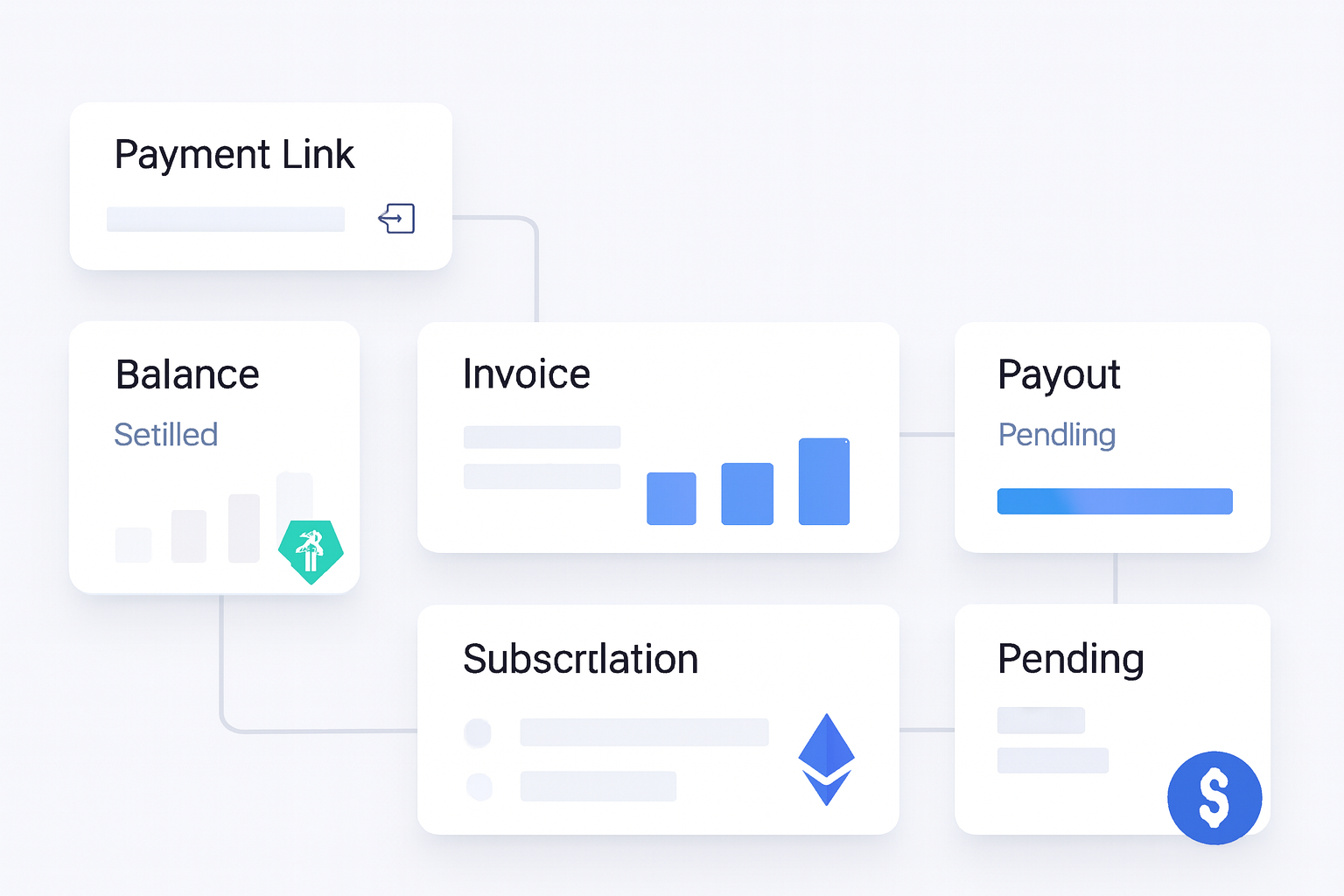
If your business wants to accept crypto payments, the main question is not whether customers can pay. It is how much operational work you want to take on after the first transaction. Teams usually need a way to present the payment, confirm status, manage settlement, and keep finance aligned on reporting. Radom gives businesses one platform for crypto payments, checkout, payment links, invoices, subscriptions, and payouts.
Radom is built for businesses and platform operators that want practical payment infrastructure, not a consumer wallet experience. You can use hosted checkout, APIs, or no-code tools depending on how much control your team needs. Explore crypto checkout if you want a hosted payment page.
What a basic crypto payment setup needs
At minimum, a business accepting crypto payments needs four things:
- A payment surface, such as checkout, a payment link, or an invoice.
- Support for the assets and blockchains your customers actually use.
- A clear way to receive funds, settle balances, or withdraw to a wallet.
- Reporting that helps operations and finance reconcile what was paid and what is still pending.
Radom supports crypto payments, billing, subscriptions, invoices, payment links, and payouts from one platform. The public product pages also state that businesses can receive funds to a Radom balance, convert assets, or withdraw to a wallet.
How to accept crypto payments with Radom
- Choose the payment flow. Use hosted checkout for a branded payment page, payment links for lightweight workflows, invoices for finance-led collection, or subscriptions for recurring revenue.
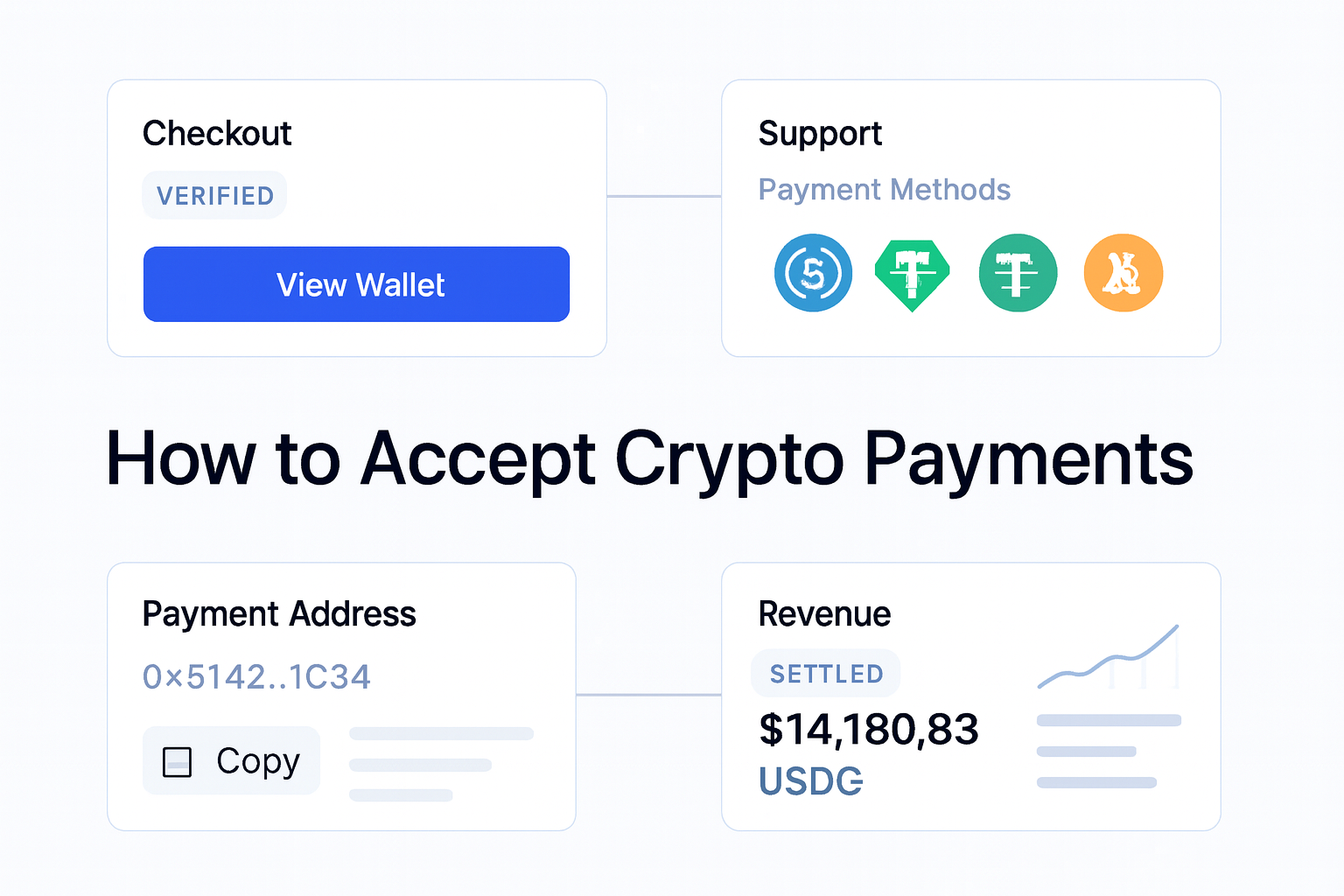
- Decide how customers will pay. Radom supports crypto payments across multiple cryptocurrencies and blockchains, with wallet support built into the checkout experience.
- Connect the flow to your business process. Map the payment to your order, invoice, subscription, or payout workflow so finance and operations can track it.
- Set your settlement approach. Keep funds in Radom, convert supported assets, or withdraw to your wallet depending on how your team manages treasury.
- Integrate or launch no-code. Use APIs if you are building a product flow, or use no-code tools if you want to move faster.
If your team wants a quick start, use crypto payment links for simple collection workflows.
Where Radom removes work
Accepting crypto payments is rarely hard because of the payment itself. The work usually comes after payment confirmation. Radom reduces that burden by giving your team one place to manage payment acceptance, settlement, balance tracking, and reporting. For product teams, that means less custom infrastructure. For finance teams, it means fewer disconnected tools. For operators, it means a clearer path from payment received to funds settled.
For teams that want to route payments into recurring billing or invoicing, Radom also supports crypto payments, hosted checkout, and pricing information in one place.
When to use checkout, links, invoices, or subscriptions
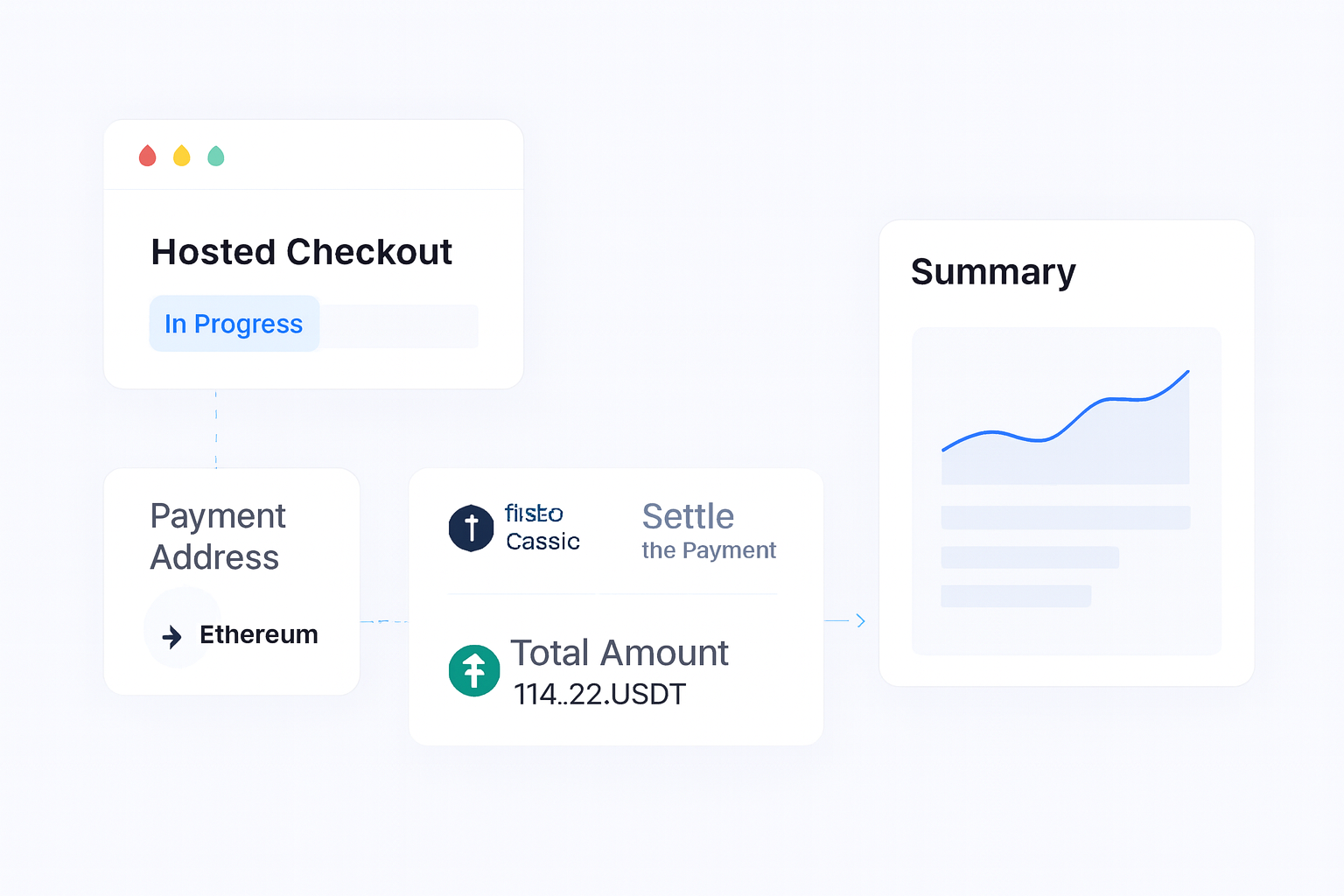
Hosted checkout works best when you want a branded payment page with a controlled customer experience.
Payment links are useful when sales, support, or operations teams need to collect payment quickly without engineering work.
Invoices fit service businesses, agencies, and finance teams that need clear payment records.
Subscriptions are the right fit for recurring crypto billing models.
Radom supports all four from one account, which makes it easier to keep payment acceptance aligned with the rest of your revenue operation.
What to check before you launch
Before going live, make sure your team has agreed on the payment assets to support, the settlement asset you want to hold, and who owns reconciliation. If your business needs a more complex setup, such as API-led payment flows or higher-volume operations, it is worth speaking with sales before launch.
For developers, the next step is usually to review the docs and map the payment flow into your product. Read the documentation if you are integrating Radom directly.
Next steps
If you are evaluating how to accept crypto payments for your business, the most direct path is to review the product fit, compare pricing, and decide whether you want to self-serve or speak with the team.
Review pricing if you want to understand the commercial model, or contact sales if you are planning a higher-volume or more complex rollout.
Frequently asked questions
Can Radom help my business accept crypto payments?+
Yes. Radom supports crypto payments, checkout, payment links, invoices, subscriptions, and payouts for businesses and platform operators.
Do I need to build a custom checkout?+
No. Radom offers hosted checkout and no-code tools, and it also supports APIs for teams that want to build custom flows.
Can I settle in crypto or fiat?+
Radom states that businesses can settle in crypto or fiat, track balances, and manage settlement workflows from the platform.
Is Radom only for developers?+
No. Radom supports both no-code tools and API-led integrations, so it can work for operators, finance teams, and developers.
What should I do if my business has a more complex payment setup?+
Contact sales. That is the right path for higher-volume or more operationally complex payment setups.