Compare Radom for crypto payments
If you are evaluating crypto payment infrastructure, the real question is not whether a provider can accept a transaction. It is whether the platform fits your payment model, supports the workflows your team actually runs, and gives finance and operations enough control over settlement, reconciliation, and reporting.
Radom is built for businesses that want to accept crypto payments, manage subscriptions, send invoices, create payment links, and run payouts from one platform. It also supports settlement in crypto or fiat, balance tracking, and launch options through APIs or no-code tools.
For teams comparing options, Radom is worth a closer look if you need a practical payments layer for online business, not a consumer wallet product or a narrow checkout widget. Review Radom pricing or contact sales if your volume, workflow, or rollout needs are more complex.
How Radom compares by use case
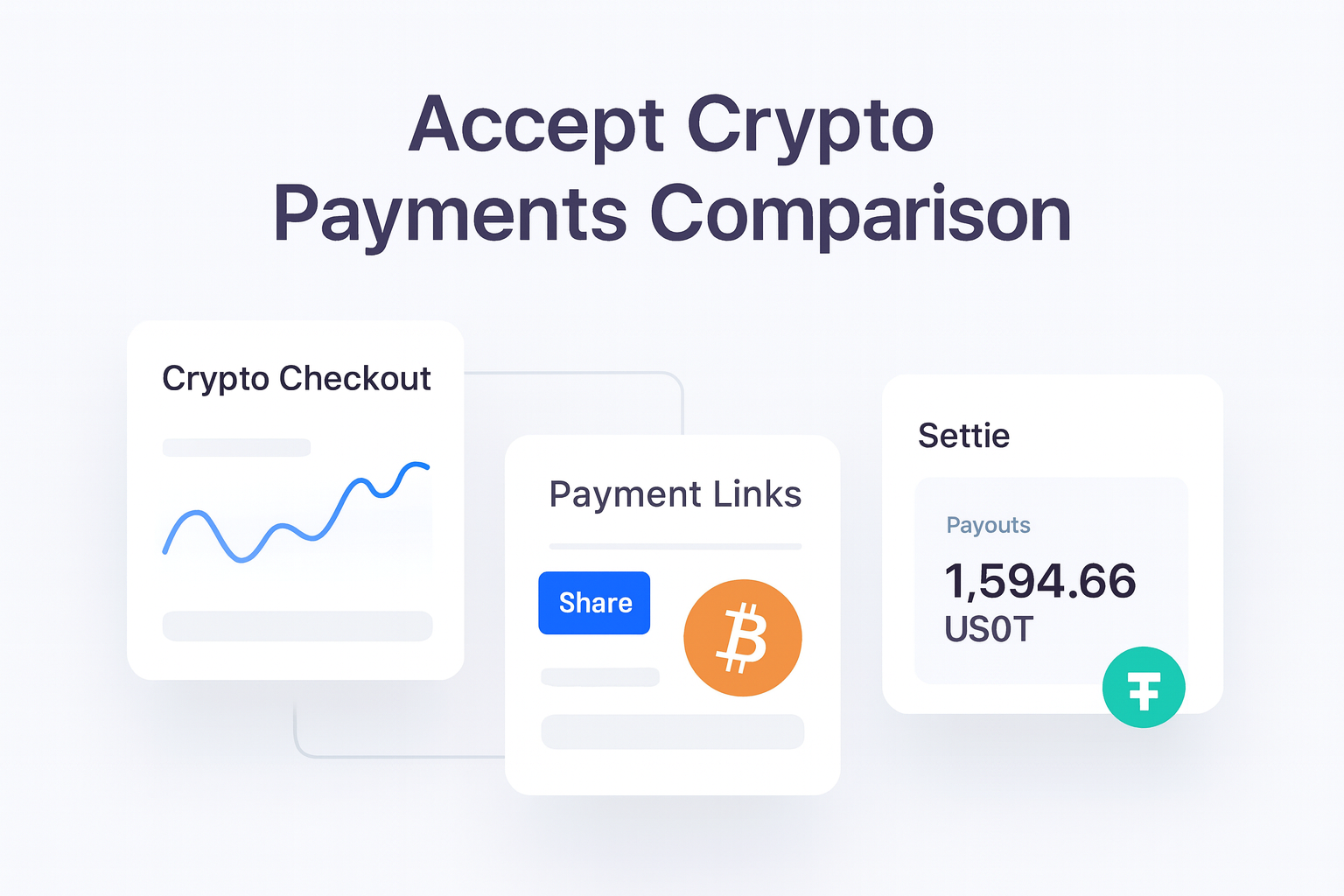
Different teams need different entry points. Radom supports the full payment stack, so you can choose the flow that matches your business model instead of forcing every payment through the same path.
- Hosted checkout: useful when you want a ready-made payment page with less engineering overhead.
- Payment links: useful for quick collection, one-off sales, and lightweight operational workflows.
- Invoices: useful for finance teams, contractors, agencies, and service businesses.
- Subscriptions and billing: useful for recurring revenue models.
- Payouts: useful for platforms, marketplaces, affiliate networks, creator programs, and other global digital businesses.
If your team is still deciding between a hosted flow and a more embedded integration, start with crypto checkout and the Radom docs.
What to compare before you choose
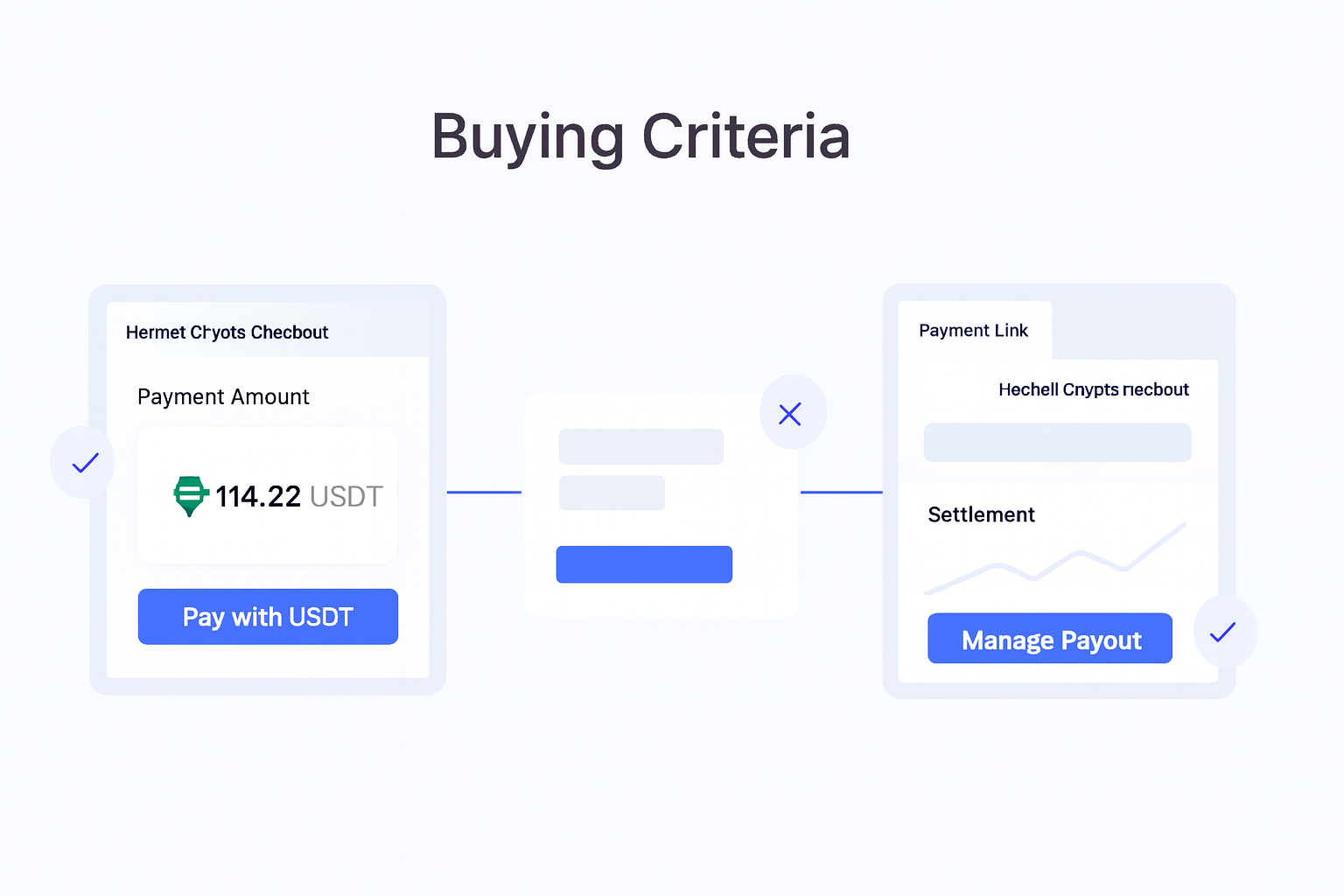
For decision-stage buyers, the best comparison criteria are usually operational rather than promotional:
- Payment model fit: one-time payments, subscriptions, invoices, or payment links.
- Settlement control: whether you need to settle in crypto or fiat and track balances in one place.
- Workflow coverage: whether the platform also supports payouts, conversion, on-ramp, or off-ramp needs.
- Team usability: whether finance, ops, and engineering can each work from the same system.
- Integration path: whether you want APIs, no-code tools, or both.
Radom is positioned around those operational needs. It is not presented here as a bank, and it should be evaluated as payment infrastructure for internet businesses that need control over acceptance and money movement.
Where Radom removes work
Radom reduces the number of tools your team needs to connect for crypto payment operations. Instead of stitching together separate products for checkout, billing, invoicing, links, payouts, conversion, and settlement, you can manage these workflows from one platform.
- Accept payments through hosted checkout or payment links.
- Run recurring billing or invoice-based collection.
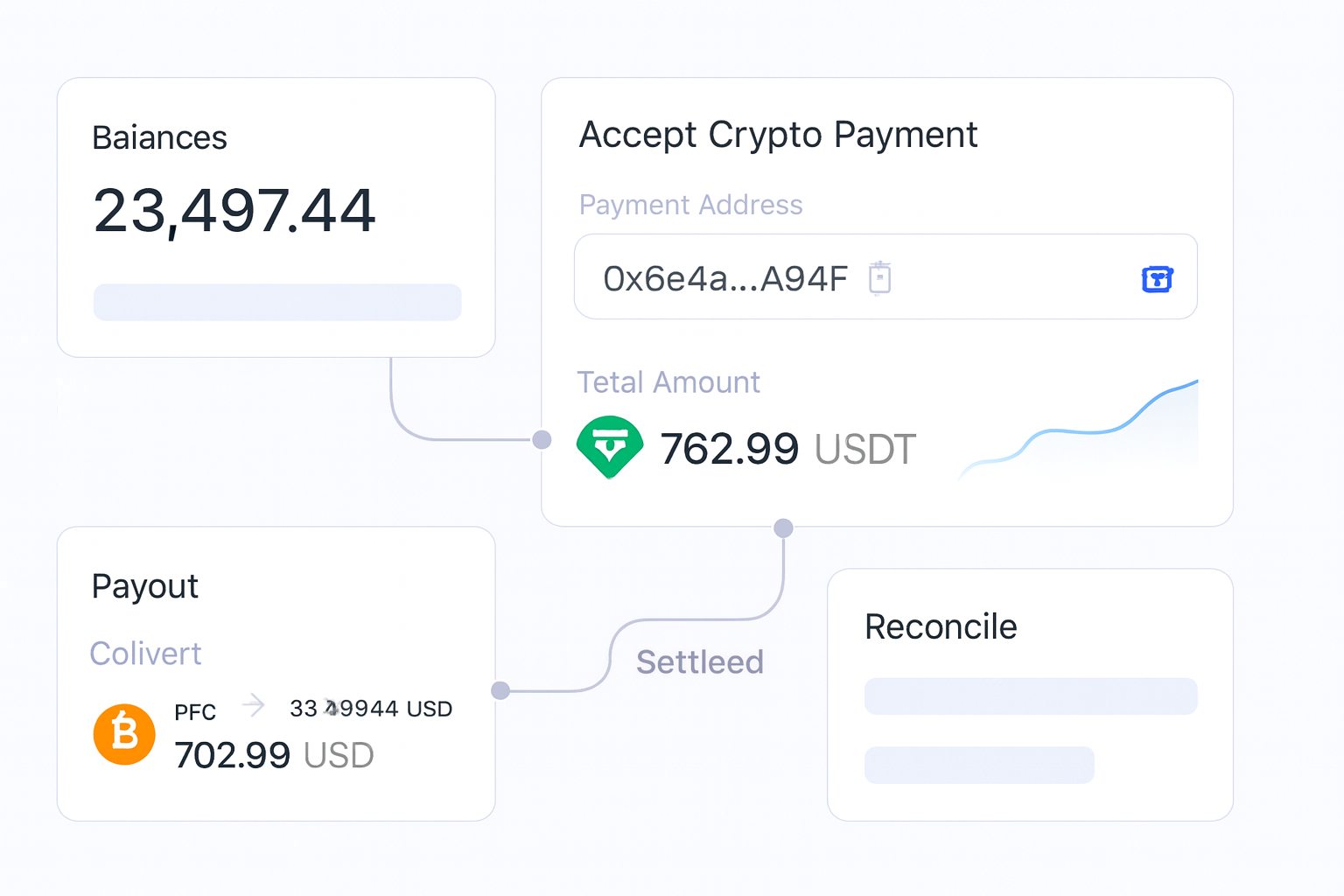
- Track balances and settlement from the same account.
- Move between crypto and fiat where available through conversion and on and off ramp workflows.
- Use APIs when your team needs programmable payment infrastructure.
That structure matters most for teams with real finance operations, not just a single payment form. If that is your case, review crypto payments and then move to pricing or sales.
Who this comparison is for
This page is most relevant if you are a founder, payments lead, finance operations manager, platform operator, or developer evaluating crypto payment infrastructure for a business that needs more than a basic checkout page.
Radom can be a fit for SaaS, e-commerce, marketplaces, gaming platforms, affiliate networks, and other online businesses that want to accept crypto and manage the downstream work that follows payment acceptance.
If your buying process includes technical review, start with the documentation. If you are comparing pricing or evaluating higher-volume usage, go to pricing or contact sales.
Decision checklist
Before you choose a provider, confirm these points internally:
- Which payment flows do you need on day one?
- Do you need hosted checkout, embedded flows, or both?
- Do you need subscriptions, invoices, or payment links as part of the same platform?
- How will finance teams handle settlement, reconciliation, and reporting?
- Do you need payout workflows as well as payment acceptance?
If the answer to more than one of those is yes, a single-purpose tool may not be enough. Radom is designed for teams that want payment acceptance plus the operational layer around it.
Next step
Compare the product fit, review the pricing structure, and choose the implementation path that matches your team. For most buyers, the natural next step is to review pricing, read the docs, or talk to sales.
Frequently asked questions
What does Radom support for crypto payments?+
Radom supports crypto payments, billing, subscriptions, invoices, payment links, payouts, and payment APIs.
Can Radom settle in fiat?+
Radom supports settlement in crypto or fiat, with balance tracking and conversion workflows where available.
Is Radom only for developers?+
No. Radom supports no-code tools as well as APIs, so it can work for operators, finance teams, and developers.
What if we need more than payment acceptance?+
Radom also supports payouts, conversion, on-ramp, off-ramp, and virtual account workflows. Review the relevant product pages or contact sales if your use case spans several of them.
Where should technical teams start?+
Technical teams should start with the Radom docs and then move to the product page that matches the integration they want to build.