Why teams add crypto payment acceptance
If your business already sells online, the question is usually not whether crypto is interesting. It is whether you can add it without creating more payment ops work. Teams look at crypto payments when they want another way to collect revenue, reduce dependency on a single rail, or support customers who already pay in digital assets.
Radom is built for that use case. It gives businesses one platform for crypto payments, checkout, billing, invoicing, payment links, and payouts, with settlement in crypto or fiat and balance tracking in the same place.
If you are comparing options, start with the core product pages for crypto payments, hosted crypto checkout, and pricing.
What an accept crypto payments integration usually needs
A useful integration is more than a wallet address. Operators usually need a payment flow that is clear for customers, simple to reconcile, and flexible enough for finance and engineering teams.
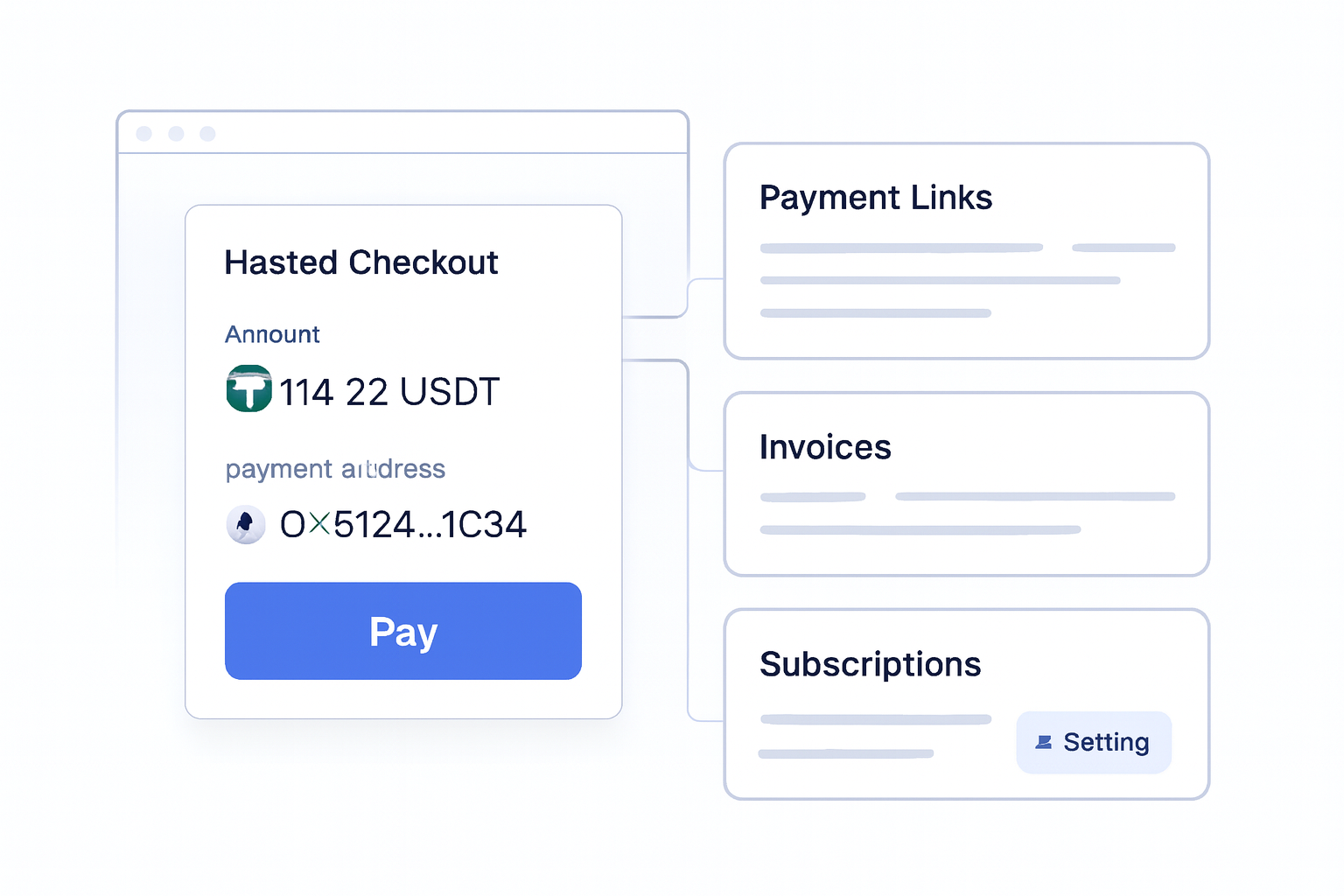
- A hosted checkout or embedded payment flow
- Payment links for quick collection
- Invoices for finance-led workflows
- Subscription support for recurring revenue
- Settlement controls so funds can stay in crypto or move to fiat where needed
- Reporting and balance visibility for reconciliation
Radom supports these product paths from one account, which helps teams avoid stitching together separate tools for collection, settlement, and reporting.
How to integrate crypto payments with Radom
The right setup depends on how your business sells. Most teams follow one of these routes.
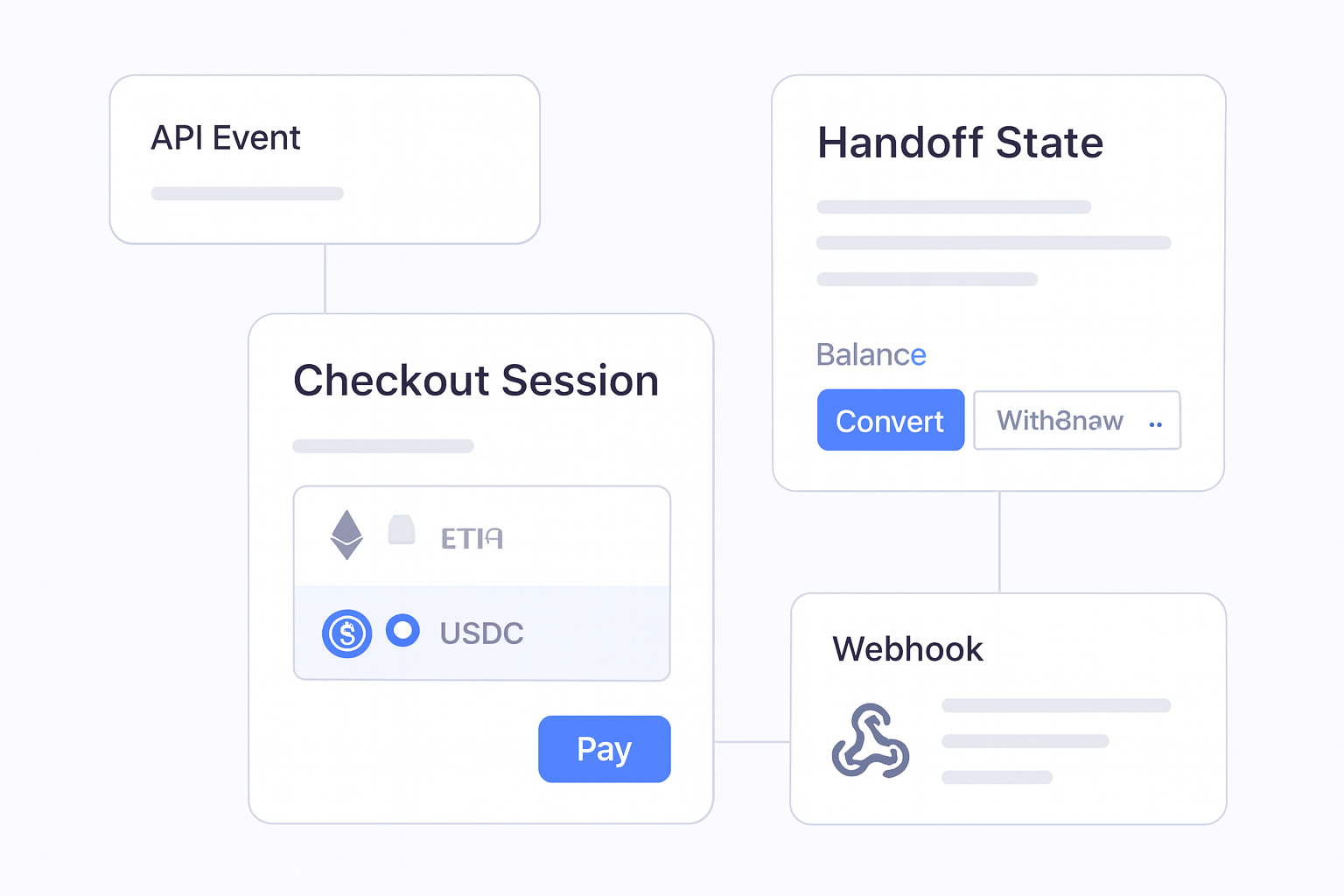
- Choose the payment flow. Use hosted checkout for a full payment page, payment links for lightweight collection, invoices for finance-led billing, or APIs if your team wants programmable payment infrastructure.
- Set your settlement preference. Decide whether you want to receive funds in crypto, convert them, or withdraw to your wallet after payment.
- Match the flow to your customer journey. Keep checkout visible for one-time purchases, use subscriptions for recurring billing, and use links or invoices where the sale is less transactional.
- Test the payment experience. Confirm the customer flow, payment status updates, and how the balance appears in Radom.
- Connect operations and reporting. Make sure finance and operations teams can reconcile received payments and track settlement without manual work.
For teams that want to move fast, Radom’s hosted checkout and payment links reduce the amount of interface work you need to build. For developers, the API path lets you automate payment handling from the start. If you want implementation detail, use the Radom documentation alongside the product pages.
Where Radom removes work
Most payment integrations break down in the same places: payment status handling, settlement choices, reconciliation, and recurring billing. Radom is designed to reduce that work by keeping collection, balance management, and payout workflows in one platform.
- You do not need to build a payment page from scratch if hosted checkout fits your use case.
- You do not need a separate tool for payment links if you only need lightweight collection.
- You do not need a separate billing layer for subscriptions and invoices if those are part of the same revenue flow.
- You do not need to manage settlement in a separate system if your team wants to track balances and move funds from the same account.
That matters for founders, finance operations teams, and platform operators who need a payment stack that is practical to run, not just easy to launch.
Common use cases
Radom is a fit for businesses that need crypto payments across different operating models.
- SaaS and subscription businesses: recurring crypto billing and invoice workflows
- E-commerce brands: hosted checkout and payment links
- Marketplaces and platforms: payment acceptance with balance and settlement control
- Affiliate and iGaming operators: payment collection and payout workflows that need operational discipline
- Creators and digital businesses: quick payment collection with low-friction links and invoices
If your main need is payment acceptance, start with crypto checkout. If you also need recurring billing or invoice-based collection, the broader crypto payments platform is the better fit.
What to check before going live
Before you launch, confirm the parts that affect finance operations as much as customer experience.
- Which payment method will be used first
- Whether you want funds to stay in crypto or move to fiat
- How you will reconcile payments in your finance stack
- Whether your team needs subscriptions, invoices, or payment links in addition to checkout
- Whether developers need API access or your team wants a no-code path
If your implementation needs are clear, you can move from evaluation to setup in the documentation or speak with Radom sales about the right product path.
Frequently asked questions
Can Radom be used for one-time and recurring crypto payments?+
Yes. Radom supports one-time payments and subscriptions, along with invoices and payment links.
Does Radom support hosted checkout?+
Yes. Radom Checkout is a hosted crypto payment page designed for a branded payment flow without building the entire interface yourself.
Can I accept crypto payments and settle in fiat?+
Radom supports settlement in crypto or fiat. Exact workflow depends on the product path and how your account is configured.
Is Radom only for developers?+
No. Radom supports no-code and API-led workflows, so founders, finance teams, and developers can use the same platform in different ways.
Where should I start if I am evaluating crypto payment processing?+
Start with the crypto payments page, then review checkout, pricing, and the documentation if you want implementation detail.
Next step
If you need a practical way to accept crypto payments, Radom gives you checkout, links, invoices, subscriptions, and APIs from one platform. Start testing in the dashboard, review the docs, or contact sales if you need help choosing the right setup.
Contact sales or review pricing before you launch.