Why fintech teams look at banking rails this way
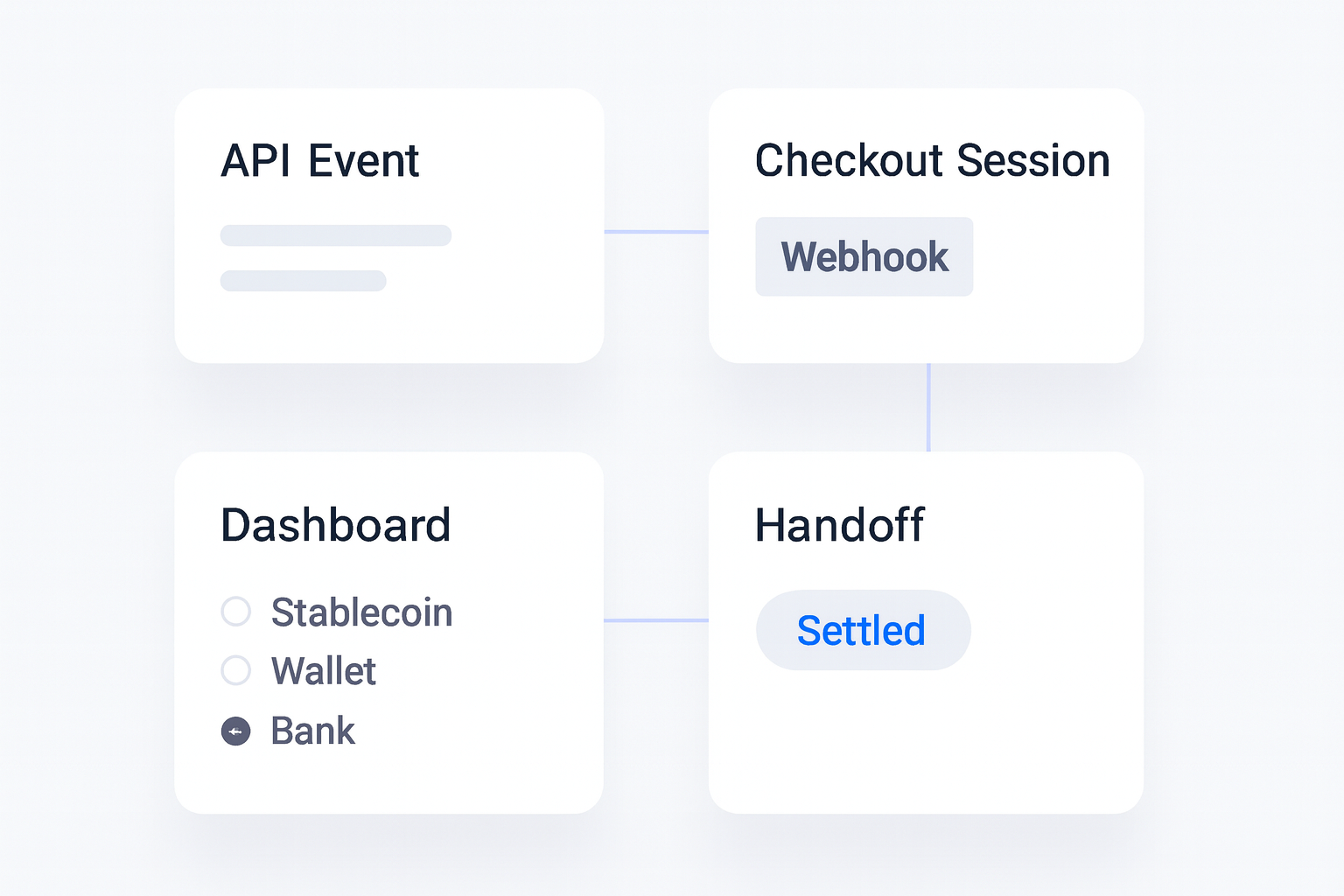
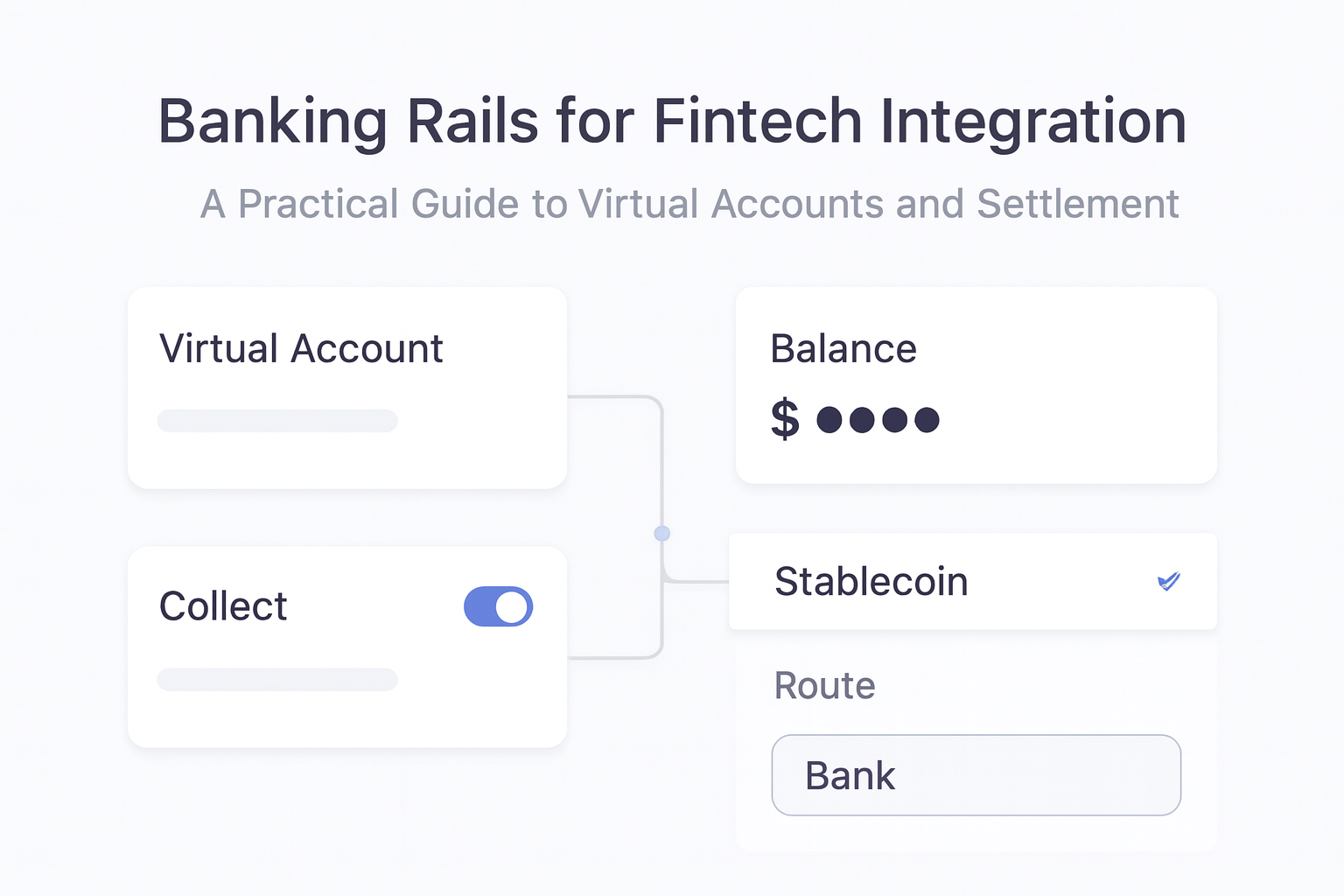
When operators search for banking rails for fintech integration, they usually are not looking for a single account type. They need a way to collect funds, reconcile balances, move value between fiat and digital assets where supported, and send payouts without stitching together separate systems.
Radom is built for that operational layer. It supports virtual USD and EUR accounts, crypto on and off ramp workflows, crypto conversion, and mass payouts from one platform. For teams comparing rails, the practical question is not only how money arrives, but how it settles, how it is tracked, and how quickly finance can move it onward.
If you are evaluating the acceptance side as well, Radom also supports crypto payments and crypto on and off ramp flows for businesses that need to move between fiat and crypto.
What banking rails need to do in a fintech stack
For most internet businesses, the rail itself is only useful if it supports the full path from receipt to settlement. A workable setup should let your team:
- Receive funds into named accounts that are clear to senders and easy for finance to reconcile.
- Separate first-party and third-party incoming payments where supported.
- Move balances into the asset or currency the business actually wants to hold.
- Trigger payouts in fiat or crypto without manual rekeying.
- Keep payment status, exchange activity, and settlement records in one place.
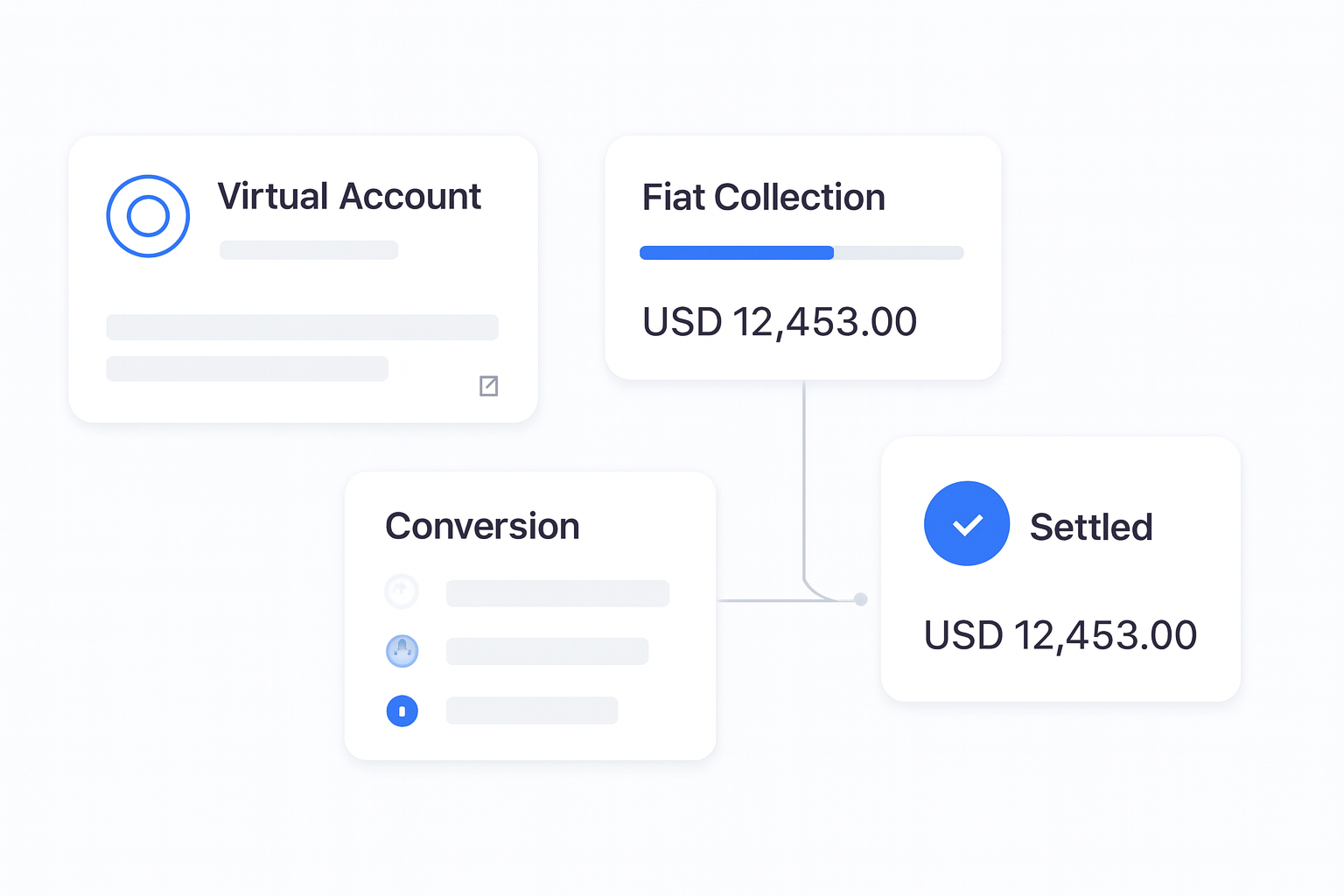
Radom's virtual accounts are designed for this kind of workflow. The platform description emphasizes named USD and EUR accounts, cleaner accounting than pooled collection flows, and dashboard visibility into payment and exchange analytics.
A practical implementation flow
If you are planning a fintech integration, the simplest way to think about the flow is in five steps.
- Choose the receipt rail. Decide whether funds arrive through virtual accounts, crypto payments, or open banking-based collection where available.
- Map the settlement rule. Define whether funds stay in fiat, move into crypto, or convert between supported assets.
- Set reconciliation fields. Make sure your finance team can match incoming payments to customers, invoices, or internal accounts.
- Automate the next move. Route balances into treasury, payout, or conversion workflows instead of leaving them idle.
- Monitor status and records. Keep a clear audit trail for receipts, conversions, and outgoing payments.
Radom helps remove work in steps 2 through 5. Its product pages describe settlement automations, conversion workflows, and payout tooling that can be managed from the dashboard or API. For teams that want to build directly, the docs are the right next step: Radom documentation.
Where Radom fits in the rail stack
Radom is not positioned as a bank. It is a payments and money movement platform for businesses that need more flexibility than a single fiat account can provide.
For fintech and platform teams, that means a few useful combinations:
- Virtual accounts plus settlement. Collect fiat into named USD or EUR accounts, then route balances into crypto or treasury workflows where supported.
- On and off ramp plus conversion. Move between fiat, stablecoins, and crypto when your operating model requires it.
- Payouts plus currency choice. Send funds to recipients in crypto or in supported fiat rails such as USD, GBP, and EUR where available.
- API plus dashboard control. Let operations teams work in the dashboard while developers automate repeat flows through the API.
If your team is focused on treasury movement and currency conversion, crypto convert is the relevant product page. If payout operations are the main issue, review mass payouts.
How to evaluate a rail before you integrate
Before you commit engineering time, compare the rail on operational criteria, not just on headline claims.
- Receipt clarity: Can your team assign funds to named accounts or clear references?
- Settlement control: Can you decide whether funds stay in fiat or move into crypto workflows?
- Conversion visibility: Are rates and settlement records visible enough for finance review?
- Payout reach: Can you pay recipients in the currencies and rails you actually use?
- Implementation path: Is there a dashboard for operations and an API for automation?
Radom's pricing page says the platform uses per-transaction pricing with no setup fees or monthly fees, and that the full suite includes payments, billing, conversion, and settlement. For higher-volume or less standard cases, route the decision through sales: contact sales.
When to start in the dashboard first
For many teams, the fastest way to validate a rail is to test it in the dashboard before building against the API. That is especially useful if you are comparing receipt flows, settlement handling, or payout operations across multiple business lines.
Start in the dashboard if you need to:
- See how named accounts and payment records appear for finance.
- Validate settlement and conversion workflows before implementation.
- Test payout operations with real internal process owners involved.
- Decide whether the business should integrate now or later.
The natural next step is to review pricing, then talk to sales if your use case needs a more specific setup.
Frequently asked questions
Is Radom a bank?+
No. Radom should be described as a payments and money movement platform. For fiat accounts, open banking, and virtual account workflows, keep the language precise and tied to the supported rails.
Can Radom collect fiat and settle in crypto?+
Yes, where supported. The virtual accounts and crypto on and off ramp pages describe fiat collection into named virtual accounts and settlement into crypto workflows.
Can Radom send payouts in fiat and crypto?+
Yes. The payouts product page says businesses can fund payouts in crypto or fiat and send recipients funds through the rail and currency they need, including supported fiat rails where available.
Does Radom support API integration?+
Yes. Radom documents payment APIs and payout APIs, and the product pages position the dashboard and API as complementary operating modes.
What should a fintech team test first?+
Start with the receipt flow, then test settlement and payout behavior. That sequence shows whether the rail fits your finance operations before you build the full integration.
Next step
If you are comparing banking rails for fintech integration, the fastest path is to test the flow in the Radom dashboard, then decide whether to build with the API or speak with sales about your operating model.
Explore virtual accounts or contact sales to discuss your use case.