Best affiliate payouts crypto providers: what to compare
If you run affiliate payouts, the best provider is usually the one that reduces manual work without creating reconciliation problems. For most teams, that means a platform that can fund payouts in crypto or fiat, route recipients to the rail they need, and give operations a clear record of what was sent, when, and in which currency.
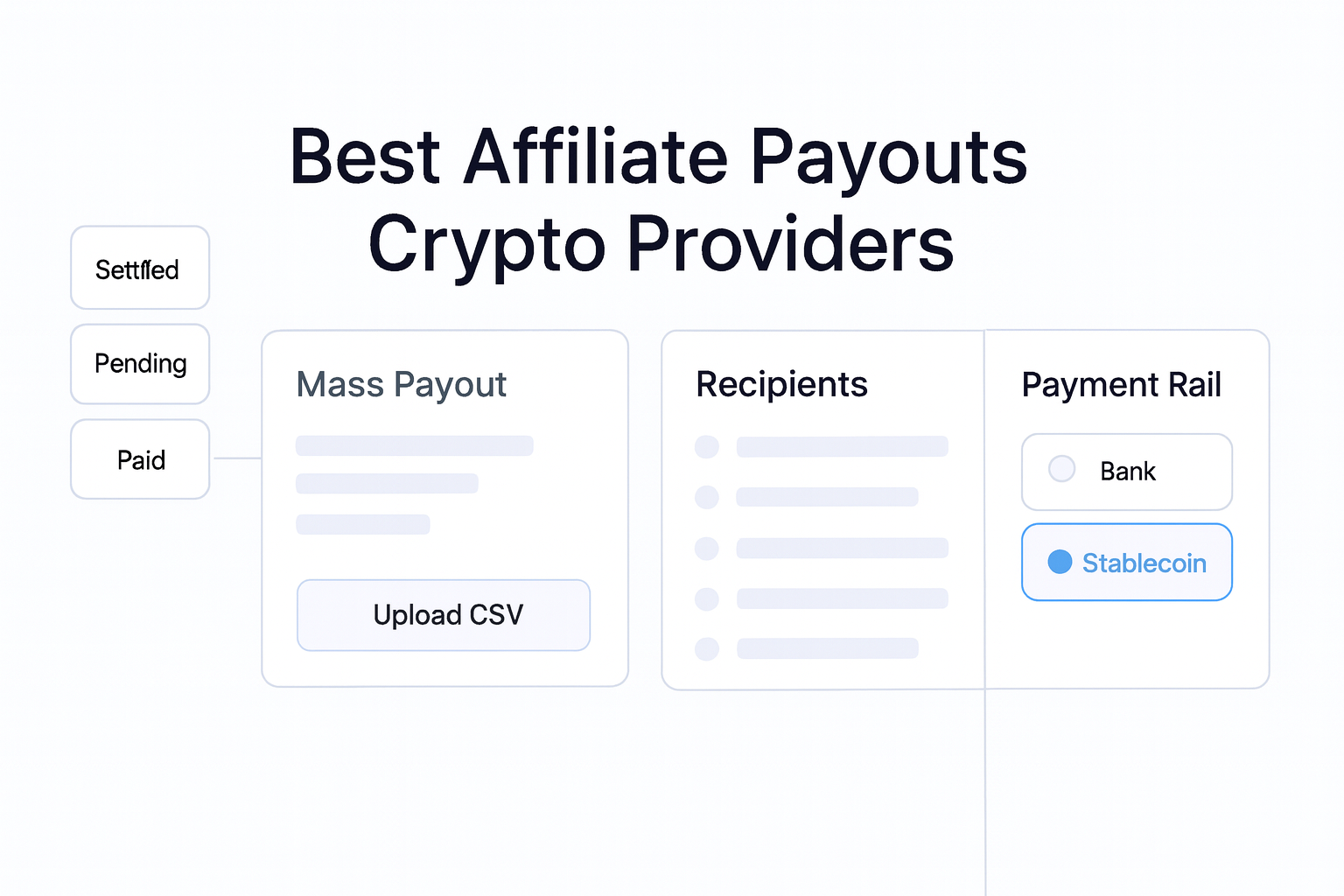
Radom is built for mass payouts across crypto and fiat. Teams can pay affiliates globally through the dashboard, CSV upload, or API, and use payout workflows that support conversion, settlement, and reporting as volume grows. See mass payouts for the product overview and affiliate network payouts for the use case.
What a serious payout provider should cover
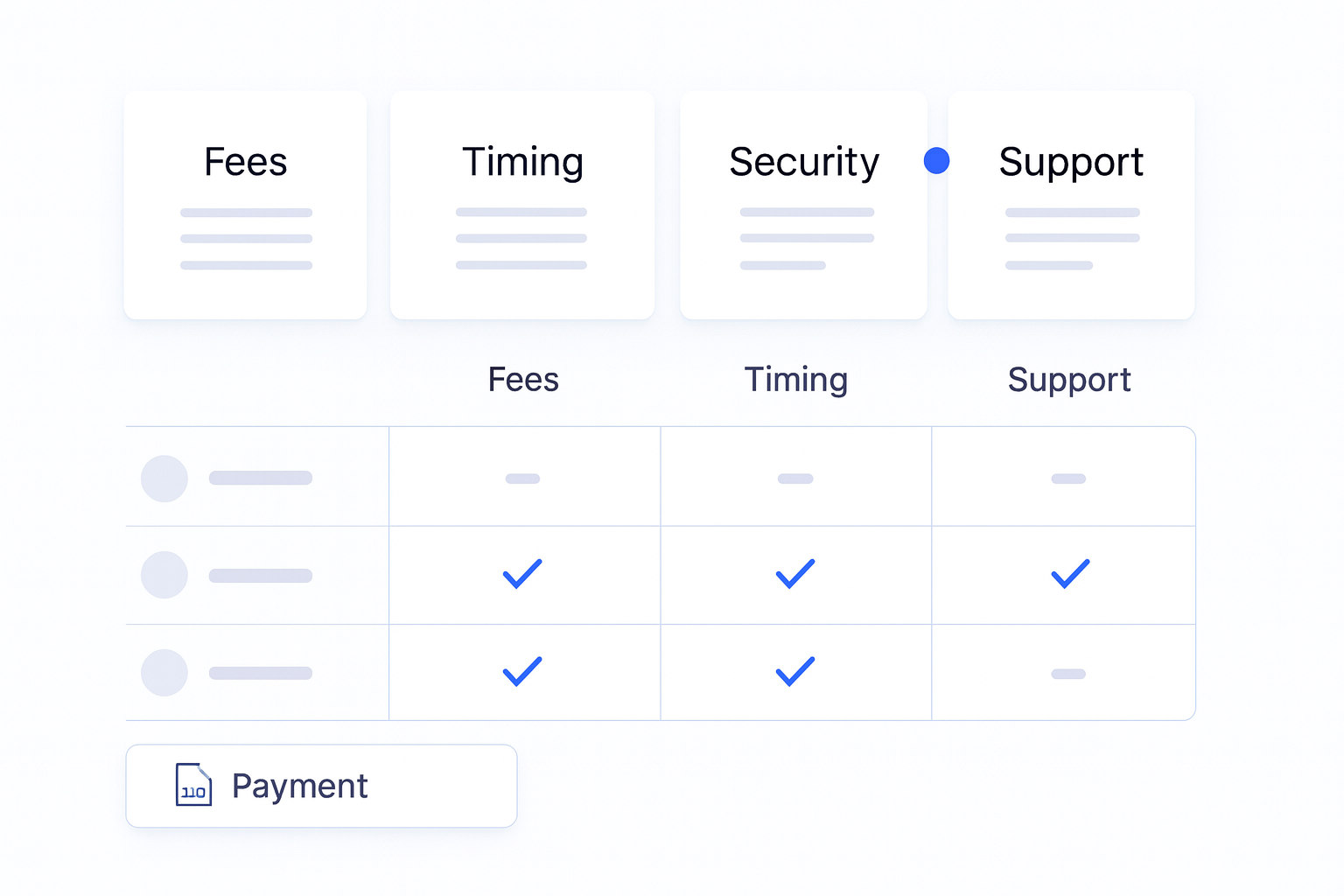
- Funding flexibility: ability to fund payouts in crypto or fiat.
- Recipient choice: support for crypto payouts and fiat payouts where available.
- Operational control: dashboard tools, CSV upload, and API access for different team workflows.
- Conversion support: clear handling for swaps and settlement when payouts need conversion.
- Accounting visibility: payment status, recipient records, and transaction history that finance teams can reconcile.
- Scale readiness: a model that works for repeat batch payouts, not just one-off transfers.
Why affiliate payout teams choose crypto rails
Crypto can reduce friction for global payout workflows where recipients want fast delivery and fewer cross-border constraints. It also gives operators another way to fund payout cycles when they already hold balances in digital assets. In practice, the value is not the asset itself. It is the ability to move value into the right rail with less manual handling.
Radom supports payouts funded in crypto or fiat, then sent through the payment rail and currency recipients need where supported. That includes fiat payout rails such as ACH, Fedwire, and SEPA for supported currencies like USD, GBP, and EUR. For teams that need conversion before payment, Radom also supports payout, swap, conversion, and settlement workflows with transparent pricing as volume grows.
How to evaluate providers in 5 steps
- Map your payout mix. Separate affiliates who need crypto, fiat, or both.
- Check funding sources. Confirm whether you can fund from crypto, fiat, or both without extra manual steps.
- Review operational controls. Look for dashboard management, CSV upload, and API support.
- Test reconciliation. Make sure recipient records, payment status, and settlement history are easy to export and review.
- Compare pricing at your volume. Ask how payout, swap, conversion, and settlement costs behave as volume increases.
Where Radom removes work
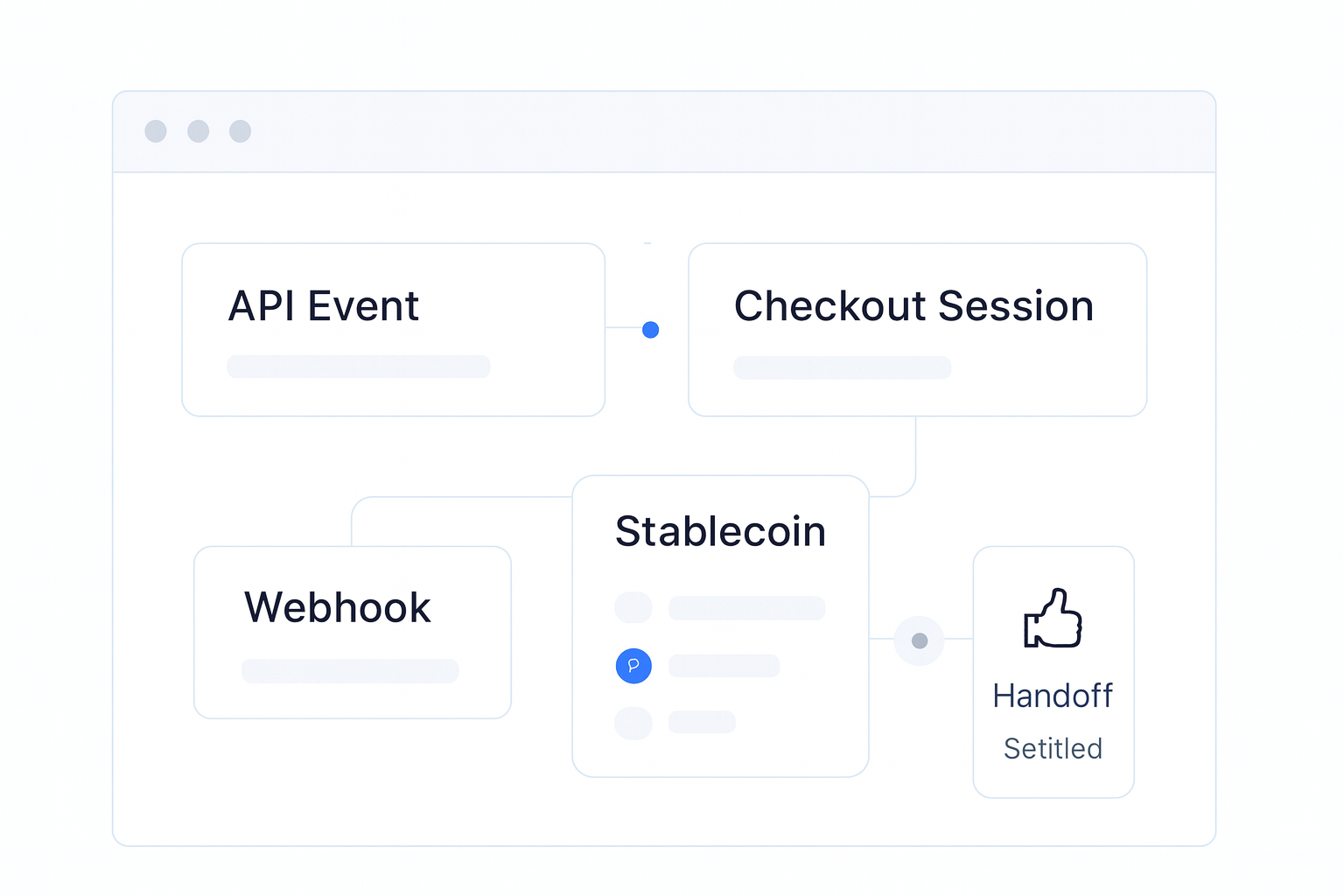
Radom is useful when payout operations need to scale without turning into a spreadsheet process. Finance and operations teams can run payout batches from the dashboard, upload CSV files, or automate flows with the Payouts API. If a payout needs conversion, Radom can handle the exchange workflow and settlement in one place rather than forcing the team to stitch together separate tools.
For affiliate networks that already manage repeat cycles, that means fewer handoffs between operations, finance, and engineering. It also means a cleaner path from payout approval to recipient delivery.
When Radom is a fit
Radom is a strong fit for affiliate networks, platforms, and digital businesses that need global payouts across crypto and fiat. It is especially relevant when teams want a single platform for payout operations, settlement visibility, and recipient choice across multiple rails.
If you are comparing providers for a live payout workflow, review pricing and then contact sales for volume-specific questions. Developers can also review the documentation for integration details.
Frequently asked questions
Can Radom pay affiliates in both crypto and fiat?
Yes. Radom supports mass payouts in crypto and fiat, with funding and recipient delivery options that depend on the rail and currency supported.
Can payout teams use CSV files and APIs?
Yes. Radom supports dashboard workflows, CSV upload, and API integration for payout operations.
Does Radom support payout conversion and settlement?
Yes. Radom supports payout, swaps, conversions, and settlement workflows, with transparent pricing as volume grows.
Which fiat rails are supported?
Published source context references ACH, Fedwire, and SEPA for supported fiat payout flows. Any rail availability by region should be verified before production.
Is Radom only for affiliate payouts?
No. Radom also supports payouts for creators, contractors, sellers, and users globally, along with other platform payout use cases.
Next step
If you need a payout provider for affiliate operations, start with the product overview, check pricing, and then move to sales or docs based on your workflow. Review mass payouts or contact sales to discuss your payout mix.