Choosing a BitPay alternative
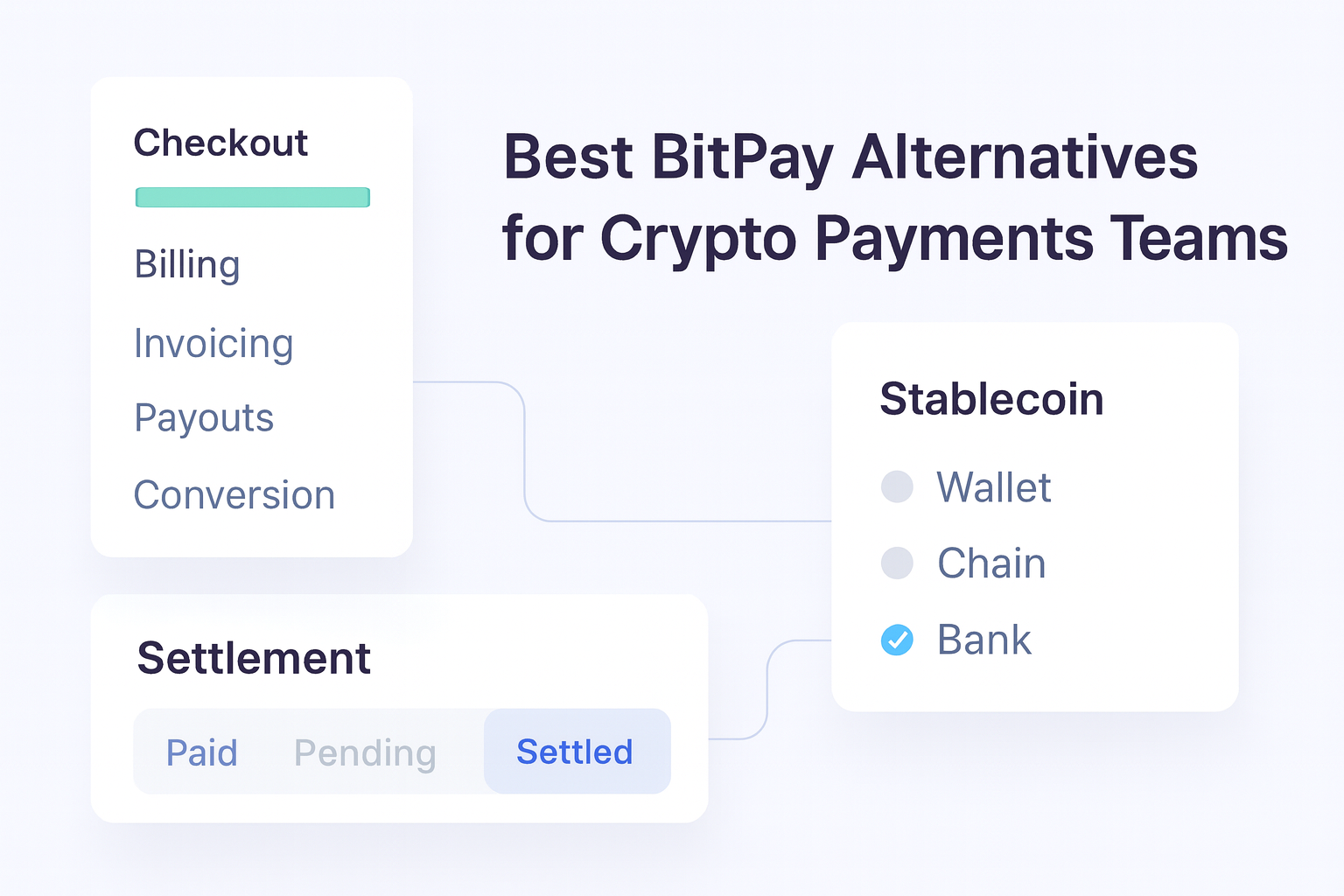
If you are comparing BitPay alternatives, start with the job you need the platform to do. Some teams only need crypto payment acceptance. Others need checkout, payment links, billing, invoicing, payouts, conversion, and settlement in one place. Radom is built for businesses that want that broader operating layer, not just a single acceptance flow.
For founders, finance teams, and platform operators, the real decision is usually about workflow fit. Can the provider support the way your team collects funds, tracks balances, settles revenue, and moves money to the next step in the process? If the answer is no, the platform may work for a first use case but create more manual work later.
Review Radom pricing if you want to compare the platform on a commercial basis before moving to implementation.
What to compare in a BitPay alternative
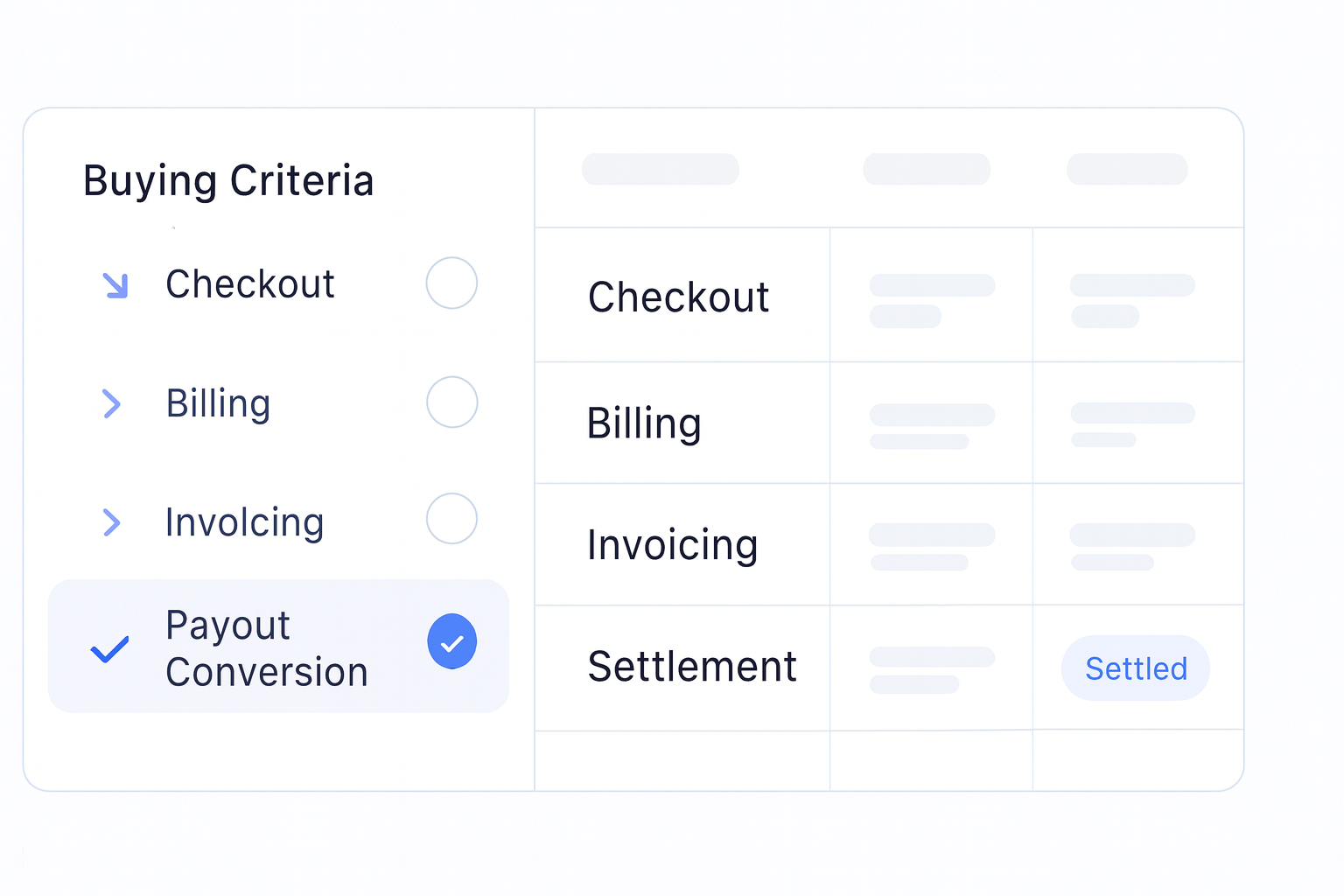
Use these criteria to compare providers fairly:
- Payment acceptance: hosted checkout, payment links, invoicing, subscriptions, and APIs.
- Settlement options: whether you can receive funds, convert assets, or withdraw to your wallet.
- Balance management: whether the platform helps you track funds and reconcile activity across payment flows.
- Payout support: whether you can move funds onward to recipients, contractors, or platform users.
- Developer fit: whether the documentation and API surface match your integration needs.
- Commercial fit: whether the pricing model works for low volume, high volume, or custom sales-led deals.
Radom’s product set is designed around these operator needs, with crypto payments, billing, subscriptions, invoices, payment links, payouts, and payment APIs available from one platform.
Where Radom fits
Radom is a practical option for businesses that want to accept crypto and manage what happens next. That includes teams that need hosted checkout, embedded flows, subscriptions, invoices, payment links, and APIs from one account. It also includes businesses that need to receive funds to a balance, convert assets, or withdraw to a wallet.
The platform is positioned for SaaS companies, e-commerce brands, marketplaces, gaming platforms, and affiliate networks that want crypto acceptance across the channels they already use. It is also relevant when your payment operation includes settlement, reconciliation, or downstream payouts.
For teams evaluating implementation effort, review crypto payments to see the product surface, or open the documentation if you are comparing integration depth.
Why teams switch from a single-purpose processor
A single-purpose processor can be enough when your only requirement is payment acceptance. But many teams outgrow that model once they start handling recurring revenue, invoice-based collection, or payout-heavy operations. At that point, the platform needs to support more than the first transaction.
Radom is built to cover more of the payment lifecycle. That includes billing, subscriptions, invoices, payment links, payouts, and conversion workflows, so teams do not have to stitch together separate tools for each stage.
For operators planning a broader rollout, the next step is usually to compare pricing, confirm the required payment flows, and decide whether the implementation should start in self-serve mode or with sales support.
Best BitPay alternatives by buyer need
There is no single best option for every team. The right choice depends on the workflow you need to support.
- For checkout-first teams: prioritize hosted checkout, payment links, and clear payment status handling.
- For recurring revenue teams: prioritize subscriptions and billing tools that fit your invoicing and renewal process.
- For finance-led teams: prioritize settlement, balance tracking, and conversion workflows.
- For platform operators: prioritize payouts and the ability to move money across multiple recipient types.
- For developers: prioritize documentation, API structure, and webhook-driven payment operations.
Radom fits across all of these use cases because it combines payment acceptance with billing, invoicing, payouts, and conversion in one platform.
Decision checklist before you switch
- List the payment flows you need in the next 12 months, not only the first one.
- Confirm whether you need checkout, billing, invoicing, links, payouts, or conversion.
- Check whether your team needs hosted tools, APIs, or both.
- Review how funds are received, tracked, settled, and moved onward.
- Compare pricing and sales support against your expected volume.
If you want a platform that can cover more than acceptance alone, contact sales to discuss your use case or review pricing first.
Frequently asked questions
Is Radom only for crypto payments?+
No. Radom supports crypto payments, billing, subscriptions, invoices, payment links, payouts, and payment APIs. It is built for businesses that need more than a single checkout flow.
Can Radom support both self-serve and sales-led buying?+
Yes. The site routes buyers to pricing, documentation, and contact sales depending on intent.
Who is this comparison page for?+
It is for payments teams, founders, finance operations teams, platform operators, and developers comparing crypto payment infrastructure.
What should I review first if I am switching from BitPay?+
Start with the payment flows you need, then compare checkout, billing, invoicing, payouts, conversion, and implementation effort.
Compare pricing or contact sales if you want help mapping your use case.