Best crypto payment processor providers: what buyers should compare
If you are comparing crypto payment processor providers, the real question is not who accepts the most coins. It is which platform fits your payment model, settlement needs, and operating workflow without creating extra work for finance, operations, and engineering.
The best provider for a SaaS business taking recurring payments is not always the best fit for a marketplace, affiliate network, iGaming operator, creator platform, or e-commerce brand. Start with the workflows you need to run, then compare the provider on checkout, billing, invoicing, links, payouts, conversion, and reporting.
Radom is built for businesses that want to accept crypto payments, manage subscriptions, send invoices, create payment links, run payouts, and settle in crypto or fiat from one platform. See crypto payments for the product overview and pricing for commercial details.
How to evaluate providers
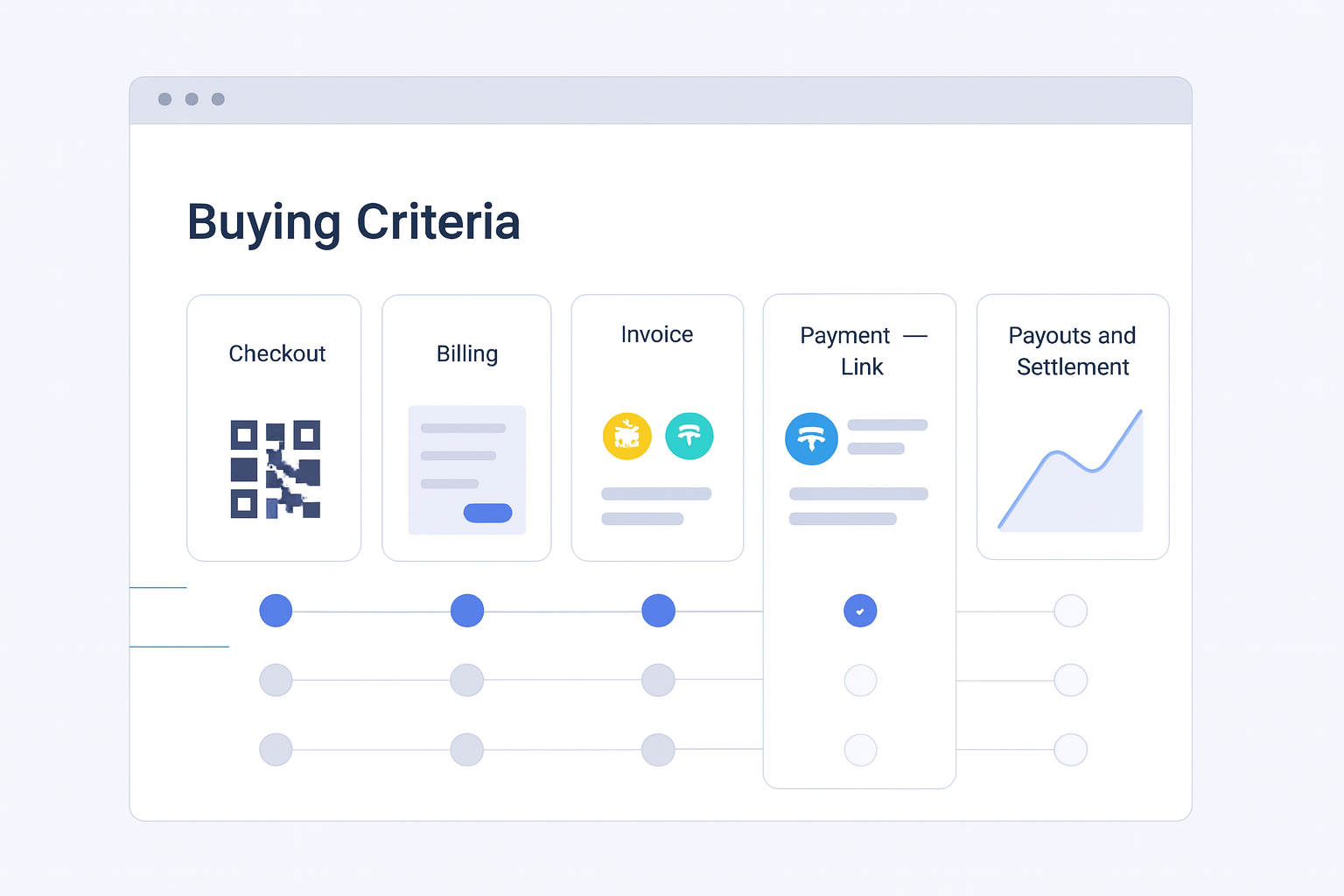
Use these criteria when you compare options:
- Payment acceptance: Can the provider support the channels you actually use, such as hosted checkout, embedded flows, payment links, invoices, and subscriptions?
- Settlement control: Can you keep funds in crypto, convert them, or withdraw them based on your operating needs?
- Payout workflows: If your business pays creators, affiliates, contractors, or partners, can the platform handle high-volume payouts as well as collection?
- Developer experience: Does the provider offer APIs, docs, and webhook-driven workflows that fit your team?
- Operational clarity: Can finance teams track balances, reconciliation, and reporting without stitching together separate tools?
- Commercial fit: Is pricing clear, and can the provider support higher-volume or more complex use cases through sales?
Where Radom fits
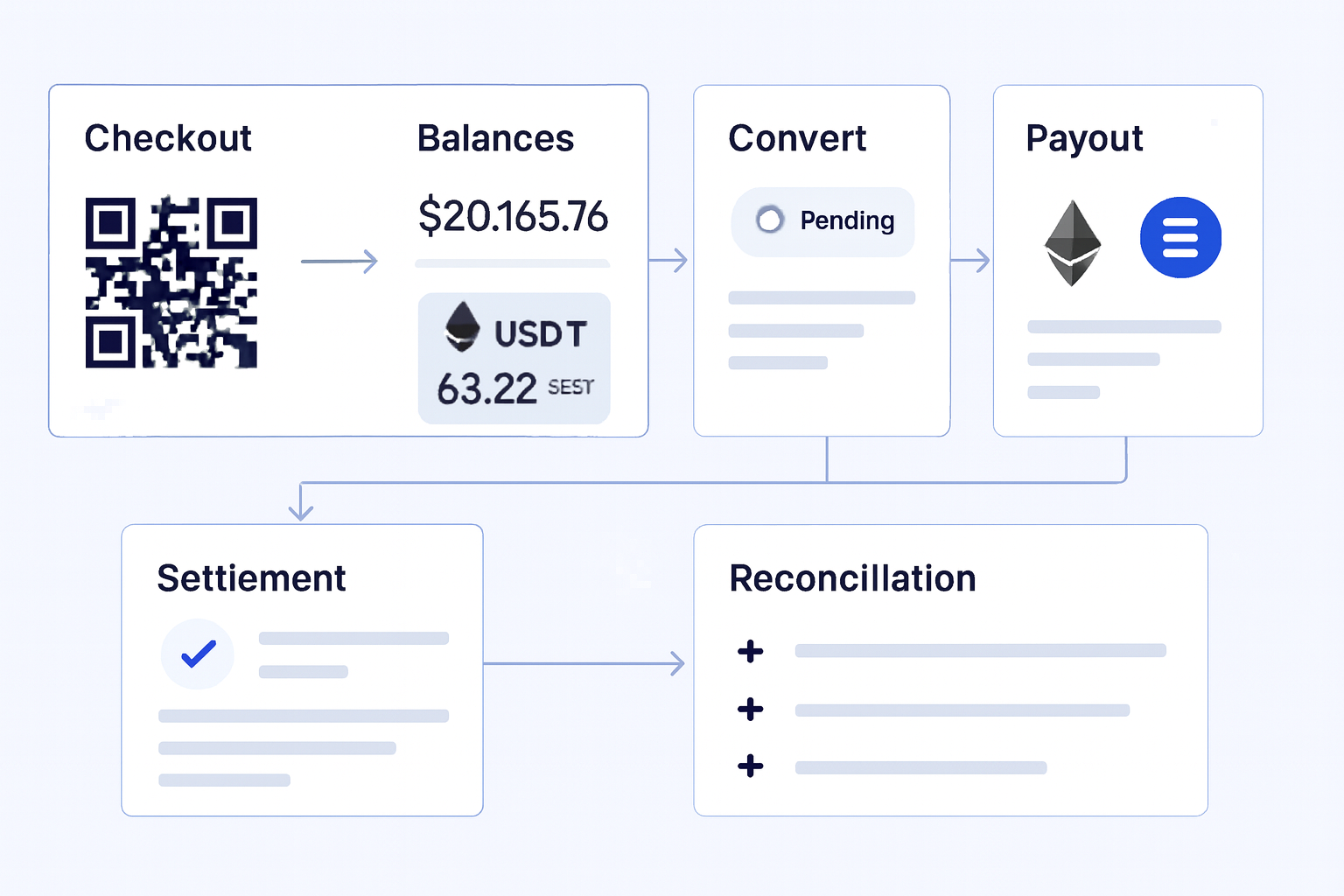
Radom is a practical option for teams that want one platform for crypto payments and related money movement workflows. The published product pages show support for hosted checkout, payment links, invoices, subscriptions, payouts, settlement, balance tracking, and APIs.
For teams that want a hosted payment experience, crypto checkout is the most direct route. For teams evaluating conversion and treasury workflows, crypto convert and crypto on and off ramp are relevant next steps.
Radom also routes buyers toward docs when they want to evaluate integration details first. If your team needs to assess implementation before commercial review, use the documentation.
Best fit by buyer type
Payments teams
Look for hosted checkout, payment links, invoices, subscriptions, and clear settlement controls. The provider should reduce manual reconciliation and let your team manage the payment lifecycle from one place.
Founders and operators
Prioritise speed to launch, broad payment coverage, and the ability to settle in the asset or currency your business needs. If you are comparing providers for a new revenue channel, pricing and implementation effort matter as much as feature count.
Finance operations teams
Focus on balance management, reporting, conversion, and payout workflows. A provider that only handles acceptance can still leave finance with fragmented settlement and reconciliation work.
Platform operators
For marketplaces, affiliate networks, creator platforms, and similar businesses, the key question is whether the provider can support both incoming payments and outgoing payouts without forcing separate systems.
Developers
Check docs quality, API structure, and how the platform handles payment status updates. If your team wants to evaluate the technical path first, start with Radom docs and then move to sales if the fit is strong.
When to choose Radom
Radom is a strong fit when your business needs more than a basic crypto checkout. It is designed for teams that want to accept crypto payments, manage subscriptions, send invoices, create payment links, and run payouts while keeping control of settlement and reporting.
If you are comparing providers for a recurring-revenue model, start with crypto payments and crypto checkout. If you need to understand how funds move after collection, review conversion workflows and on and off ramp options.
Practical buying checklist
- List the payment flows you need in the next 6 to 12 months.
- Confirm whether the provider supports checkout, billing, invoices, links, and payouts.
- Check whether settlement can stay in crypto or move to fiat when needed.
- Review the docs before committing engineering time.
- Compare pricing and ask sales about higher-volume or more complex requirements.
If you want a platform that covers payment acceptance and adjacent operations in one place, start with Radom pricing and contact sales for a commercial review.
Frequently asked questions
What should I compare in a crypto payment processor?+
Compare payment methods, checkout experience, billing support, settlement options, payout workflows, APIs, docs, and pricing.
Is a crypto payment processor only for checkout?+
No. For many businesses, the real value is in the full workflow around acceptance, settlement, reconciliation, and payouts.
Can Radom support both payments and payouts?+
Yes. The published product pages show support for crypto payments, billing, invoices, payment links, and payouts.
Where should technical teams start?+
Start with documentation if you want to evaluate integration details before speaking with sales.
What if my use case is higher volume or more complex?+
Review pricing and then contact sales for a tailored conversation.
Next step
Compare the product fit, review pricing, and decide whether Radom matches your payment model. If you need to move quickly, begin with crypto payments, then use pricing and contact sales to confirm the right setup.