Best stablecoin payments providers: what buyers should compare
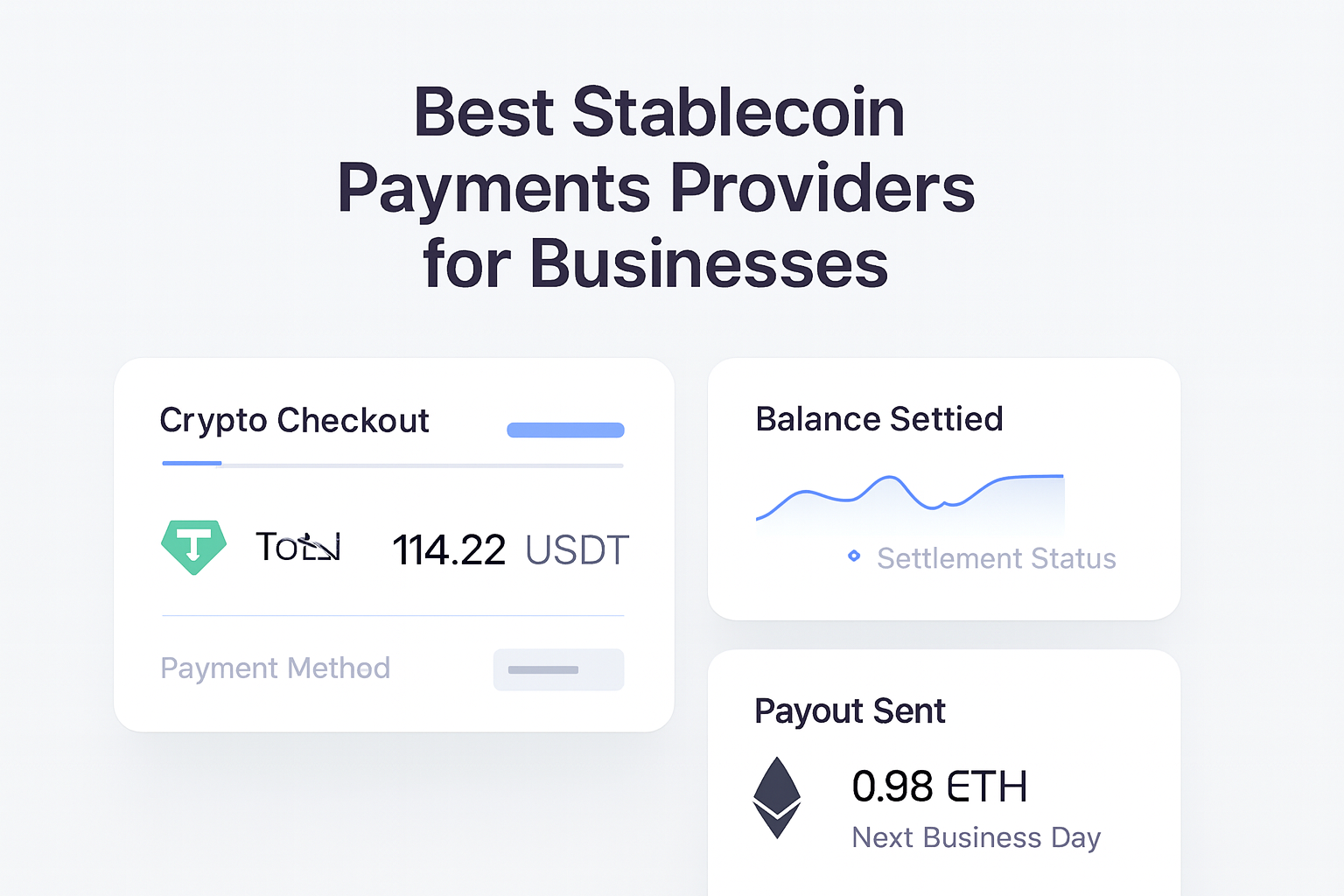
If you are evaluating stablecoin payments providers, the right choice is usually the one that fits your payment flow, settlement needs, and team structure. A provider should help you accept stablecoins, manage balances, move funds where needed, and keep reporting clear for finance and operations.
For most businesses, the decision is not just about accepting a payment. It is about what happens next. Can you settle in crypto or fiat? Can you manage invoices, subscriptions, payment links, or payouts from the same platform? Can your team use APIs when needed, while still keeping a simple operational workflow?
Radom is built for businesses that need crypto payments infrastructure rather than a consumer wallet experience. It supports crypto payments, checkout, billing, subscriptions, invoices, payment links, payouts, and payment APIs from one platform. For teams comparing providers, that matters because it reduces the number of tools involved in acceptance, settlement, and reporting.
Compare Radom pricing if you want to see the commercial model before you decide.
The buying criteria that matter most
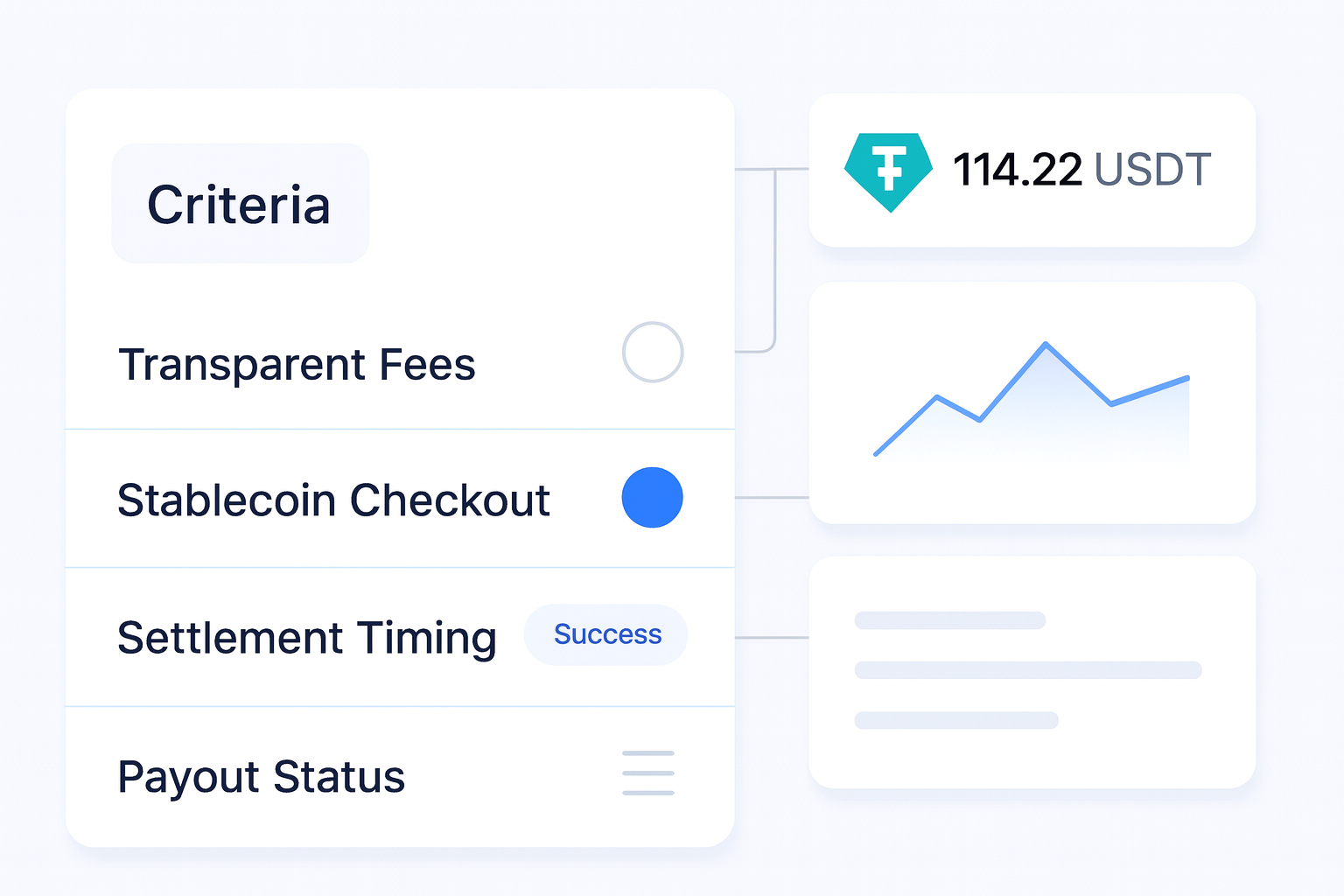
Use these criteria to compare stablecoin payments providers in a practical way.
- Payment coverage. Look for support across checkout, payment links, invoices, subscriptions, and APIs if your business uses more than one collection method.
- Settlement options. Decide whether you need to hold funds in crypto, convert them, or settle to fiat for treasury and accounting purposes.
- Operational control. Finance teams usually need clear balances, reporting, and settlement records, not just a payment success screen.
- Developer fit. If your team ships product workflows, check whether the provider offers documentation and API-led integration paths.
- Pricing clarity. Compare the pricing model against your expected volume and use case, especially if you need multiple products in one stack.
- Business fit. Some providers are better for commerce, others for platforms, billing, or payout-heavy operations.
Radom addresses these needs with hosted checkout, payment links, subscriptions, invoices, payouts, and conversion tools. If your team wants to accept stablecoins and then manage what happens next, the platform is designed for that workflow.
Where Radom fits
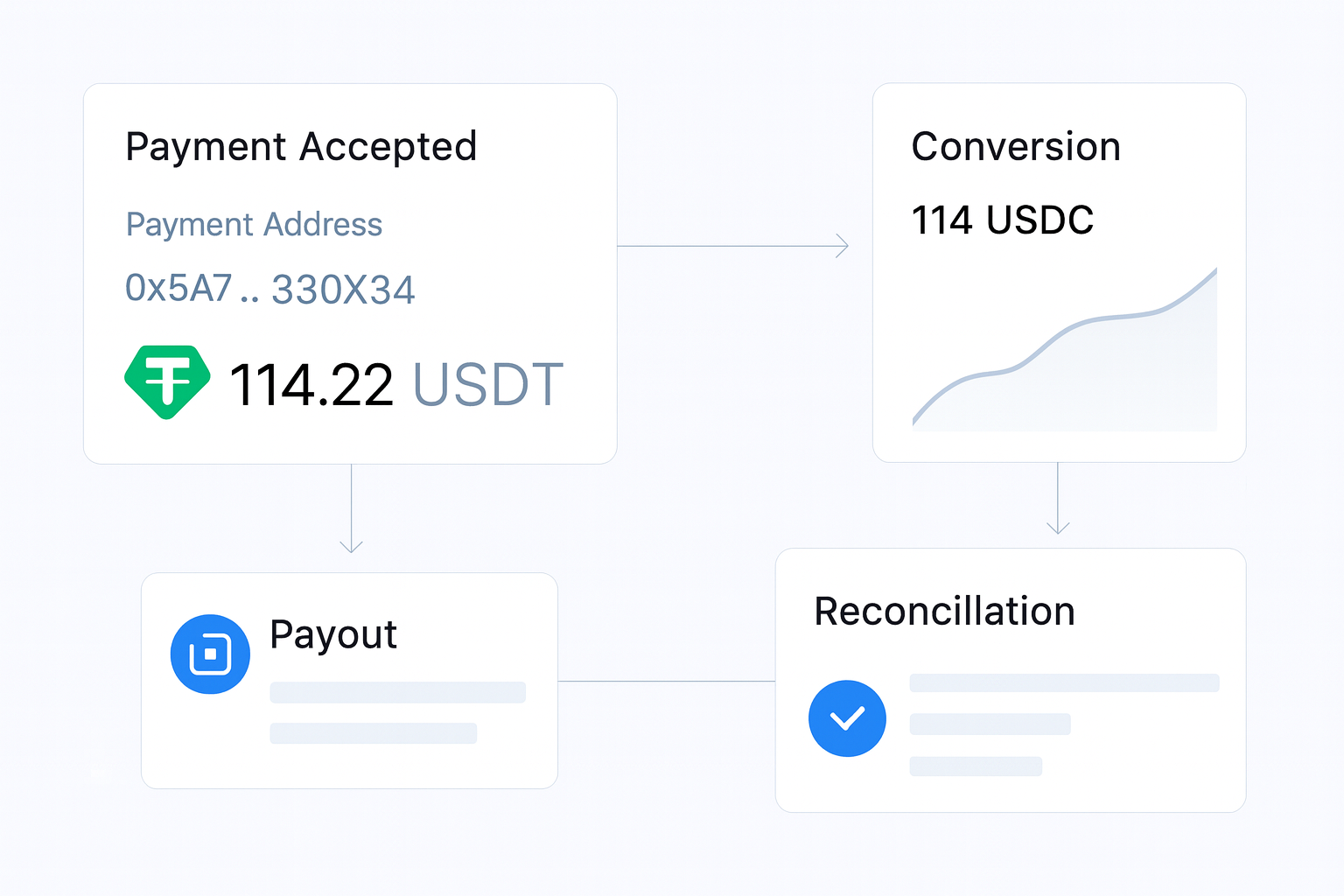
Radom helps businesses accept crypto payments and manage the downstream work around settlement and treasury. The platform supports businesses that want a hosted checkout, lightweight payment collection, recurring billing, invoice workflows, and payout operations from the same account.
It is also relevant for teams that need to move between crypto and fiat, or manage balance conversion as part of payment operations. If your stablecoin flows touch treasury, reconciliation, or cross-border payouts, that broader tooling can be more useful than a single-purpose payment page.
For teams that want to build directly, Radom also offers payment APIs and documentation. If you are evaluating the technical path, start with the Radom documentation.
How to evaluate a provider before you sign up
- Map your payment flow. List whether you need checkout, billing, invoices, payment links, or payouts.
- Define your settlement preference. Decide whether you want to keep funds in crypto or convert for fiat settlement.
- Check reporting needs. Confirm that your finance team can reconcile balances and payment status without manual work.
- Review the integration path. Make sure the provider supports your team’s preferred setup, whether no-code or API-led.
- Test the commercial fit. Compare pricing and, for higher volume or more complex requirements, speak with sales.
Radom removes work by combining payment acceptance, balance management, conversion, and payouts in one platform. That reduces the need to stitch together separate tools for each step of the flow.
Best stablecoin payments providers for different use cases
Different businesses need different capabilities. A SaaS company may care most about subscriptions and invoices. A marketplace may care more about payouts and reconciliation. A platform operator may need both acceptance and settlement controls. A developer-led team may care most about APIs and documentation.
Radom is a strong fit when your business needs more than basic stablecoin acceptance. It is built for teams that want to accept payments, manage recurring revenue, move funds, and settle in crypto or fiat from one platform. If that matches your workflow, you can review crypto payments capabilities or see the hosted crypto checkout.
Pricing and next steps
Radom pricing is positioned as per-transaction pricing with no setup fees or monthly fees on the published pricing page. If you are comparing providers for a standard use case, that gives you a straightforward starting point. If your volume is significant or your workflow is more complex, contact sales for a commercial discussion.
Start with the pricing page, then move to contact sales if you need help matching the platform to your payment flow.
Frequently asked questions
What should I look for in a stablecoin payments provider?+
Look for payment coverage, settlement options, reporting, pricing clarity, and integration support. The best choice is the one that fits your actual business workflow, not just your checkout page.
Can Radom handle more than one payment flow?+
Yes. Radom supports crypto payments, checkout, billing, subscriptions, invoices, payment links, payouts, and payment APIs from one platform.
Can I settle in fiat?+
Radom supports settlement in crypto or fiat. If your workflow depends on conversion or treasury movement, review the crypto convert and crypto on and off ramp pages.
Is Radom only for developers?+
No. Radom supports both no-code and API-led workflows, so it can work for operators, finance teams, and developers.
When should I contact sales?+
Contact sales if you have higher volume, a more complex payment flow, or need help choosing the right setup for your business.