Best USDC payments providers: what buyers should compare
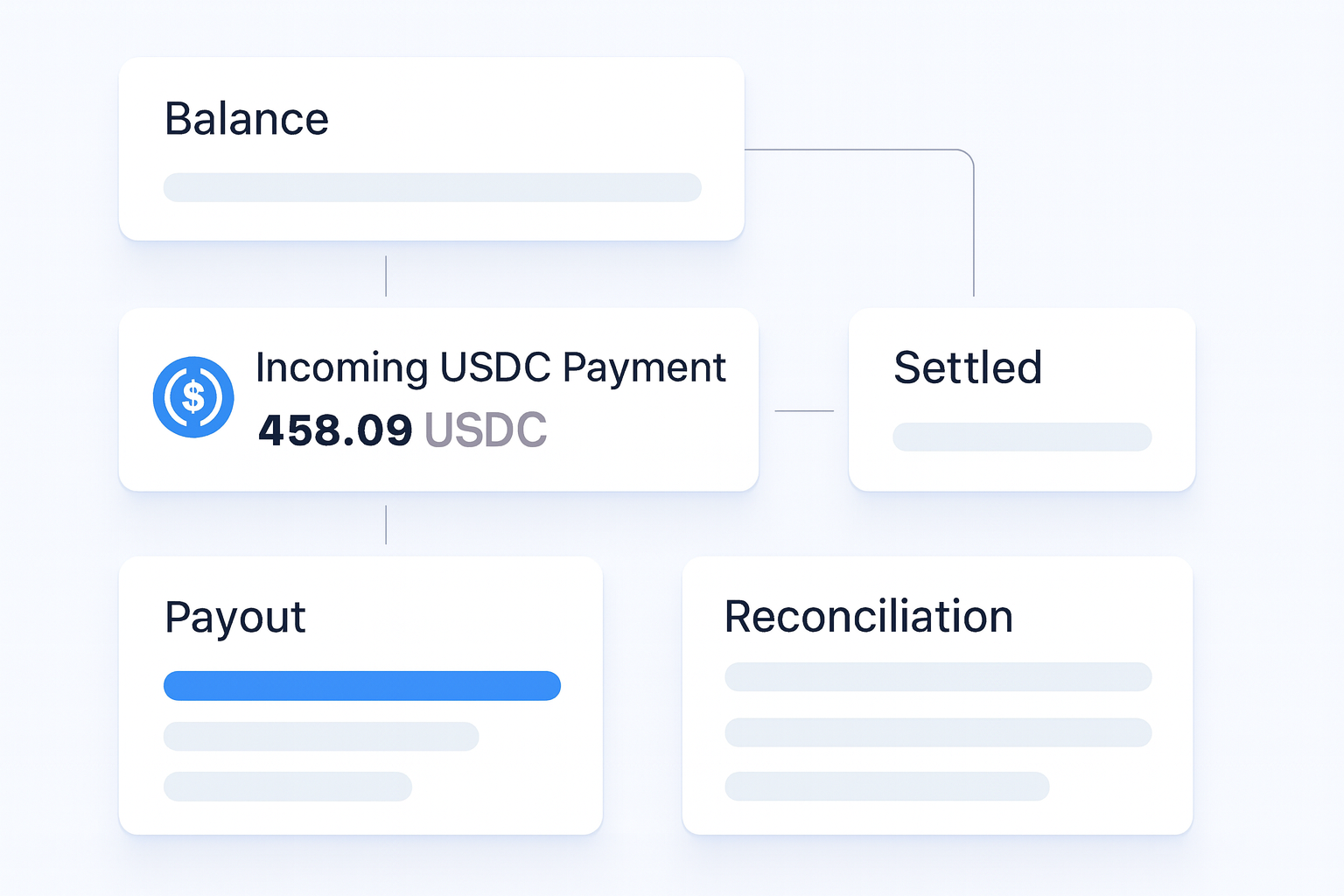
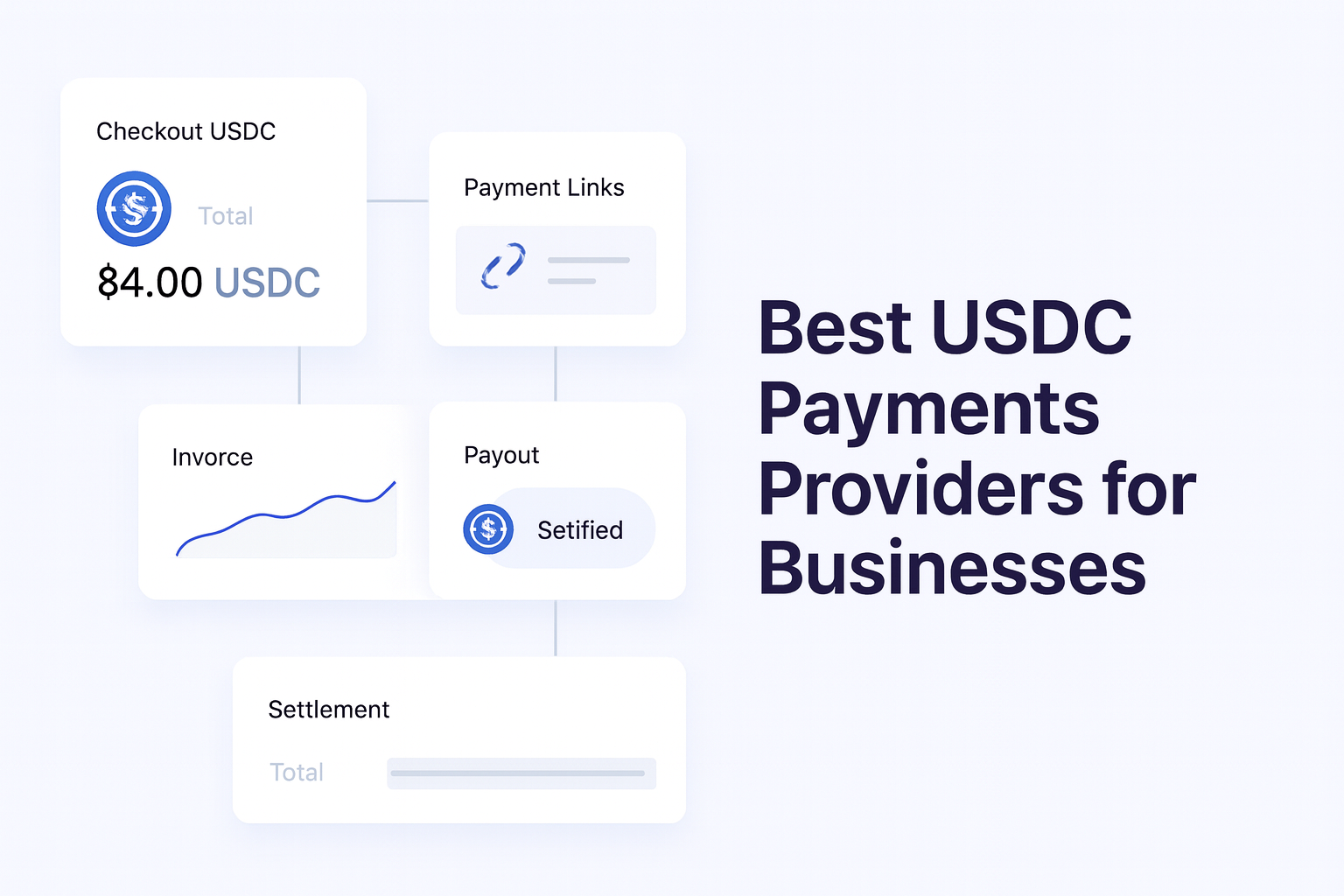
If you are choosing a USDC payments provider, the real question is not only who can accept a token. It is who can support the full payment operation around it: checkout, billing, invoices, payment links, payouts, conversion, settlement, and reporting.
Radom is built for businesses that need crypto payments infrastructure, not a consumer wallet experience. It supports crypto payments, checkout, billing, subscriptions, invoices, payment links, payouts, and payment APIs from one platform. For teams comparing providers, that means one place to handle acceptance and downstream money movement.
For a broader view of product fit, start with crypto payments and pricing.
Buying criteria for USDC payment providers
Use these criteria to compare providers in a way that reflects how your business actually operates.
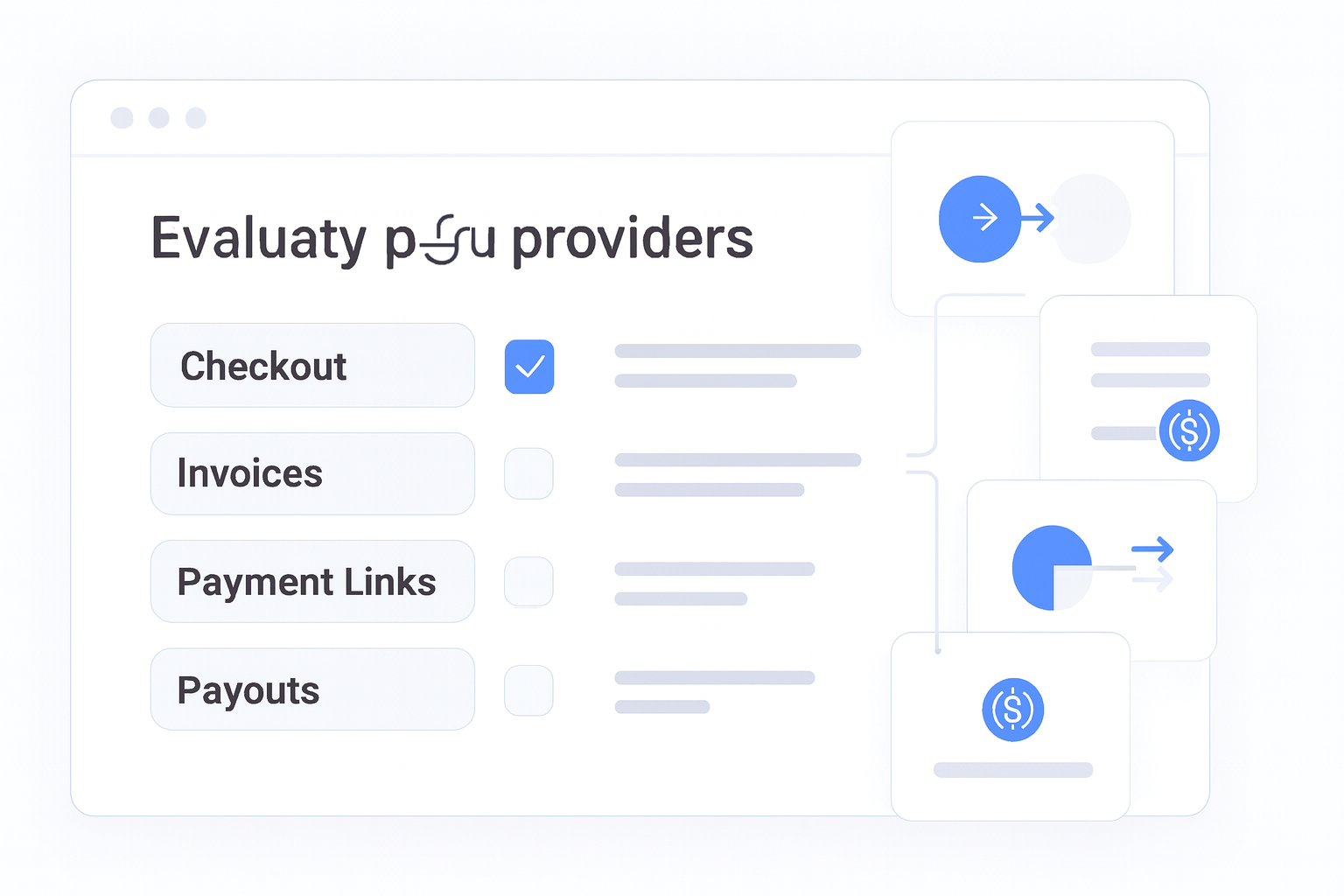
- Payment acceptance options. Can the provider support hosted checkout, embedded flows, payment links, invoices, subscriptions, or API-led flows?
- Settlement control. Can you receive funds to a balance, convert assets, or withdraw to your wallet as needed?
- Operational fit. Does the platform help with reconciliation, reporting, and balance management, or only the initial payment?
- Business model coverage. Can it support e-commerce, SaaS, marketplaces, gaming platforms, affiliate networks, and other digital businesses?
- Developer workflow. Are APIs and docs available for teams that want to automate payment operations?
- Pricing clarity. Is the pricing structure simple enough to model before you commit?
Where Radom fits
Radom is a strong fit for teams that want to accept USDC as part of a wider business payment stack. The platform supports hosted crypto checkout, payment links, invoices, subscriptions, payouts, and APIs. It is designed for businesses that need to manage balances and settlement, not just collect a payment once.
That makes Radom useful for operators who want a single platform for acceptance and money movement. If your use case includes conversion or settlement into another asset or fiat rail, Radom also supports crypto conversion and crypto on and off ramp workflows where available.
Relevant product pages include crypto checkout, crypto convert, and crypto on and off ramp.
How to choose the right provider
- Map your payment flow. Decide whether you need checkout, billing, invoices, payment links, or API-only acceptance.
- Define settlement needs. Work out whether you want to keep funds in crypto, convert them, or move them out to another rail.
- Check operational workload. Look at how much manual work the provider leaves for finance and operations teams.
- Review developer requirements. If your team needs automation, confirm API and documentation quality before you commit.
- Test the pricing model. Compare the provider’s pricing against your expected volume and payment mix, then speak to sales if your needs are more complex.
Where Radom removes work
Radom reduces the number of tools you need to stitch together for crypto payments operations. Instead of using one service for checkout, another for invoicing, and another for payouts, you can keep the workflow in one platform.
That matters for finance teams that need cleaner reconciliation and for developers who want fewer moving parts. It also helps platform operators that run recurring revenue, global payouts, or mixed payment flows across multiple business lines.
If you want to see the payment flow in practice, review the crypto payments platform and the pricing page, then contact sales for higher-volume or more specific requirements.
Best fit by use case
SaaS and subscriptions: Radom supports crypto billing and subscriptions for recurring revenue models.
Finance teams and agencies: Radom supports crypto invoicing and balance management workflows.
Marketplaces and platforms: Radom supports payouts and payment APIs for businesses that move money at scale.
Affiliate, creator, iGaming, and adult platforms: Radom supports payout-heavy workflows that need global money movement and clearer settlement operations.
Developers: Radom offers documentation for teams that want programmable payment infrastructure. See Radom docs.
Pricing and next steps
Radom uses per-transaction pricing, with no setup fees or monthly fees on the standard pricing page. If you are comparing providers on cost, start there first. If you have higher volume or a more specific operational requirement, speak to sales so the commercial fit is clear before you integrate.
Review pricing, then contact sales if you want help matching the product to your payment flow.
Frequently asked questions
What should I look for in a USDC payments provider?+
Look at acceptance methods, settlement options, operational reporting, API support, and pricing. The best provider for a business is usually the one that fits the full money movement workflow, not just the checkout.
Can Radom support more than one payment flow?+
Yes. Radom supports crypto payments, checkout, billing, invoices, payment links, payouts, and APIs from one platform.
Does Radom only support USDC?+
No. Radom’s website states support for 12+ cryptocurrencies across 10+ blockchains. USDC can be part of a broader crypto payments setup.
Can Radom help with settlement and conversion?+
Yes. Radom supports settlement in crypto or fiat, and also offers crypto conversion and crypto on and off ramp workflows where available.
Is Radom a bank?+
No. Radom should be treated as payments and money movement infrastructure for businesses, not as a bank.
Choose the provider that fits the whole payment operation
If you only need a single checkout page, many providers may look similar. If you need acceptance, settlement, conversion, invoicing, and payouts in one workflow, the differences become more important. Radom is built for that broader operating layer.
Contact sales to discuss your use case or review crypto checkout if you want to start with hosted payment flows.