Bitcoin payments integration for business teams
If you are evaluating bitcoin payments integration, the main question is not whether customers can send bitcoin. It is how your team will accept payments, track status, reconcile balances, and settle funds without building every piece from scratch.
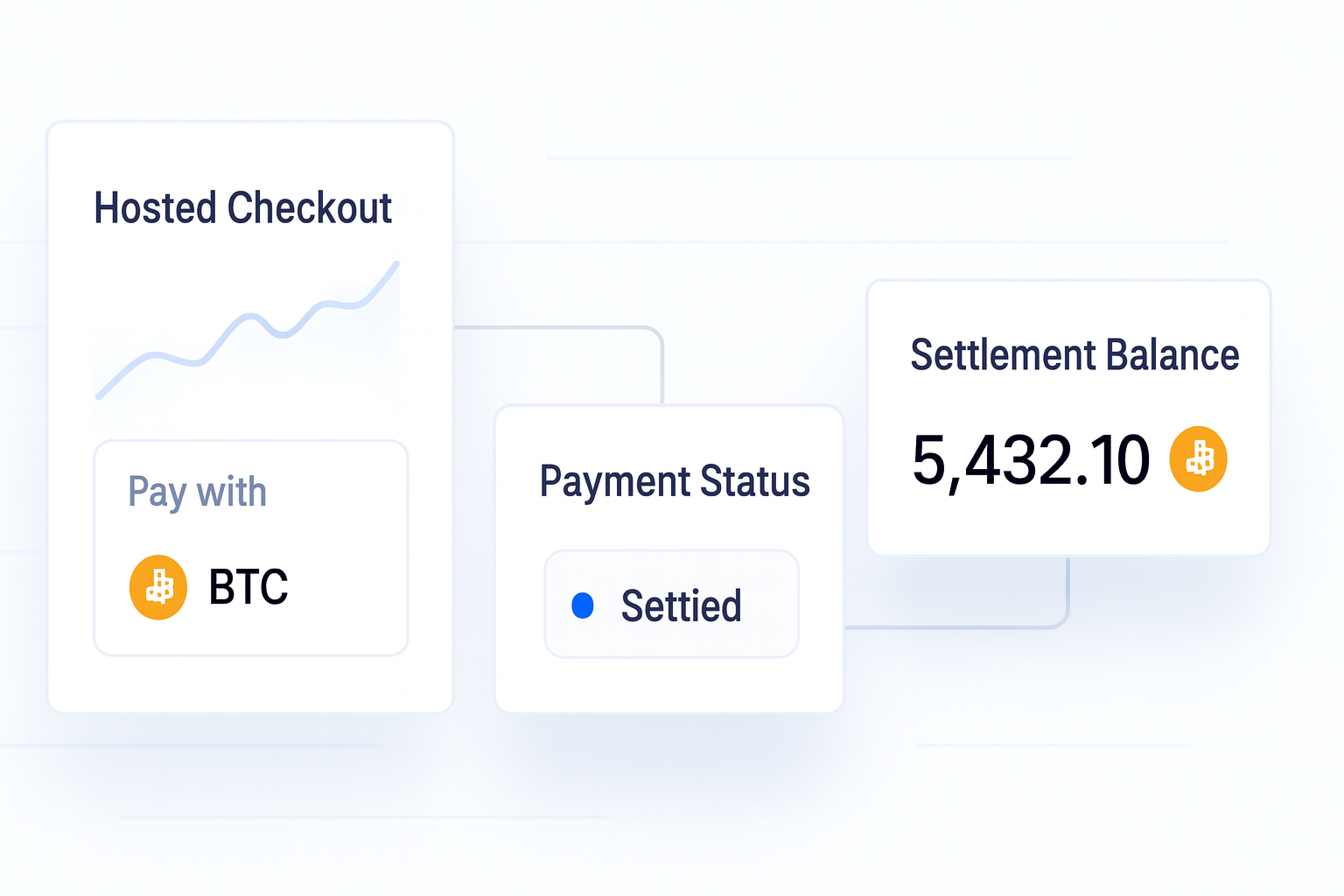
Radom is built for businesses that want to accept crypto payments through hosted checkout, payment links, invoices, subscriptions, and APIs. It also supports settlement in crypto or fiat, plus balance tracking and reporting. For teams comparing implementation options, that means you can choose the flow that fits your product and operations instead of forcing every use case through one checkout path.
Start by testing the available payment flows in the crypto checkout product or review the wider crypto payments platform if you need more than one acceptance method.
When bitcoin payments make sense
Bitcoin payments can work well for businesses that sell globally, serve crypto-native customers, or need a payment method that does not depend on card rails. Common use cases include SaaS, e-commerce, marketplaces, gaming platforms, affiliate networks, creator platforms, and subscription businesses.
They are also useful when a team wants a clearer operational view of payment status and settlement, especially if the business needs to manage treasury, reporting, or conversion after payment.
A practical integration path
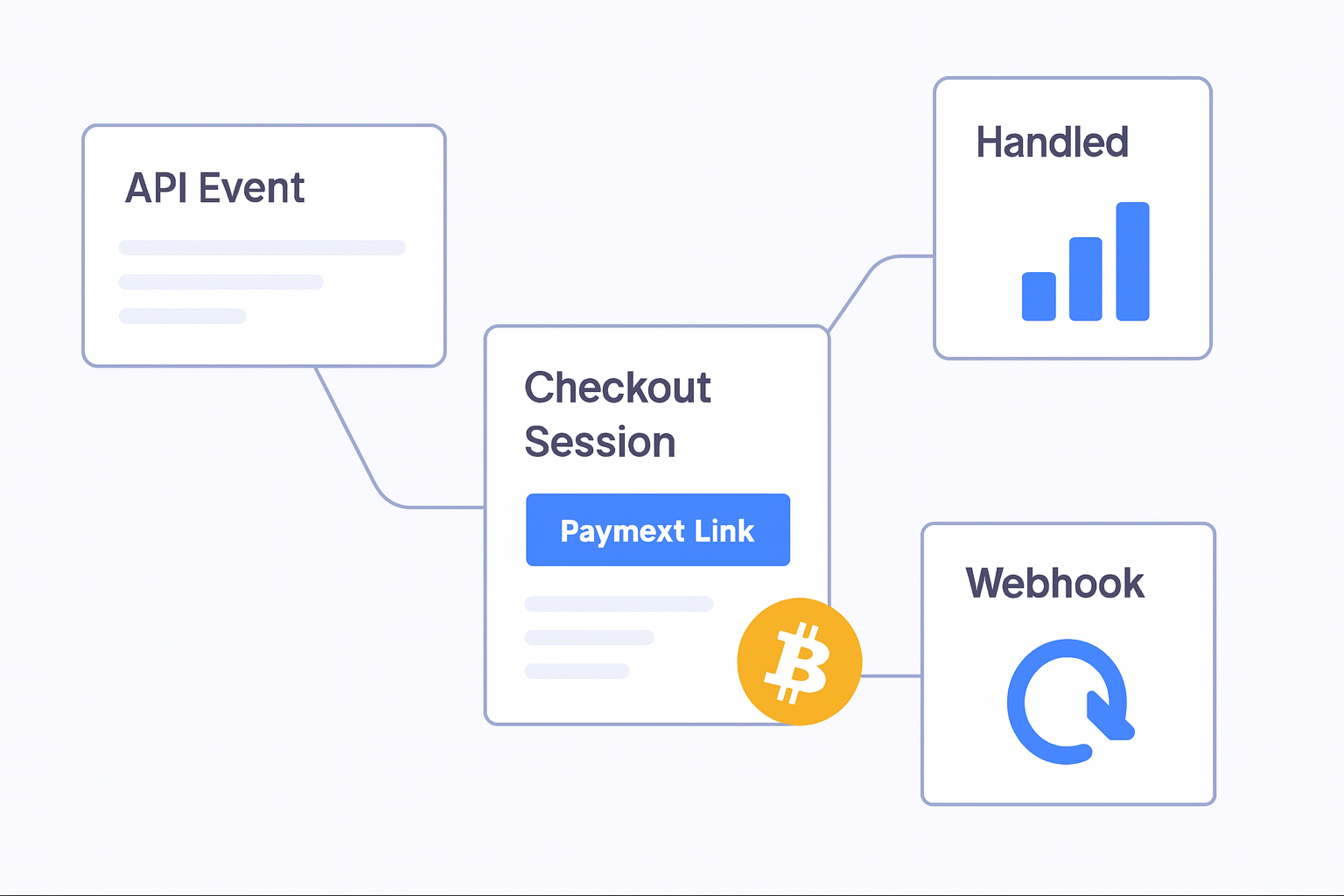
- Choose the payment flow. Use hosted checkout for a managed payment page, payment links for lightweight collection, invoices for finance-led workflows, subscriptions for recurring billing, or APIs if your product team wants a custom experience.
- Decide where funds should land. Radom supports settlement in crypto or fiat, so your team can decide whether to hold assets or move them into another balance workflow.
- Map the operational steps. Define what should happen after a payment is received, including balance tracking, reconciliation, reporting, and any conversion or withdrawal workflow your finance team needs.
- Implement the customer experience. Use the hosted flow if you want to move quickly, or integrate through APIs if you need more control over the payment journey.
- Test end to end. Validate payment creation, status updates, settlement handling, and the internal handoff to finance or operations before launch.
Where Radom removes work
Most bitcoin payment integrations fail in the same places: payment status tracking, settlement handling, and operational cleanup after funds arrive. Radom reduces that work by giving your team one platform for acceptance, balance management, and settlement.
For business operators, that means less time stitching together separate tools for checkout, invoicing, billing, and payouts. For developers, it means you can use APIs or no-code tools depending on how much of the flow you want to own. For finance teams, it means a cleaner path to reconciliation and reporting.
If your team also needs to move between crypto and fiat, review crypto convert and crypto on and off ramp workflows alongside the payment setup.
Implementation choices by team type
Payments teams usually want the fastest route to launch with clear control over status and settlement. Hosted checkout and payment links are the most direct starting points.
Finance operations teams usually care about reconciliation, reporting, and how funds move after payment. Invoices, subscriptions, and settlement controls matter most here.
Founders and operators often want a simple way to add bitcoin as a payment method without committing to a large build. A hosted flow is often the quickest way to test demand.
Developers usually need API-led payment creation, webhook-driven status handling, and a clear path from payment acceptance to downstream operations. Start with the docs if that is your path.
For technical teams, the best next step is to review the Radom documentation and test the flow in the dashboard.
What to check before launch
- Which bitcoin payment flow fits your customer journey.
- Whether you need hosted checkout, invoices, links, subscriptions, or APIs.
- How payment status will be handled internally.
- Where funds should settle and who owns reconciliation.
- Whether your team also needs conversion, fiat settlement, or payout workflows.
If your use case is volume-sensitive or requires a broader rollout, speak with the team through contact sales. If you want to compare entry points first, review pricing.
Frequently asked questions
Can I accept bitcoin payments without building everything myself?+
Yes. Radom supports hosted checkout, payment links, invoices, subscriptions, and APIs, so teams can choose the level of implementation they need.
Can bitcoin payments settle in fiat?+
Radom supports settlement in crypto or fiat. If your workflow also needs conversion between assets or movement into fiat rails, review the conversion and on and off ramp products.
Is Radom only for developers?+
No. Radom is built for businesses and platform operators. Developers can integrate through APIs, but teams can also use no-code or hosted tools.
What should I use first for a bitcoin payments test?+
Hosted checkout is usually the fastest starting point for a live test. Teams that need lightweight collection may prefer payment links, while finance-led workflows may start with invoices.
Does this page cover every bitcoin payment requirement?+
No. Specific rail availability, settlement options, and regional support should be confirmed during implementation review.