What blockchain deposit addresses are for
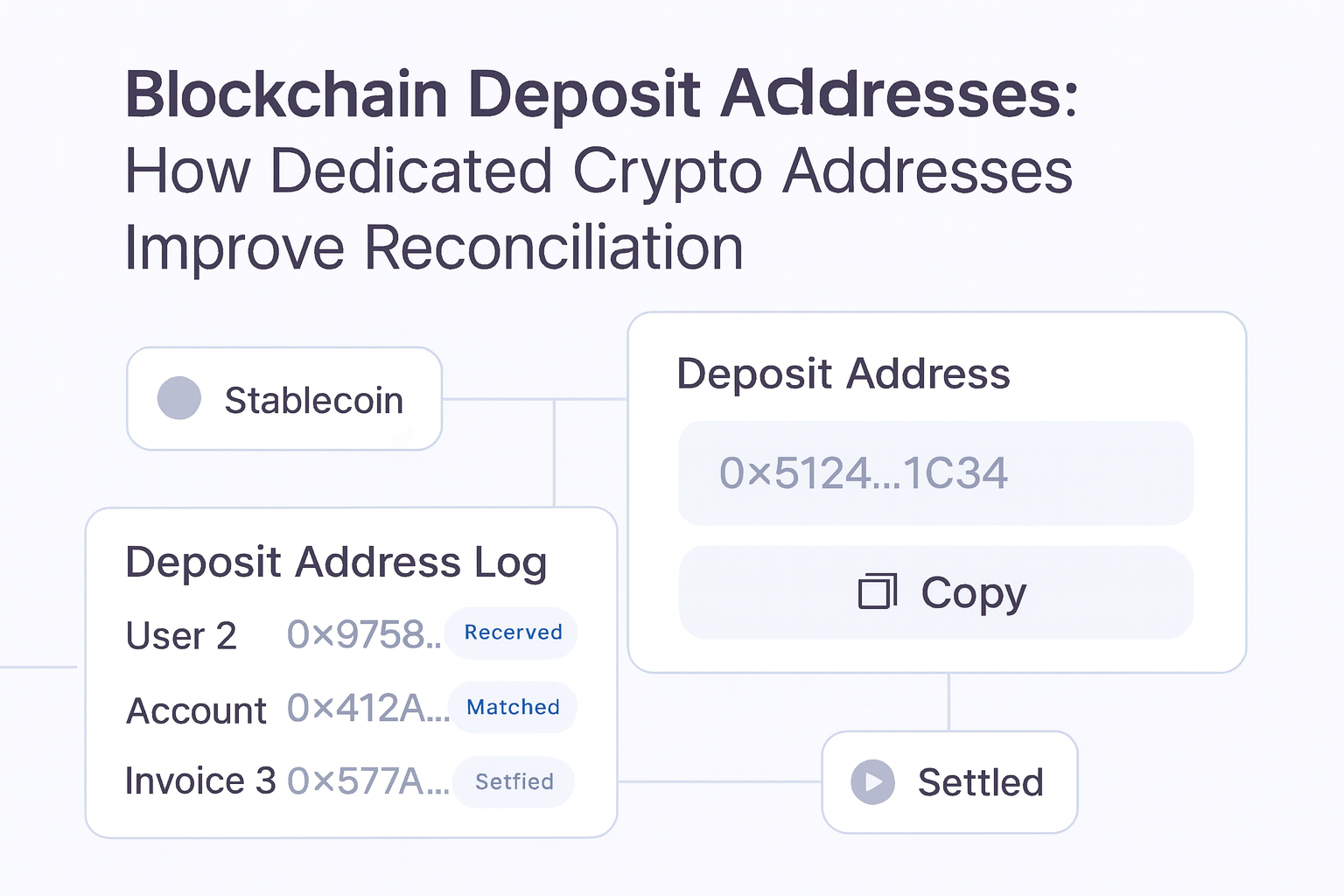
Dedicated blockchain deposit addresses let you assign a unique crypto address to a user, account, invoice, or workflow. That gives your team a cleaner way to track incoming deposits, reduce manual matching, and support repeat payments without asking customers to reuse the same wallet instructions every time.
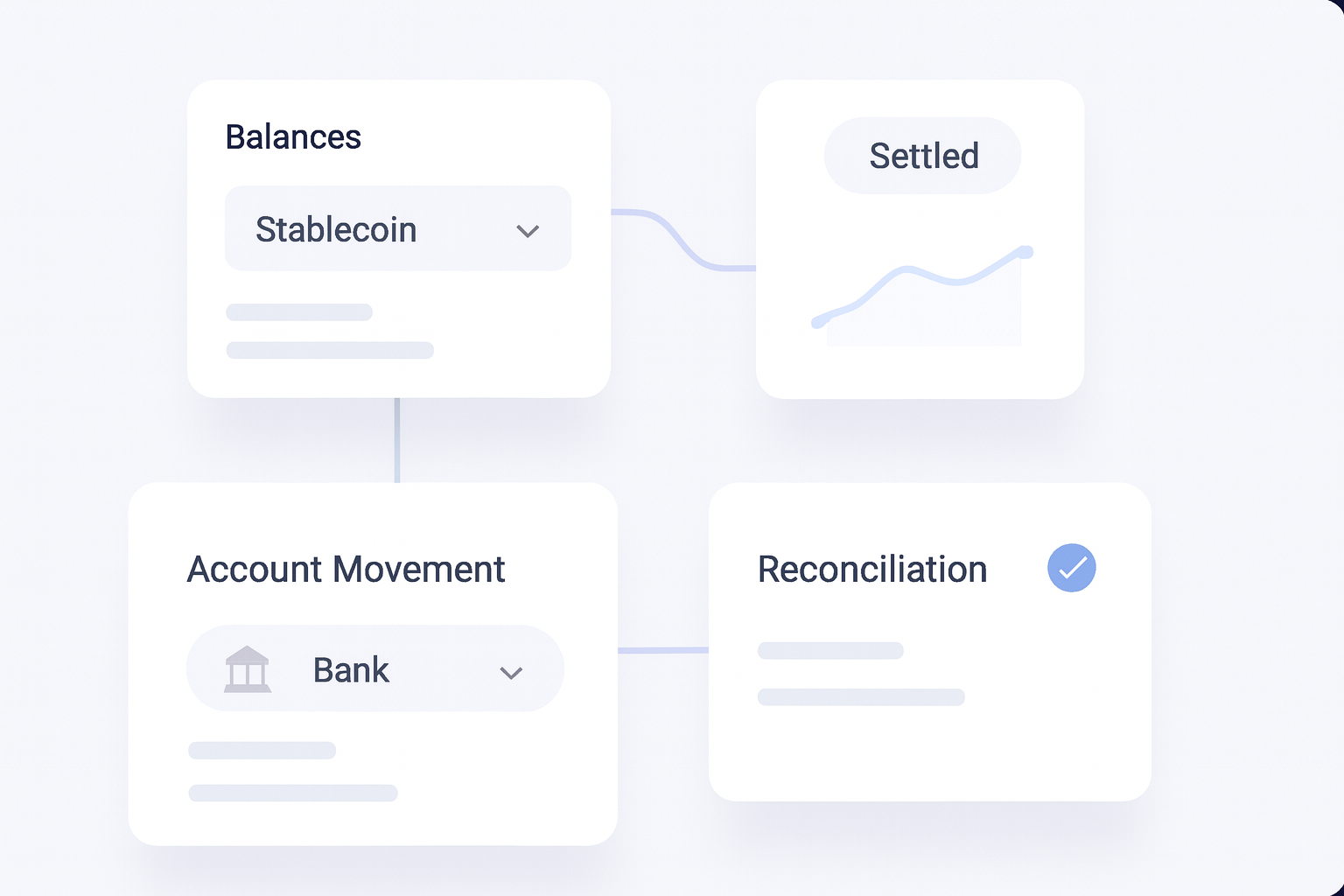
For operators, the main value is not the address itself. It is the accounting structure around it. When each deposit can be tied back to a specific customer or workflow, reconciliation becomes faster and settlement decisions are easier to manage.
If you also need hosted payment flows or direct acceptance tools, Radom supports crypto payments alongside deposit address workflows.
When to use dedicated deposit addresses
Dedicated deposit addresses are useful when you need one of the following:
- Repeat top-ups for customer accounts or balances
- Invoice-level payment tracking
- Cleaner reconciliation for finance teams
- Wallet-based payment experiences for users
- Automated routing of future deposits to the right account
They are especially relevant for platforms, marketplaces, affiliate programs, creator businesses, and other internet businesses that handle many small or medium-value payments.
How dedicated blockchain deposit addresses work
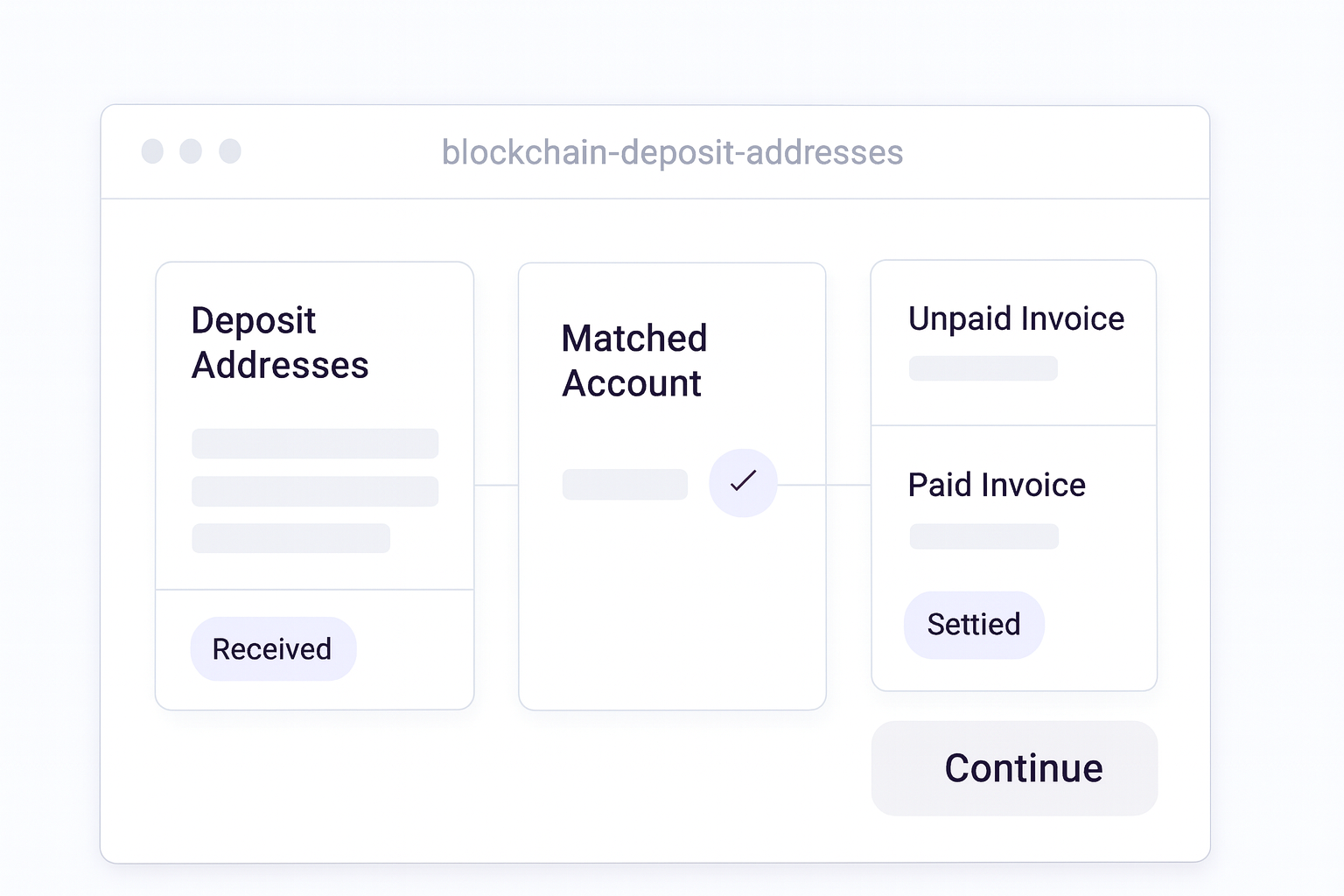
- Create a deposit channel for a user, account, or workflow.
- Assign a dedicated address to that record.
- Share the address with the payer or surface it inside your product flow.
- Monitor incoming deposits and match them to the right account automatically.
- Convert incoming funds into stablecoins, other crypto assets, or fiat where supported.
- Use the matched payment record for settlement, reporting, or treasury operations.
Radom supports API-based creation of deposit channels, address-to-user mapping, and automatic routing of future deposits into the right account. That reduces manual handling for teams that do not want to build this logic from scratch.
Where Radom removes work
Radom is built for operators that want deposit tracking to fit into a broader payments stack. Instead of managing addresses in one system and reconciliation in another, you can keep collection, tracking, and settlement closer together.
- Assign addresses by user, account, or workflow
- Link future deposits to the right record automatically
- Convert incoming crypto into other digital assets or fiat where supported
- Support repeat top-ups and account funding without rebuilding the flow each time
For teams that also need named fiat collection accounts, see virtual accounts.
How to evaluate a deposit address workflow
Before you choose a provider, check whether the workflow supports your actual operations:
- Can you assign addresses at the user, account, or invoice level?
- Can you map deposits back to internal IDs?
- Can you automate reconciliation and reporting?
- Can you convert received funds where supported?
- Does the workflow fit your finance team as well as your developers?
If you need programmable payment infrastructure, review the Radom documentation for integration details.
Practical use cases
Dedicated deposit addresses are commonly used for customer account funding, wallet-based top-ups, invoice collection, and repeat deposits across platform workflows. They are also useful for businesses that need a clear record of which payer funded which account, especially when many transactions arrive in a short period of time.
For recurring payment models, you may also want to compare crypto billing and crypto invoicing to see whether a subscription or invoice flow is a better fit.
Getting started
If you need dedicated blockchain deposit addresses for reconciliation, account-level tracking, or repeat payments, Radom can help you build the workflow around them. Start with the product page, review the docs, or speak with sales if you are planning a higher-volume implementation.
View deposit addresses or contact sales to discuss your setup.
Frequently asked questions
What is a blockchain deposit address?+
A blockchain deposit address is a dedicated crypto address used to receive funds for a specific user, account, invoice, or workflow.
Why use a dedicated address instead of one shared wallet?+
Dedicated addresses make it easier to match deposits to the right record, reduce manual reconciliation, and support cleaner reporting.
Can deposit addresses be used for repeat payments?+
Yes. Radom supports dedicated addresses for repeat payments, account funding, and wallet-based payment experiences.
Can incoming deposits be converted?+
Radom supports conversion of incoming deposits into stablecoins, other crypto assets, or fiat where supported.
Is this only for developers?+
No. The workflow is useful for finance, operations, and payments teams as well as developers building payment infrastructure.