Cross-border eCommerce payments for online stores

Learn how to evaluate cross-border eCommerce payments, settlement, reconciliation, and the right checkout setup for online stores.
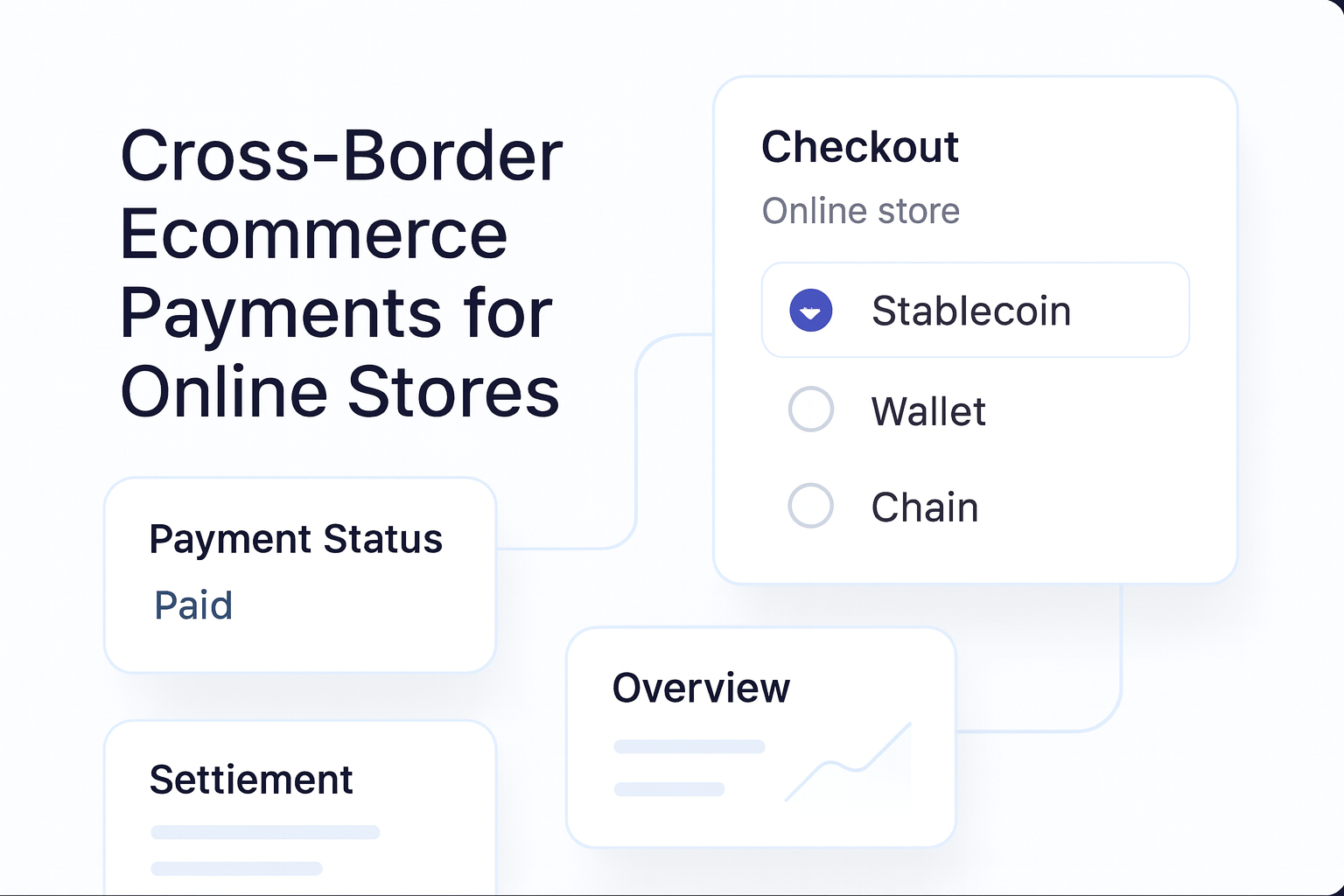
Cross-border eCommerce payments for online stores guide hero visual
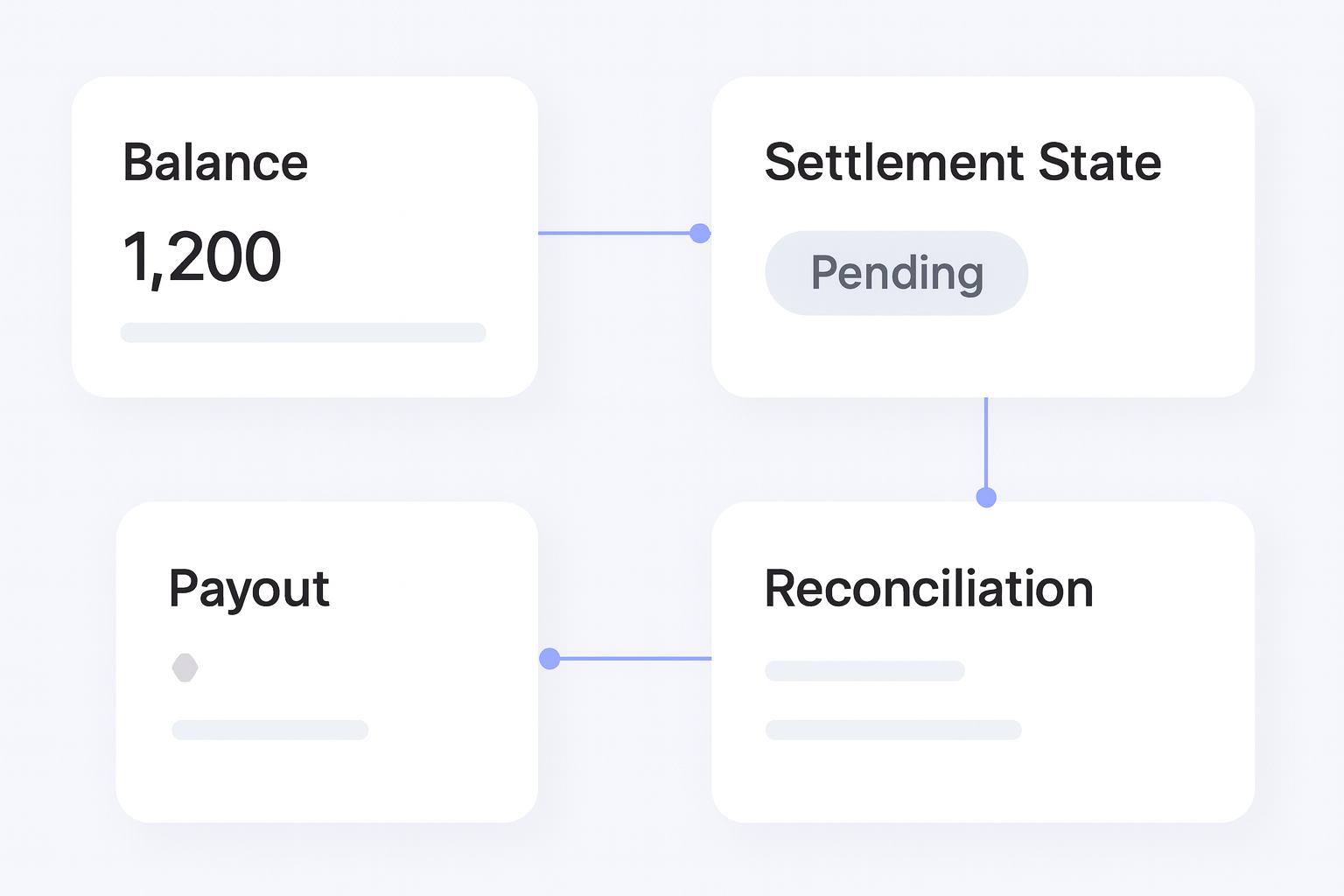
Map the operating modelDocument ownership across acceptance, conversion, settlement, reconciliation, and exceptions.
Test controls before launchValidate onboarding, transaction monitoring, reporting, failure handling, and fallback paths.
Choose the relevant railMatch the integration and settlement path to the use case, currencies, jurisdictions, and risk controls.

Evaluating this operating model? Review the relevant product capability and confirm coverage, controls, and implementation details with the Radom team.

What cross-border eCommerce payments mean for an online store

Cross-border eCommerce payments are the payment flows an online store uses when buyers, currencies, and settlement accounts are not all in the same place. The real job is not just taking money. It is keeping checkout clear, confirming payment status, and deciding how funds should settle, convert, or move onward.

That matters because cross-border commerce is not only a checkout problem. Independent guidance from BlueSnap and Discover Global Network both point to the need for payment setups that work across regions and support growth, while the European Payments Council highlights checkout experience and mobile readiness as part of cross-border ecommerce planning. BlueSnap and Discover Global Network.

Who this is for

This guide is for payments teams, founders, finance operations teams, platform operators, affiliate and iGaming operators, creator and subscription platforms, and developers evaluating crypto payment infrastructure for online commerce.

It is most useful if your team needs to accept crypto or stablecoin payments, keep the checkout experience understandable, and manage the post-payment work without building every step from scratch.

When this setup works well

Cross-border payment setups work best when there is a clear operational reason to support digital assets or stablecoins. Common cases include international buyers with different payment preferences, teams that want a hosted checkout instead of a custom build, and finance teams that need cleaner settlement and reconciliation than a patchwork of tools can provide.

  • The buyer base is international and payment preferences vary by region.
  • The team needs a hosted checkout or lightweight payment flow instead of a custom build.
  • Finance wants clearer settlement and reconciliation than a patchwork of point tools can provide.
  • The business may need recurring billing, invoices, or payment links alongside checkout.

When this approach does not fit

Cross-border crypto payment flows are not a fit for every store. If customers only pay by card, if your compliance model does not allow digital asset acceptance, or if your team does not want to manage settlement and conversion decisions, a different payments stack may be simpler.

It is also a poor fit if the business expects a bank-like deposit account. A payments platform should be evaluated as financial infrastructure for businesses, not as a bank.

How to compare providers

When you compare providers, focus on operational fit rather than headline features alone. The main questions are whether the provider can support the checkout experience you need, how funds are settled, how much manual reconciliation remains, and whether the integration path matches your team’s resources.

Evaluation areaWhat to checkWhy it matters
Checkout experienceHosted checkout, branded payment page, payment links, or API-led flowDirectly affects conversion and implementation effort
Settlement optionsWhether funds can be kept, converted, or withdrawn in a way finance can manageAffects treasury, reporting, and timing
ReconciliationPayment status visibility, reporting, and dashboard workflowsReduces manual finance work
Product breadthPayments only versus payments plus billing, invoices, conversion, and payoutsDetermines whether you need separate tools
Integration pathNo-code tools, docs, APIs, and how much engineering time is requiredImpacts speed to launch

Implementation notes for online stores

A sensible rollout usually starts with the customer journey, then moves to finance and operations.

  1. Choose the payment surface that matches the sale, such as hosted checkout or payment links.
  2. Decide which assets and settlement paths finance is willing to support.
  3. Map payment statuses to your order and reconciliation process.
  4. Test how refunds, failed payments, and partial completion will be handled in your internal workflow.
  5. Use APIs and docs if the store needs automation or deeper integration with existing systems.

The ecommerce page says Radom supports checkout, payment links, invoices, and integrations built for commerce teams. The checkout page also describes a hosted payment flow with branding controls, while payment links are positioned as a no-code way to collect payment quickly. Ecommerce use case and hosted checkout.

Risks and operational trade-offs

The main risks are operational, not just technical. Crypto payment acceptance can add treasury decisions, asset handling choices, and reconciliation work if the process is not designed carefully.

  • Settlement complexity: Teams need a clear policy for when to convert and when to hold balances.
  • Reconciliation gaps: Payment status must map cleanly to orders, invoices, or subscriptions.
  • Compliance boundaries: The business must still follow its own onboarding, risk, and reporting controls.
  • Customer support load: International buyers may need clearer payment instructions than domestic card flows.

Cross-border payment research from the European Payments Council also points to mobile experience and other checkout details as important considerations in ecommerce. That is a reminder that payment design is an operations problem as much as a rails problem.

Where a payments platform can remove work

If a team decides to use a platform like Radom, the main savings are in setup and operations. The public product pages describe a single platform for payments, billing, conversion, and settlement, plus hosted checkout and no-code links for lighter workflows. That can reduce the need to stitch together separate crypto tools.

This is most useful for teams that want a branded payment flow, a faster launch path, and one place to manage payment status and post-payment operations.

Next steps

If you are deciding whether to support cross-border crypto or stablecoin payments, write down three things before you pick a provider: the payment surface you need, the settlement policy you want finance to own, and the amount of engineering time you can spend.

If you already know the flow you want, review the docs, compare pricing, or contact sales for higher-volume or more specific requirements. For lighter collection flows, payment links can be the quickest starting point.

FAQs

Are cross-border eCommerce payments only for crypto-native stores?

No. They are relevant to any online store that wants to accept digital assets or stablecoins for international buyers and manage settlement deliberately.

What matters more, checkout or settlement?

Both matter, but settlement usually creates the bigger operational difference because it affects treasury, reporting, and reconciliation.

Do payment links work for cross-border sales?

Yes, if the sales motion is lightweight and the team wants a quick no-code way to collect payment without building a full flow.

When should a store use hosted checkout instead of a payment link?

Hosted checkout is better when you want a more branded, structured payment page and a fuller customer experience.

Can a provider replace all internal finance work?

No. A payments platform can reduce manual work, but your team still needs policies for settlement, reporting, and compliance.

What is the best first step for a team evaluating a payments platform?

Start with the product surface that matches your use case, then review pricing and integration docs before deciding whether to contact sales.

Sources

  1. bluesnap.com/how-cross-border-payments-work-in-ecommerce
  2. insights.discoverglobalnetwork.com/insights/how-smbs-use-cross-border-payments-for-global-growth
  3. europeanpaymentscouncil.eu/sites/default/files/inline-files/cross-border-payments-and-ecommerce-report-20202021.pdf

Evaluate Use Cases

Review the infrastructure, integration requirements, operational controls, and available settlement paths for your use case.