Cross-border payments for platforms that need control
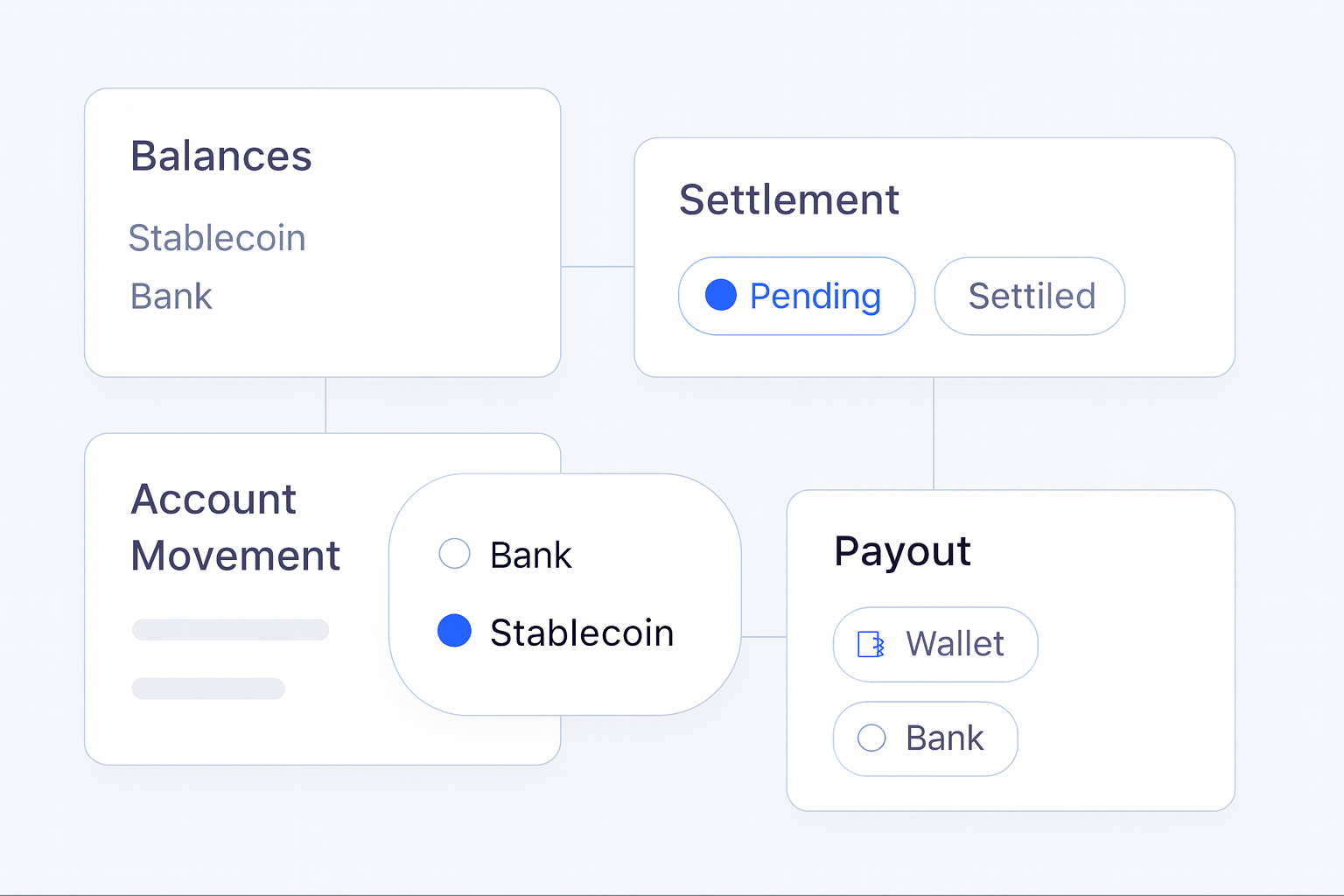
If your platform pays people in multiple countries, the main problem is usually not sending money. It is managing the full path from collection to conversion, settlement, and payout without adding manual work at every step. Radom is built for that operating model. It helps businesses accept, move, and settle money across crypto, stablecoins, open banking, and fiat rails from one platform.
For teams handling affiliate payments, creator payouts, marketplace settlement, contractor payments, or other global workflows, the goal is simple: keep payment operations predictable, reduce reconciliation work, and give finance and operations a clearer view of balances and status.
Contact sales if you want to discuss a payout or settlement setup for your platform.
What platform teams usually need
Cross-border payment operations tend to break down into the same set of jobs:
- Collect funds from customers or counterparties.
- Convert balances into the currency or asset the business wants to hold.
- Settle across crypto or fiat rails where supported.
- Send payouts to many recipients in different regions.
- Keep clean records for finance, operations, and reconciliation.
Radom supports payment acceptance, payouts, conversion, and settlement from one platform, which makes it easier to keep those steps connected.
How Radom fits into the workflow
Radom is not positioned as a consumer wallet or a retail bank account. It is practical financial infrastructure for businesses that need to manage money movement across rails.
- Receive funds. Use crypto payments, payment links, invoices, open banking flows, or virtual accounts where available.
- Convert when needed. Move between supported digital assets, stablecoins, and fiat through Radom conversion workflows.
- Settle and reconcile. Keep track of balances and settlement records in one place.
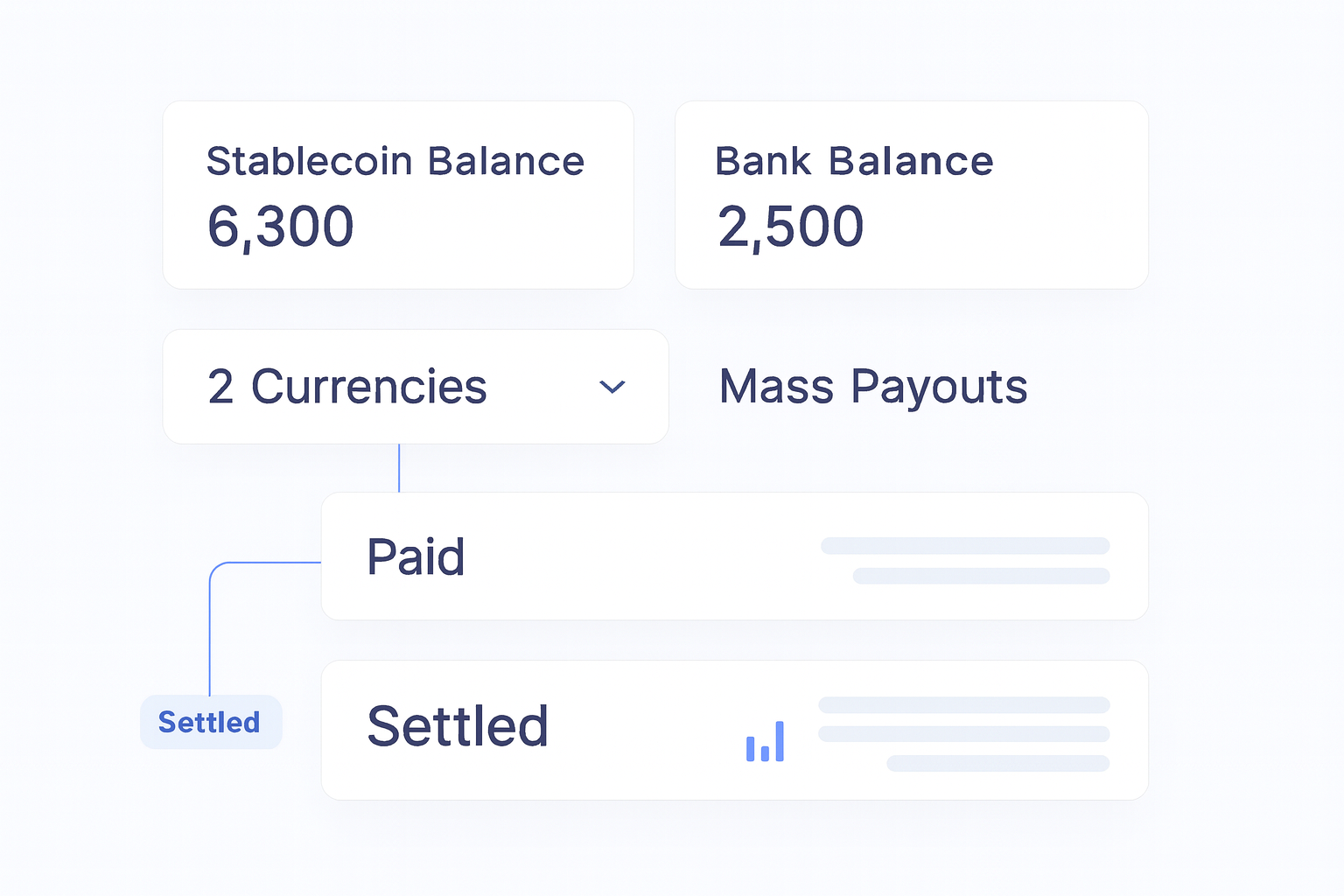
- Pay recipients. Send mass payouts from the dashboard, CSV upload, or API, depending on how your team operates.
This is the part that matters for platform operators: fewer disconnected tools, fewer spreadsheet handoffs, and a clearer path from incoming funds to outgoing payouts.
Where Radom removes work
Radom is useful when your team wants to avoid building every payment flow from scratch. The platform includes hosted checkout, payment links, billing, invoicing, payouts, conversion, and APIs, so you can choose the level of integration that fits your team.
That matters for finance and operations teams that need repeatable payout cycles, and for developers who want programmable payment infrastructure without stitching together separate tools for collection, conversion, and distribution.
If your use case is payout-heavy, start with mass payouts. If you also need treasury movement or asset conversion, review crypto convert and crypto on and off ramp.
Common platform use cases
Affiliate networks
Pay affiliates in crypto or fiat, use CSV uploads or APIs, and keep clear recipient records for repeat payout cycles.
Creator and subscription platforms
Handle recurring revenue, payouts, and settlement in a way that gives finance teams better visibility into balances and payment status.
Marketplaces
Move funds between collection and payout more efficiently when sellers, contractors, or service providers need different payout rails.
iGaming and other global digital businesses
Support large-scale payout operations with more control over conversion, settlement, and recipient payment rails where available.
When to sign up and when to talk to sales
If you want to explore the product quickly, review pricing and read the documentation. If your payout volume is high, your workflow is complex, or you need help designing a multi-rail setup, contact sales. Radom pricing is per transaction, with no setup fees or monthly fees on the published pricing page.
For teams evaluating a platform account model, the next step is usually to sign up, test the workflow, and then decide whether the dashboard or API is the better fit for operations.
Decision checklist for buyers
- Can the platform collect, convert, settle, and pay out from one system?
- Can operations teams use the dashboard while developers use the API?
- Are fiat and digital asset payout options available where needed?
- Can finance teams reconcile balances and settlement records without extra tooling?
- Does the pricing model fit the expected transaction volume?
If the answer to those questions is mostly yes, Radom is worth testing for your cross-border payment flow.
Frequently asked questions
Is Radom a bank?+
No. Radom should not be described as a bank. It is a business payments and money movement platform.
Can Radom help with both crypto and fiat payouts?+
Yes. The published product pages describe payouts in crypto or fiat, plus conversion and settlement workflows.
Can platform teams use the dashboard and API?+
Yes. The source pages describe dashboard tools, CSV upload, and APIs for payouts and other payment workflows.
What should teams do first?+
Start with the payout and conversion workflow, then use the documentation or sales conversation to confirm the best setup for your operation.