Why teams evaluate a crypto checkout API
If you need to accept crypto payments without building every payment flow yourself, a checkout API is usually the first technical decision. The goal is not just to create a payment page. It is to give buyers a clear flow, give your team reliable payment status updates, and keep settlement and reconciliation manageable.
Radom is built for businesses that want to accept crypto payments through hosted checkout, payment links, invoices, subscriptions, and APIs from one account. For teams comparing options, the key question is how much payment work you want Radom to handle for you.
See Radom crypto checkout or review the docs if you are already planning implementation.
What a crypto checkout API should let you do
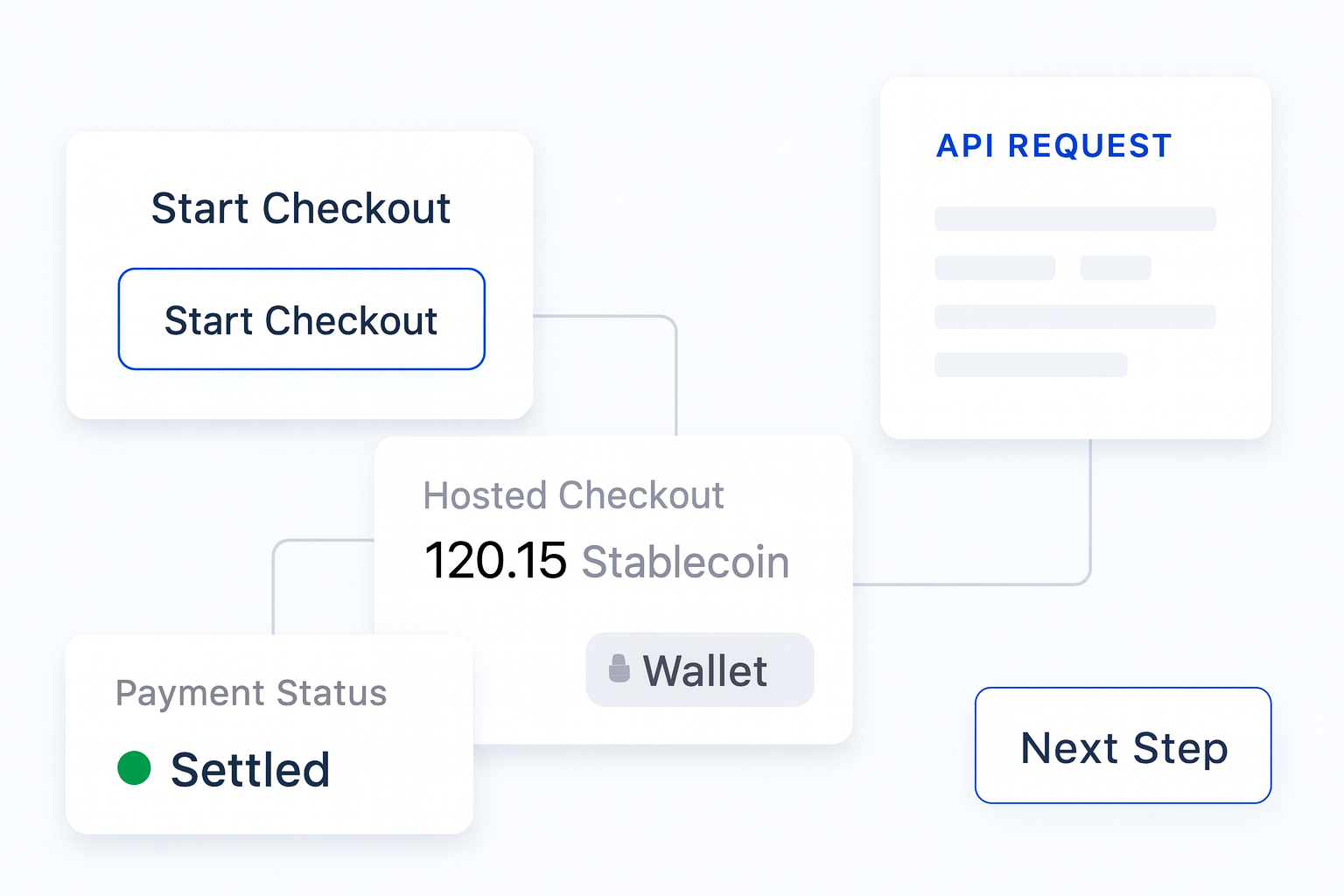
A useful crypto checkout API should support the payment flow your business actually needs, not just a basic payment request. For most teams, that means a hosted checkout page, wallet support, clear payment states, and a way to track the payment after the buyer submits it.
- Create a checkout flow for one-time payments.
- Support subscriptions if recurring revenue is part of your model.
- Show buyers a clear hosted payment page instead of forcing a custom build.
- Return reliable payment status updates for your backend and finance team.
- Let you receive funds to your Radom balance, convert assets, or withdraw to your wallet where needed.
Radom supports hosted checkout, payment links, invoices, subscriptions, and APIs, which makes it easier to match the integration to the checkout model you already use.
How to evaluate the API before you integrate
- Map the payment journey. Decide whether you need a hosted page, embedded flow, payment link, invoice, or subscription setup.
- Check the buyer experience. Make sure the checkout is clear, branded, and easy to complete on wallet-based payment flows.
- Review payment status handling. Your team needs dependable status updates so support, operations, and finance can reconcile payments properly.
- Confirm settlement options. Decide whether you want to keep funds in crypto, convert them, or withdraw to a wallet.
- Test operational fit. Look at how the product fits your reporting, reconciliation, and payout workflows, not only the initial checkout.
Radom’s hosted checkout is designed to reduce the work of building and maintaining a custom payment interface, while still leaving developers with API control where it matters.
Where Radom removes work
For technical evaluators, the main advantage of a hosted checkout plus API model is less surface area to maintain. Radom gives you a payment page, wallet support, and status handling without requiring your team to build every part of the checkout experience from scratch.
That matters for SaaS teams, e-commerce brands, marketplaces, gaming platforms, affiliate networks, and other digital businesses that want to launch faster and keep payment operations under control.
If you need a broader payments setup beyond checkout, Radom also supports crypto payments and pricing information for teams comparing platform scope.
Implementation path for developers
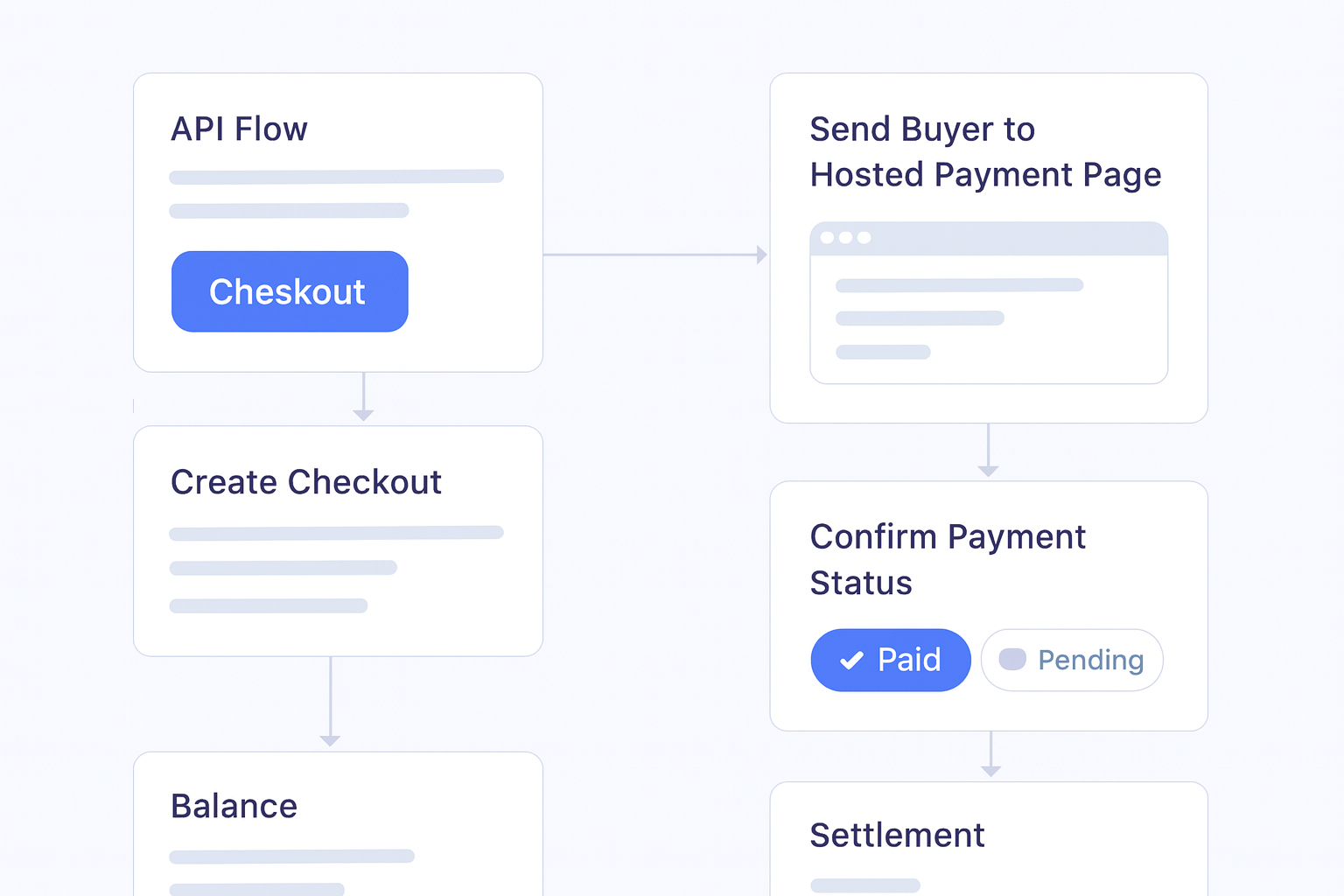
Most teams can evaluate the integration in three stages.
- Test the hosted flow in the dashboard. Use the dashboard first to understand the payment lifecycle and buyer experience.
- Wire up the API. Connect your application to create payment flows and handle status updates.
- Validate finance operations. Check how settlements, balances, and reporting fit your internal process before launch.
If you are building for a platform, marketplace, or subscription business, this is also the point to decide whether you need invoices, recurring billing, or payment links alongside checkout.
When to use checkout, billing, or payment links
Not every business needs the same integration path. Use hosted checkout when you want a clear payment page for one-time payments. Use billing when recurring revenue is central to your model. Use payment links when you need a lightweight way to collect payment without building a full checkout experience.
Radom supports all three patterns, which helps teams avoid stitching together separate tools for acceptance, billing, and settlement.
- Hosted checkout for a branded payment page.
- Billing for recurring crypto payments.
- Payment links for quick collection workflows.
For recurring use cases, see crypto billing. For implementation detail, use Radom documentation.
Pricing and next step
Radom pricing is based on per-transaction pricing, with no setup fees or monthly fees on the published pricing page. If you are comparing checkout APIs, that makes it easier to evaluate on actual payment volume. For high-volume or more complex cases, contact sales for guidance.
Start by testing the flow in the dashboard, then move to the API when you are ready to integrate.
Contact sales if you want to discuss your use case, or review pricing before you start.
Frequently asked questions
Does Radom support hosted crypto checkout?+
Yes. Radom offers a hosted crypto checkout page designed for conversion and supported by APIs for integration.
Can I use Radom for one-time payments and subscriptions?+
Yes. Radom Checkout supports one-time payments and subscriptions.
Can I accept payments through payment links or invoices instead of checkout?+
Yes. Radom supports payment links and invoices as part of its payments suite.
Can I settle in crypto or fiat?+
Radom supports settlement tools that let businesses receive funds to a Radom balance, convert assets, or withdraw to a wallet. Specific settlement paths should be checked against your use case.
Where should a developer start?+
Start with the dashboard to test the payment flow, then use the docs to integrate the API into your product.