Why teams evaluate crypto checkout API integration
If you are comparing crypto checkout API integration options, the real question is not whether you can accept a payment. It is how much of the payment flow you want to build, how much control your team needs, and how quickly you can get to a reliable first test.
Radom is built for businesses that want to accept crypto payments through hosted checkout, payment links, invoices, subscriptions, and APIs from one account. That makes it useful for founders, payments teams, finance operators, platform teams, and developers who need a practical checkout flow rather than a consumer wallet experience.
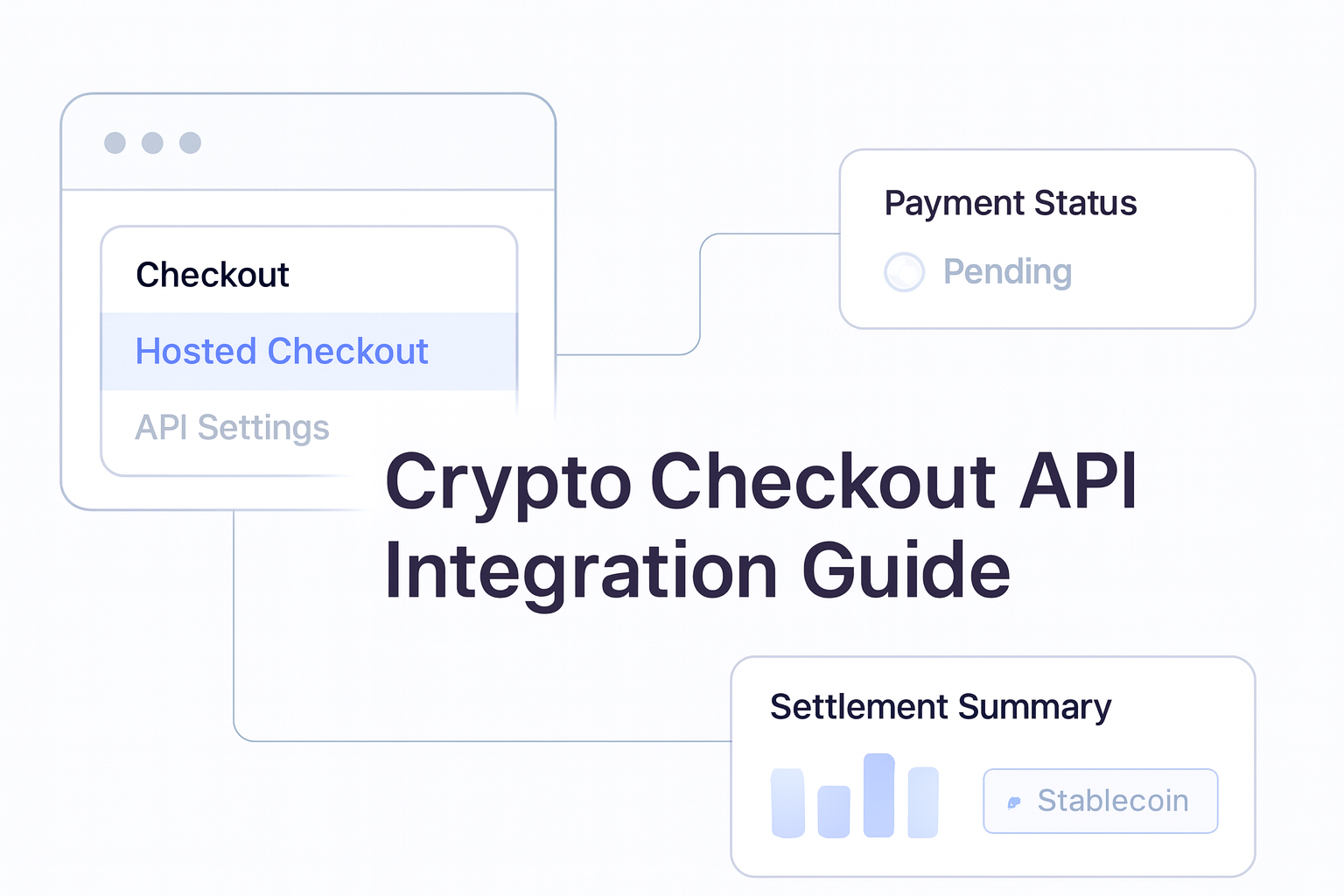
For product teams, the fastest path is usually to start in the crypto checkout product, test the hosted flow, and then move into the Radom documentation once you know the payment model fits.
What a crypto checkout API integration should cover
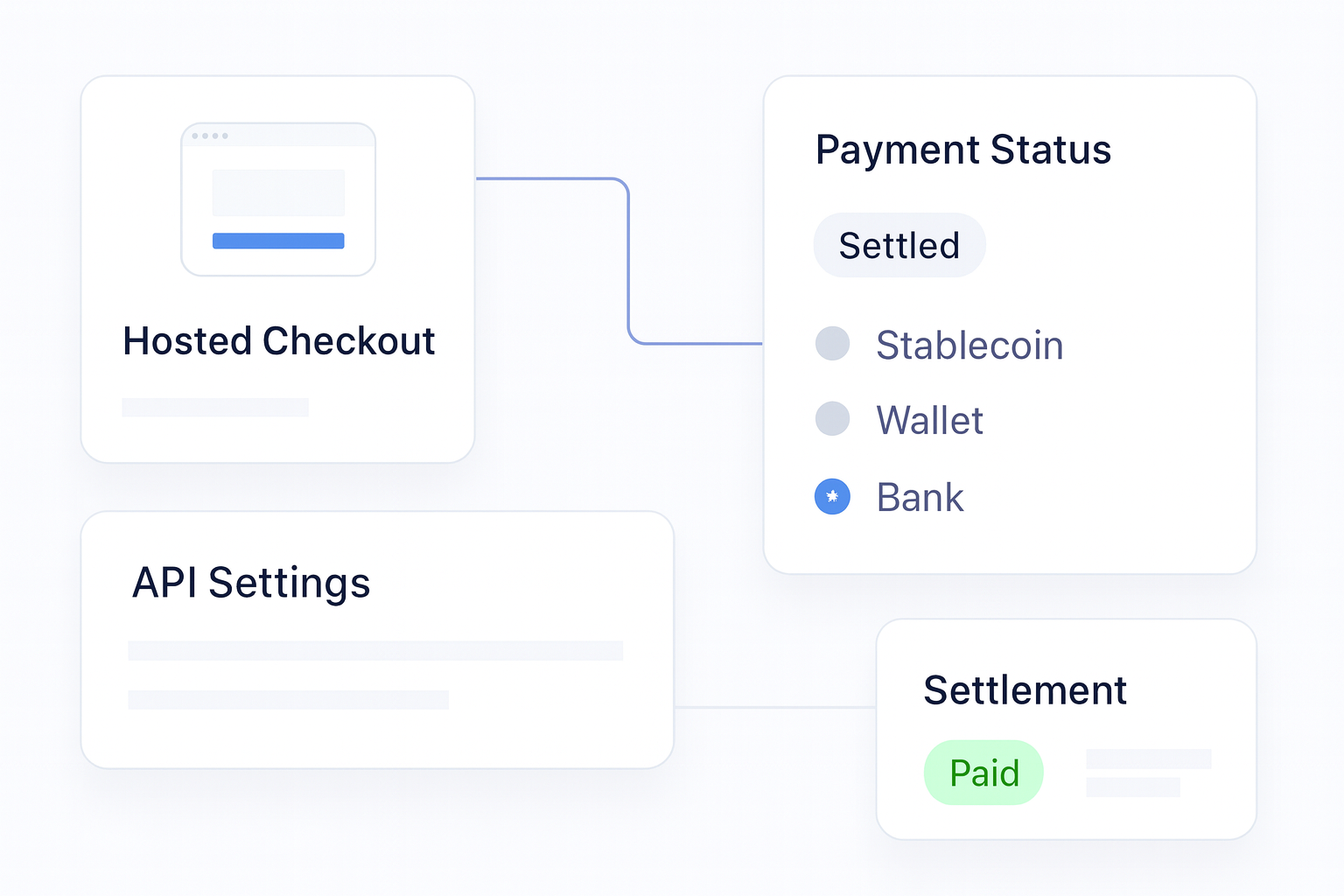
A useful integration does more than collect a payment address. It should support the full business flow around the payment event, including checkout presentation, payment status updates, settlement, and reconciliation.
- Hosted checkout for teams that want a ready-made payment page.
- API-led flows for teams that want to automate payment creation and status handling.
- Subscriptions and one-time payments where recurring billing is part of the model.
- Clear payment states so finance and support teams can track what happened.
- Settlement options that fit the way your business wants to hold or move funds.
Radom's product pages describe checkout, payment links, invoices, subscriptions, and APIs as part of the same platform, which is useful when one team owns both product integration and finance operations.
Implementation steps
- Define the payment model. Decide whether you need one-time checkout, subscriptions, invoices, or a lighter payment link workflow.
- Test the hosted checkout first. Use the Radom dashboard to validate the customer flow before you wire it into your app.
- Map the payment event lifecycle. Confirm how your team will handle payment creation, status updates, and settlement records.
- Connect the API only where it adds value. Use automation for payment creation, customer handling, or recurring flows if your team needs it.
- Review reporting and settlement needs. Make sure finance can reconcile payments without extra manual work.
This approach keeps the first integration focused. It also reduces the risk of building a custom checkout before you know the payment model is right.
Where Radom removes work
Radom reduces the amount of infrastructure you need to build in-house. The hosted checkout gives you a payment page without designing the full flow yourself, while the API lets you automate the parts that matter to your team.
That is useful for SaaS teams, marketplaces, gaming platforms, affiliate networks, and other businesses that need to accept crypto across the channels they already use. It is also helpful for finance teams that care about settlement and reconciliation as much as the payment itself.
If your business needs recurring revenue, the crypto billing product is the natural next step. If you are still evaluating pricing, review Radom pricing before you commit to a build plan.
When to use hosted checkout, payment links, or APIs
Not every team needs the same level of integration.
- Hosted checkout works well when you want a branded payment page without building every screen yourself.
- Payment links are useful for lightweight collection workflows and quick payment requests.
- APIs make sense when your product, billing, or operations team needs automation and deeper control.
For many teams, the best rollout is to start with hosted checkout, then add API automation once the payment flow is proven.
What developers should test early
Before going live, developers and payments teams should test the parts of the flow that affect support, finance, and customer experience.
- How the checkout behaves on desktop and mobile.
- How payment status changes are surfaced to your team.
- Whether the settlement flow matches your internal accounting process.
- How subscriptions or repeat payments behave if you need recurring billing.
- Whether your team can manage the flow from the dashboard without engineering help for every change.
Radom's documentation is the right place to validate implementation details once the business requirements are clear.
Who this integration is best for
This guide is most relevant for teams that need crypto payment infrastructure, not just a checkout widget. That includes SaaS companies, e-commerce brands, marketplaces, creator platforms, affiliate networks, and other digital businesses that want a practical way to accept crypto and manage the downstream payment work.
If your team also needs payouts, invoicing, or conversion workflows, it may make sense to evaluate the broader platform rather than a checkout-only tool. For product and engineering teams, that usually means comparing crypto payments, crypto checkout, and the documentation together.
Next steps
Start by testing the hosted flow in the dashboard, then move to the docs if you need API-level implementation detail. If you are comparing pricing or planning a larger rollout, speak with sales so you can match the product setup to your volume and operating model.
Contact sales for a rollout discussion, or review the Radom documentation to start integrating.
Frequently asked questions
What is a crypto checkout API integration?+
It is the process of connecting a checkout flow that accepts crypto payments to your product or website through APIs, hosted tools, or both.
Do I need to build the whole checkout myself?+
No. Radom offers hosted checkout, so teams can start with a ready-made payment page and add API automation where needed.
Can Radom support subscriptions as well as one-time payments?+
Yes. Radom's product pages describe subscriptions and recurring billing alongside checkout and other payment tools.
Should finance teams be involved early?+
Yes. Payment acceptance, settlement, and reconciliation decisions affect finance and operations, not just engineering.
Where should I start if I am still evaluating the product?+
Start with the dashboard, review the product pages, and use the documentation when you are ready to test implementation details.