What buyers mean by a crypto payment gateway
If you are evaluating a crypto payment gateway, you are usually trying to solve a practical business problem: accept digital asset payments without adding unnecessary operational work. For most teams, that means a system that can handle checkout, payment links, invoices, subscriptions, and settlement in one place.
Radom is built for that use case. It helps businesses accept crypto payments, manage subscriptions, send invoices, create payment links, run payouts, and settle in crypto or fiat.
If you want a product overview first, start with crypto payments or review pricing.
How a crypto payment gateway works
At a basic level, a crypto payment gateway sits between your customer and your business accounts. It creates the payment flow, tracks the payment state, and gives your team a way to reconcile what was paid and what should happen next.
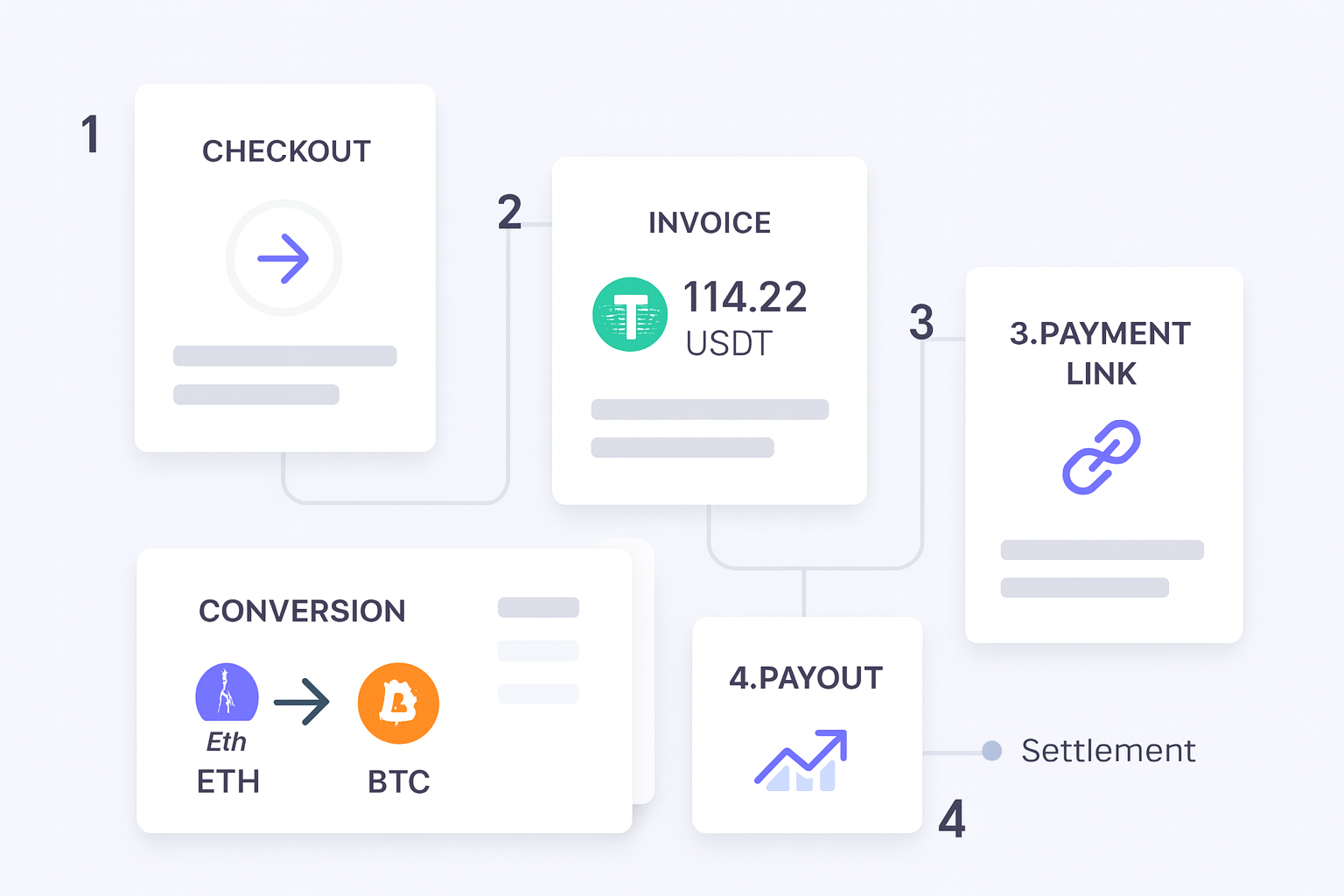
- Your customer chooses a crypto payment method at checkout, in an invoice, or through a payment link.
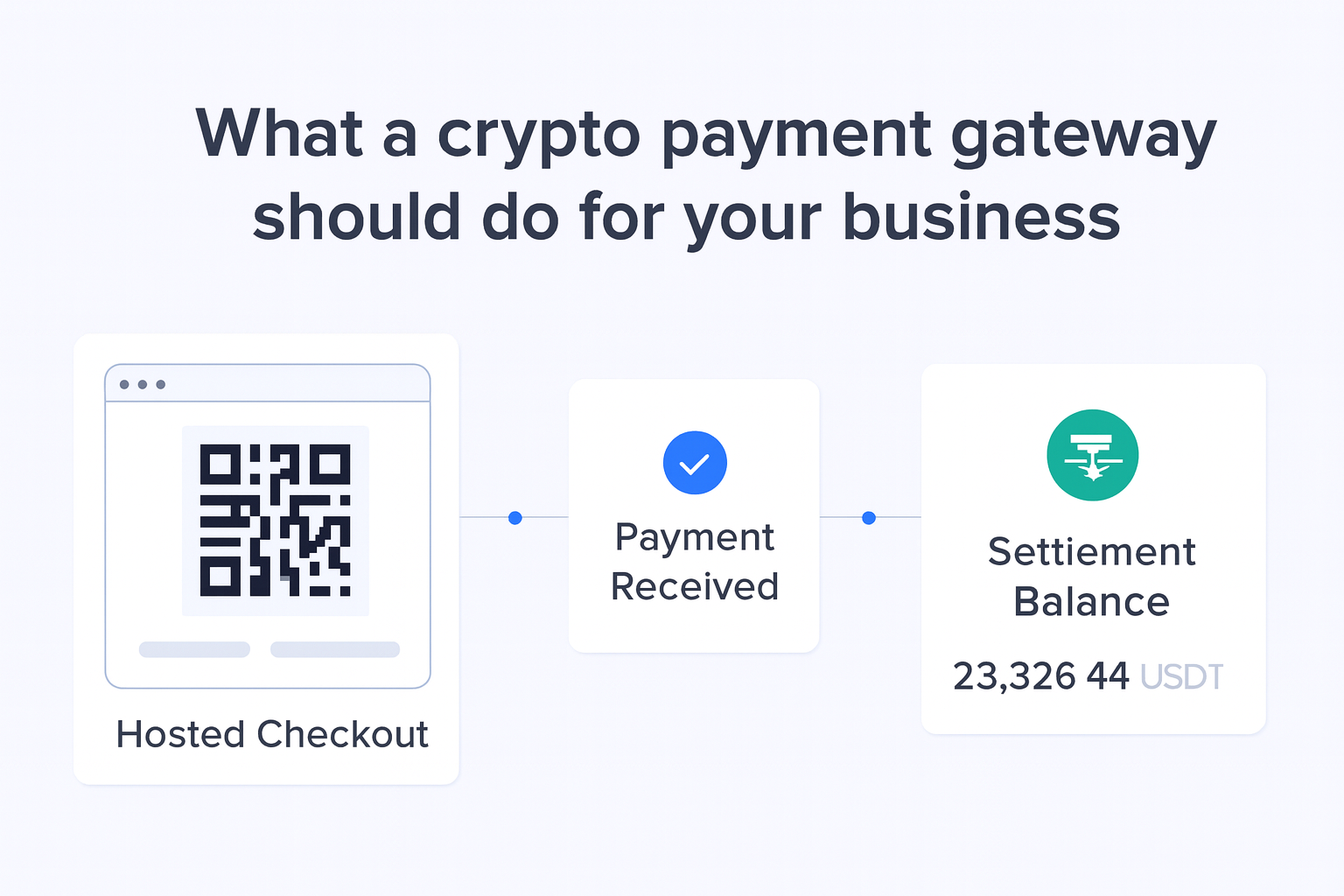
- The gateway presents the payment details and tracks the transaction status.
- Your business receives funds to its balance or wallet workflow, depending on how the platform is set up.
- Your team converts, settles, or withdraws funds based on treasury and payout needs.
- Finance and operations teams use the records for reconciliation and reporting.
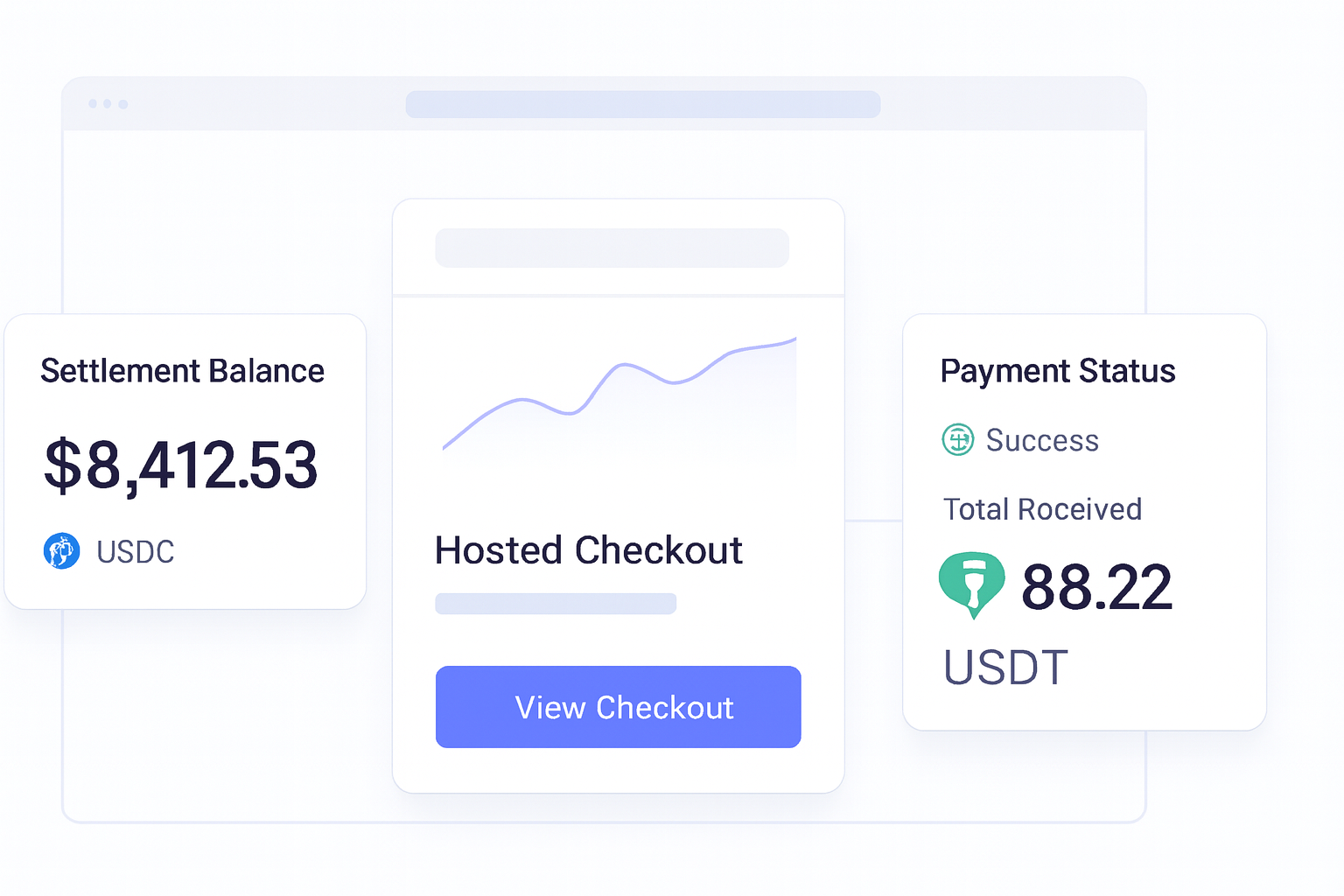
For teams that want a hosted payment page, see crypto checkout.
What to look for before you choose one
Not every gateway is built for the same buyer. A founder, payments lead, finance team, and developer may all care about different parts of the stack, but the core criteria are usually consistent.
- Payment methods: Support for the cryptocurrencies and blockchains your customers actually use.
- Checkout options: Hosted checkout, payment links, invoices, and subscriptions if you need them.
- Settlement control: The ability to keep funds in crypto or settle in fiat where available.
- Balance visibility: Clear records for reconciliation, reporting, and treasury operations.
- Operational fit: Tools for teams that need both no-code setup and API access.
- Pricing clarity: A model you can understand as volume grows.
Radom’s public product pages describe support for crypto payments, billing, subscriptions, invoices, payment links, payouts, conversion, and settlement. The pricing page states per-transaction pricing with no setup fees or monthly fees.
Where Radom removes work
Radom is useful when you do not want to build and maintain every payment flow yourself. It gives teams a hosted crypto payments page, re-usable payment links, billing and invoicing tools, and APIs for more custom workflows.
That can reduce work across several parts of the payment stack:
- Less engineering effort to launch a payment flow.
- Less manual handling of invoices and recurring payments.
- Less friction when finance needs clear settlement records.
- Less operational overhead when payouts or conversion are part of the workflow.
Developers can start with the Radom documentation if they need implementation detail.
How to evaluate whether Radom fits your use case
Use this simple checklist before you choose a gateway.
- Confirm the payment type you need, such as checkout, invoicing, subscriptions, or payment links.
- Check whether you need settlement in crypto, fiat, or both.
- Map the workflow for finance, operations, and reconciliation.
- Decide whether your team wants no-code setup, APIs, or both.
- Review pricing and speak to sales if your volume or workflow is more complex.
If you are comparing payment acceptance options for a platform or commerce stack, Radom’s crypto payments and crypto checkout pages are the most direct next steps.
How Radom fits payment, billing, and payouts
Many businesses do not need a standalone gateway. They need a payment layer that also handles billing, invoices, conversion, and payouts. That is where Radom is positioned.
Radom supports businesses that want to accept crypto payments, manage subscriptions, send invoices, create payment links, and run payouts from one platform. It also supports conversion and settlement workflows, which matters when finance teams need a cleaner path from payment acceptance to treasury operations.
For businesses that need to move between crypto and fiat, see crypto on and off ramp and crypto convert.
When to talk to sales
Contact sales if you have a higher-volume rollout, a platform workflow, or a payment setup that needs more coordination across finance, operations, and engineering. That is usually the point where a standard product page is not enough and the right answer depends on your settlement, conversion, or payout requirements.
Contact sales if you want to discuss your use case, or review pricing before you commit.
Frequently asked questions
What is a crypto payment gateway?+
A crypto payment gateway is a payment layer that helps a business accept digital asset payments and manage the related workflow for checkout, tracking, settlement, and reconciliation.
Can Radom support more than one payment flow?+
Yes. Radom’s published product pages say it supports crypto payments, billing, subscriptions, invoices, payment links, payouts, conversion, and settlement.
Does Radom only work for developers?+
No. Radom supports both API-led integrations and no-code tools, so it can work for developers and non-technical teams.
Can I settle in fiat?+
Radom’s public pages say businesses can settle in crypto or fiat. If your workflow depends on a specific currency or rail, confirm the details with sales.
Where should I start if I am comparing options?+
Start with crypto payments, review pricing, and use the documentation if you need implementation detail.