Choose a crypto payment gateway based on the work it removes
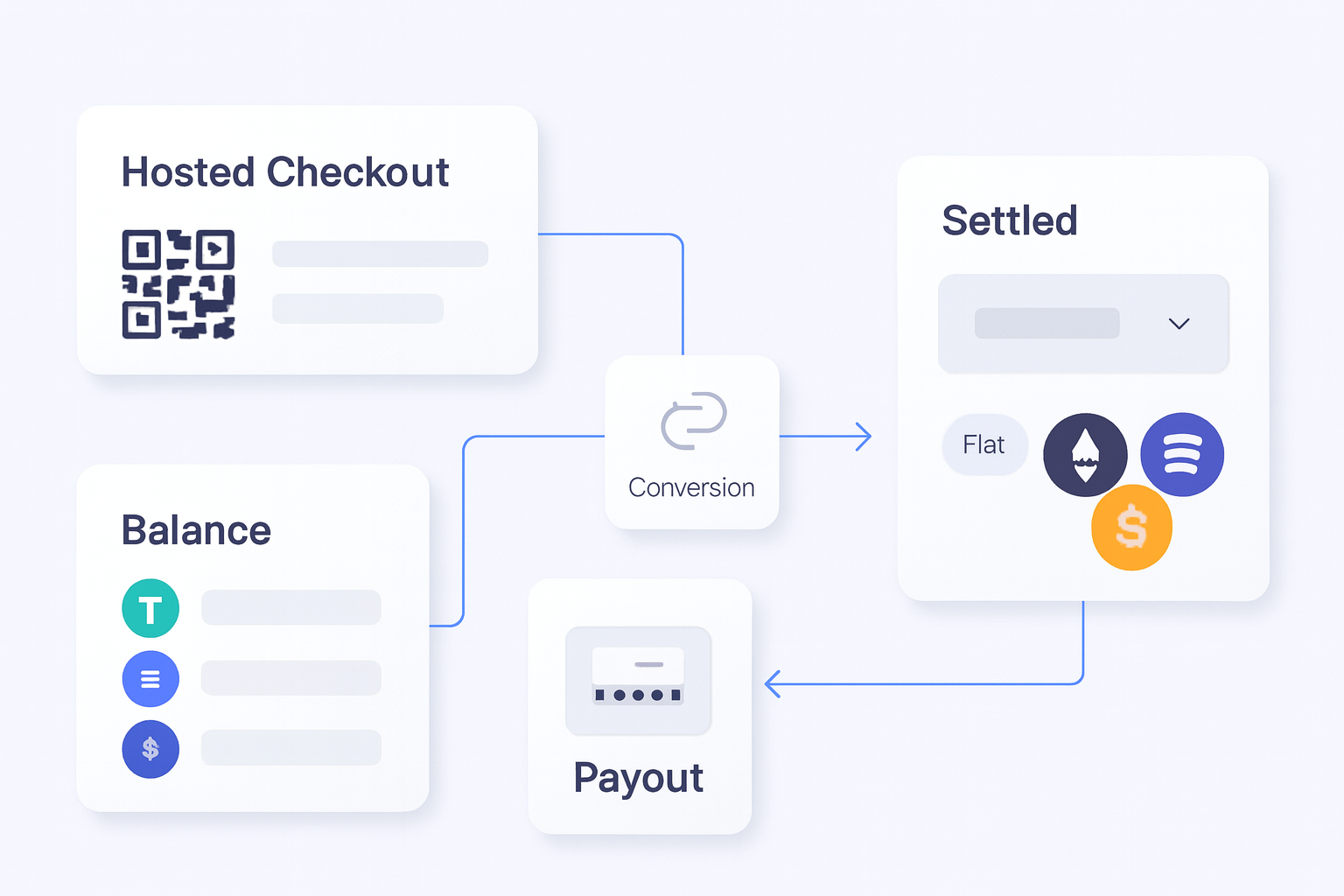
If you are comparing crypto payment gateways, start with the operational job, not the label. The right platform should help your team accept payments, manage settlement, move balances, and handle payouts without forcing you to stitch together separate tools.
Radom is built for businesses that need crypto payments, billing, invoices, payment links, payouts, conversion, and settlement from one platform. It is designed for operators, finance teams, founders, and developers who want practical payment infrastructure rather than a consumer-style wallet product.
For product details, see crypto payments and pricing.
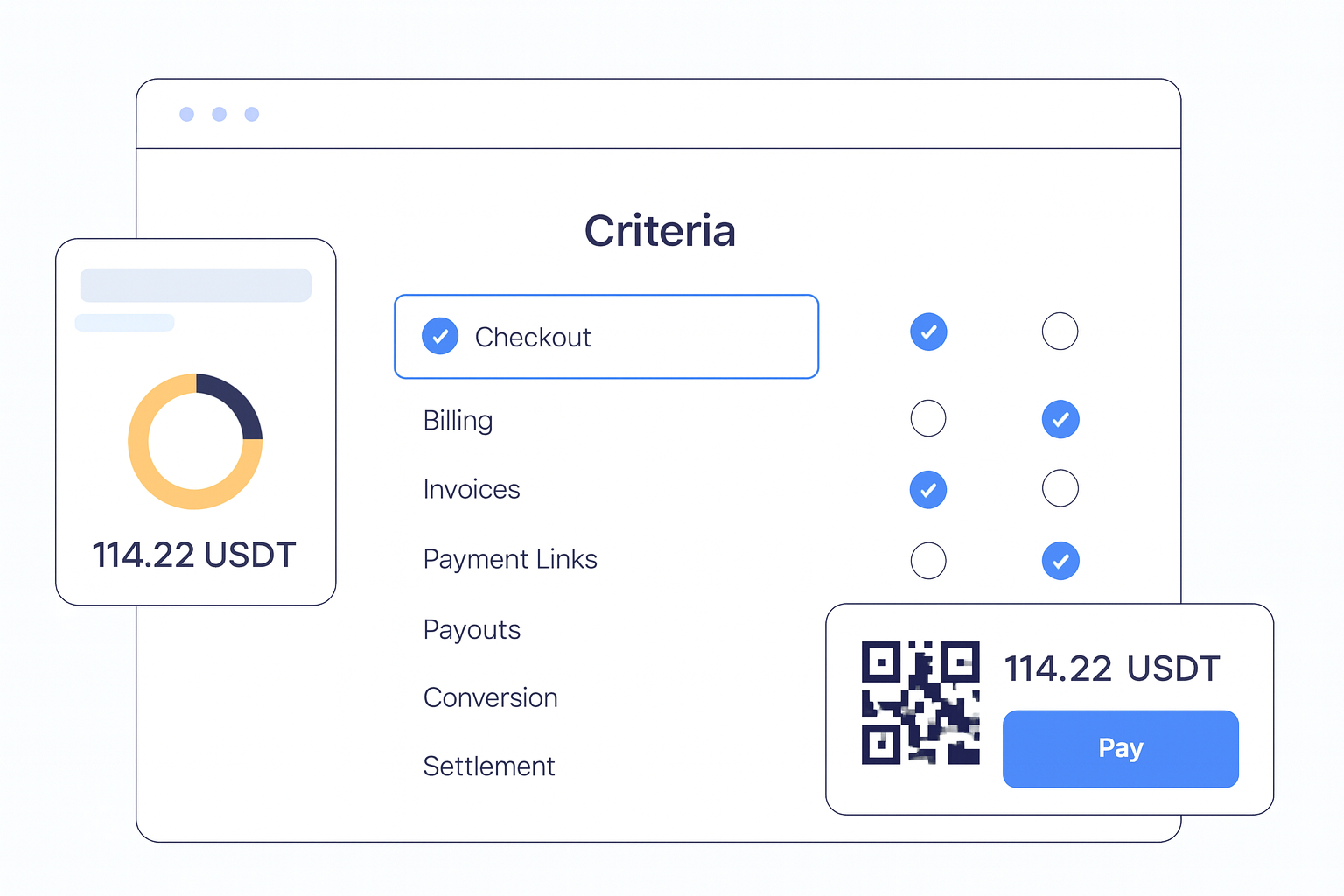
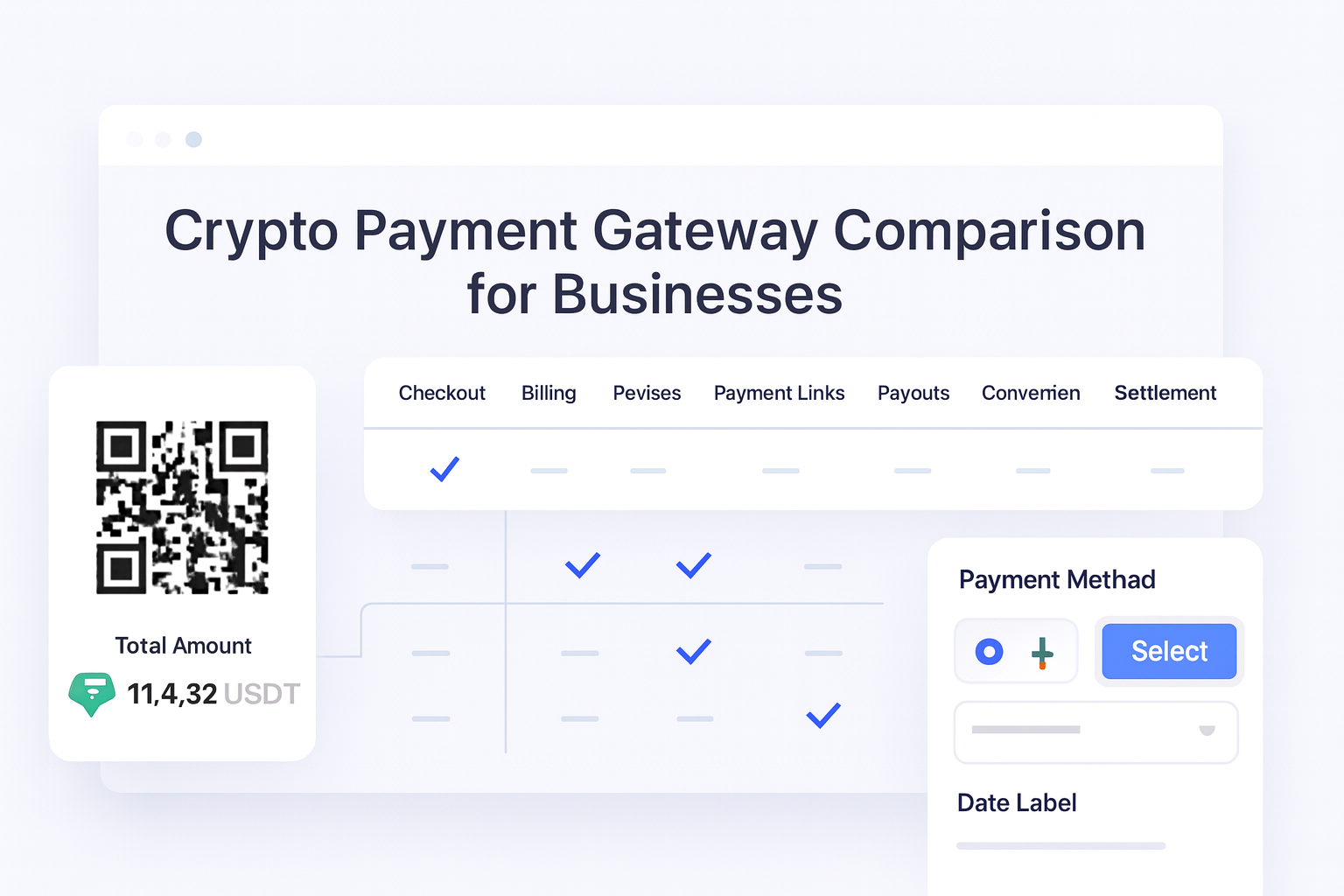
The comparison criteria that matter
When teams evaluate a crypto payment gateway, the useful questions are usually the same:
- Can it support the payment flow your business already uses, such as hosted checkout, invoices, subscriptions, or payment links?
- Can finance teams track balances, settlement, and reporting without manual work?
- Can the platform support both crypto receipt and conversion into fiat when needed?
- Does it handle payouts as well as collection?
- Can developers integrate it through APIs and docs when the business needs automation?
Radom is relevant where those requirements overlap. The platform supports hosted checkout, payment links, invoices, subscriptions, payouts, and payment APIs, and it can be used for balance management, settlement, currency conversion, on-ramp, off-ramp, and virtual account workflows where available.
Where Radom fits in the buying decision
Radom is a strong fit for teams that want one platform for acceptance and movement of funds. That includes businesses that need to accept crypto payments, collect recurring revenue, issue invoices, or run global payout operations.
It is also relevant for platform operators that need to move between crypto and fiat, or manage balances across supported rails. If your team is evaluating how to connect payment acceptance with treasury or payout workflows, Radom’s crypto on and off ramp, crypto convert, and virtual accounts pages are the most relevant next steps.
How to compare Radom with other gateway options
- List the payment flows you need now, not the ones you might add later.
- Check whether the platform supports checkout, billing, invoices, payment links, or payouts out of the box.
- Confirm how settlement works and whether you can hold, convert, or withdraw funds in the asset you need.
- Review the developer experience if your team needs APIs, docs, or embedded flows.
- Compare pricing, then pressure test support needs with sales if you expect meaningful volume or a custom setup.
Radom’s pricing is published on the pricing page. If you have a quote from another provider or need a higher-volume setup, contact sales for a commercial review.
Why payments teams often shortlist Radom
Teams usually shortlist Radom when they want more than a single checkout widget. The platform covers acceptance, billing, invoicing, payment links, payouts, conversion, and settlement in one account, which reduces the number of separate tools a team has to manage.
That matters for finance operations as well as product teams. A simpler stack can make reconciliation, settlement tracking, and payout operations easier to run.
If your use case is checkout-first, review crypto checkout. If you need recurring revenue support, use crypto billing and crypto invoicing. If your main job is collection through lightweight workflows, see crypto payment links.
For platforms that also need payouts
Some crypto payment gateway comparisons stop at collection. Radom is more useful when your business also needs to send money. That includes mass payouts, crypto-funded fiat payouts, and direct crypto payouts for global operators that manage contractors, affiliates, creators, or other distributed recipient groups.
If payouts are part of the decision, review mass payouts alongside the payment acceptance flow. That gives you a clearer picture of whether the platform can support the full operating cycle from incoming payment to outgoing settlement.
For developers evaluating integration effort
If your team is comparing gateways on implementation effort, start with the docs and the product surface that matches your flow. Radom supports APIs and no-code tools, which lets teams choose between faster launch and more programmable payment infrastructure.
Use the Radom documentation if you need to assess integration work, webhook handling, or the shape of the payment flow before you commit.
Frequently asked questions
What should I compare in a crypto payment gateway?
Look at supported payment flows, settlement options, payout support, conversion tools, API quality, and pricing. The right answer depends on whether you need only acceptance or a broader payment operations stack.
Is Radom only for checkout?
No. Radom supports crypto payments, billing, subscriptions, invoices, payment links, payouts, and payment APIs, so it can cover more than a single hosted checkout use case.
Can Radom support settlement and conversion?
Radom supports settlement, conversion, and crypto-to-fiat movement where available. For the most relevant product pages, review crypto convert and crypto on and off ramp.
Where should I start if I want to evaluate Radom?
Start with pricing if you are comparing commercial terms, or go straight to documentation if you want to evaluate integration effort. If you need help with volume or a custom setup, contact sales.
Next step
If you are comparing crypto payment gateways for a business use case, Radom is worth reviewing when you need acceptance, settlement, conversion, and payouts in one platform. Start with pricing, read the docs, or contact sales for a commercial review.