Why teams integrate crypto payments
If you are evaluating a crypto payment integration, the real question is not whether crypto can be accepted. It is how much of the payment flow you want to build, how your team will manage settlement, and how quickly you can launch without adding avoidable complexity.
Radom is built for businesses that want to accept crypto payments, manage subscriptions and invoices, create payment links, and handle payouts and settlement from one platform. That makes it a fit for payments teams, founders, finance operators, platform teams, and developers comparing payment infrastructure rather than consumer wallets.
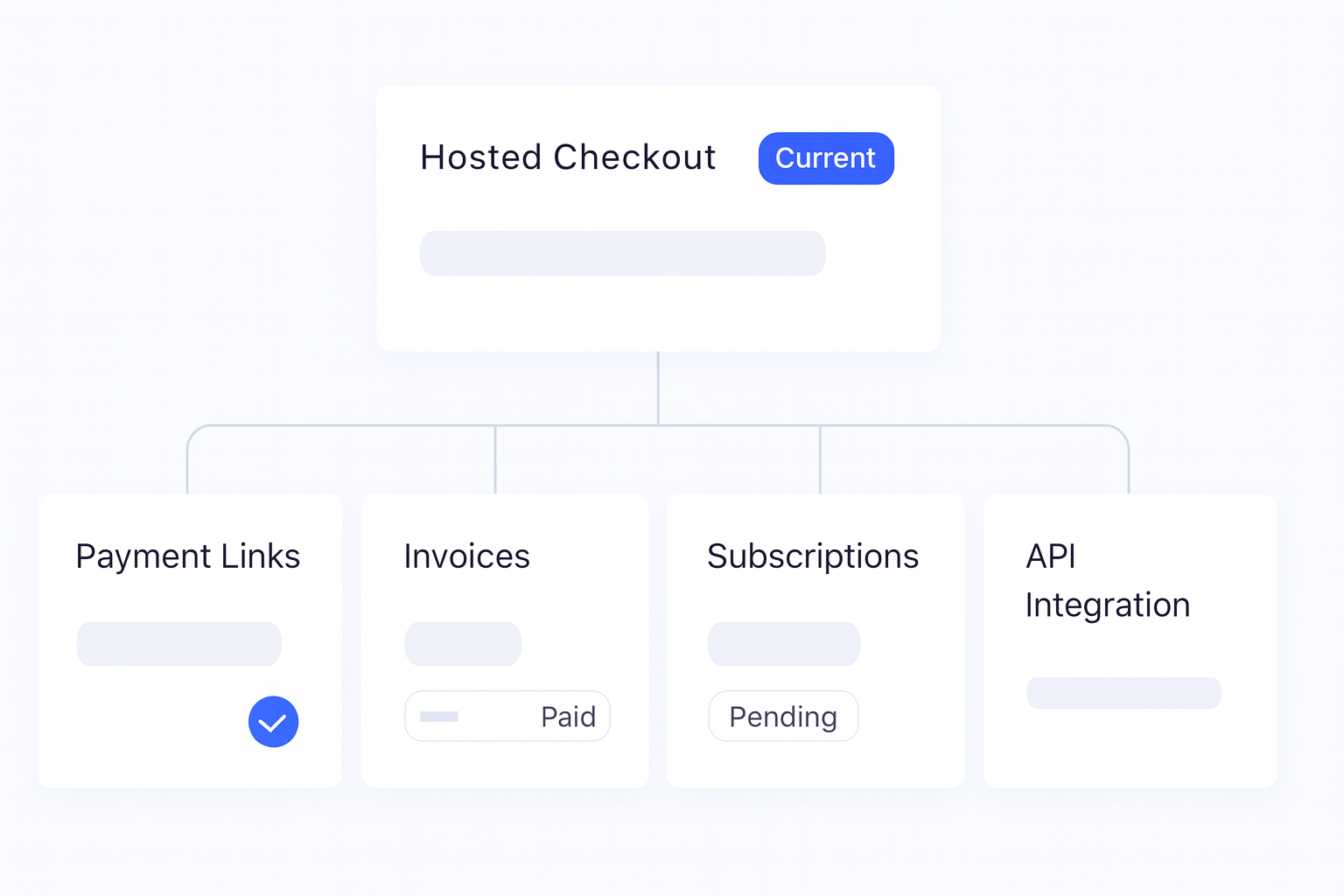
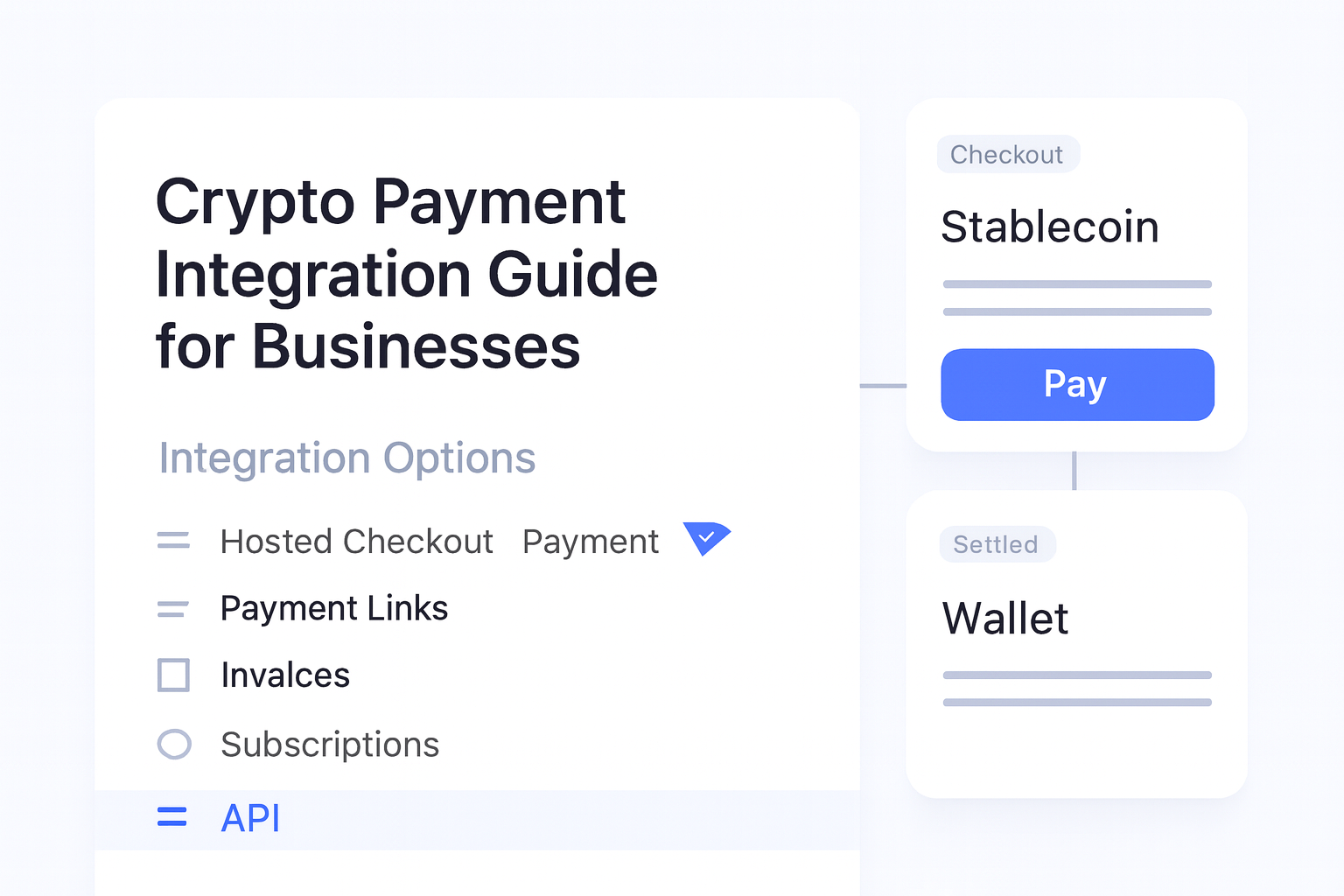
Start with the integration path that matches the job. For a hosted payment page, use crypto checkout. For quick collection flows, use payment links. For recurring revenue, use crypto billing. For finance-led workflows, use invoices. For more control, use APIs and docs.
The main integration paths
- Hosted checkout: Best when you want a ready-made payment page with a clear customer flow and less front-end work.
- Payment links: Best for lightweight collection, one-off requests, and operational teams that need to move fast.
- Billing and subscriptions: Best for recurring revenue models, including subscription payments and renewal flows.
- Invoices: Best for finance teams, service businesses, and contractors that need structured payment requests.
- APIs: Best for teams that want to embed crypto payments into a custom product or platform workflow.
Radom supports crypto payments, billing, subscriptions, invoices, payment links, payouts, and payment APIs. If your team wants one platform for acceptance and downstream money movement, that is usually simpler than stitching together separate tools.
How to integrate crypto payments with Radom
- Choose the payment flow. Decide whether your use case is checkout, links, invoices, subscriptions, or API-led integration.
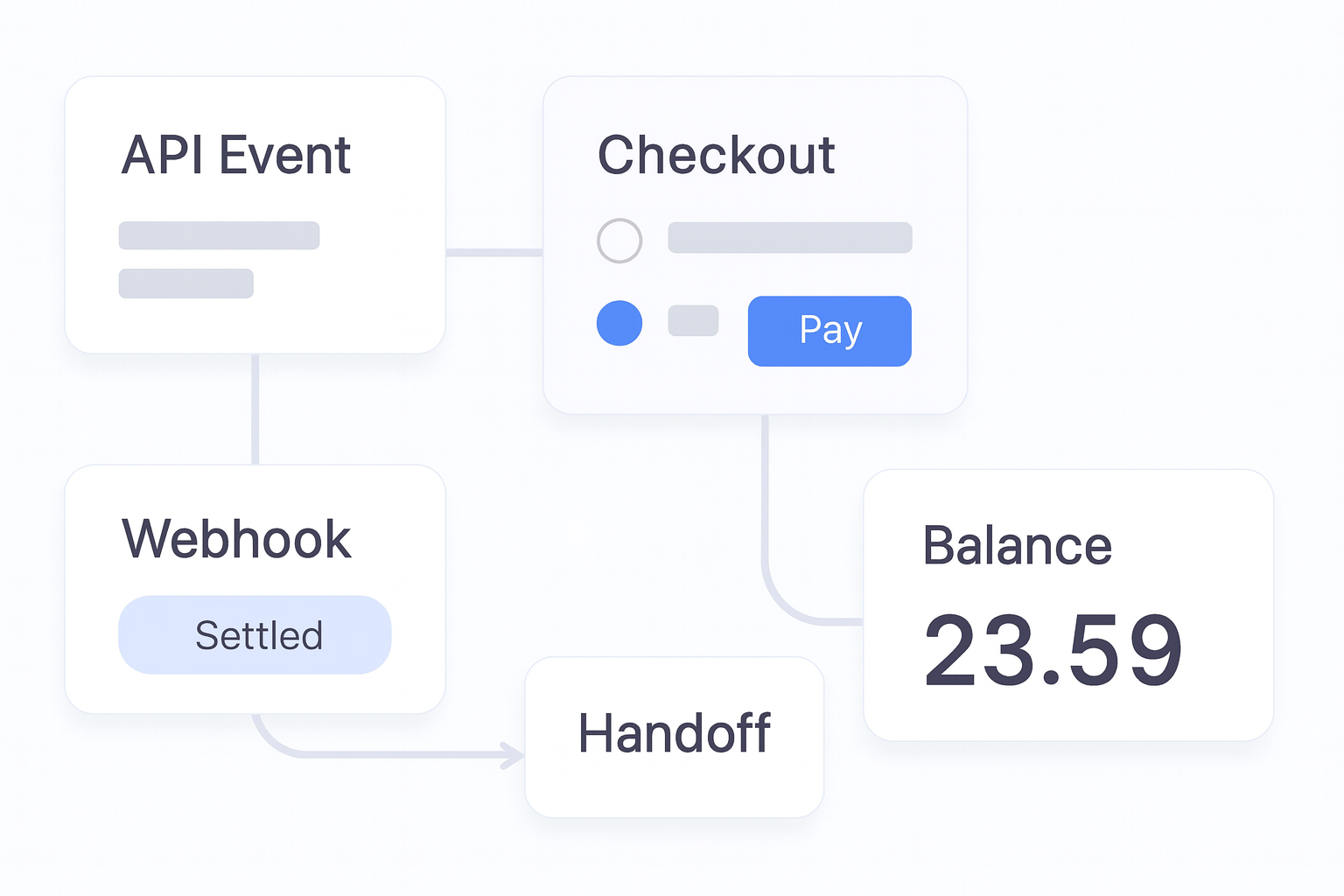
- Map the customer journey. Define where the payment starts, how status updates are handled, and what happens after payment is confirmed.
- Set your settlement approach. Decide whether you want to receive funds to your Radom balance, convert assets, or withdraw to your wallet.
- Connect the workflow. Use the dashboard for no-code setup or the API if your product needs a programmable flow.
- Test before launch. Validate payment states, customer experience, and internal reporting before sending live traffic.
This is where Radom removes work. Instead of building every payment screen, status state, and operational handoff from scratch, you can start with hosted tools and move to API control where needed.
What technical evaluators should check
When comparing crypto payment integration options, look at the parts that affect operations after launch, not only the initial checkout. Finance and engineering teams usually need clarity on payment status handling, settlement, balance management, and reporting.
- Whether the payment flow is hosted or fully custom
- How easy it is to launch without a large engineering project
- Whether subscriptions, invoices, and one-time payments are supported in the same platform
- How funds can be received, converted, or withdrawn
- How the team will reconcile payments and settlement
Radom is designed to support businesses that need payment acceptance, balance management, settlement, currency conversion, on-ramp, off-ramp, virtual account, crypto-funded fiat payout, and direct crypto payout workflows. If your use case extends beyond acceptance, that matters.
Where Radom fits best
Radom is a practical fit for SaaS teams, e-commerce brands, marketplaces, gaming platforms, affiliate networks, creator platforms, and other internet businesses that want a business-first crypto payment stack. It is also relevant for operators that need a cleaner path from collection to settlement and payouts.
For product teams, the main advantage is having a single platform that can support payment acceptance and the operational layer around it. For finance teams, the value is a clearer path from incoming payments to settlement records and balance control. For developers, it is the ability to start with hosted tools and move into APIs when the product needs it.
Next steps
If you are still comparing options, start with the product page for crypto payments, review hosted checkout, and check pricing if you want to understand the commercial model before testing. If your use case depends on custom flows or higher-volume operations, contact sales for guidance.
If you are ready to evaluate the product directly, read the docs and test the integration path that matches your workflow.
Frequently asked questions
What is a crypto payment integration?+
It is the process of adding crypto payment acceptance into your website, app, or internal workflow. That can mean hosted checkout, payment links, invoices, subscriptions, or direct API integration.
Do I need to build the checkout myself?+
No. Radom offers a hosted crypto checkout for teams that want a ready-made payment page instead of building every part of the payment flow themselves.
Can Radom support recurring payments?+
Yes. Radom supports crypto billing and subscriptions, which is useful for recurring revenue models.
Can finance teams use Radom without heavy engineering work?+
Yes. Teams can use hosted tools for faster setup, then move to APIs where product or engineering control is needed.
Where should I start if I want to test the product?+
Start with hosted checkout, payment links, or the docs depending on your use case. For pricing and commercial questions, review the pricing page or contact sales.