Compare crypto payment links for business workflows
If you need a shareable hosted payment flow, the real question is not whether a link exists. It is whether the tool fits how your team collects payment, tracks status, and settles funds. Radom Payment Links are built for businesses that want a no-code way to accept crypto without building every payment flow themselves.
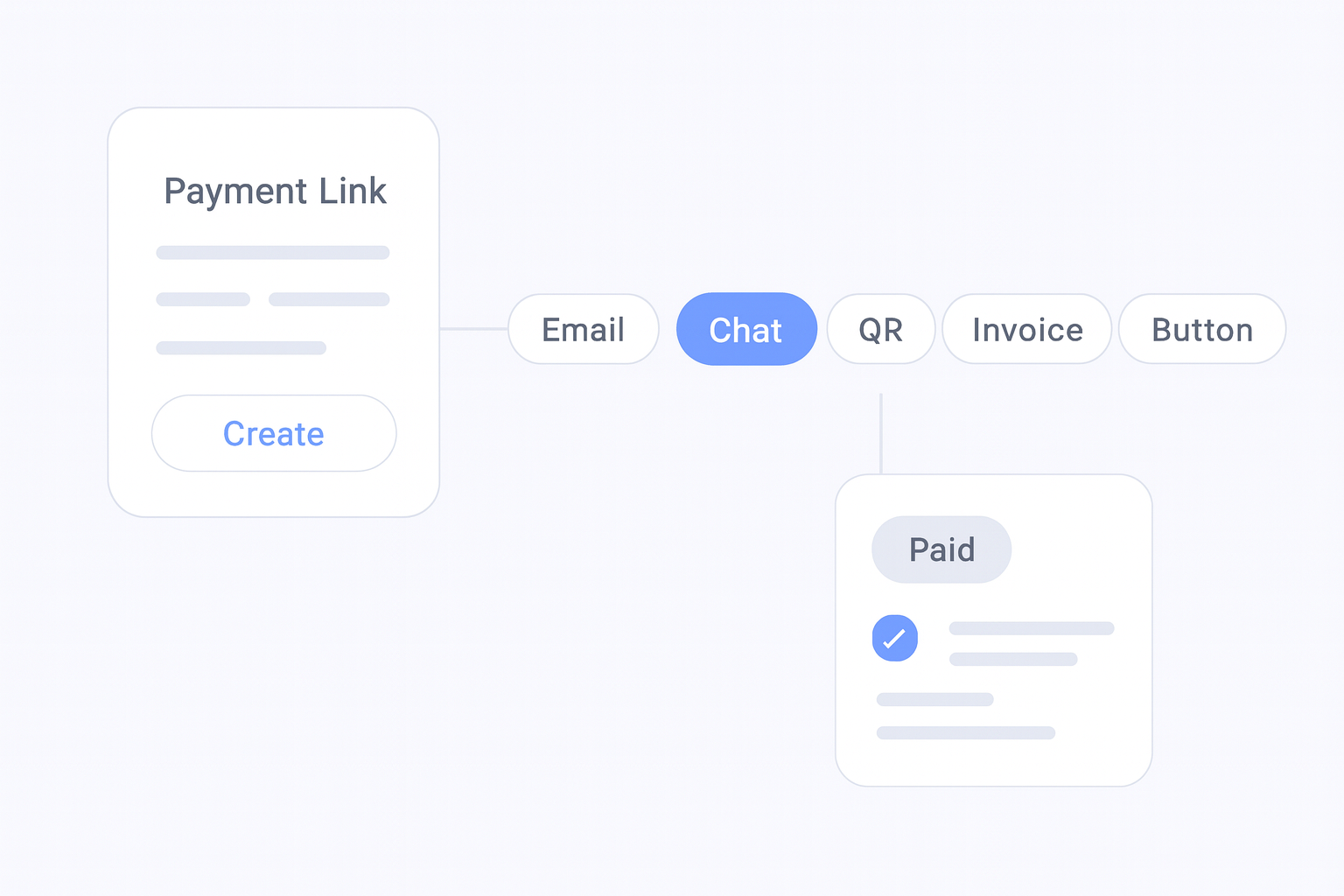
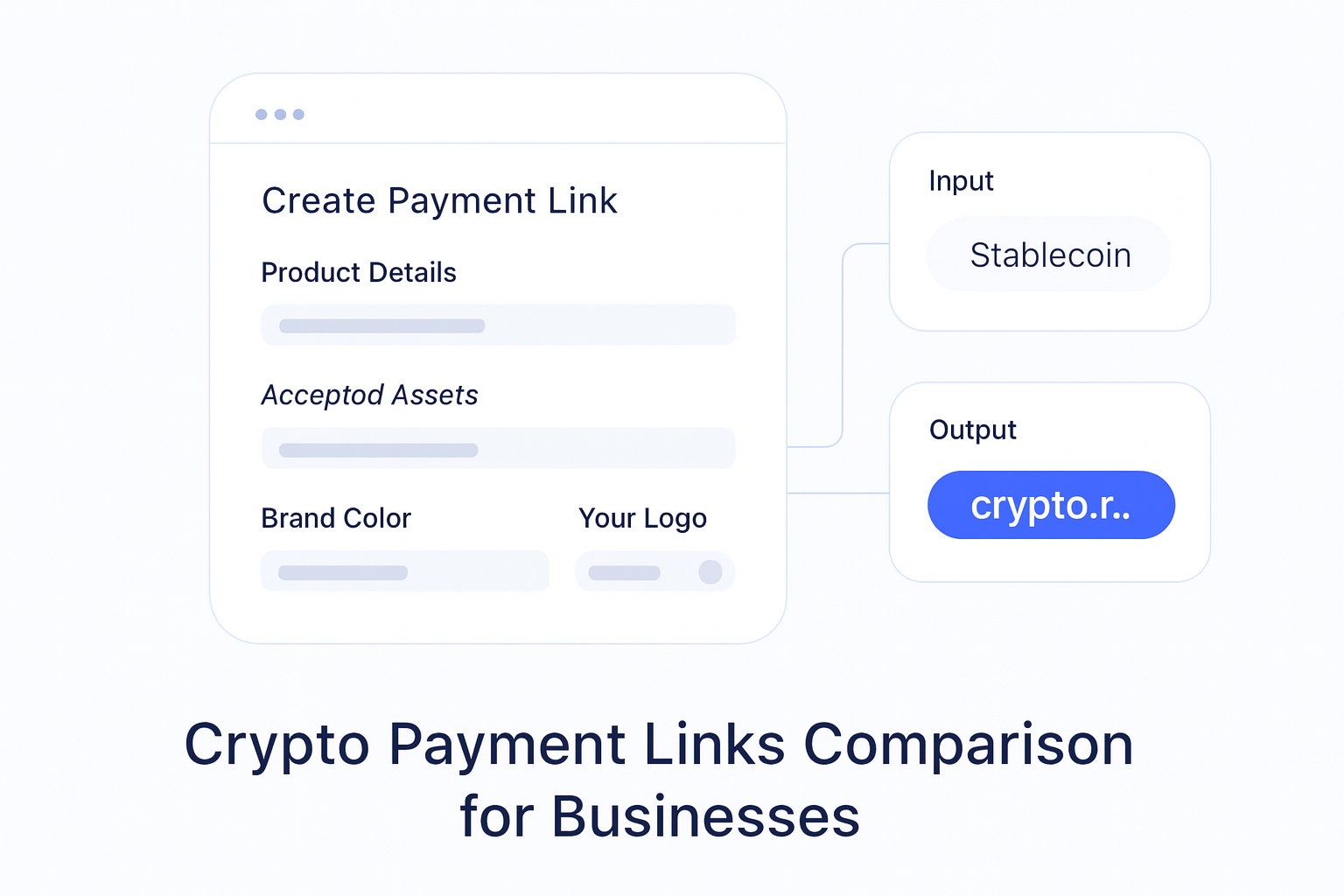
Radom lets you create a branded payment page in the dashboard with product details, pricing, accepted assets, brand colors, and your logo. You can share the link by email, chat, social media, QR code, invoice, or a website button. When a customer pays, you get dashboard and email notifications, then settle or withdraw funds from Radom.
For teams that also need a fuller payment stack, Radom connects payment links to hosted crypto checkout, crypto payments, crypto invoicing, and pricing.
What to compare before you choose a payment links tool
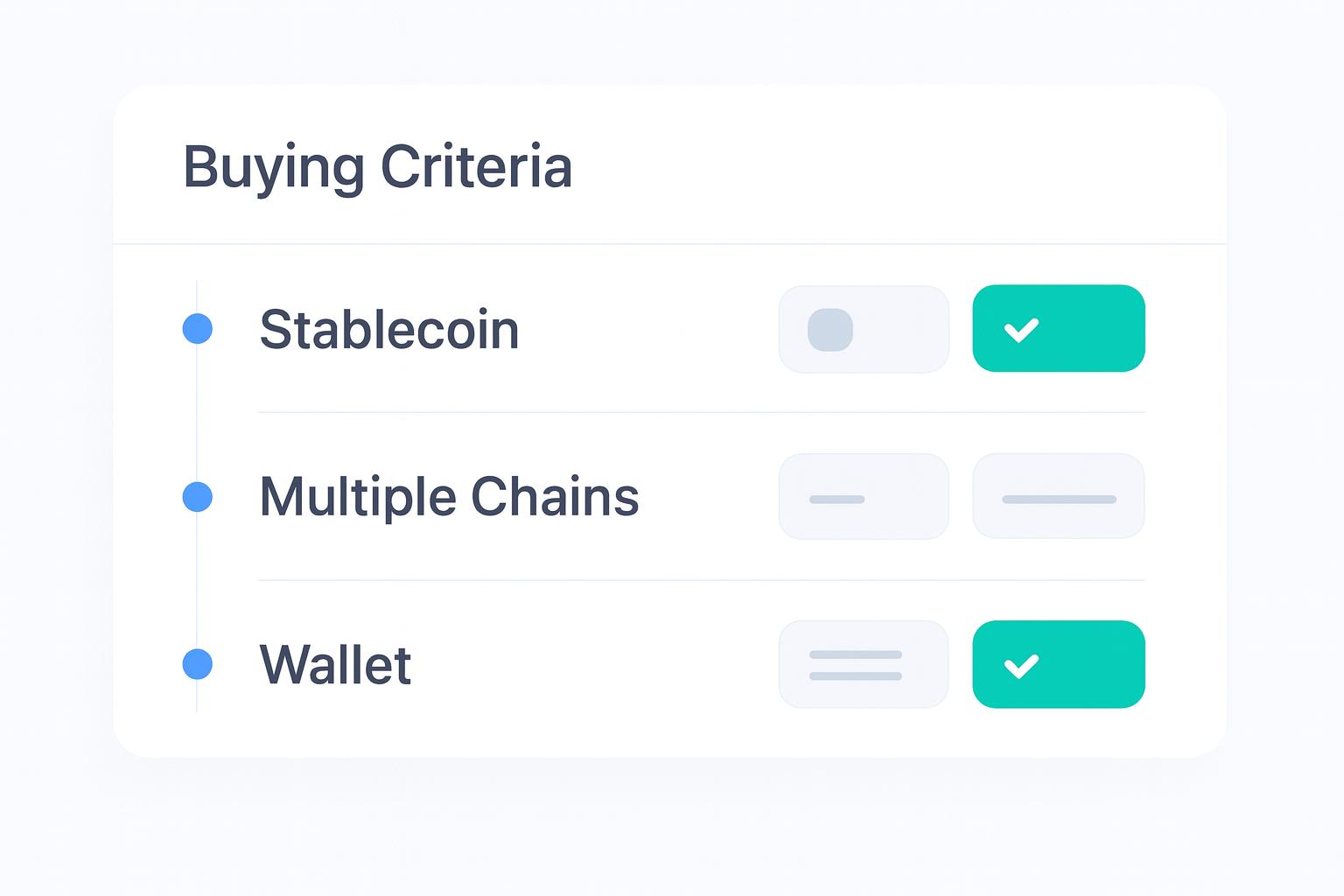
Use these criteria if you are deciding between Radom and another payment links product.
- Setup time: Can your team create a payment page without engineering work?
- Brand control: Can you set logo, colors, and product details on the payment page?
- Sharing options: Can you send the link by email, chat, QR code, invoice, or website button?
- Payment visibility: Do you get clear notifications when a customer pays?
- Settlement path: Can you settle or withdraw funds from the platform after payment?
- Business fit: Is the product built for operators, finance teams, and developers, not just one-off consumer use?
Where Radom fits
Radom is a good fit when you want payment links as part of a broader business payments stack. The platform also supports hosted checkout, subscriptions, invoices, payouts, conversion, and settlement from one account. That matters if payment links are only one part of your collection workflow.
Radom is especially useful for teams that need a practical payment page for quick collection, then want the option to move into hosted checkout or broader crypto payment processing later.
Decision guide
- Map the payment flow you need today: quick collection, invoice payment, or a hosted checkout experience.
- Check whether the tool supports branded payment pages and the sharing channels your team already uses.
- Confirm how payment status is reported back to your team.
- Review pricing so you understand whether the model fits your volume and workflow.
- If you need more than links, compare the broader platform rather than buying a point solution first.
Why teams choose a broader platform
Payment links are often the entry point. But once volumes grow, teams usually need invoicing, subscriptions, payouts, conversion, or settlement controls. Radom is built to keep those workflows in one place so finance, operations, and developers are not stitching together separate tools.
If your use case is more than simple link collection, start with Radom pricing or speak with sales about the right product mix for your workflow.
Frequently asked questions
What is a crypto payment link?+
A crypto payment link is a shareable hosted page that lets a customer pay without building a custom checkout flow.
Can I brand the payment page?+
Radom supports branded payment pages with product details, pricing, accepted assets, brand colors, and your logo.
How do customers receive the link?+
You can share Radom payment links by email, chat, social media, QR code, invoice, or website button.
What happens after payment?+
Radom sends dashboard and email notifications when a customer pays, then you can settle or withdraw funds from Radom.
When should I use checkout instead of payment links?+
Use checkout when you want a more complete hosted payment flow for your website or app. Use payment links when you need a fast no-code way to collect payment.