What a crypto payment processor should do
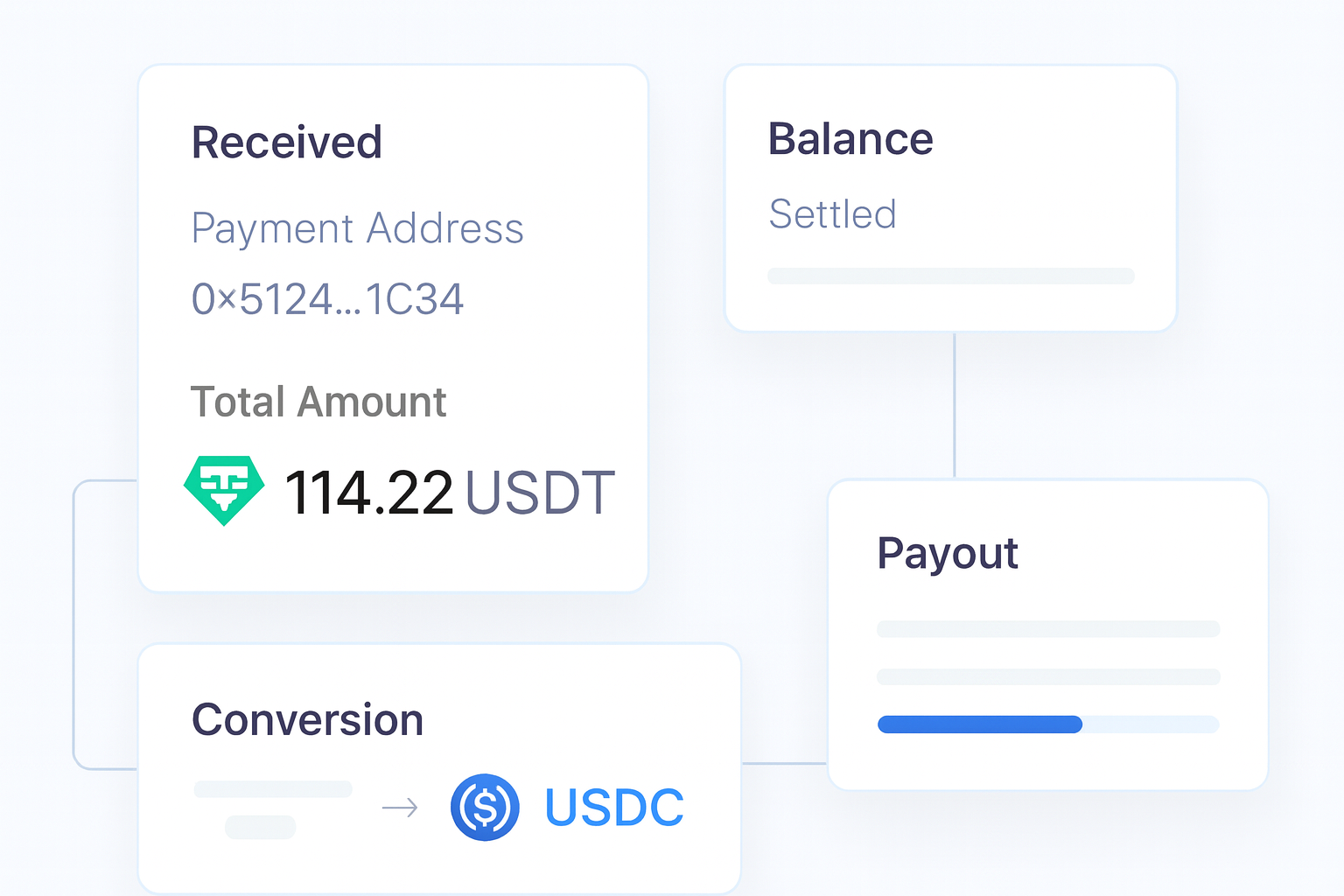
If you are evaluating a crypto payment processor, start with the operational job it needs to do. For most businesses, that means accepting crypto payments, tracking balances clearly, settling in the right asset or currency, and reducing manual work for finance and operations teams.
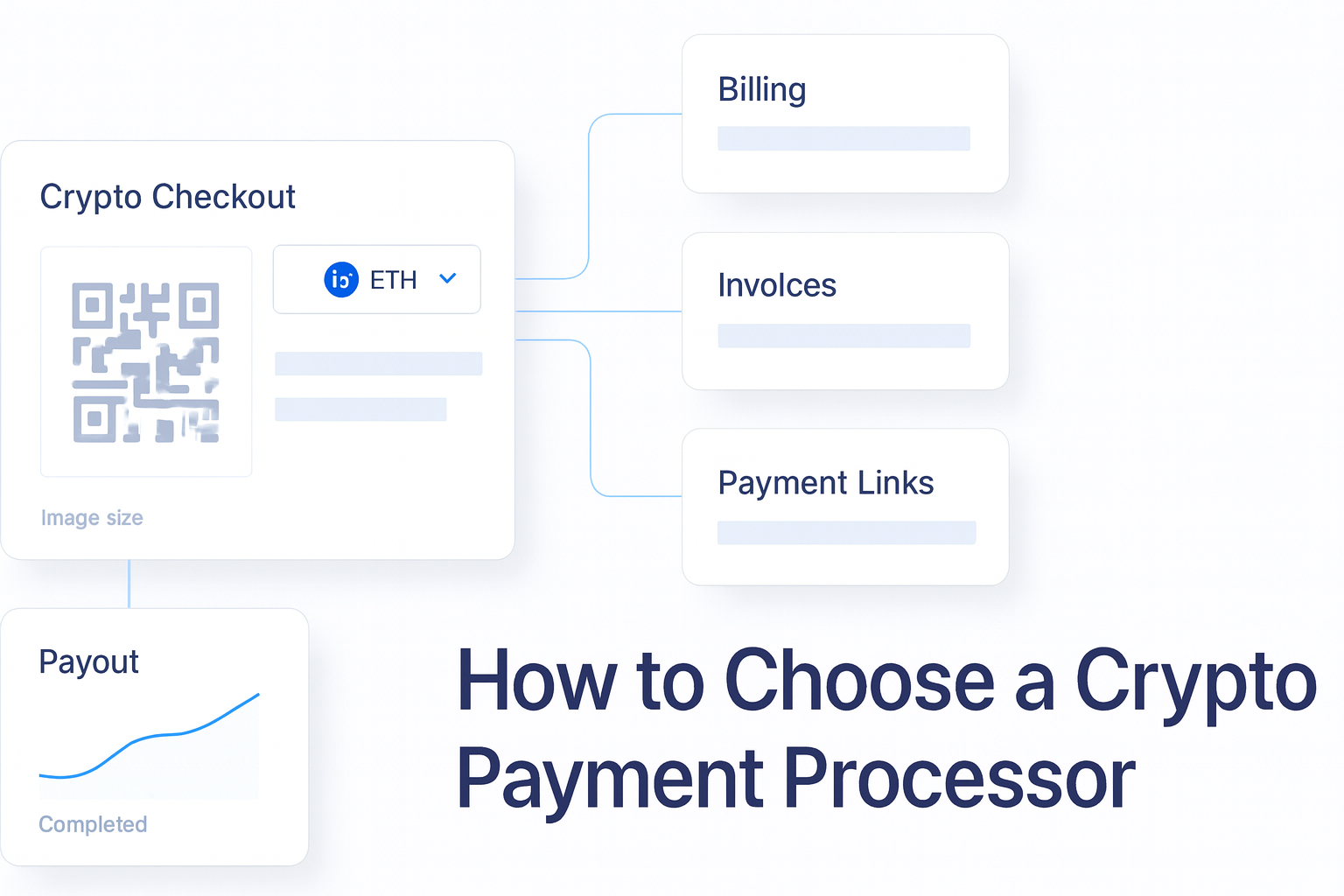
Radom is built for businesses that need more than a single checkout flow. It supports crypto payments, billing, subscriptions, invoices, payment links, payouts, and payment APIs from one platform.
For teams comparing options, the main question is not whether a provider can take a payment. It is whether the platform fits the full workflow around acceptance, settlement, conversion, reconciliation, and payouts.
See Radom crypto payments or review pricing if you are narrowing vendors.
How to evaluate a crypto payment processor
- Check the payment methods you actually need. If you need hosted checkout, payment links, invoices, subscriptions, or API-led flows, confirm those are available in one platform.
- Confirm settlement options. Some teams want to hold crypto balances. Others want to convert or settle in fiat. Make sure the platform supports the workflow you need.
- Look at balance management and reporting. Finance teams need clear records for reconciliation, not just payment status updates.
- Review the developer experience. If your team will integrate the processor, documentation and APIs matter as much as checkout design.
- Map the payout path. If you also need to move funds out to contractors, creators, partners, or platform users, the processor should support that without extra tools.
Radom supports teams that want to manage acceptance and movement of funds in one place, including conversion and settlement workflows. For developers, the documentation is the natural next step.
Where Radom removes work
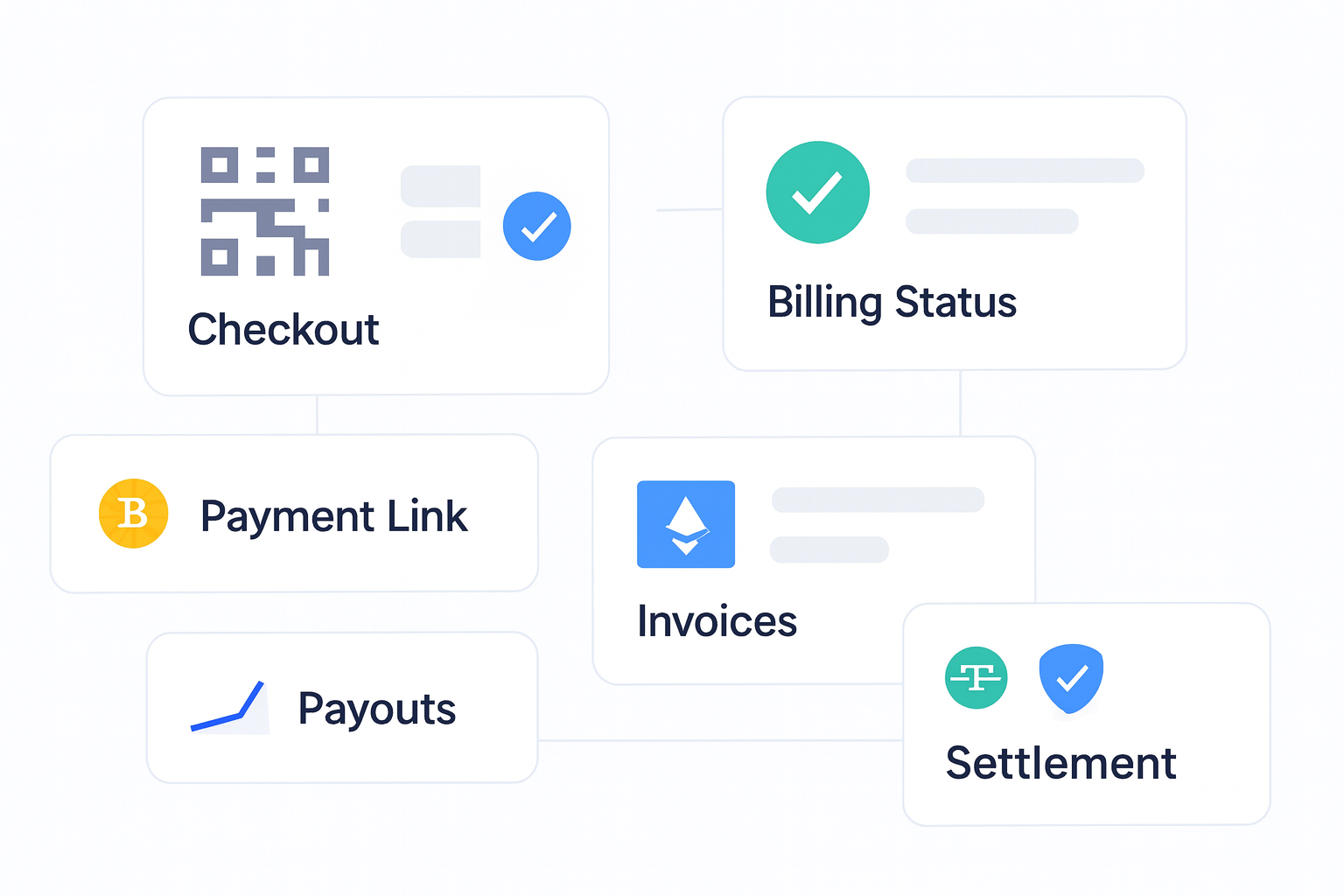
Radom is useful when you want fewer disconnected tools between payment acceptance and finance operations. Instead of stitching together separate products for checkout, invoicing, billing, payouts, and conversion, you can use one platform to manage the flow.
- Hosted checkout for teams that want a ready-made payment page.
- Payment links for quick collection workflows.
- Invoices and billing for recurring or service-led revenue.
- Payouts for businesses that need to move funds to recipients.
- Conversion and settlement for teams that want to manage balances in the asset or currency they prefer.
This matters for finance operations because it reduces manual handoffs between payment collection, treasury, and payout execution.
Use hosted crypto checkout if your team wants a faster launch path.
Choose based on your business model
The right crypto payment processor depends on how you get paid and how you move money after the payment lands.
SaaS and subscription businesses: look for subscriptions, billing, and invoice support.
E-commerce and digital commerce teams: look for hosted checkout, payment links, and a clear customer payment flow.
Platforms, marketplaces, affiliate networks, and creator businesses: look for payout workflows and balance management.
Developers: look for APIs, documentation, and a product that can support your payment architecture without forcing a full rebuild.
Finance teams: look for settlement, conversion, and reporting that make reconciliation easier.
Radom is designed for these business use cases, with a product set that covers payment acceptance and downstream money movement.
When to use crypto payments, billing, or payouts
Not every buyer needs the same entry point.
If you want to accept one-time payments, start with crypto payments or crypto checkout.
If you bill customers on a recurring basis, use billing or subscriptions. If your team sends funds to many recipients, focus on payouts. If you need to move between crypto and fiat, review crypto convert and crypto on and off ramp.
The practical benefit of choosing a broader platform is that you can keep payment acceptance, settlement, and treasury movement inside one operating layer.
Pricing and buying considerations
Radom pricing is presented as per-transaction pricing with no setup fees or monthly fees on the published pricing page. If you have high volume or a more complex implementation, contact sales to confirm fit.
Review Radom pricing before you compare total cost across processors.
Frequently asked questions
What is a crypto payment processor?+
A crypto payment processor helps a business accept digital asset payments and manage the related workflows around checkout, settlement, reporting, and payouts.
What should finance teams look for?+
Finance teams should look for clear balances, settlement options, conversion tools, and reporting that supports reconciliation.
Do I need a separate tool for billing or payouts?+
Not necessarily. Radom supports payments, billing, invoices, payment links, and payouts from one platform.
Can developers integrate Radom?+
Yes. Radom provides APIs and documentation for teams that need programmable payment infrastructure.
Where should I start if I am comparing platforms?+
Start with the workflow you need most, then review the product page, pricing, and documentation. If your use case is complex or high volume, speak with sales.
Contact sales if you want help mapping your workflow to Radom.
Next step
If your business needs crypto payment acceptance plus the operational tools around it, Radom is a practical place to start. Sign up if you want to explore the product, or contact sales if you need help with a larger rollout.