Compare crypto payment processors on the parts that affect revenue and operations
If you are comparing crypto payment processors, start with the workflow, not the logo. The right platform should fit how your business accepts payments, issues invoices, manages subscriptions, sends payouts, and settles balances.
Radom is built for businesses that need crypto payments, billing, subscriptions, invoices, payment links, payouts, conversion, and settlement in one platform. It is a practical option for founders, payments teams, finance operations, platform operators, and developers who want fewer moving parts.
For product detail, see crypto payments and pricing.
What to compare before you choose
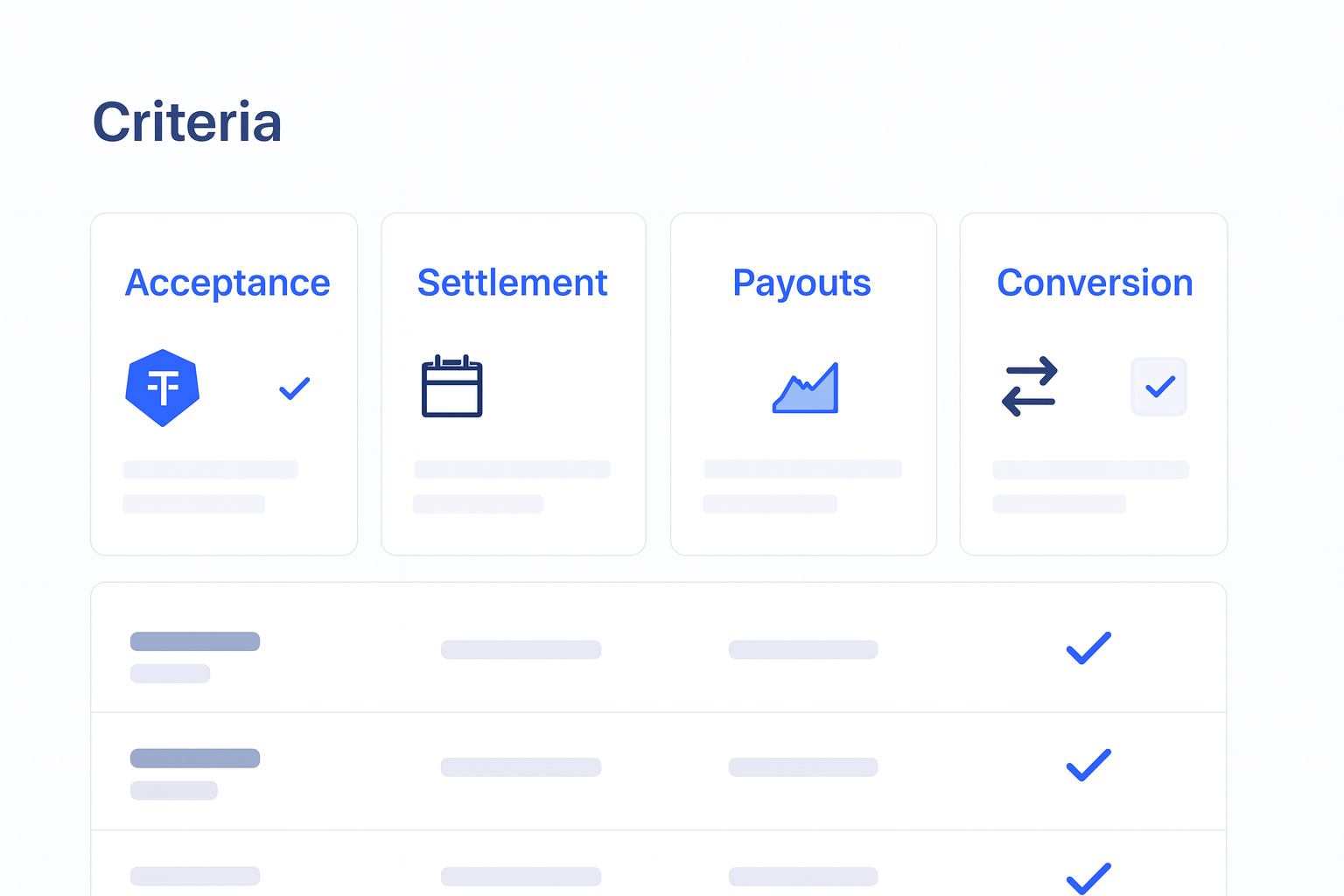
Use the same checklist for every provider so the decision is based on operations, not positioning.
- Payment acceptance: Can you accept one-time payments, hosted checkout, payment links, invoices, and subscriptions?
- Settlement control: Can you receive funds to a balance, convert assets, or withdraw to a wallet?
- Payout workflows: Can the platform support business payouts, including crypto and fiat payout flows where available?
- Conversion and treasury: Can you move between supported assets and manage settlement rules without extra tools?
- Developer fit: Are there APIs and docs for teams that need to automate payment operations?
- Pricing clarity: Is pricing easy to understand, and can you speak to sales for higher-volume or more complex needs?
Where Radom fits
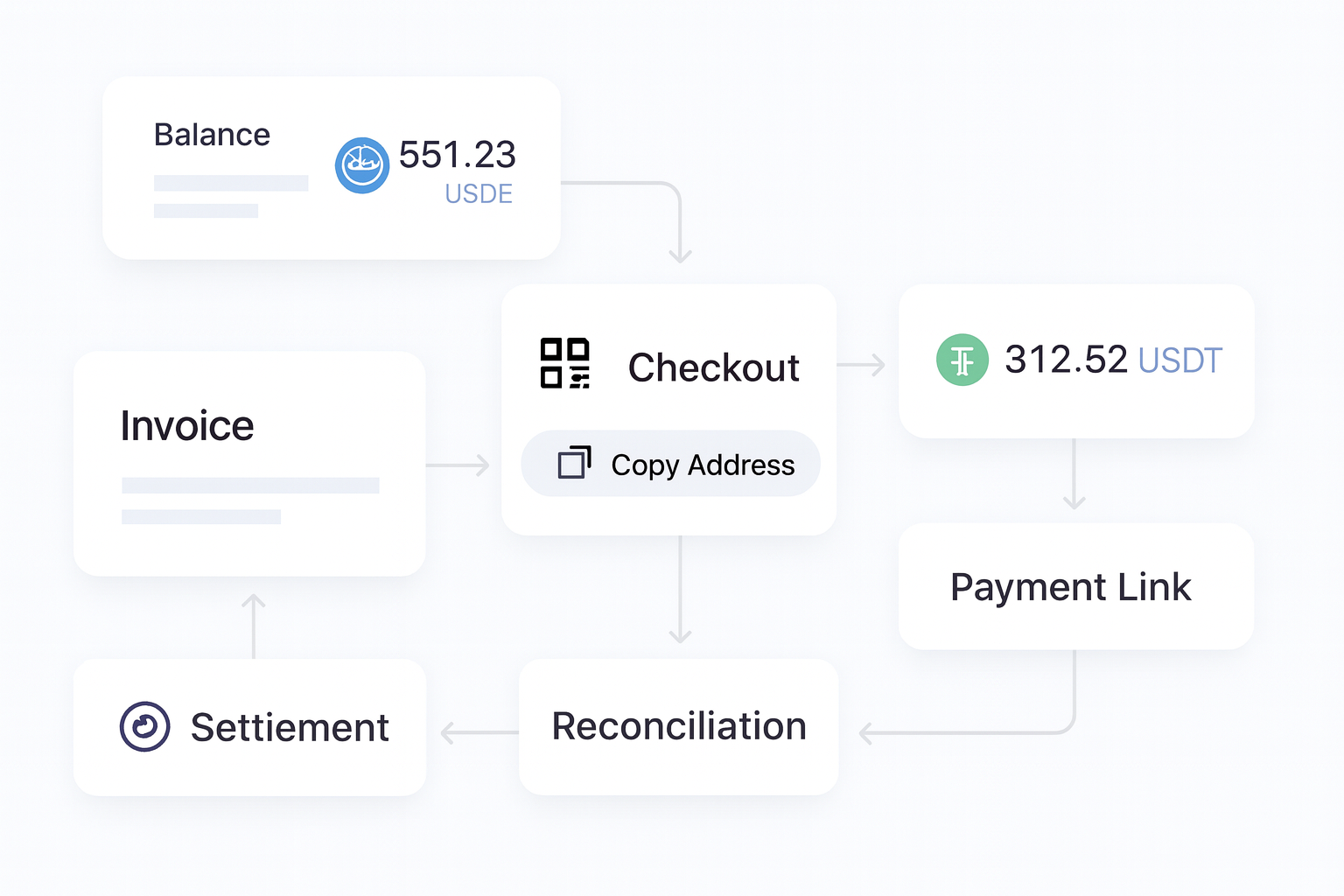
Radom combines payment acceptance and money movement tools in one platform. That matters when the same team needs to collect funds, reconcile balances, manage settlement, and move money onward.
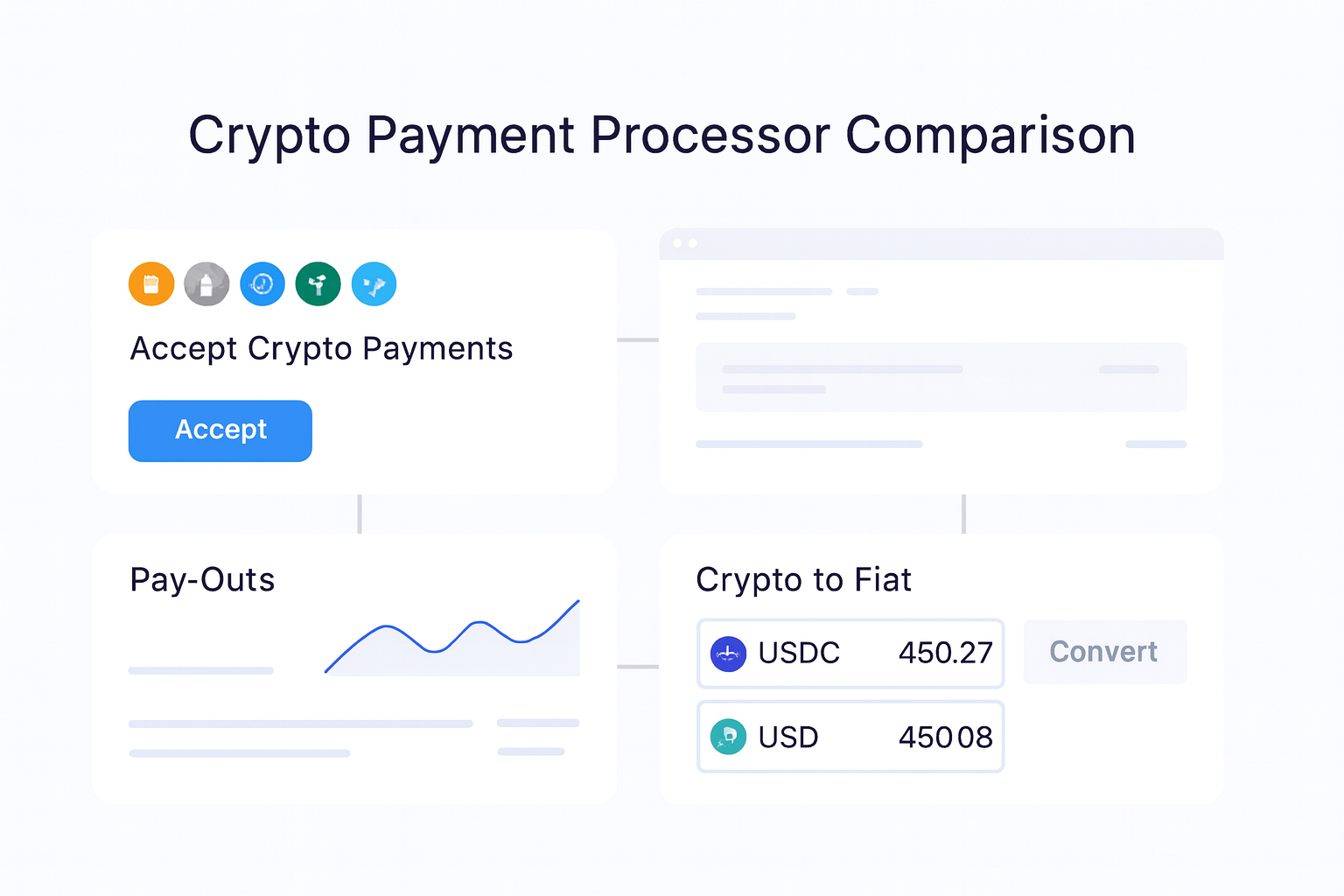
- Accept crypto payments through hosted checkout, payment links, invoices, subscriptions, and APIs.
- Settle in crypto or fiat, track balances, and manage reporting from one platform.
- Use conversion tools to move between supported digital assets and settlement currencies.
- Run payouts from the same operating layer instead of stitching together separate tools.
Explore the related product pages for a closer fit check: crypto checkout, crypto billing, crypto invoicing, crypto convert, crypto on and off ramp, and mass payouts.
A practical comparison framework for operators
- Map the payment flow. Decide whether you need checkout, invoices, billing, links, payouts, or all of them.
- Check settlement options. Confirm whether you can hold, convert, or withdraw balances in the way your finance team needs.
- Review payout requirements. If you pay partners, affiliates, creators, or contractors, confirm the platform supports your payout workflow.
- Test the developer path. If your team will automate the flow, review the docs and API surface before committing.
- Compare pricing with volume in mind. If you have meaningful volume or a more complex setup, speak to sales before making a final decision.
For teams comparing options at the decision stage, the next step is usually to review pricing and then move to contact sales if the workflow is a fit.
Why some teams choose Radom over a single-purpose processor
Many processors solve one part of the problem well. The issue appears later, when finance, operations, and product teams need the rest of the flow to work together.
Radom is designed for businesses that want to keep payment acceptance, settlement, conversion, and payouts in one operating layer. That can reduce the amount of manual reconciliation and tool switching your team has to manage.
If your use case is developer-led, start with the Radom docs. If you want to evaluate fit quickly, use contact sales.
Who this comparison is for
This page is most useful if you are a founder, payments lead, finance operator, or developer comparing crypto payment infrastructure for a business, platform, or marketplace. It is also relevant for subscription businesses, affiliate networks, creator platforms, and other operators that need both acceptance and downstream money movement.
Frequently asked questions
What should I compare in a crypto payment processor?+
Focus on checkout, billing, invoices, payment links, settlement options, payout support, conversion tools, API quality, and pricing clarity.
Does Radom support more than payment acceptance?+
Yes. Radom supports payments, billing, subscriptions, invoices, payment links, payouts, conversion, and settlement workflows.
Is Radom only for developers?+
No. Radom supports no-code and API-led use cases, so it can work for operators as well as engineering teams.
Where should I go if I need pricing for a larger volume setup?+
Review pricing first, then contact sales if your volume or workflow needs a tailored conversation.
Can I integrate Radom with my product team’s workflow?+
Yes. If you are evaluating the technical path, start with documentation and then move to the product page that matches your use case.
Next step
If you are comparing crypto payment processors for a real business workflow, the fastest path is to review pricing, check the relevant product page, and contact sales if you want to confirm fit.