Why teams integrate a crypto payment processor
If you are evaluating crypto payment processor integration, the real question is usually operational, not ideological. You need a way to accept crypto payments without building every payment flow yourself, keep settlement visible, and give finance and engineering one place to manage the result.
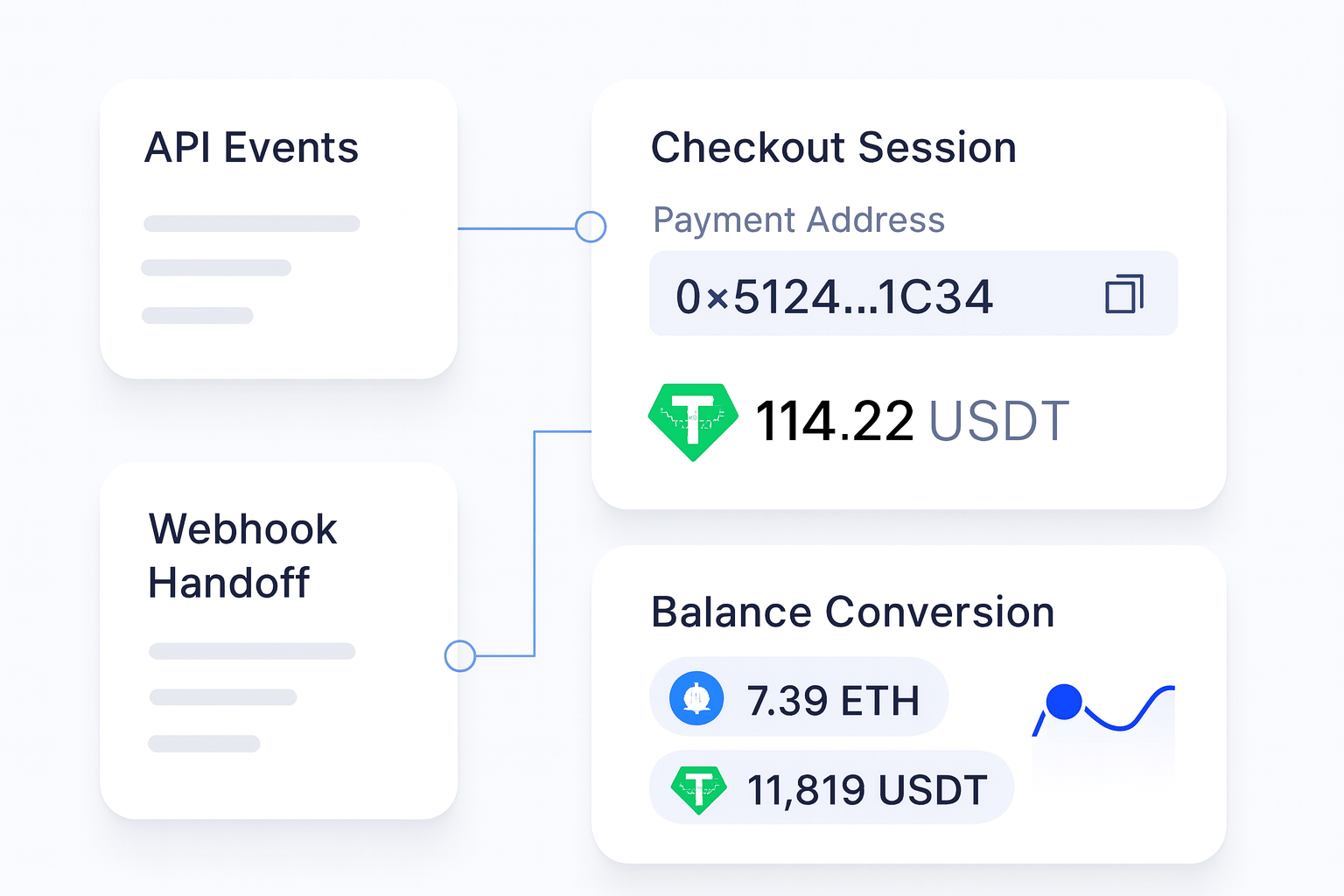
Radom is built for businesses that want to accept crypto payments, manage subscriptions, send invoices, create payment links, and run payouts from one platform. You can also settle in crypto or fiat, track balances, and launch with APIs or no-code tools.
For teams comparing implementation paths, start with crypto payments and crypto checkout if you want the acceptance flow first, or review pricing if you are working through commercial approval.
What a crypto payment integration usually needs
A workable integration is more than a payment button. Most teams need a clear customer flow, reliable payment status updates, a way to reconcile incoming funds, and a settlement path that matches how the business operates.
- A hosted checkout or embedded flow for customer payment collection
- Payment links for lighter-weight sales workflows
- Invoices or subscriptions for recurring or finance-led collections
- APIs for automated payment creation and event handling
- Balance tracking and settlement options for treasury and reconciliation
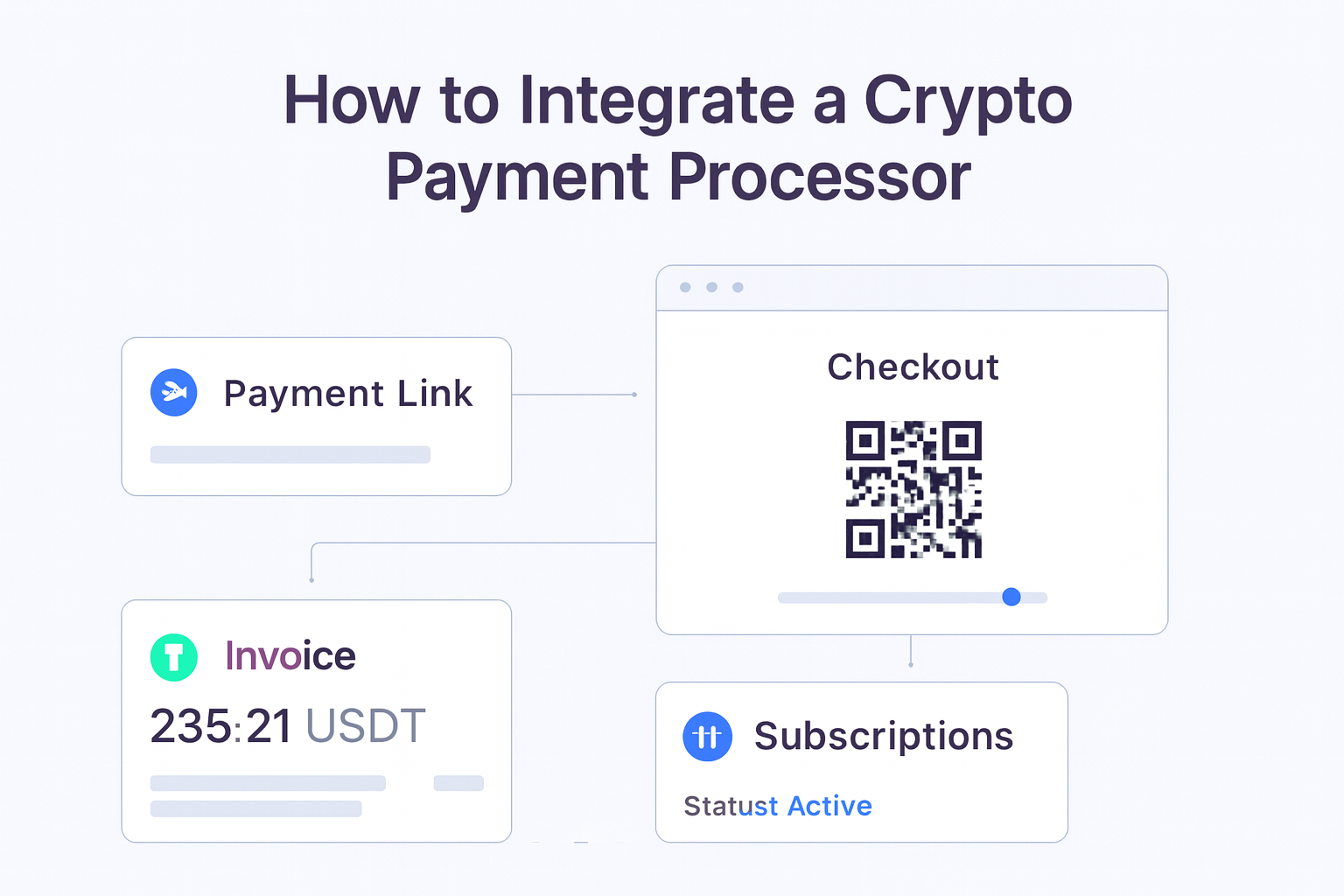
Radom supports hosted checkout, payment links, invoices, subscriptions, and payment APIs from one account, so teams can choose the flow that fits the use case rather than stitching together separate tools.
How to integrate Radom step by step
- Choose the payment flow. Decide whether the first release should use hosted checkout, payment links, invoices, subscriptions, or an API-led flow.
- Map the business event. Define what triggers a payment request, such as a cart checkout, a renewal, a manual invoice, or a platform payout workflow.
- Connect the payment experience. Use Radom to present the customer with a clear payment flow that fits your brand and operating model.
- Handle payment status updates. Make sure your team can see when a payment is created, pending, confirmed, or settled.
- Plan settlement and reconciliation. Decide whether funds should stay in crypto, convert, or move into fiat based on your treasury process.
- Test before rollout. Validate the customer experience, internal notifications, and reporting before sending live traffic.
For developer teams, the fastest path is usually to start with the Radom documentation and then test the flow in the dashboard.
Where Radom removes work from the integration
Radom reduces the amount of custom payment infrastructure you need to maintain. Instead of building separate systems for checkout, subscriptions, invoices, payment links, and settlement tracking, you can use one platform to handle the payment lifecycle.
That matters for payments teams and finance operations teams because it reduces the number of moving parts that need to stay in sync. It also matters for platform operators, affiliate networks, iGaming operators, creator platforms, and subscription businesses that need fast global payment workflows and clear operational control.
If your business also needs currency movement after collection, Radom supports conversion workflows through crypto convert and crypto to fiat movement through crypto on and off ramp.
When to use checkout, links, invoices, or subscriptions
Pick the payment surface that matches the customer journey.
- Checkout: best for a hosted payment page with a clear customer flow
- Payment links: useful for quick collection without building a full checkout path
- Invoices: useful when finance or services teams want a formal payment request
- Subscriptions: useful for recurring revenue models and repeat billing
If you are still deciding, the crypto payments product page is the best place to compare the available acceptance flows.
What finance teams should plan for
Finance teams should confirm how incoming funds will be tracked, where balances will sit, and how settlement will be reported. That is especially important if the business accepts crypto but wants to settle in fiat, or if it needs to move between assets during treasury operations.
Radom supports settlement in crypto or fiat and gives teams a way to track balances. For businesses that need movement between crypto and fiat, the on and off ramp flow can be reviewed on crypto on and off ramp.
Implementation checklist before launch
- Confirm the payment method and customer flow
- Decide whether the first release is hosted or API-led
- Define internal ownership for support, reconciliation, and reporting
- Check settlement preferences for crypto, stablecoins, or fiat
- Test the full payment lifecycle before going live
Next step
If you are comparing crypto payment processor integration options, the most practical next step is to test the flow in Radom and see how it fits your checkout, billing, and settlement process. You can also review pricing or contact sales if you need help with higher-volume or more complex payment operations.