Why businesses accept crypto payments
Businesses usually evaluate crypto payments for operational reasons, not ideology. They want another way to collect revenue, reach customers who already hold digital assets, and reduce friction in cross-border or platform-led payment flows. For teams that need to manage settlement, reporting, and reconciliation, the question is not whether crypto is interesting. It is whether the payment flow fits the business model.
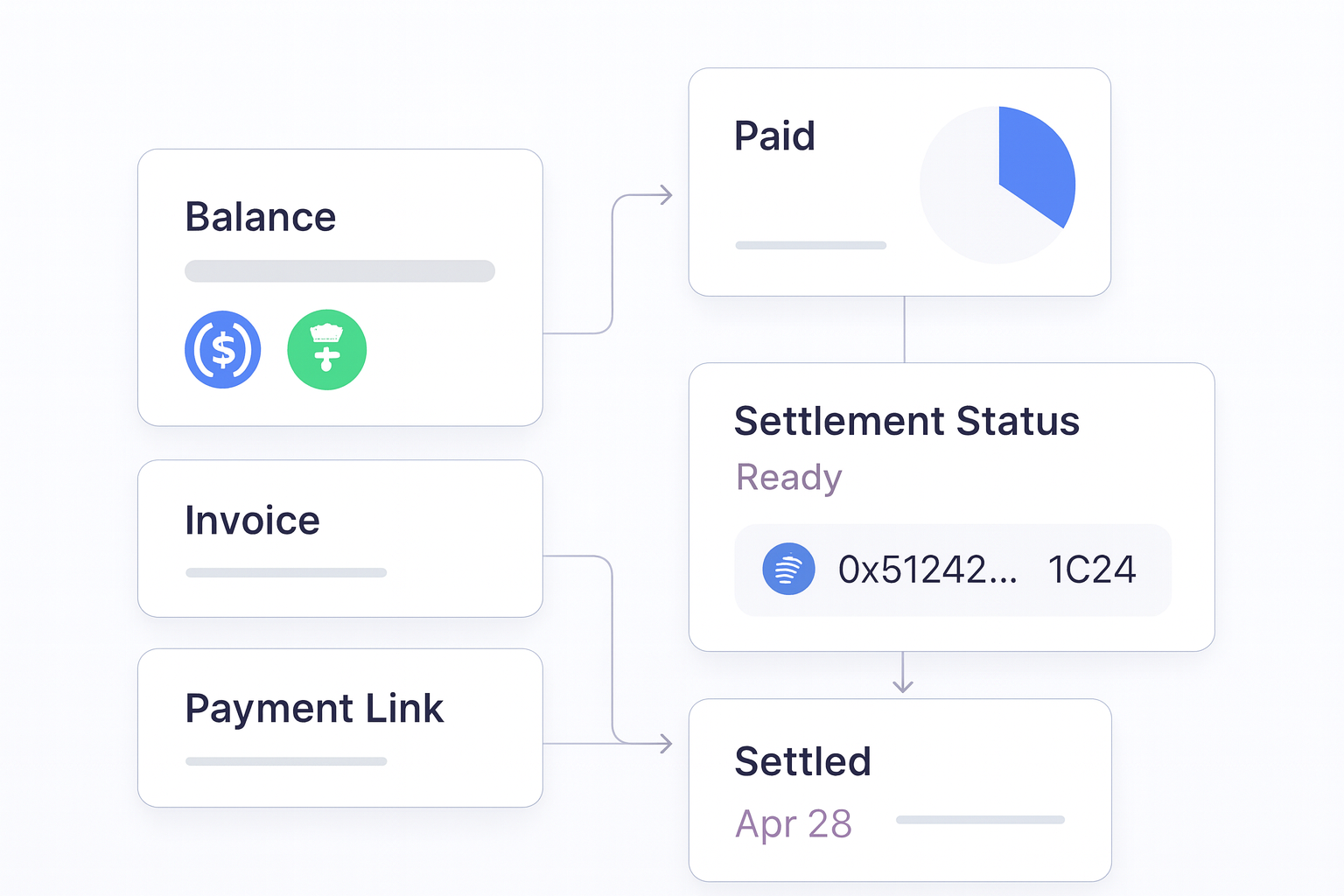
Radom is built for that use case. It helps businesses accept crypto payments, manage subscriptions, send invoices, create payment links, and run payouts from one platform. Crypto payments can be launched through hosted checkout, embedded flows, payment links, invoices, subscriptions, or APIs, depending on how your team sells.
How to accept crypto payments in 5 steps
- Choose the payment flow. Start with the channel that matches how you already sell. That might be hosted checkout for a website, payment links for quick collection, invoices for B2B work, or subscriptions for recurring billing.
- Decide where funds should land. Some businesses want to keep balances in crypto, while others want to settle in fiat or convert between assets as part of treasury operations.
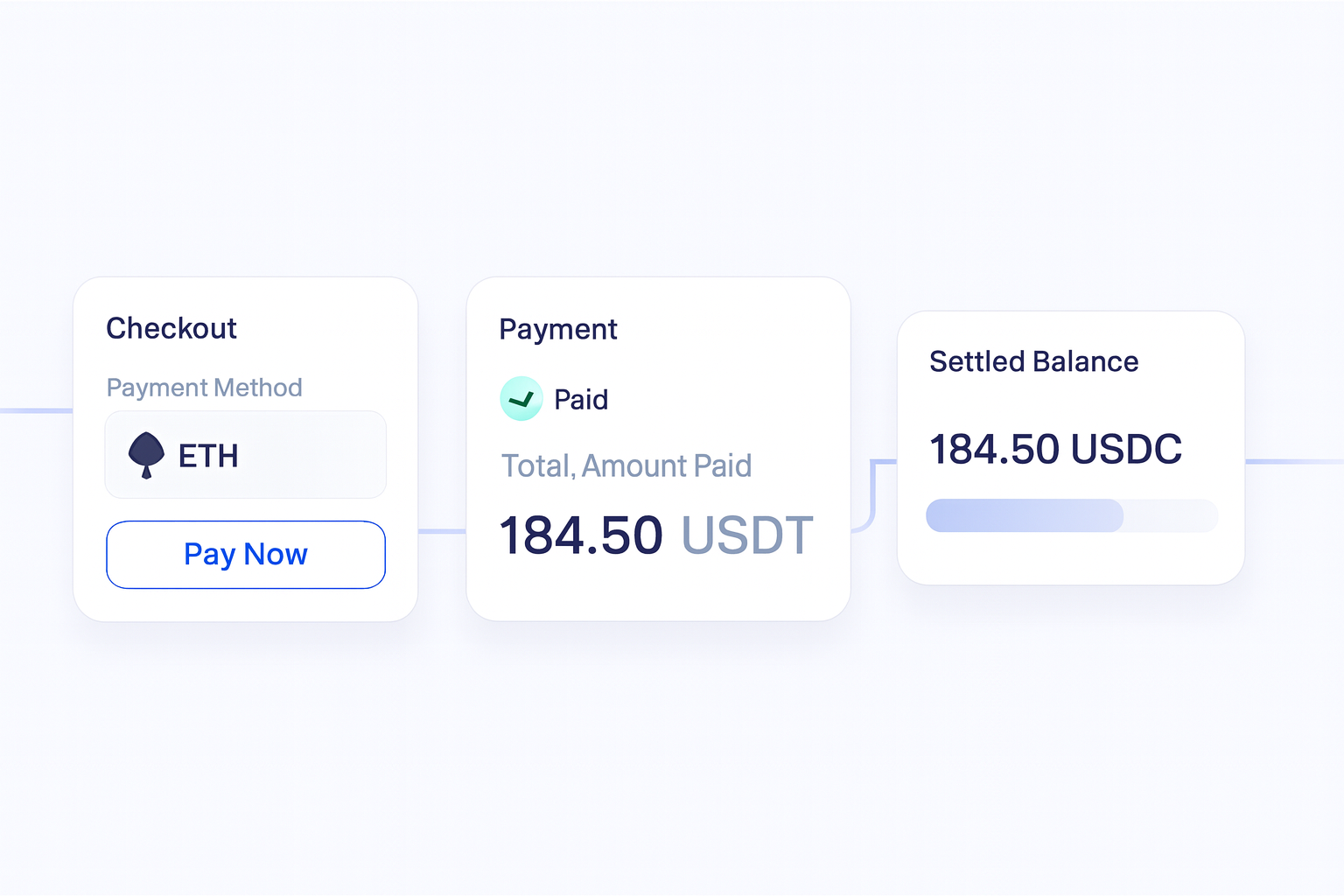
- Set up the customer experience. Buyers need a clear payment page, clear payment status, and a simple path from invoice or checkout to completion. Radom's crypto checkout is designed as a hosted payment flow for one-time payments and subscriptions.
- Connect reporting and operations. Finance teams need to track balances, settlement, and reconciliation. This matters as much as the payment page itself.
- Test before launch. Run a full payment, refund, and settlement workflow before you go live so support, finance, and operations know what happens at each step.
Where Radom removes work
Building crypto acceptance from scratch means handling payment pages, wallet support, status updates, settlement logic, and reporting. Radom reduces that work by giving teams a single platform for acceptance and downstream money movement.
- Hosted checkout for teams that want a ready-made payment page.
- Payment links for lightweight or repeatable collection workflows.
- Invoices for finance-led collection.
- Subscriptions for recurring revenue models.
- APIs and docs for teams that want programmable payment infrastructure.
- Settlement tools for businesses that need to receive funds, convert assets, or withdraw to a wallet.
If your business also needs to move between crypto and fiat, Radom's crypto convert and crypto on and off ramp tools are relevant parts of the stack.
What finance and operations teams should plan for
Crypto acceptance is not only a checkout decision. Finance and operations teams should plan for how balances will be tracked, how settlement will be handled, and how reporting will flow into internal processes. If your business accepts revenue in one asset but wants to settle in another, conversion and treasury rules become part of the operating model.
That is especially important for platforms, marketplaces, affiliate networks, creator businesses, and subscription products, where payment volume can be distributed across many recipients or many recurring charges. The payment rail should support the business model, not force the team into manual work.
When to use checkout, links, invoices, or subscriptions
Use hosted checkout when you want a branded payment page for a product or service. Use payment links when you need a fast way to collect payment without building a full flow. Use invoices when finance or account management owns the collection process. Use subscriptions when you need recurring crypto billing with a predictable customer journey.
Radom supports all of these from one account, which makes it easier to keep payment acceptance and downstream settlement aligned.
How to choose a crypto payments provider
Before you commit to a provider, check whether it can support the payment model you actually need. Good questions include: can you accept one-time and recurring payments, can you launch with APIs or no-code tools, can you manage balances and settlement, and can the platform support the operational side of the business after payment is received?
Pricing also matters. Radom's pricing page states that pricing is per transaction, with no setup fees or monthly fees. For higher volumes or more complex requirements, it is reasonable to contact sales and confirm the right setup.
Next steps
If you are evaluating crypto payments for a live business, start with the payment flow that matches your current operation. Then decide whether you need hosted checkout, payment links, invoices, subscriptions, APIs, or settlement tools. From there, you can sign up and test the flow, review the docs, or speak with sales if your requirements are higher volume or more complex.
Review the crypto payments product or open the docs to see how the integration works.
Frequently asked questions
What kinds of businesses use crypto payments?+
Radom is built for businesses and platform operators, including SaaS, e-commerce, marketplaces, gaming platforms, affiliate networks, creator businesses, and teams that need recurring or invoice-based collection.
Can I accept both one-time payments and subscriptions?+
Yes. Radom supports one-time payments and subscriptions through its crypto payments and checkout products.
Can I settle in fiat instead of crypto?+
Radom supports settlement in crypto or fiat. If you need to move between assets, the crypto convert and crypto on and off ramp products may also be relevant.
Do I need to build my own payment page?+
No. Radom offers hosted checkout and payment links for teams that want to launch without building every payment flow from scratch.
Is Radom only for developers?+
No. Radom supports no-code tools as well as APIs, so teams can choose the implementation path that fits their workflow.