Compare crypto payment platforms with the actual buyer workflow in mind
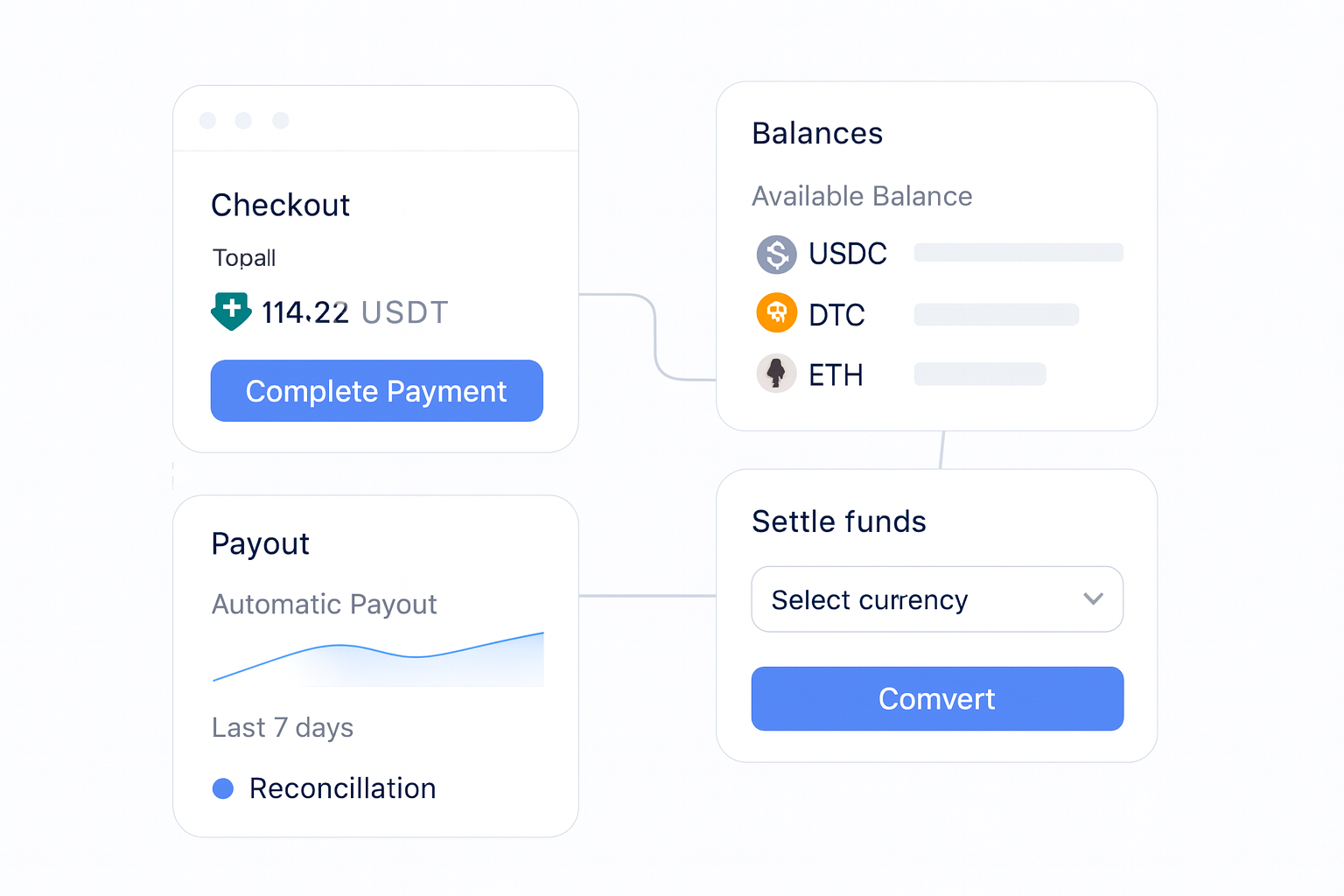
If you are evaluating crypto payments, start with the full operating flow, not just checkout. A platform should help you accept payments, manage subscriptions or invoices, track balances, convert funds when needed, and move money out through payouts or settlement. Radom is built for that broader use case, with crypto payments, checkout, billing, invoices, payment links, payouts, conversion, and settlement tools in one platform.
For teams comparing options, that usually means asking a few practical questions: can the platform handle one-time and recurring payments, does it support hosted checkout and API-led flows, can finance teams reconcile balances cleanly, and can operators move funds between crypto and fiat when the business needs it? Radom is positioned for businesses that want those workflows in one place rather than stitching together separate tools.
Review Radom pricing if you want a simple starting point before you compare product fit, or contact sales if you are comparing higher-volume or more complex payment operations.
What matters in a crypto payments comparison
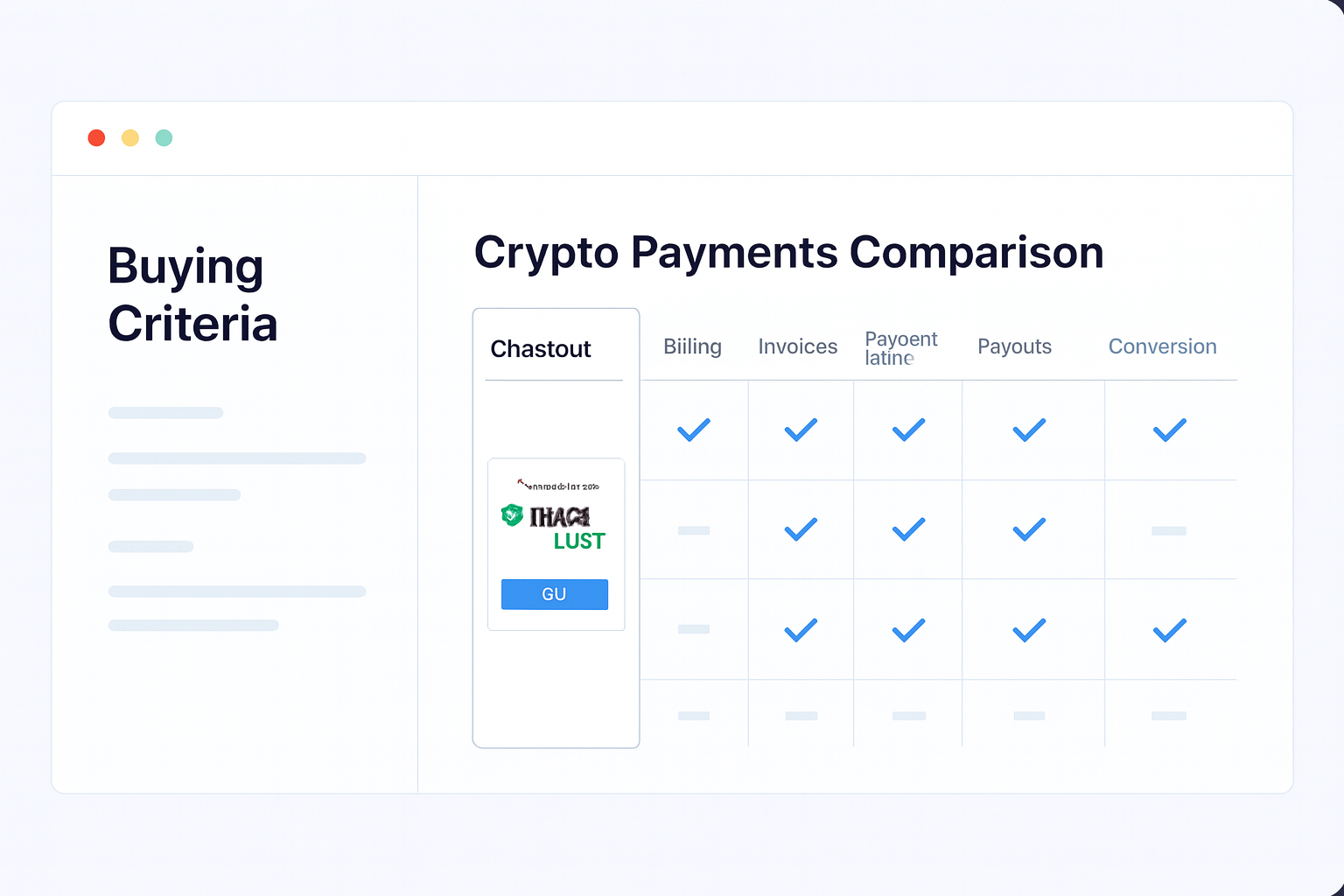
Not every platform is built for the same job. Some are focused on checkout only. Others are better suited to billing, invoicing, or payout operations. A useful comparison should cover the work your team actually needs to do.
- Payment acceptance: hosted checkout, embedded flows, payment links, invoices, and subscriptions.
- Settlement options: whether funds can stay in crypto, be converted, or be withdrawn to your wallet.
- Operations control: balance tracking, reconciliation, and reporting.
- Conversion workflows: moving between supported digital assets and fiat where available.
- Payout support: sending crypto or fiat payouts from the same operating layer.
- Developer fit: APIs, docs, and webhook-driven workflows for product and engineering teams.
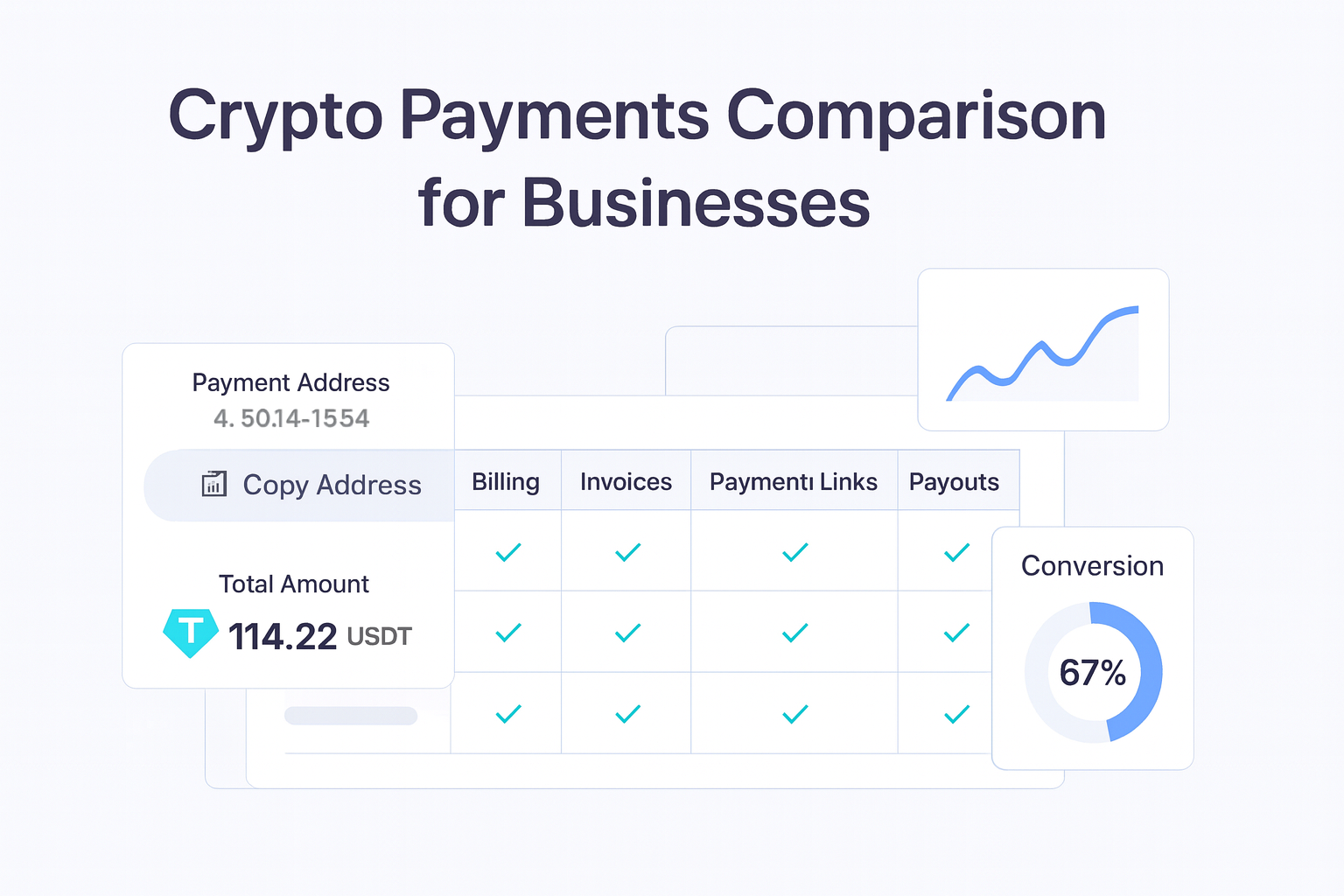
Radom’s public product pages describe support for crypto payments, billing, subscriptions, invoices, payment links, payouts, conversion, and settlement, plus hosted checkout and APIs. If your team needs all of those pieces, it is worth comparing platforms on workflow coverage rather than branding alone.
Where Radom fits in a crypto payments comparison
Radom is a fit for businesses that need a practical payments layer for internet-native money movement. That includes SaaS companies, e-commerce brands, marketplaces, gaming platforms, affiliate networks, and other teams that want to accept crypto across the channels they already use.
The main advantage of evaluating Radom in this category is scope. The platform is not just a checkout page. It also covers billing, invoicing, payment links, payouts, and conversion, with settlement tools designed for business operations. That matters when the payments team, finance team, and engineering team all need the same system to do different jobs.
If your shortlist includes platforms with different strengths, use the product pages to compare the exact workflow you need: crypto payments, crypto checkout, crypto billing, crypto invoicing, and mass payouts.
Comparison criteria for operators and finance teams
Use this checklist when you compare Radom against any other crypto payments platform.
1. Can the platform support the payment model you use?
Some businesses need one-time payments. Others need subscriptions, invoices, or payment links. Radom supports all of those product types, so teams can keep the same provider as their revenue model changes.
2. Can finance teams manage balances and settlement?
Payment acceptance is only part of the job. Finance teams also need visibility into balances, settlement, and reporting. Radom’s product positioning includes tracking balances and settling in crypto or fiat, which is useful when treasury and reconciliation matter as much as checkout.
3. Can the platform move funds when the business needs to?
For many teams, the real decision is not whether they can accept crypto. It is whether they can convert it, settle it, or move it into payout flows without extra manual work. Radom supports conversion and payout workflows alongside acceptance.
4. Is there a path for both no-code and developer-led adoption?
Some teams want to launch quickly with hosted tools. Others need APIs and docs. Radom supports both, which makes it easier to start with a simple implementation and expand later.
5. Does the platform fit the business, not just the payment page?
Platforms that only handle checkout can leave operations teams doing the rest manually. Radom is designed as a broader crypto payments platform, which is more relevant for businesses that need acceptance, settlement, conversion, and payouts in one operating layer.
How to choose between Radom and a narrower alternative
- Map the full payment flow your team needs, from customer payment to settlement or payout.
- Check whether the platform supports your current model and the next one you may add, such as subscriptions or invoices.
- Confirm whether finance can reconcile balances and reporting without extra tooling.
- Review whether conversion, off-ramp, or payout workflows are part of the same product or require separate systems.
- Compare the implementation path for operators and developers, including hosted tools, APIs, and documentation.
Radom removes work when a business needs more than acceptance alone. Instead of using separate tools for checkout, billing, invoicing, payouts, and conversion, teams can evaluate one platform that covers the full flow.
For implementation details, start with Radom documentation. For pricing and commercial fit, use pricing or contact sales.
Common buyer questions
Is Radom only for checkout?
No. The public product pages show crypto payments, checkout, billing, invoices, payment links, payouts, conversion, and settlement tools.
Can Radom support recurring revenue?
Yes. Radom’s public pages include crypto billing and subscriptions, which makes it relevant for SaaS and other recurring revenue models.
Can Radom help with payout operations?
Yes. Radom supports payouts, including business payout workflows described in the product and business context.
Where should I start if I am comparing platforms?
Start with the product pages that match your main workflow, then review pricing and documentation. If your volume or settlement requirements are more complex, contact sales.
See Radom pricing or talk to sales if you are comparing options for a live rollout.
Next step
If you are comparing crypto payments platforms for a real business use case, Radom is worth reviewing when you need checkout, billing, invoices, payment links, payouts, conversion, and settlement in one place. That combination matters most for teams that want a practical operating layer, not just a payment widget.
Contact sales to discuss your use case, or start with the product docs if your team is evaluating the integration path.