Accept crypto without rebuilding your checkout stack
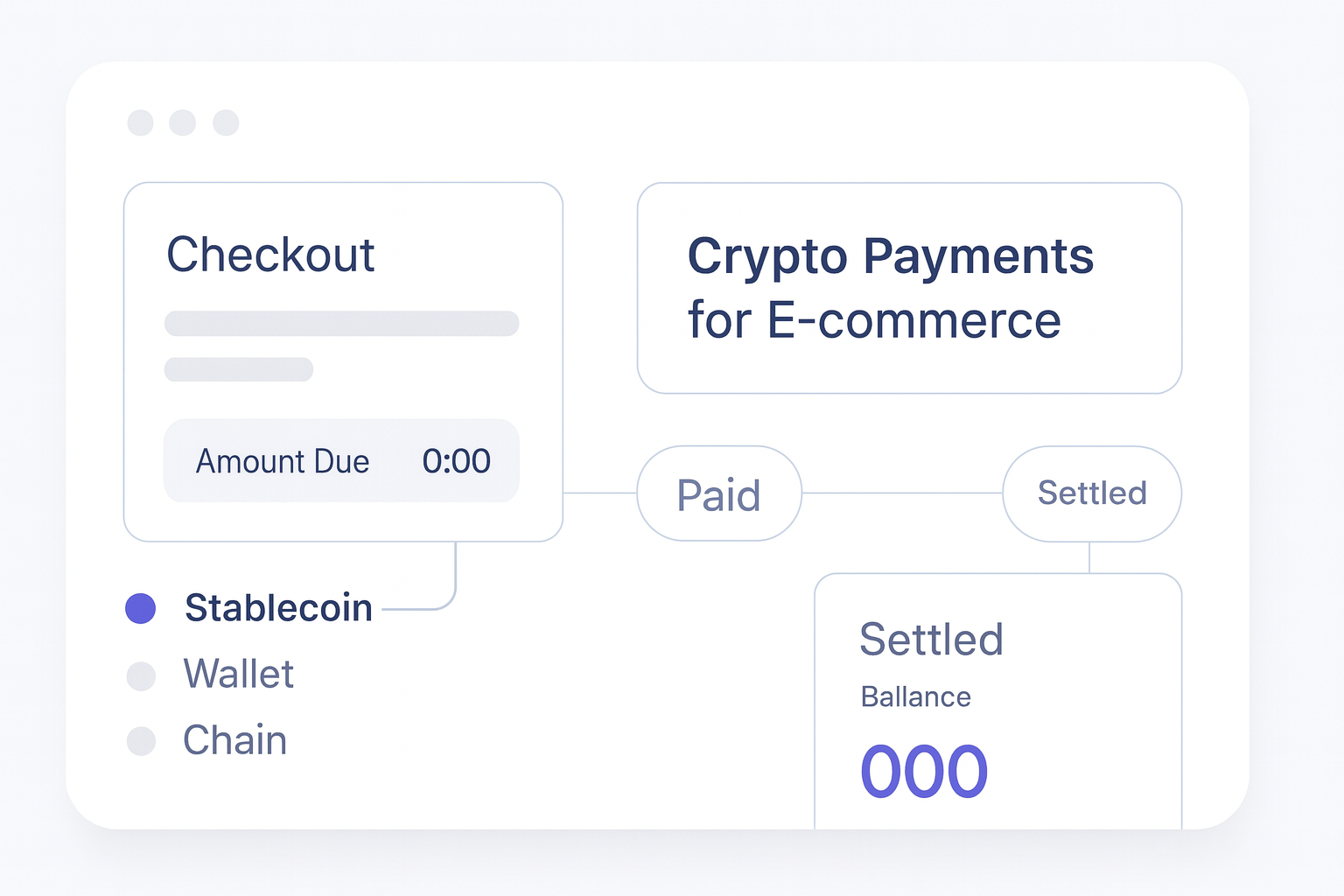
E-commerce teams use Radom to accept crypto payments online with hosted checkout, payment links, invoices, subscriptions, and APIs from one account. It is built for businesses that want a practical payment layer, not a separate crypto workflow.
Radom gives you a way to add crypto payment methods while keeping control of settlement, balance management, and reporting. If you want to compare the available tools first, review crypto checkout, payment links, and crypto payments.
Contact sales if you want help mapping Radom to your store, billing model, or payment volume.
What e-commerce teams can use Radom for
- One-time online purchases through hosted checkout or payment links
- Invoice-based sales for higher-touch or B2B orders
- Recurring purchases and subscriptions where crypto billing is a better fit
- Settlement workflows that let your team receive funds, convert assets, or withdraw to a wallet
Where Radom removes work
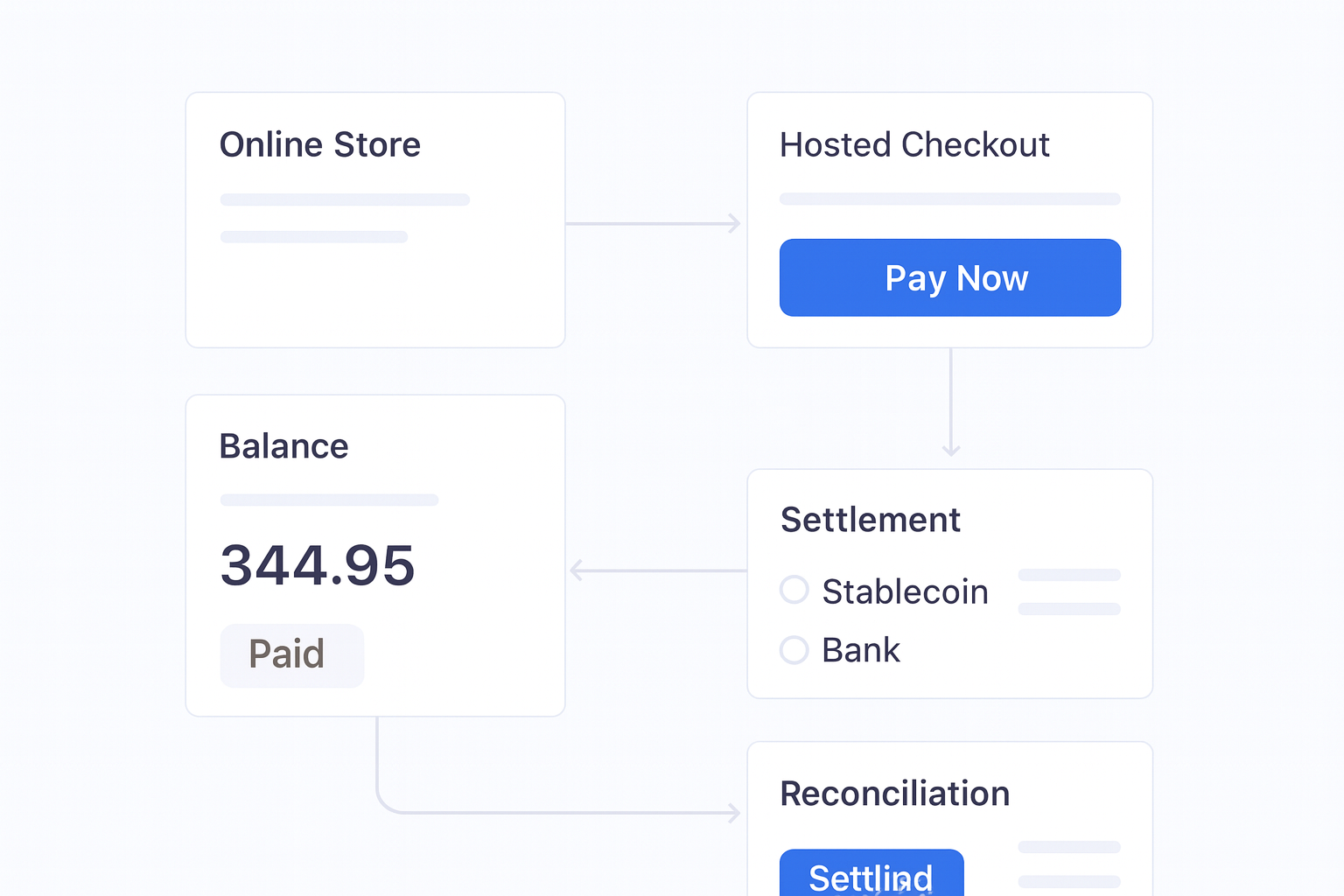
Instead of stitching together separate tools for acceptance, billing, and settlement, Radom keeps the main payment workflows in one platform. That matters when finance, operations, and engineering all need the same view of payment status and balance movement.
- Choose the payment flow that matches the order type.
- Send customers to a hosted checkout or payment link, or generate an invoice.
- Track payment status in the dashboard.
- Settle in crypto, convert assets, or withdraw funds based on your operating needs.
For teams that want to understand pricing before rollout, see Radom pricing.
Built for operators, not just developers
Radom is designed for commerce teams that care about conversion, reconciliation, and control. Developers can use APIs and docs when needed, while operators can work from the dashboard without rebuilding every payment flow.
If your team is evaluating implementation effort, start with the product pages and then move to Radom documentation for integration detail.
Common e-commerce use cases
Radom fits online businesses that sell digital goods, subscriptions, memberships, services, or other internet-native products. It is also relevant for platforms and operators that need a payment stack that can handle crypto acceptance alongside broader money movement.
For teams comparing acceptance options, a good next step is to review hosted crypto checkout for a branded payment page, or crypto payment links for lightweight collection workflows.
How to get started
- Choose the payment flow you need for your store.
- Decide whether you want a no-code setup, a hosted checkout, or an API-led integration.
- Set up your acceptance and settlement preferences.
- Test the flow with your team before launch.
If you are still defining the rollout, contact sales for a practical setup conversation.
Frequently asked questions
Can Radom be used for online stores?+
Yes. Radom supports crypto payments for businesses, including e-commerce teams that want checkout, payment links, invoices, subscriptions, and APIs in one platform.
Does Radom only support one payment flow?+
No. The platform includes hosted checkout, payment links, invoices, subscriptions, and payment APIs, so you can match the payment flow to the order type.
Can we settle funds after a customer pays?+
Radom supports receiving funds to your balance, converting assets, or withdrawing to your wallet. If your team needs a specific settlement workflow, confirm the setup with sales.
Is this only for developers?+
No. Radom is built for businesses and platform operators. Developers can use docs and APIs, but non-technical teams can also work from the dashboard.
Where should we start if we are comparing options?+
Start with crypto payments and crypto checkout, then review pricing or speak with sales if you have a larger rollout.