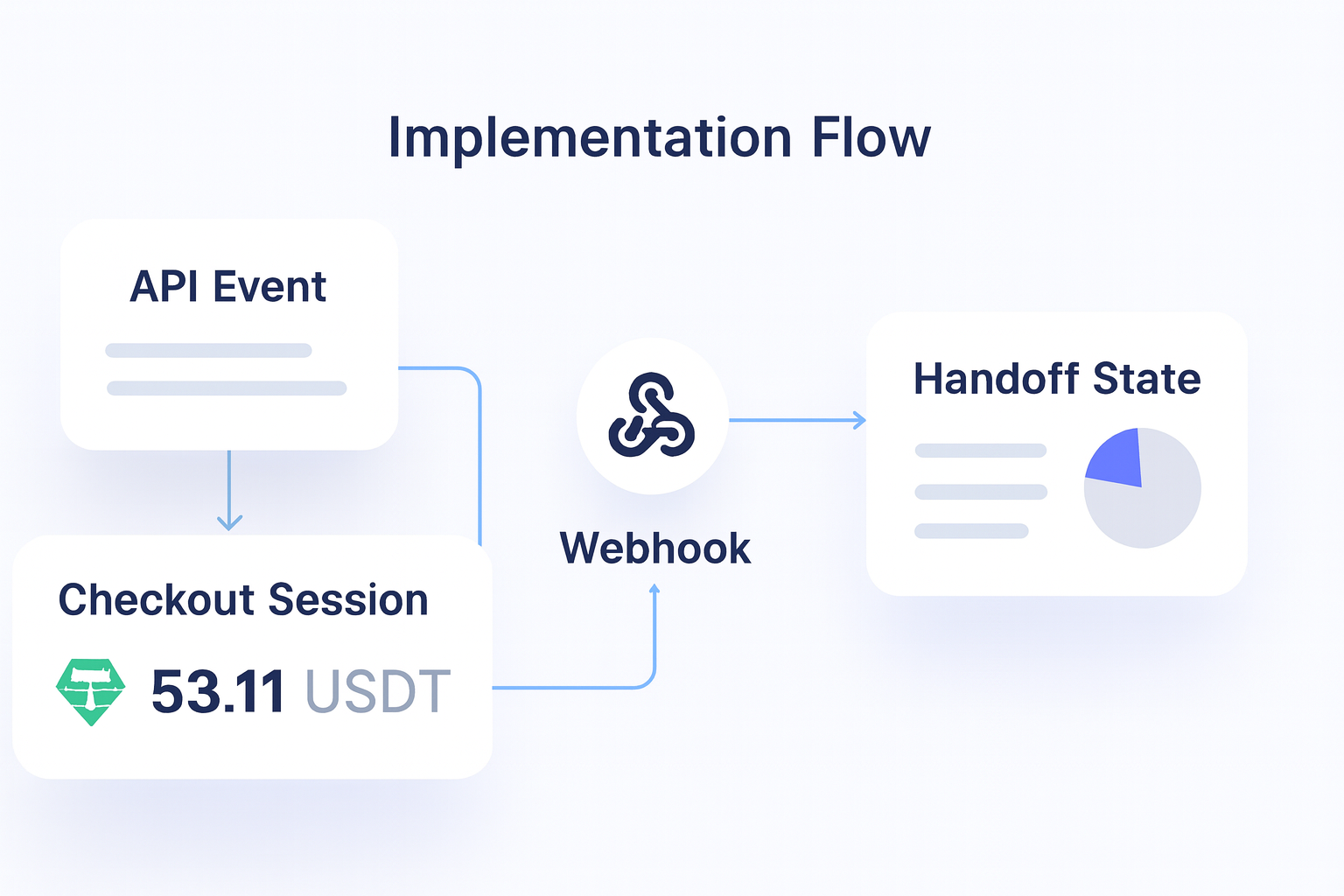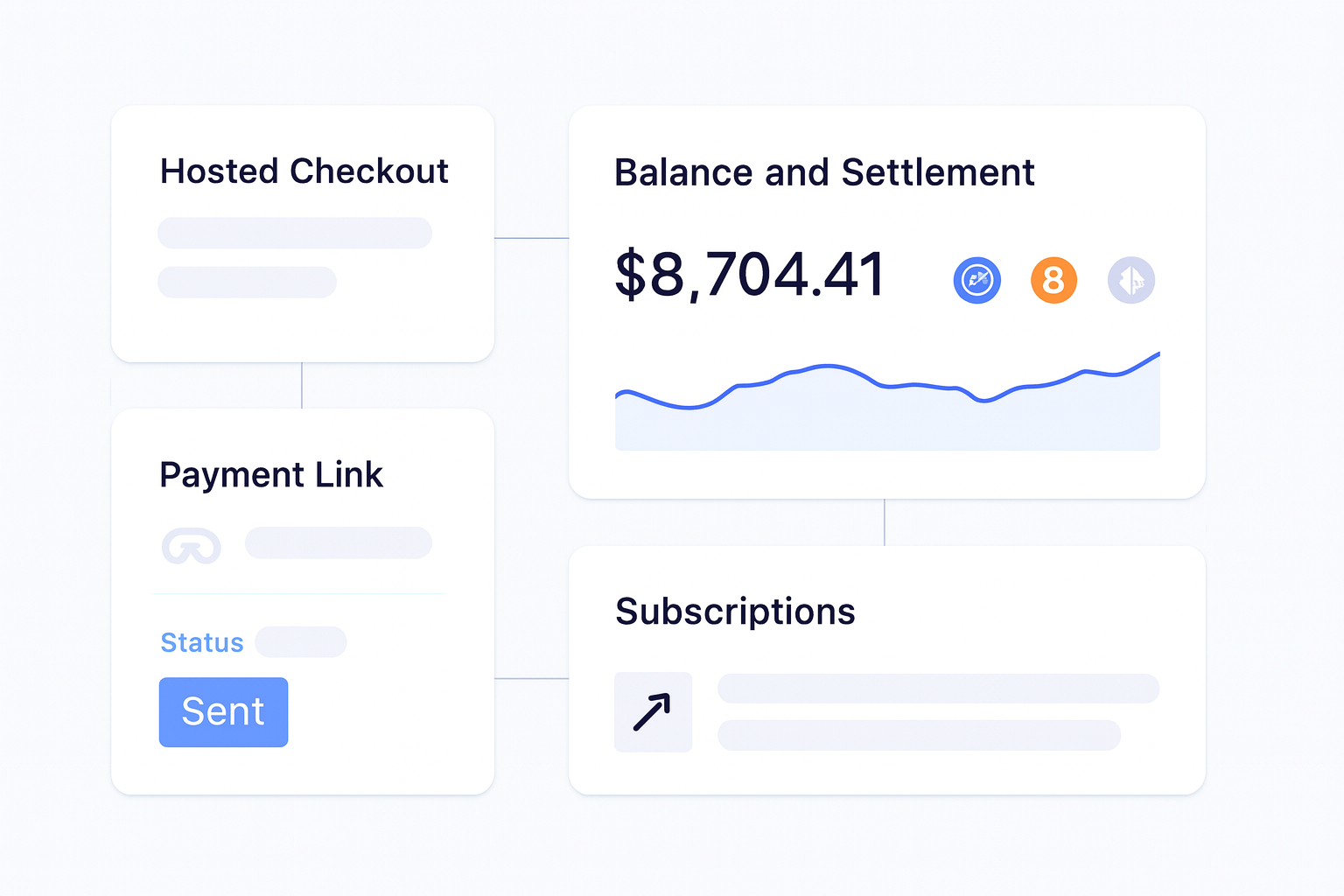
What a crypto payments integration needs to do
If you are evaluating a crypto payments integration, the real question is not whether you can accept digital assets. It is whether the payment flow fits your business model, gives your team clear status and settlement control, and avoids months of custom infrastructure work.
Radom is built for businesses that want to accept crypto payments, manage subscriptions, send invoices, create payment links, and run payouts from one platform. You can launch with hosted checkout, embedded flows, APIs, or no-code tools, then settle in crypto or fiat depending on your operating needs.
For teams that want to review product options first, start with crypto checkout or the crypto payments product page.
Common integration paths
Different teams need different starting points. The right integration usually depends on how you sell, how often you bill, and how much engineering time you want to spend.
- Hosted checkout: best when you want a ready-made payment page with clear status updates and minimal build time.
- Payment links: useful for quick collection, one-off sales, and lightweight workflows.
- Invoices: a fit for finance teams, contractors, agencies, and service businesses.
- Subscriptions: useful for recurring revenue models that need repeat billing.
- APIs: best for teams that want programmable payment infrastructure and tighter control over the flow.
Radom supports these paths from one account, which helps teams avoid stitching together separate tools for collection, settlement, and reporting.
How to set up a crypto payments integration
- Choose the payment flow. Decide whether your first launch is checkout, payment links, invoices, subscriptions, or an API-led flow.
- Map the business outcome. Define whether you want to receive funds to your Radom balance, convert assets, or withdraw to your wallet.
- Set the payment experience. Use hosted checkout if you want a faster launch, or wire in APIs if your product needs deeper control.
- Test payment statuses. Make sure your team understands what happens when a payment is pending, confirmed, settled, or ready for reconciliation.
- Confirm settlement and reporting. Check how balances, conversion, and withdrawal workflows will fit your finance process.
- Move from test to live. Once the flow works for your team, switch to production and monitor the first transactions closely.
If you want to see how the payment flow is packaged for businesses, the pricing page covers the platform approach and routes larger or uncertain cases to sales.
Where Radom removes work
A good integration should reduce the amount of infrastructure your team has to build and maintain. Radom helps by combining payment collection, wallet support, settlement tools, balance management, and conversion workflows in one platform.
That matters for payments teams that need reliable status updates, for finance teams that care about reconciliation, and for developers who do not want to build every payment path from scratch. It also helps platforms that need to accept crypto across different customer journeys without fragmenting the back office.
Radom supports customers across hundreds of wallets, major cryptocurrencies, stablecoins, and blockchains, so your team can cover a broad set of payment preferences without rebuilding the same integration for every asset.
Who this is for
This integration pattern is a strong fit for SaaS companies, e-commerce brands, marketplaces, gaming platforms, affiliate networks, creator platforms, and other digital businesses that want to accept crypto and keep control of settlement.
It is also useful for founders and finance operations teams that want a practical operating layer for crypto payments, not a consumer wallet product. If your team needs to accept funds, track balances, and keep settlement tidy, a structured integration matters more than a simple payment button.
What to check before you go live
Before launch, confirm the payment method you are enabling, the settlement asset you want to hold, and the operational owner for reporting and reconciliation. If you are building for a platform or higher-volume use case, it is worth speaking with sales before you commit to the final flow.
For developer implementation details, use the Radom documentation. For teams comparing product fit and commercial terms, start with contact sales.
Frequently asked questions
What is the fastest way to start a crypto payments integration?+
Hosted checkout or payment links are usually the fastest route when you want to launch without building a full custom flow.
Can Radom support subscriptions and invoices?+
Yes. Radom supports subscriptions and invoices as part of its crypto payments product set.
Can we settle in crypto or fiat?+
Radom supports settlement in crypto or fiat, depending on the workflow you choose and the available rails for your setup.
Do we need to build everything from scratch?+
No. Radom offers hosted and no-code options as well as APIs, so teams can choose the amount of engineering work they want to take on.
Where should a technical team start?+
Technical teams should start with the documentation and then move into the dashboard to test the payment flow before going live.
When you are ready to evaluate a live setup, contact sales or begin testing in the dashboard.