Compare digital asset treasury operations with a practical operator lens
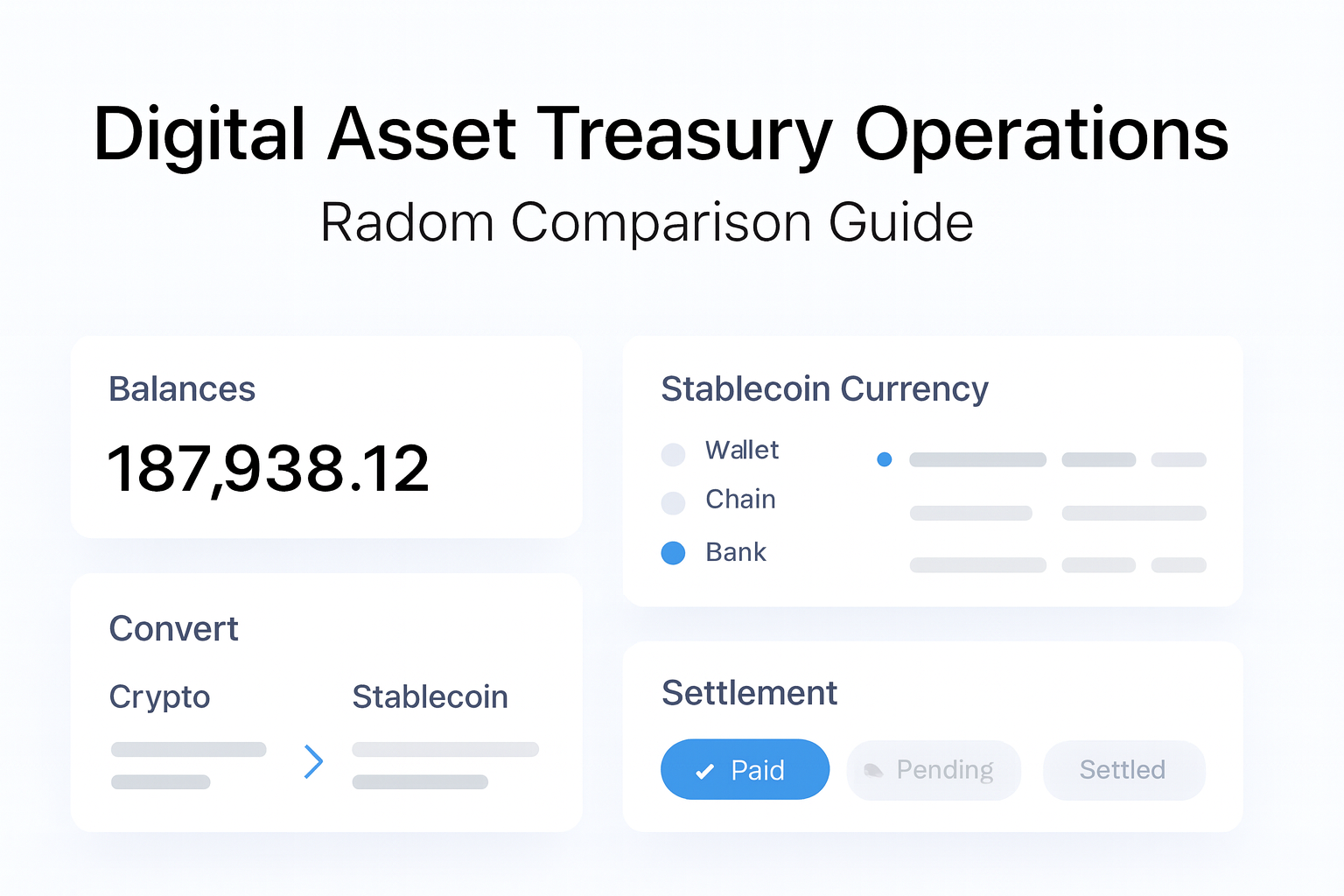
Digital asset treasury operations is not just about holding crypto. For most finance and payments teams, the real question is how funds move between crypto, stablecoins, and fiat without creating extra manual work. That means looking at conversion, settlement, account structure, and payout routing together.
Radom is built for businesses that need to accept payments, move balances, and manage treasury workflows from one platform. If your team wants to convert assets, settle into the currency you actually use, or route payouts across crypto and fiat rails, Radom is designed for that operating model. For current pricing and a sales conversation on volume or workflow fit, use Radom pricing or contact sales.
What buyers should compare
When you evaluate digital asset treasury operations tools, compare the parts that affect day-to-day work, not just headline features.
- Conversion workflow: Can the team move between supported digital assets and fiat in the dashboard or via API?
- Settlement control: Can you decide which asset a payment ends in, and can you document that flow clearly for finance?
- Account structure: Do you get named virtual accounts or clear balance tracking for reconciliation?
- Payout routing: Can you fund payouts in crypto or fiat and send recipients the rail they need?
- Operational fit: Does the platform work for finance, payments, and engineering teams, or only one of them?
Radom’s current product pages show support for crypto payments, payouts, conversion, and virtual accounts, which makes it a practical fit for treasury workflows that sit between collection and distribution. See crypto convert, mass payouts, and virtual accounts.
Where Radom fits in treasury operations
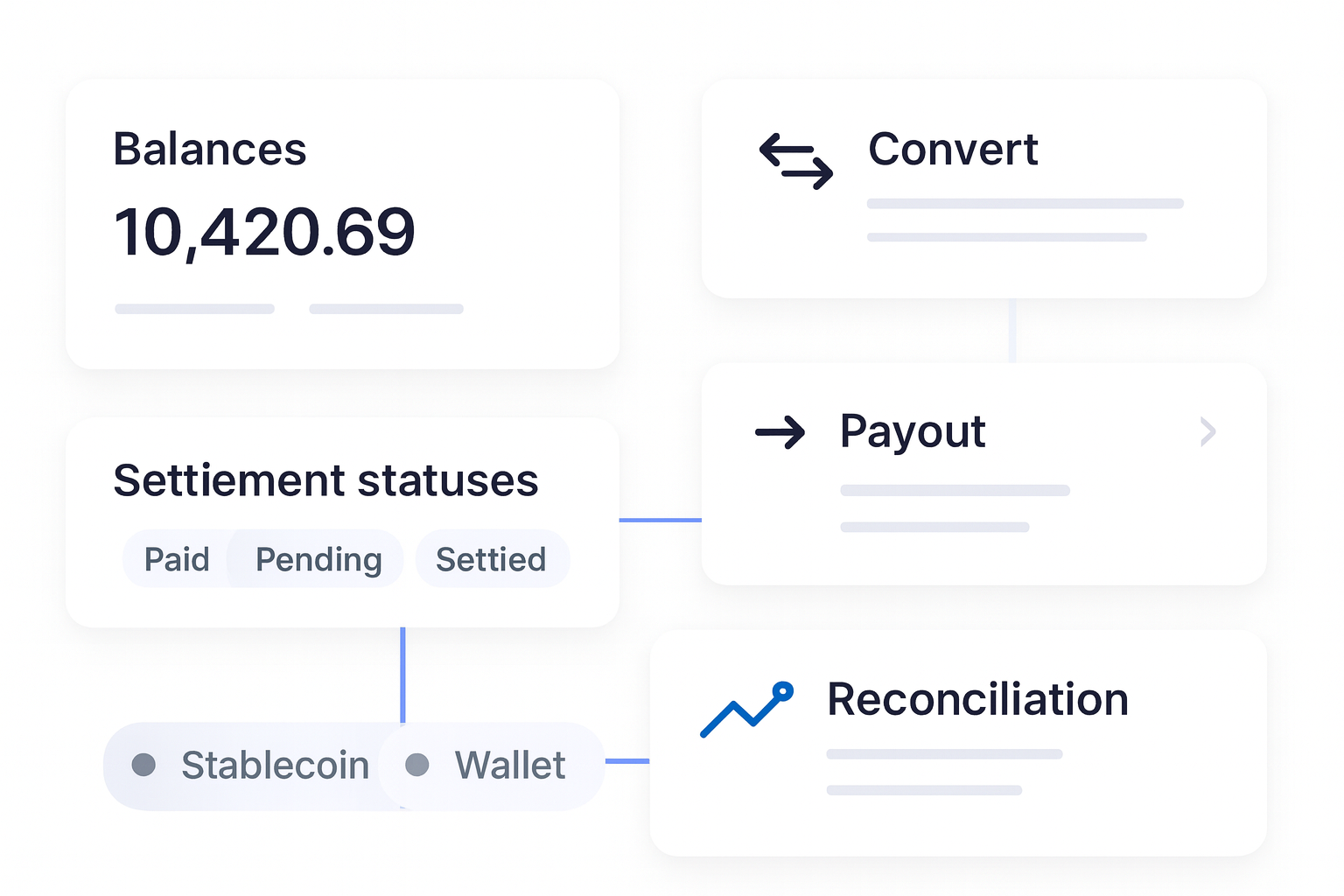
Radom is useful when treasury work is tied to business payments, not isolated asset management. That includes stablecoin settlement, payout funding, conversion between supported assets, and reconciling balances across rails.
Supported use cases on the current site include moving between crypto and fiat for payments, payouts, stablecoin settlement, and treasury workflows. Radom also documents real-time rates and institutional liquidity for conversions, plus named virtual USD and EUR accounts for fiat collection where supported. For teams that need to see how this maps to their workflow, the next step is usually a sales conversation or a docs review.
Review the Radom docs if your team wants implementation details, or contact sales if you are comparing operating models.
Decision guide for finance and platform teams
- Map the money flow. Start with where funds enter, where they settle, and where they need to end up.
- Separate holding from movement. Decide whether the job is treasury storage, conversion, payout execution, or all three.
- Check reconciliation needs. If finance needs named accounts, settlement records, or clearer attribution, compare those directly.
- Test payout paths. Confirm whether recipients need crypto, fiat, or both, and whether the platform supports that routing.
- Validate implementation effort. Decide whether you need dashboard workflows, CSV operations, or API-driven automation.
Radom removes work where treasury, conversion, and payouts overlap. Instead of using separate tools for collection, conversion, and disbursement, teams can manage those steps in one platform and keep the operating logic closer to the payment flow.
Why this matters for stablecoin treasury and settlement
Stablecoin treasury operations often sit between customer payments and business payouts. That creates practical questions about where balances are held, how conversion happens, and how quickly finance can see what moved.
Radom’s product pages support that model with conversion, payout, and virtual account workflows. If your team is comparing treasury operations platforms for stablecoin settlement, Radom is worth evaluating when you want the payment layer and the treasury layer to sit closer together.
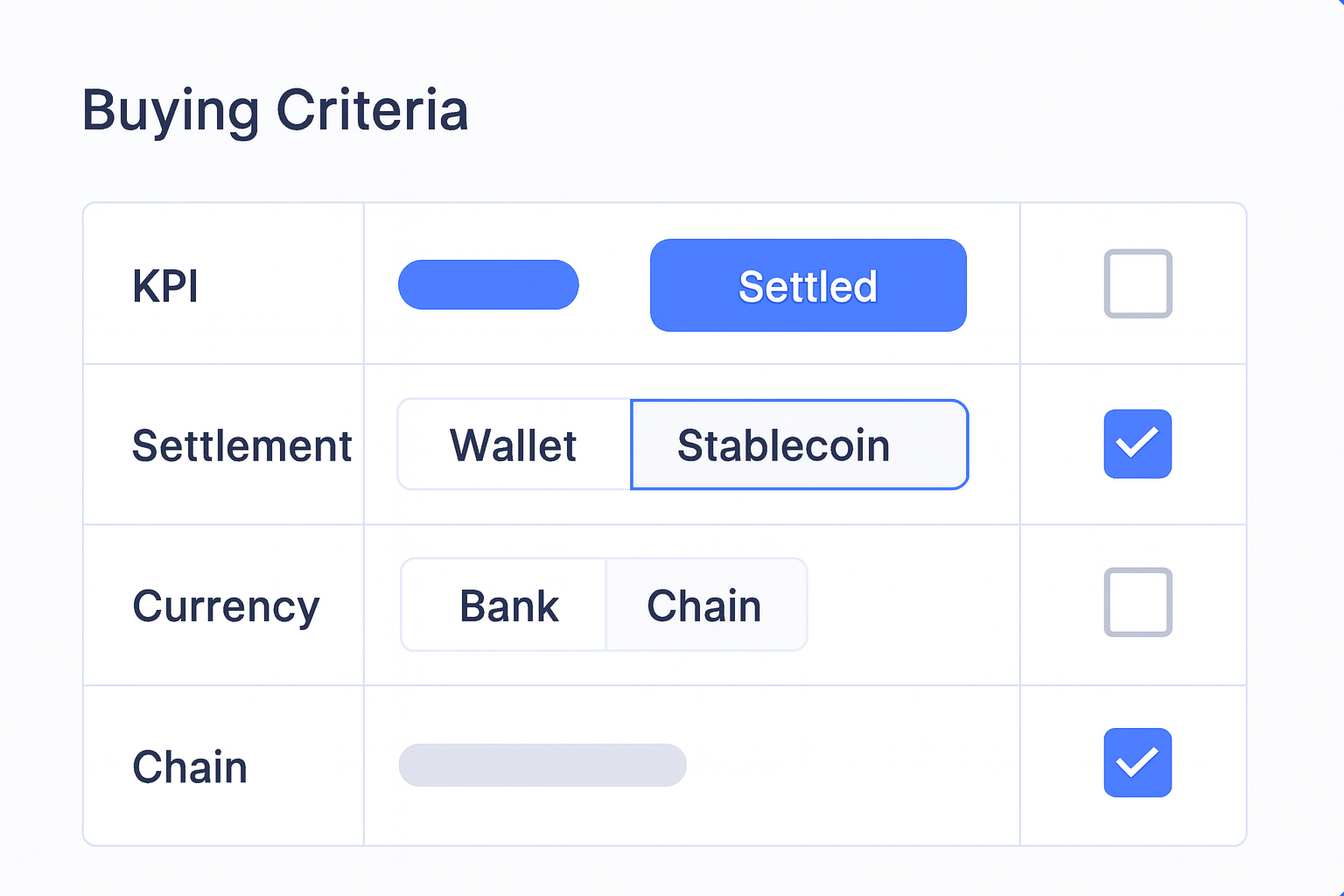
Buying criteria by team type
Payments teams
Look for clear settlement paths, conversion controls, and payout routing that match the rails your recipients actually use.
Finance operations teams
Prioritise reconciliation, named accounts, and clear records for settlement and exchange activity.
Platform operators
Focus on how easily the system handles multiple recipients, recurring flows, and asset movement at scale.
Developers
Check whether the platform offers API access, predictable workflows, and documentation that fits your implementation plan.
If your team wants to build around these workflows, start with Radom documentation, then compare pricing and operating fit on pricing.
Frequently asked questions
Is Radom a treasury management system?+
Radom is a payments and money movement platform with conversion, payouts, and virtual account workflows that can support treasury operations. It is not positioned as a bank.
Can Radom help with stablecoin settlement?+
Yes. The current site says Radom helps businesses move between crypto and fiat for payments, payouts, stablecoin settlement, and treasury workflows.
Does Radom support fiat accounts for treasury workflows?+
Radom documents virtual USD and EUR accounts in its current product pages. Availability and rail support should be confirmed for your use case.
When should we contact sales?+
Contact sales if you have volume, multi-rail settlement, or implementation questions that are not answered by the public product pages or docs.
Next step
If you are comparing digital asset treasury operations workflows, start with the product pages that match your flow, then move to pricing or sales. The most relevant pages are crypto convert, mass payouts, and virtual accounts.