Embedded finance teams need more than a payment form
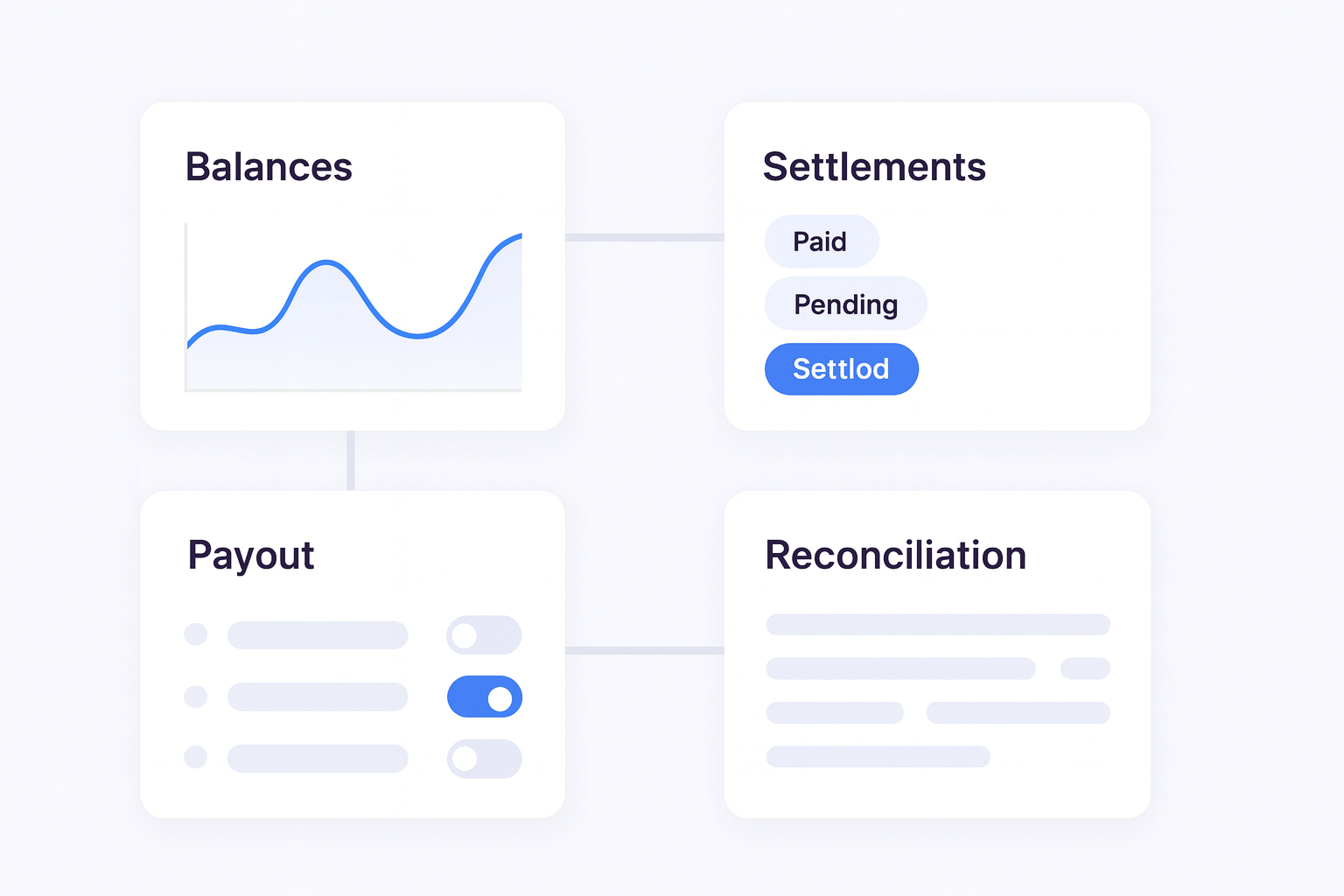
If your product collects money, moves balances, and pays out users or partners, you need infrastructure that handles the full flow. Radom helps embedded finance teams collect fiat into named virtual accounts, move value into crypto workflows where supported, convert between supported assets, and run payouts from one platform.
The goal is simple: give your finance, operations, and product teams one place to manage collection, settlement, and payout workflows without stitching together separate tools for every step.
Explore virtual accounts or contact sales if you need a workflow review.
What Radom covers in an embedded finance stack
Radom is built for businesses and platform operators that need practical money movement, not consumer banking features. For embedded finance use cases, the relevant pieces are:
- Named USD and EUR virtual accounts for fiat collection.
- Crypto and fiat conversion workflows for moving balances into the right asset.
- Mass payouts in crypto or fiat for recipients that need different rails.
- Payment APIs and dashboard tools for operational control.
That combination matters when your team needs to reconcile incoming funds, manage settlement, and send money back out without losing track of where each balance sits.
See crypto conversion workflows
How embedded finance teams typically use Radom
- Collect funds. Use named virtual accounts to receive fiat payments in your business name.
- Route balances. Move funds into crypto settlement or treasury workflows where supported.
- Convert when needed. Use Radom to move between supported digital assets and fiat where available.
- Pay recipients. Send payouts to users, contractors, affiliates, creators, or partners in the currency and rail they need where supported.
- Track operations. Use the dashboard and accounting records to keep settlement and reconciliation clean.
This is the part embedded finance teams usually have to build across multiple vendors. Radom brings the workflow together so finance and operations can manage it in one place.
Where Radom removes work
Instead of maintaining separate systems for collection, conversion, and payout operations, Radom gives you a single platform for the core payment flows. That reduces handoffs between product, finance, and operations teams.
- Fewer tools to reconcile.
- Cleaner balance tracking for finance teams.
- More controlled settlement workflows.
- One place to manage payment operations as volume grows.
For teams building embedded finance products, that usually means faster launch cycles and fewer operational gaps between inbound collections and outbound payouts.
When to use virtual accounts versus payout workflows
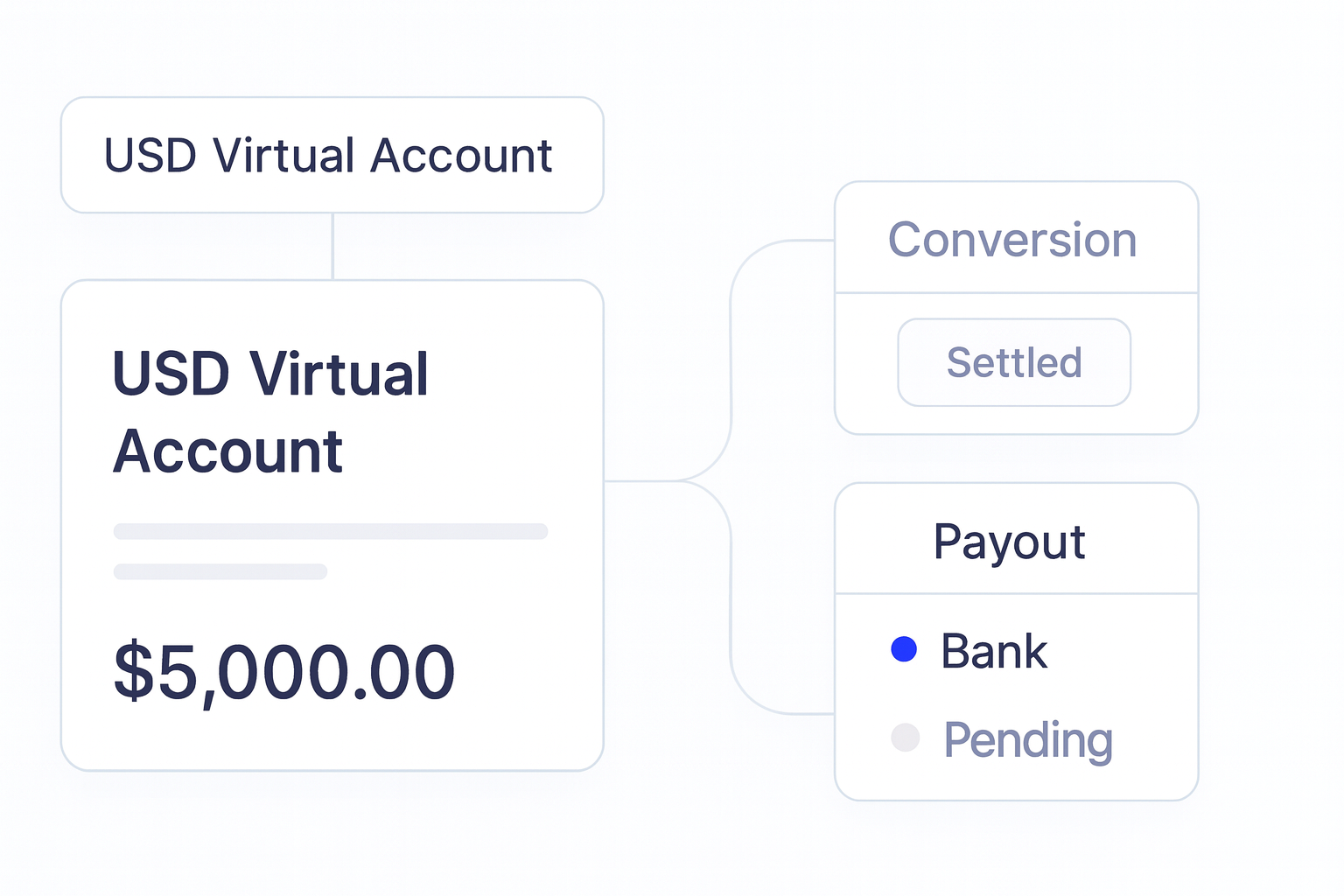
Use virtual accounts when your main need is to receive and organize incoming funds under your business name. Use payouts when the core job is sending money out to many recipients. Use conversion workflows when balances need to move between supported assets before settlement or payout.
Many embedded finance teams need all three. Radom is designed for that combined workflow rather than a single isolated function.
Pricing and implementation
Radom uses per-transaction pricing with no setup fees or monthly fees on the published pricing page. If you are evaluating higher volume flows, unusual settlement requirements, or a broader platform rollout, the right next step is usually a sales conversation.
Review pricing or contact sales for a rollout discussion. Developers can also start with Radom docs.
Frequently asked questions
Is Radom a bank?+
No. Radom should not be presented as a bank. It provides payment infrastructure, virtual accounts, conversion, and payout workflows through supported rails.
Can Radom handle both collection and payouts?+
Yes. The platform supports virtual accounts for collection and payout workflows for sending funds out, with conversion tools where supported.
Does Radom support API-based integration?+
Yes. Radom provides developer APIs and documentation for teams that need programmable payment infrastructure.
Who is this page for?+
It is for embedded finance teams, platform operators, finance operations teams, founders, and developers evaluating account, conversion, and payout infrastructure.
Next step
If you are building embedded finance workflows and need a practical way to collect, convert, and pay out funds, start with virtual accounts, review mass payouts, or contact sales to map the right flow for your use case.