Embedded payments infrastructure is about control, not just collection
If your team is comparing embedded payments infrastructure, the real question is not whether you can receive money. It is whether you can route it, reconcile it, convert it, and pay it out without building a separate stack for every step.
For fintech teams, platform operators, and finance operations teams, the useful infrastructure sits between collection and settlement. It should help you receive funds, track balances, move money between supported rails, and keep accounting clean as volume grows.
Radom is built for that kind of workflow. It supports virtual accounts, crypto on and off ramp flows, crypto conversion, and payouts from one platform. For teams evaluating the broader money movement stack, start with virtual accounts and crypto on and off ramp.
What buyers usually need from embedded payments infrastructure
Most teams do not need a generic payment page. They need infrastructure that fits how money actually moves inside the business.
- Named accounts for receiving funds in a business context
- Clear settlement records for finance and operations teams
- Conversion between supported digital assets and fiat where available
- Payout workflows for recipients, contractors, affiliates, creators, or users
- Dashboard tools for operations teams and APIs for developers
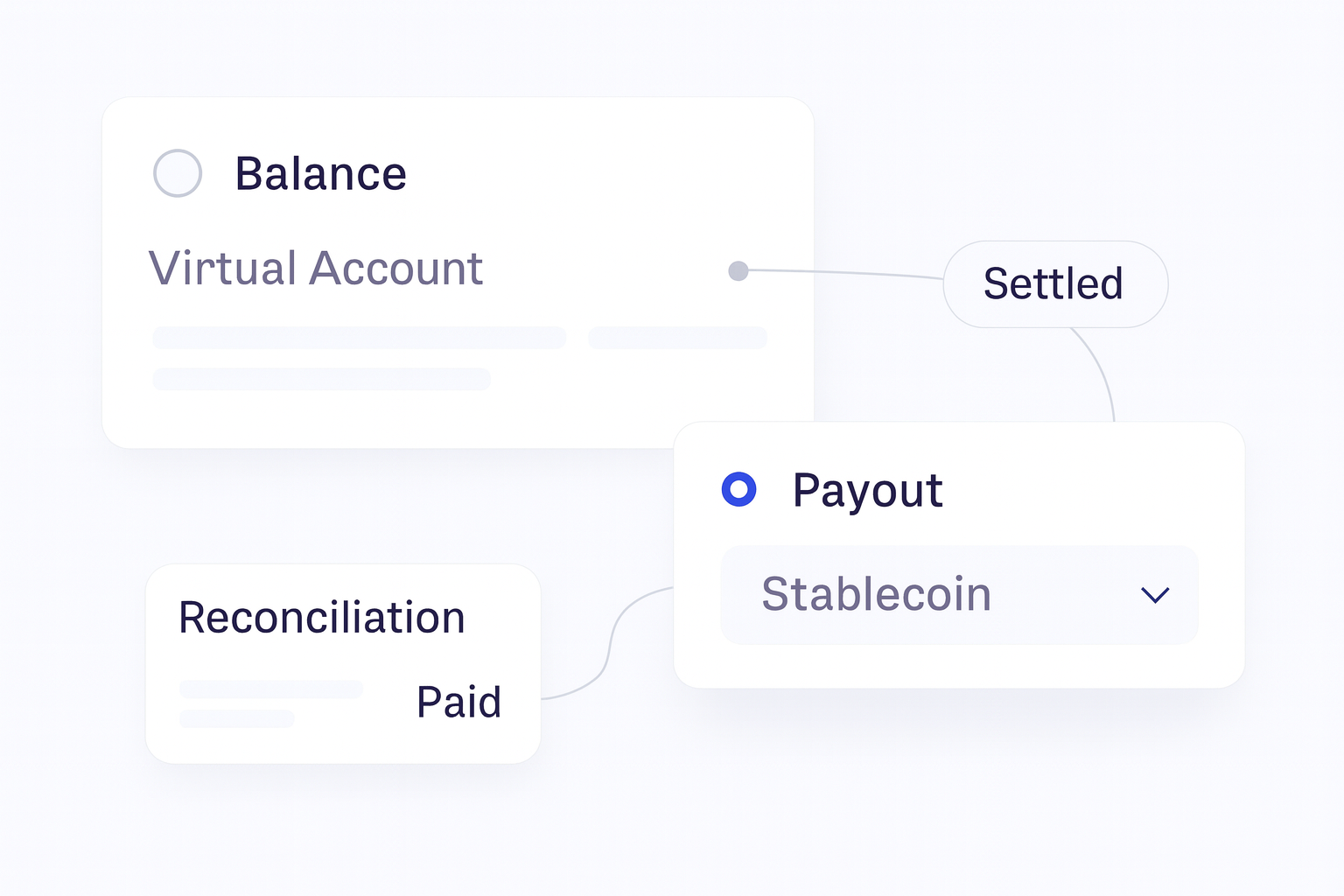
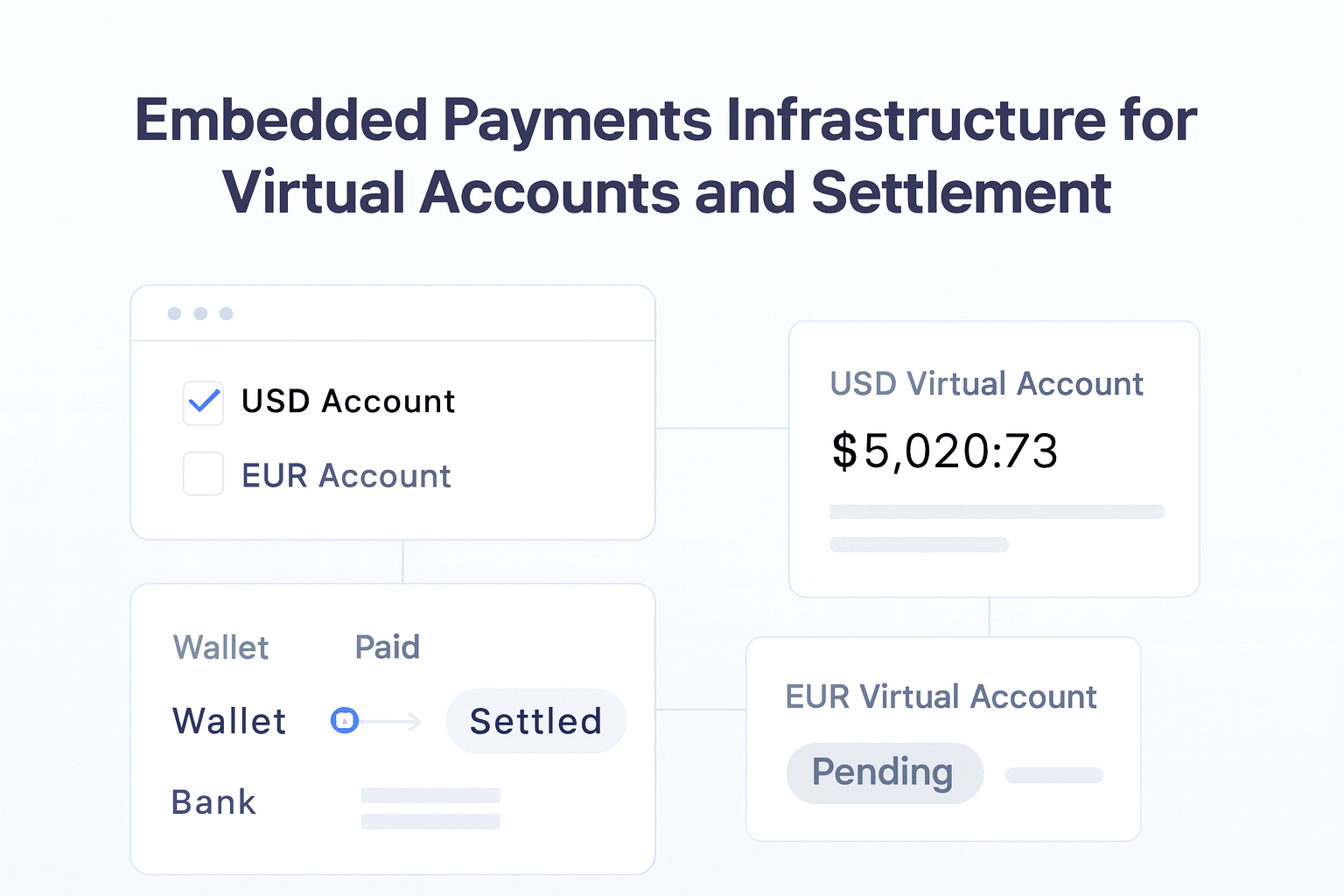
Radom’s virtual accounts product is designed to collect fiat payments into named virtual USD and EUR accounts and move value into crypto workflows where supported. Its payouts product supports crypto and fiat payouts from the dashboard, CSV upload, or API. See mass payouts if your use case includes recipient payments at scale.
How to evaluate a platform
Use these steps to compare options without overfocusing on surface-level features.
- Map the money flow. Define how funds enter, where they need to settle, and who receives them.
- Check supported rails. Confirm which fiat, crypto, and stablecoin rails are available for your use case.
- Review reconciliation. Look for named accounts, payment status visibility, and accounting detail.
- Test conversion and settlement. Make sure currency movement is operationally clear and predictable.
- Validate payout mechanics. Check whether you can pay recipients through the rail and currency they need.
- Confirm developer access. If your team needs automation, review the API and docs early.
Radom removes work in the middle of this process by combining collection, conversion, settlement, and payouts in one platform. If you are comparing programmable workflows, review the documentation alongside the product pages.
Where Radom fits
Radom is a practical fit for businesses that need embedded payments infrastructure for internet-native money movement. That includes teams handling fiat collection into virtual accounts, crypto-to-fiat movement, stablecoin settlement, and global payouts.
The platform is aimed at operators who want one place to manage balances, settlement, currency conversion, and payout workflows. It is not positioned as a consumer wallet or a generic business bank replacement.
If your buying team is focused on fees and volume economics, review pricing early. If your use case is more complex or high volume, contact sales for guidance on fit and supported rails.
When to sign up and when to talk to sales
Sign up if you want to explore the product, test the workflow, or evaluate the dashboard for a straightforward use case. Contact sales if you need help scoping payout volume, settlement flow, or a multi-step implementation across fiat and digital asset rails.
For teams building into a product or platform, the best next step is usually to review the docs, then confirm commercial and operational fit with sales.
Frequently asked questions
Is embedded payments infrastructure the same as a business bank account?+
No. It is a broader money movement layer. Radom should be understood as payment and settlement infrastructure, not as a bank.
Can Radom handle both fiat and crypto workflows?+
Yes. Radom supports virtual accounts, crypto on and off ramp flows, crypto conversion, and payouts across supported rails and currencies where available.
Can finance teams use it without a developer?+
Yes. The dashboard supports operational workflows, while the API and docs are available for teams that need automation.
What should I review before implementation?+
Check supported rails, settlement flow, pricing, and whether your use case needs a sales conversation for volume or operational complexity.
Where should I start if I need payouts as well as collection?+
Start with virtual accounts and mass payouts, then use the docs if you plan to automate the workflow.
Contact sales to discuss your flow, or review pricing if you are comparing commercial options.