Compare Radom with embedded payments infrastructure
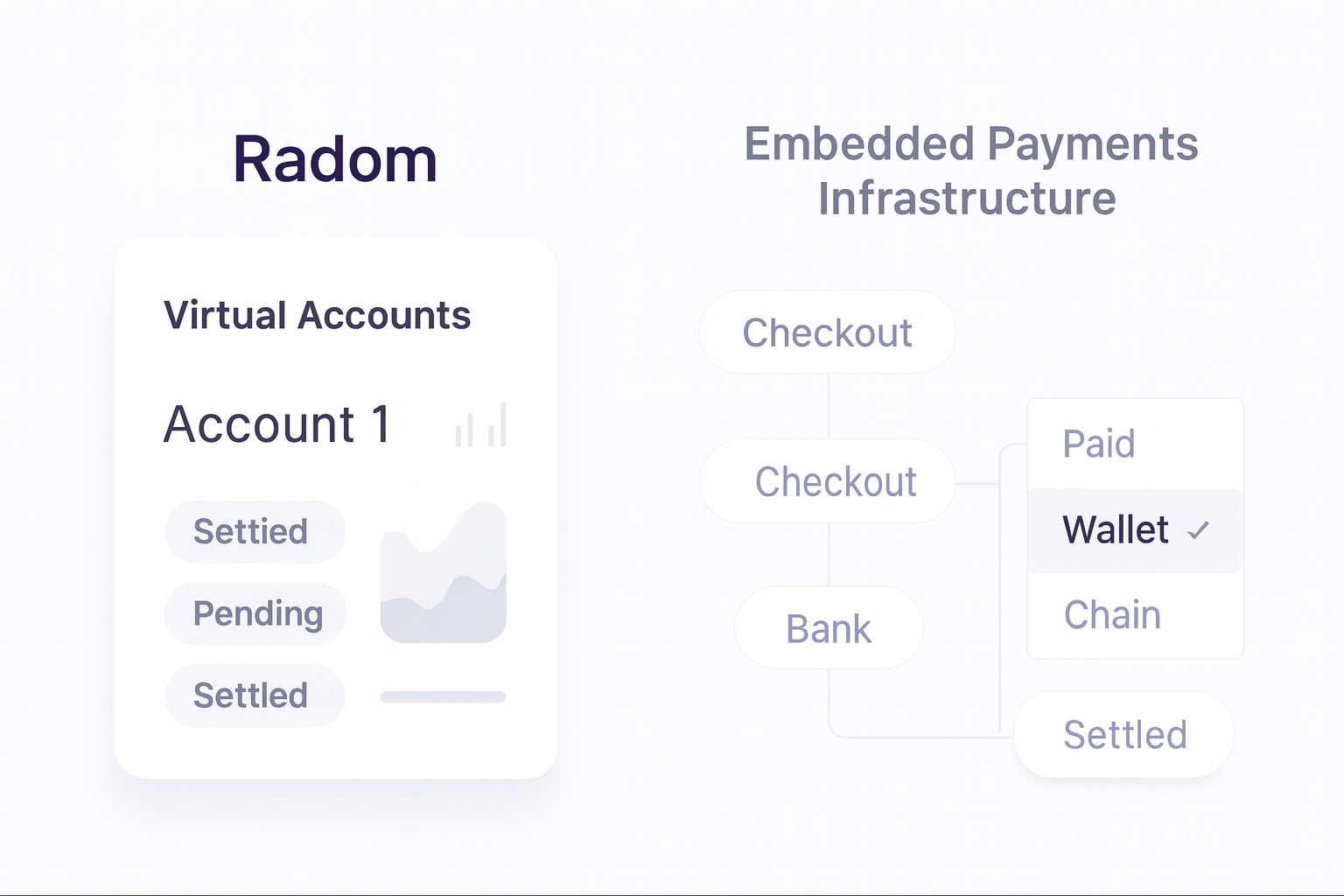
If your team is evaluating embedded payments infrastructure, the real question is not just how money moves. It is whether the platform gives you enough control over collection, settlement, conversion, and payouts without adding unnecessary operational work. Radom is built for businesses that need virtual USD and EUR accounts, crypto and fiat movement, and payment operations in one place.
Use this page to compare fit for finance operations, platform workflows, and developer-led payment infrastructure. If your requirements include fiat collection, crypto settlement, conversion, or payouts across supported rails, Radom may be a better fit than a generic embedded stack. Review Radom pricing or contact sales for a workflow-based discussion.
Where Radom fits
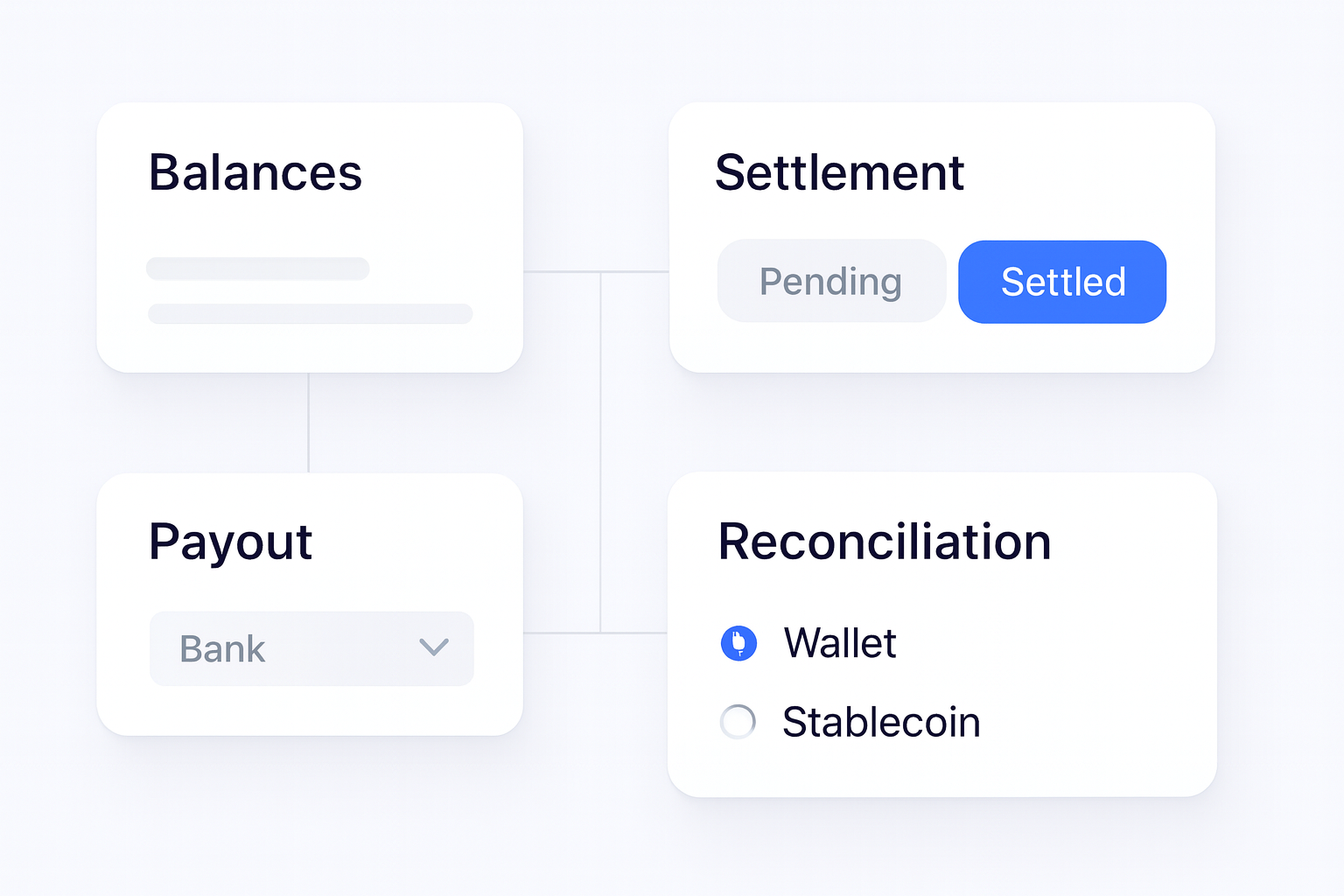
Radom helps businesses collect fiat into named virtual accounts, move between crypto and fiat where supported, and manage payout operations from the dashboard, CSV upload, or API. The platform is designed for finance teams, operators, and developers that need payment acceptance and money movement tools, not just a single embedded checkout or account layer.
- Virtual USD and EUR accounts in your business name for fiat collection and reconciliation.
- Settlement and withdrawal automations so funds move into the right asset and destination.
- Crypto and fiat payouts from the dashboard, CSV upload, or API.
- Conversion workflows for moving between supported digital assets and fiat where available.
For teams evaluating collection and settlement together, start with virtual accounts, then review crypto on and off ramp and crypto convert if your flows include treasury movement or asset conversion.
What embedded payments infrastructure buyers usually care about
Most comparison conversations come down to practical questions:
- Can we collect fiat in named accounts that are easy to reconcile?
- Can we settle into crypto, fiat, or both where supported?
- Can operations teams manage exceptions without engineering help?
- Can we route payouts to contractors, affiliates, creators, or users at scale?
- Can developers integrate the workflow through APIs and docs?
Radom is positioned for teams that want one platform for these workflows. If your current stack separates collection, conversion, and payouts across multiple tools, Radom can reduce the number of systems your finance and operations teams need to manage.
Decision criteria for finance and platform teams
When comparing Radom to embedded payments infrastructure, use criteria that reflect your actual operating model.
1. Collection and account structure
Radom supports named virtual USD and EUR accounts for fiat collection. That matters if you need cleaner accounting than pooled flows and want a destination that senders can recognize.
2. Settlement and treasury control
Radom supports workflows that move funds into crypto settlement or treasury where supported. If your team needs to hold some balances, convert some balances, and route the rest to payout destinations, that is a better test than simple payment acceptance.
3. Payout operations
Radom’s payouts product supports crypto and fiat payouts from the dashboard, CSV upload, or API. That is useful for affiliate networks, creator platforms, marketplaces, and other businesses that pay many recipients on a recurring basis.
4. Conversion and exchange records
Radom’s conversion workflows are built for business payment operations, with clear settlement records and real-time rates where supported. Finance teams should compare how each platform handles traceability, not just execution.
5. Developer access
If your team wants programmable infrastructure, review the docs and API surface before committing. Start with Radom documentation if you need to understand integration effort and workflow design.
How to evaluate the fit in practice
Use this sequence when your team is shortlisting providers:
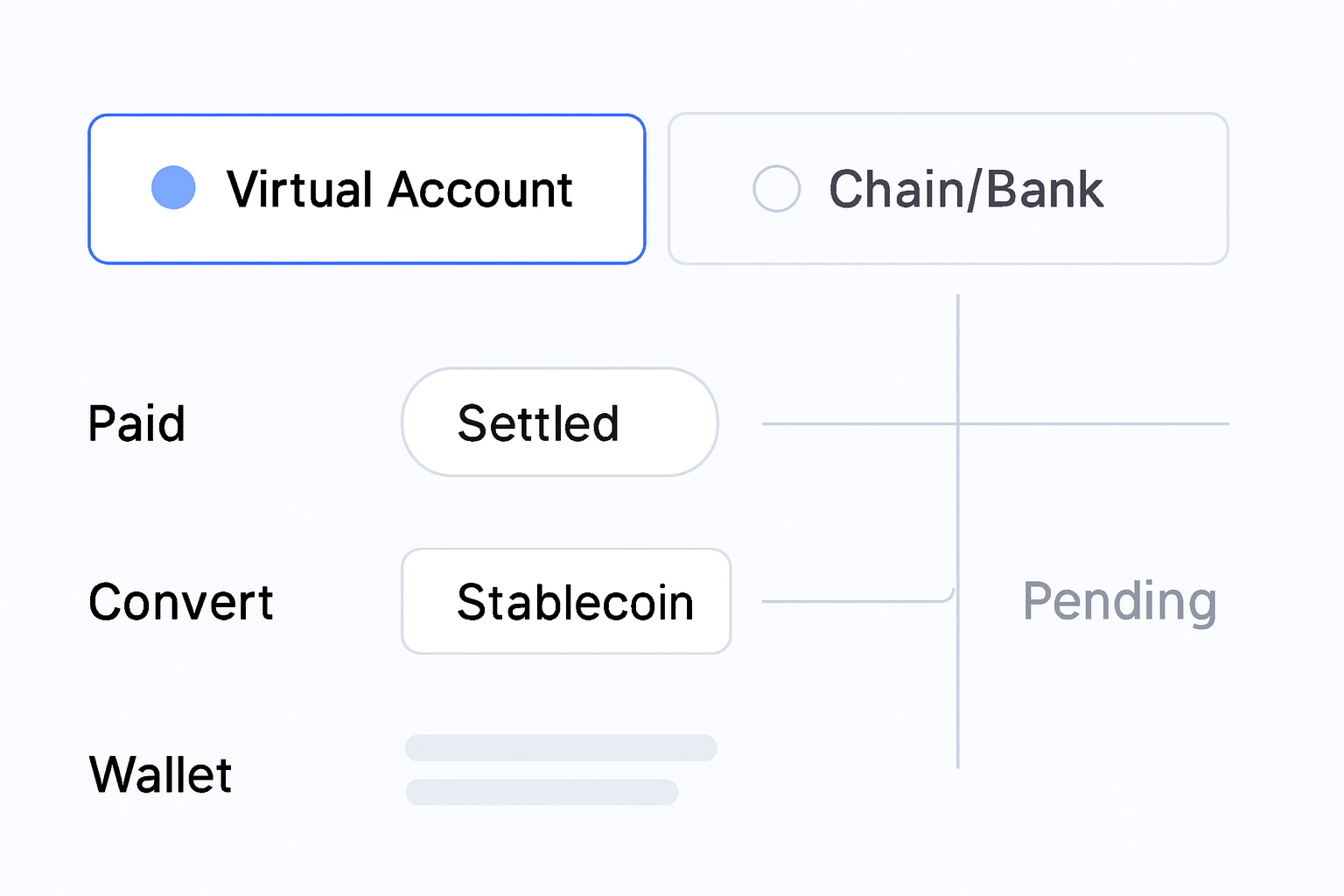
- Map the exact flow: fiat collection, crypto on-ramp, conversion, settlement, or payouts.
- Confirm which rails you need by region and currency.
- Check whether finance can reconcile each step without manual exports.
- Review whether operations can run the flow from dashboard, CSV, or API.
- Compare pricing, then route edge cases or volume questions to sales.
Radom is most relevant when the answer to more than one of those steps involves crypto and fiat together. If your needs are limited to a single embedded function, a narrower product may be enough. If you need the full path from collection to settlement to payout, Radom is built for that workflow.
Why teams switch from fragmented tooling
Teams often start with one tool for collection, another for treasury movement, and a third for payouts. That can work early on, but it creates more reconciliation work as volume grows. Radom brings payment acceptance, virtual accounts, conversion, and payouts into one platform so operators can manage more of the flow in one place.
That does not mean every team needs the same setup. It means buyers should compare the full operating model, not just a single API or a single account feature.
Next steps
If you are comparing embedded payments infrastructure for a fintech, platform, or crypto-native business, review the product pages that match your workflow. Start with virtual accounts, then check mass payouts, crypto on and off ramp, and pricing. If you need a deeper integration review, contact sales.
Frequently asked questions
Is Radom a bank?+
No. Radom should be described as payment and money movement infrastructure. For fiat accounts, open banking, and virtual account workflows, stay precise about the supported rails and partner arrangements where applicable.
Can Radom collect fiat and settle in crypto?+
Yes, where supported. Radom’s virtual accounts and on and off ramp products are designed for businesses that need to collect fiat and move into crypto workflows.
Can Radom handle payouts at scale?+
Yes. Radom supports mass payouts from the dashboard, CSV upload, or API, with crypto and fiat payout options where supported.
Who is Radom best for?+
Radom is best for fintech teams, platform operators, and businesses that need practical infrastructure for collection, settlement, conversion, and payouts across crypto and fiat rails.
Should we use pricing or contact sales first?+
Start with pricing if you are early in evaluation. Use contact sales if your volume, rails, or workflow needs are specific, complex, or region dependent.