Collect fiat without losing control of settlement
When a business needs to receive fiat payments, the main problem is usually not collection alone. It is what happens next. Finance teams need named accounts, clear records, and a clean path from receipt to reconciliation, treasury, or crypto settlement.
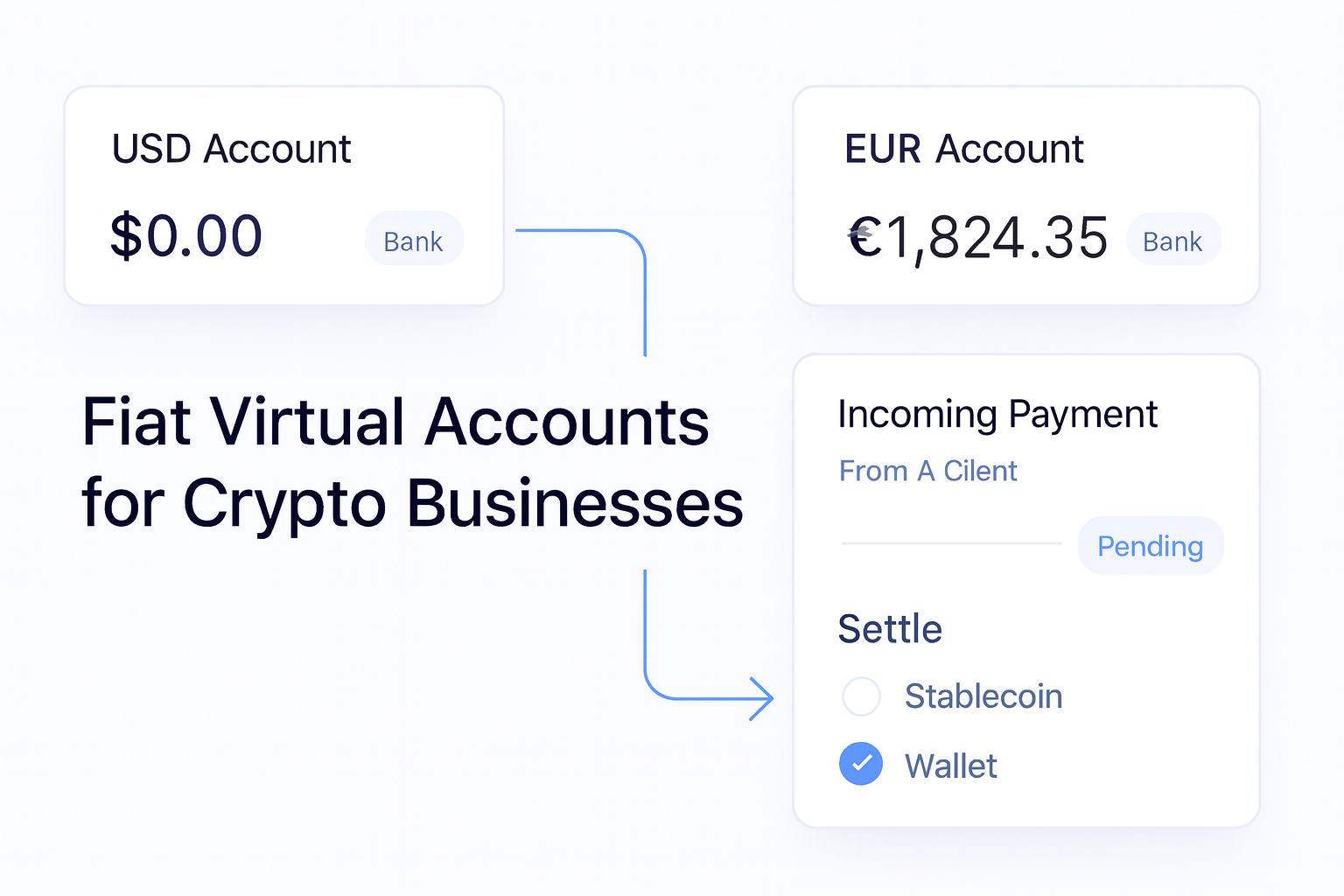
Radom virtual accounts are built for that workflow. You can use virtual USD and EUR accounts in your business name to collect fiat payments, then move value into crypto workflows where supported. The dashboard is designed to help teams track incoming payments and exchange activity with accounting in mind.
Contact sales if you want to discuss a collection and settlement workflow for your finance team.
Who this is for
This page is for operators who need more than a basic receiving account. It is a fit for finance operations teams, platform operators, payment teams, founders, and developers building around fiat collection and crypto settlement.
- Receive fiat from customers, partners, or counterparties
- Use named virtual accounts for cleaner sender recognition and accounting
- Route balances into conversion, treasury, or payout workflows
- Keep payment operations in one system instead of stitching together separate tools
How Radom virtual accounts work
- Create a virtual USD or EUR account in your business name.
- Share the account details with the sender or connect the flow to your own product.
- Receive incoming payments and track them in the Radom dashboard.
- Route funds into crypto settlement or treasury workflows where supported.
- Use the records in Radom to support finance operations and reconciliation.
The practical advantage is simple. Your team gets a named receiving layer instead of a pooled collection flow, which makes it easier to understand where money came from and where it should go next.
Where Radom removes work
Radom is useful when finance and operations teams need fewer manual steps between receipt and settlement. Instead of handling fiat collection in one place, conversion in another, and payout or treasury management somewhere else, Radom keeps the workflow connected.
- Named virtual accounts reduce confusion for counterparties
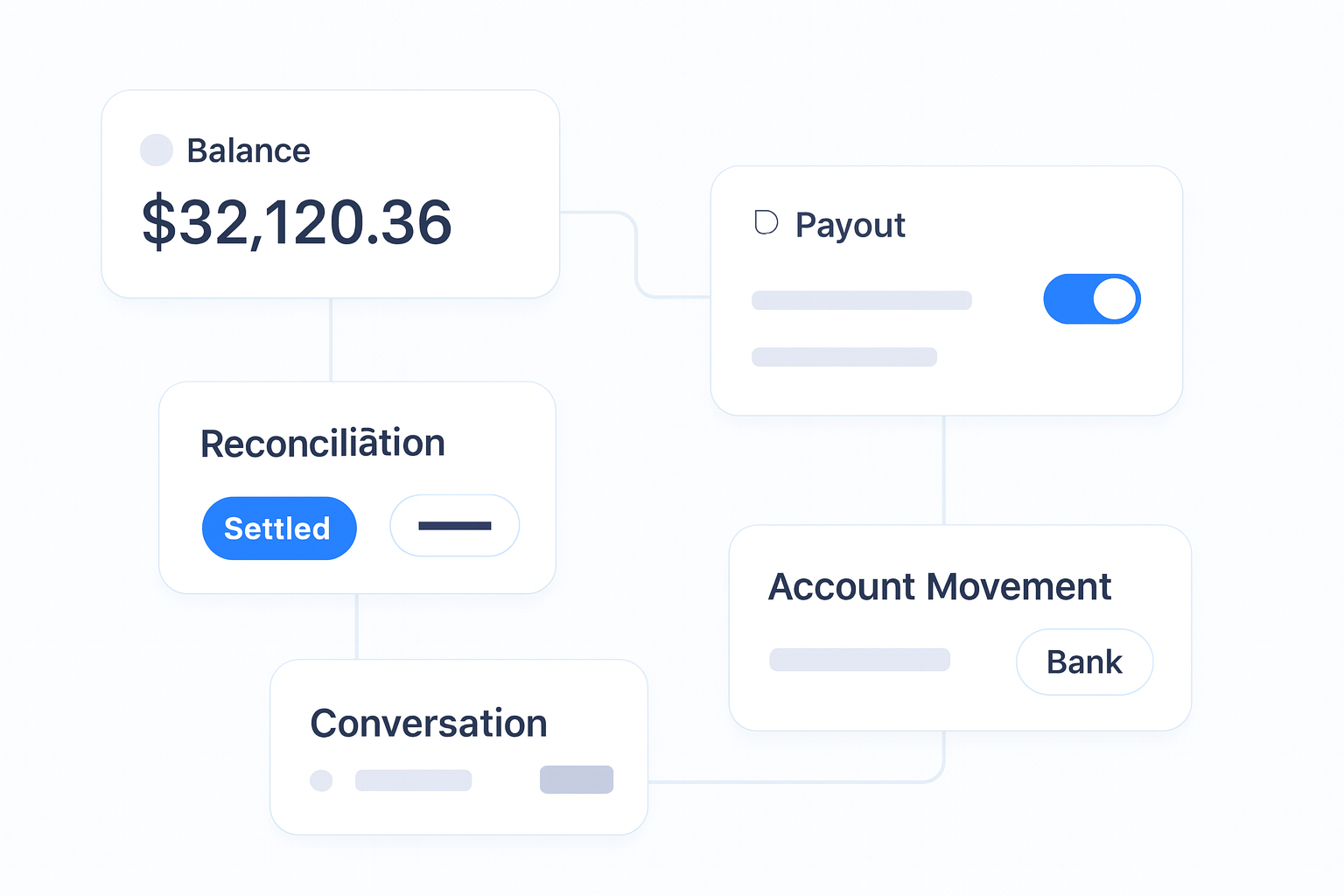
- Tracking in the dashboard helps with reconciliation
- Settlement and withdrawal automations can move funds to the right destination
- Payment and exchange analytics support finance review
If your team needs to move from fiat collection into conversion, see crypto convert for the related settlement workflow.
Use cases
Virtual accounts are especially useful for internet businesses that handle frequent incoming payments and need a reliable operating layer.
- Web3 and crypto businesses collecting fiat before moving into digital asset workflows
- Marketplaces and platforms that need better payment attribution
- Affiliate, creator, and subscription businesses that want cleaner finance operations
- Teams that need USD and EUR receiving accounts for operational settlement
For businesses that also need outbound payment operations, mass payouts can extend the same operating model to recipients.
What to consider before you use virtual accounts
Virtual accounts are not a replacement for every treasury or banking need. They are a payment operations tool for receiving, tracking, and routing funds. If your use case depends on specific rail availability, regional support, or partner-supported fiat account features, review the setup with Radom before going live.
For product and integration teams, the API and docs are the right next step. For operations teams, contact sales to confirm the right account structure and workflow.
Next steps
If you are evaluating fiat virtual accounts for collection, reconciliation, and crypto settlement, start with the product view, compare pricing, and then choose the right implementation path.
View pricing or read the docs if you are building directly. If you want to talk through your workflow first, contact sales.
Frequently asked questions
What are fiat virtual accounts used for?+
They are used to receive fiat payments into named accounts, then track and route those funds through finance, treasury, or crypto settlement workflows.
Does Radom support USD and EUR virtual accounts?+
Yes, the approved product page states that Radom supports virtual USD and EUR accounts in your business name.
Can I use virtual accounts for crypto settlement?+
Yes, Radom says virtual accounts can move value into crypto workflows where supported.
Is Radom a bank?+
No. Radom should be treated as payment infrastructure and virtual account tooling, not as a bank.
Where should developers start?+
Start with the documentation if you want to integrate virtual accounts into a product or internal workflow.