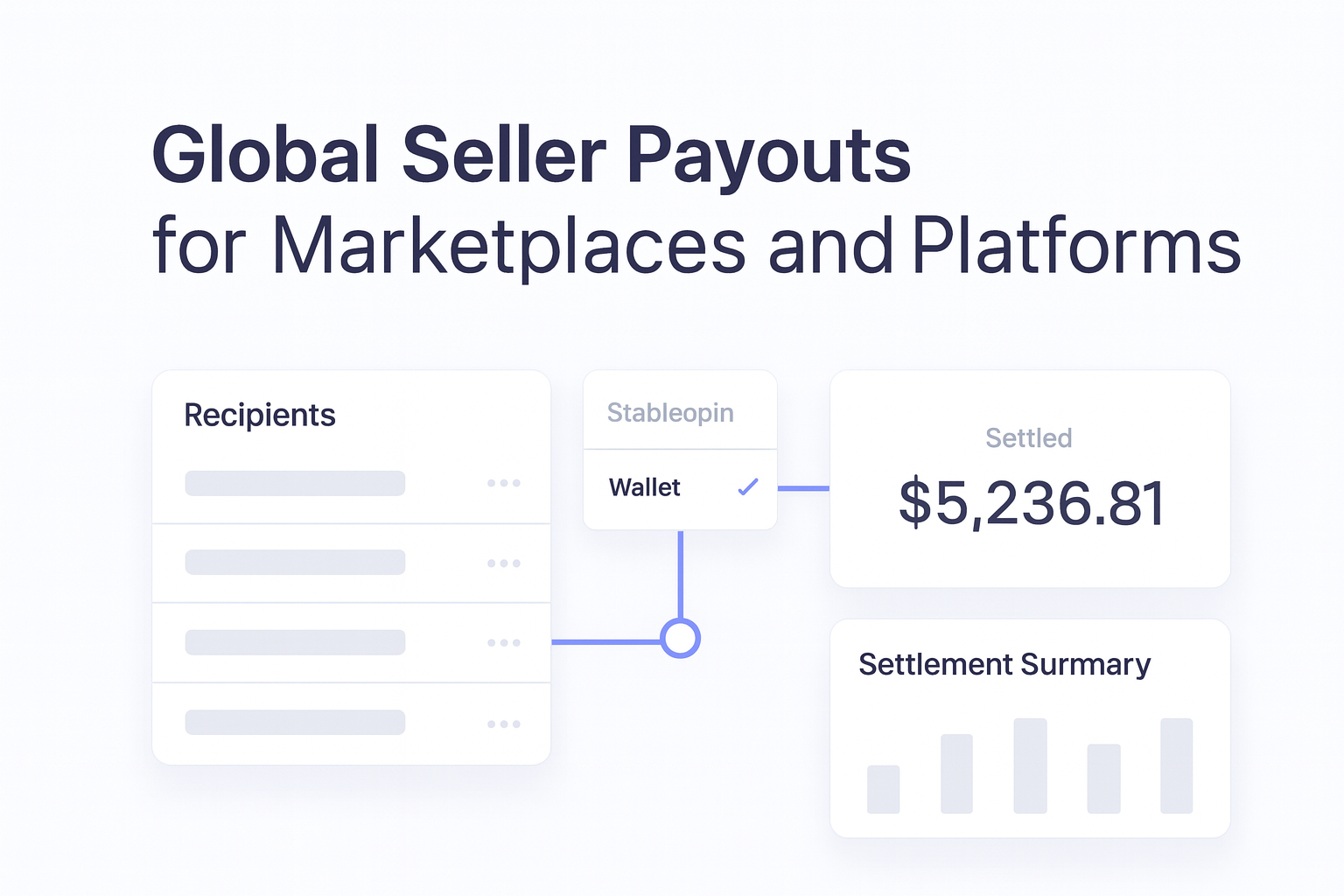
Global seller payouts are an operations problem first
If your platform pays sellers, affiliates, creators, contractors, or users across markets, the hard part is not just sending money. You need to collect funds, reconcile balances, settle in the right asset, and route payouts through the rail each recipient can use. Radom is built for that workflow.
Radom helps businesses accept and move money across crypto, stablecoins, open banking, and fiat account rails. For payout-heavy teams, that means one platform for payout execution, conversion, and settlement, with control for finance and operations teams.
Contact sales about Radom payouts
When Radom fits seller payout workflows
Radom is a fit when your platform needs to pay many recipients and keep the back office clean. Common use cases include global seller payouts, affiliate commissions, creator earnings, marketplace disbursements, and platform rewards.
- Fund payouts in crypto or fiat.
- Pay out in supported fiat currencies where available, including USD, GBP, and EUR through rails such as ACH, Fedwire, and SEPA.
- Send direct crypto payouts to recipients who prefer digital assets.
- Use the dashboard, CSV upload, or API to run payout operations.
For industry-specific payout flows, see iGaming payouts.
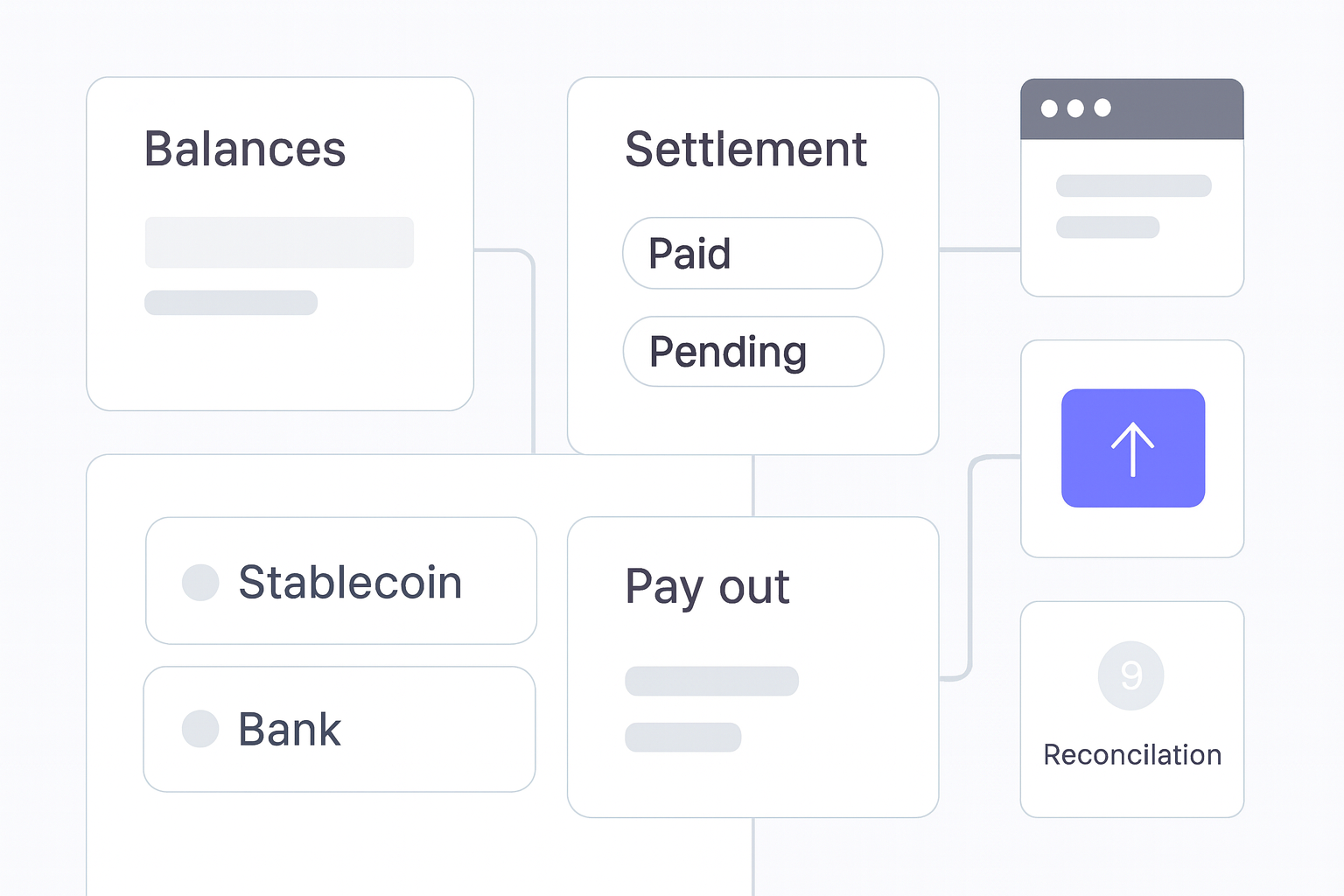
What the payout workflow looks like
- Collect incoming funds from customers, partners, or platform activity.
- Track balances and settlement in Radom.
- Convert funds when a payout needs a different asset or currency.
- Send payouts through the rail and currency your recipient needs.
- Use accounting records and payout status to reconcile the run.
Radom also supports crypto-funded fiat payouts where available, which is useful when your treasury sits in crypto or stablecoins but your recipients need fiat. If your team needs to move between assets before paying out, see crypto convert and virtual accounts.
Where Radom removes work
Most payout teams spend time on manual reconciliation, currency handling, and exception management. Radom reduces that work by keeping payout execution, conversion, and settlement in one place.
- Use one system instead of separate tools for payouts and conversion.
- Keep payout records tied to balances and settlement.
- Use transparent pricing for payouts, swaps, conversions, and settlement as volume grows.
- Access competitive real-time exchange rates when payouts require conversion between crypto and fiat.
If your team also needs to accept funds before payout, start with crypto payments or review pricing.
How buyers usually evaluate a global payout platform
Decision-stage buyers usually compare platforms on a few practical points:
- Coverage: Can you pay recipients in the currencies and rails they actually use?
- Funding flexibility: Can you fund payouts in crypto or fiat?
- Operations control: Can finance and ops teams reconcile runs without spreadsheets?
- Automation: Is there a dashboard, CSV workflow, and API for scale?
- Settlement clarity: Can you track balances, conversions, and payout outcomes in one place?
Radom is built around those needs for businesses and platform operators, not consumers.
Recommended next step for teams evaluating Radom
If you are comparing payout infrastructure for a marketplace, affiliate network, creator platform, or other global business, the fastest path is usually to review the payout flow, then confirm pricing and integration requirements.
Review Radom docs or contact sales about Radom payouts.
Frequently asked questions
Can Radom pay sellers in fiat and crypto?+
Yes. Radom supports crypto and fiat payouts, including direct crypto payouts and fiat payouts where supported.
Can I fund payouts with crypto or fiat?+
Yes. Radom supports funding payouts in crypto or fiat, with crypto-funded fiat payouts available where supported.
Can Radom handle payout conversion before settlement?+
Yes. Radom supports conversion workflows so teams can move between supported assets and currencies before payout or settlement.
How do teams run payouts at scale?+
Radom supports payout workflows through the dashboard, CSV upload, and API, which gives operations teams and developers different ways to manage volume.
Is Radom a bank?+
No. Radom should not be presented as a bank. For fiat accounts, open banking, and virtual accounts, use the supported rail language on the product pages.