Stablecoin payments are a payment workflow, not just a token transfer
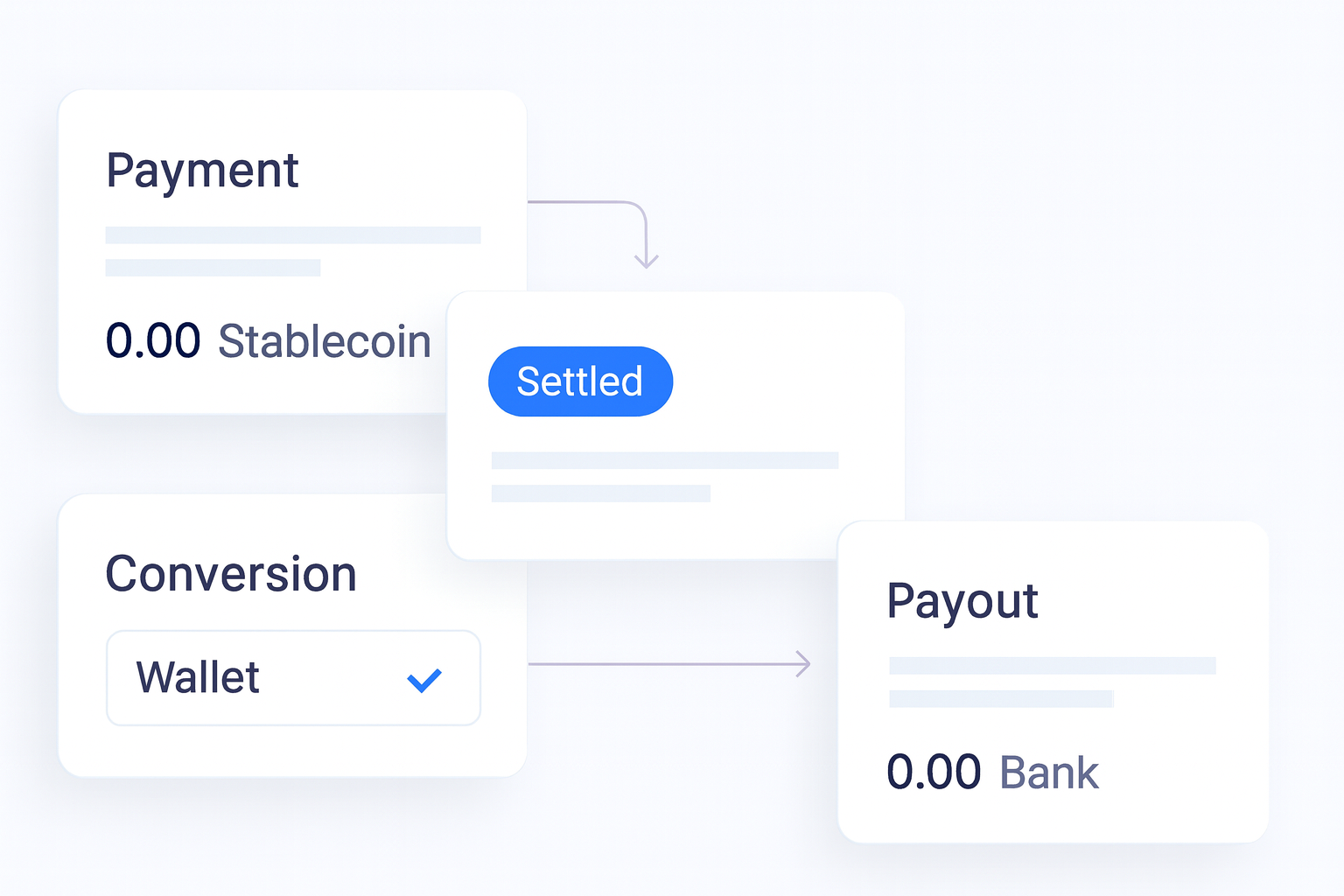
For businesses, stablecoin payments usually mean accepting a stablecoin from a customer or counterparty, recording the payment, deciding where the funds should settle, and then moving value into the asset or currency your team needs. That might be crypto, a stablecoin balance, or fiat where supported.
Radom is built for that operational flow. The platform supports crypto payments, conversion, payouts, and payment APIs for businesses that need to manage acceptance, settlement, and money movement from one place.
Explore crypto payments or see on and off ramp tools.
How stablecoin payments work in practice
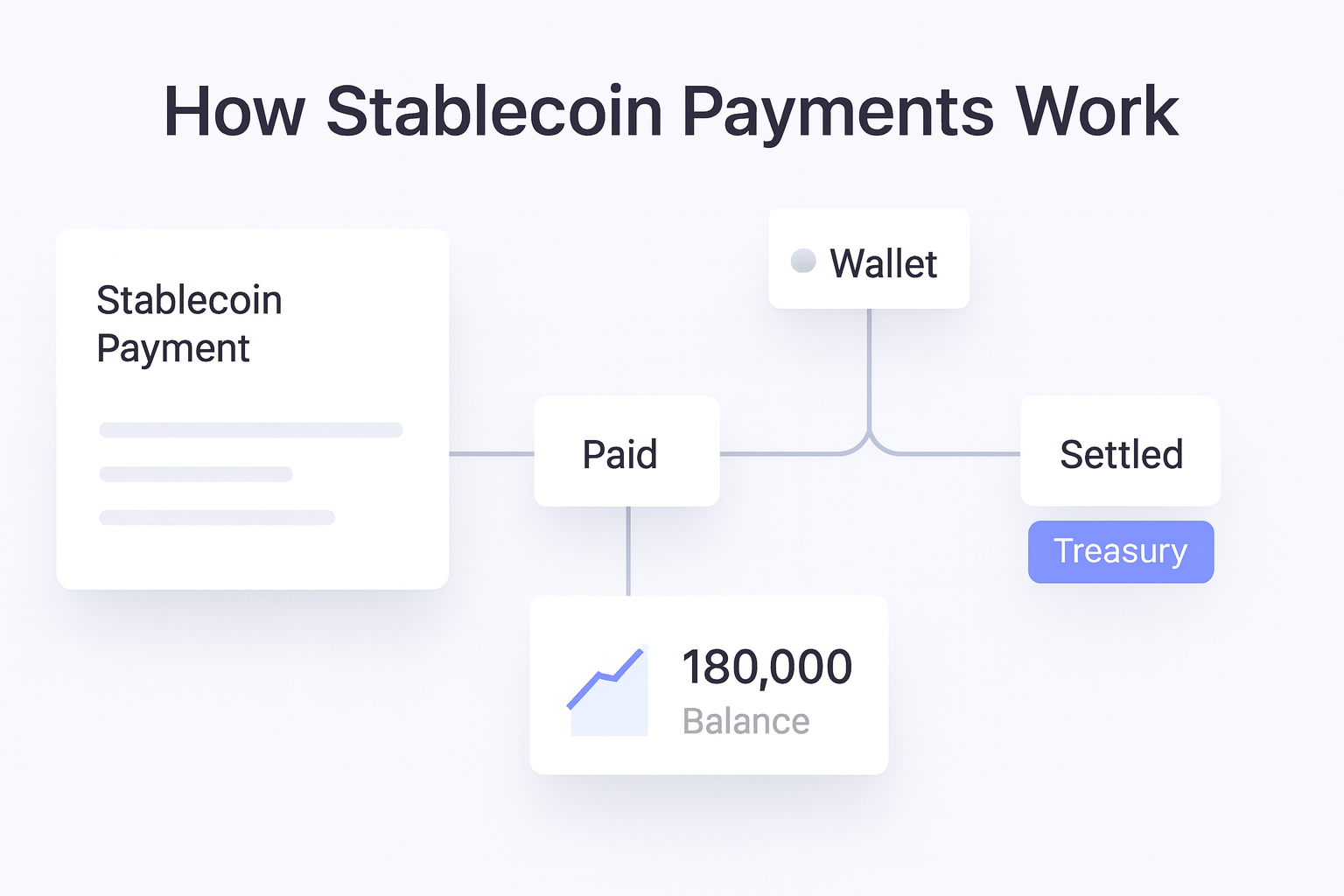
A stablecoin payment usually follows a simple sequence:
- The buyer pays in a stablecoin. The customer sends funds from a wallet or supported payment flow.
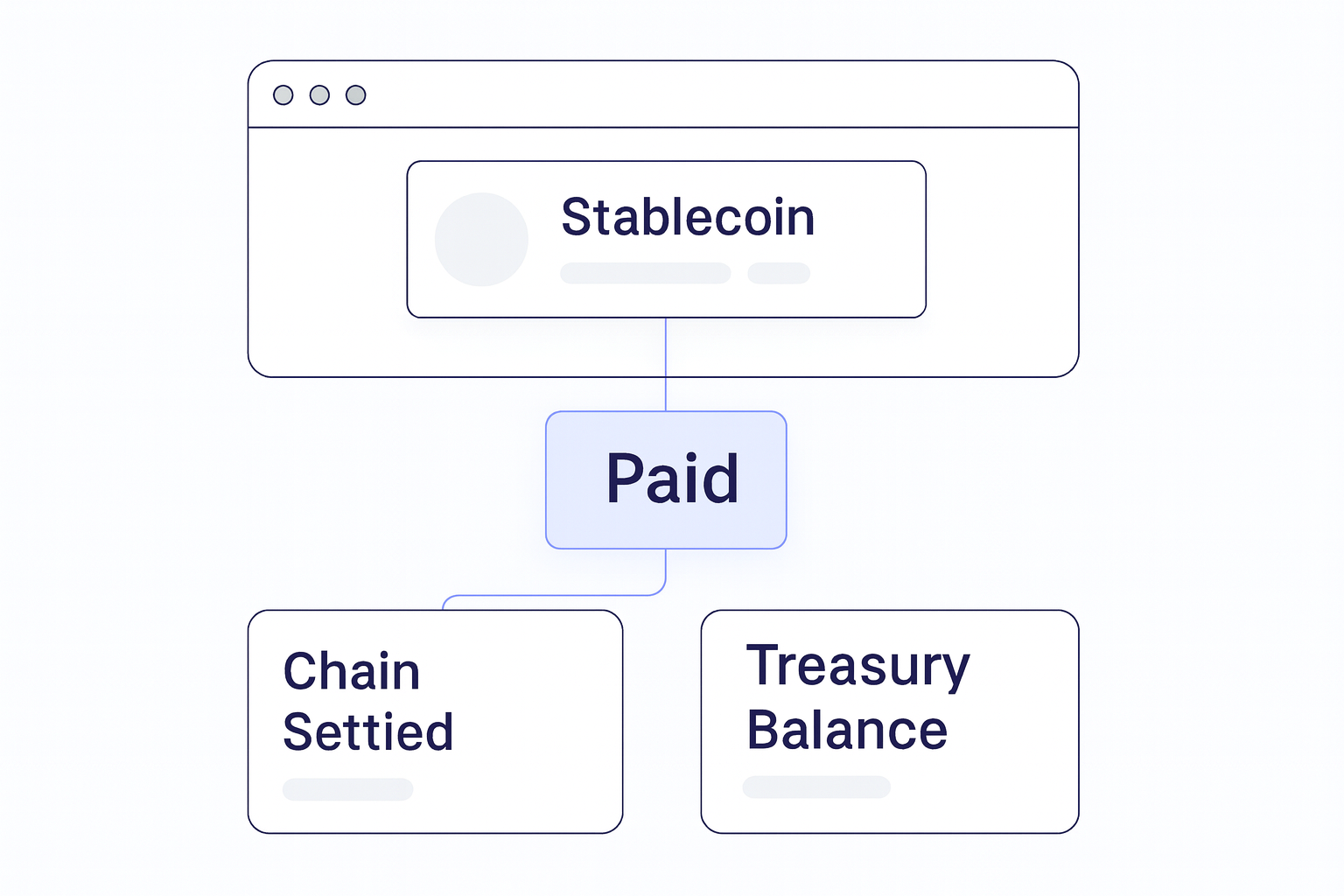
- The payment is detected and confirmed. Your system or provider tracks status so finance and operations can reconcile the transaction.
- The funds are settled. You decide whether to keep value in crypto, convert it, or move it into fiat where supported.
- The balance is used operationally. That can mean treasury management, vendor payments, refunds, or payouts.
- Records are kept for finance teams. Clear settlement and payment records matter when you need to reconcile revenue, liabilities, and payouts.
This is why stablecoin payments are often evaluated alongside payment acceptance, treasury, and cross-border payout workflows rather than as a standalone crypto feature.
Where stablecoin payments fit for operators
Stablecoin payments are useful when a business wants faster settlement options, simpler global money movement, or a way to bridge crypto and fiat operations. Common use cases include SaaS billing, platform payments, affiliate payouts, creator payouts, marketplace settlement, and international contractor payments.
Radom supports businesses that need payment acceptance, balance management, settlement, currency conversion, on-ramping, off-ramping, crypto-funded fiat payouts, and direct crypto payouts. That makes it suitable for teams that need more than a checkout page.
Review mass payouts if your main use case is recipient payments.
How Radom removes manual work
Teams usually spend time on four things when stablecoin payments start to scale: collecting payments, tracking balances, moving funds between assets, and paying people out. Radom helps reduce that work with one platform for payments, conversion, and payouts.
Depending on the workflow, teams can use hosted checkout, payment links, invoices, subscriptions, APIs, dashboard tools, CSV upload, and settlement controls. For conversion needs, Radom also supports crypto convert workflows and on and off ramp tools where available.
If your team needs a programmable flow, start with the docs at Radom documentation. If you want a commercial walkthrough, contact sales.
How to evaluate a stablecoin payment setup
When comparing providers, ask these questions:
- Can we accept stablecoin payments and see clear payment status?
- Can we settle in crypto, convert, or move into fiat where supported?
- Can finance teams reconcile balances without manual spreadsheets?
- Can we use the same platform for payouts, invoicing, or subscriptions if needed?
- Does the provider offer APIs, dashboard tools, and documentation for the team that will actually run the workflow?
Radom is designed for businesses that want one place to manage payment acceptance, conversion, settlement, and payouts. For pricing and volume-sensitive use cases, see pricing.
Stablecoin payments are often part of a larger money movement stack
In practice, many teams do not need only stablecoin acceptance. They also need conversion between crypto and fiat, virtual account receipts, treasury controls, and payout workflows. That is why stablecoin payments are often evaluated together with crypto conversion and crypto on and off ramp.
For platforms, marketplaces, and global operators, the best setup is usually the one that keeps acceptance, settlement, and payout operations connected.
Frequently asked questions
What is a stablecoin payment?+
A stablecoin payment is a transfer made using a stablecoin rather than a volatile crypto asset. Businesses usually care about how the payment is accepted, tracked, settled, and converted.
How do stablecoin payments settle?+
Settlement depends on the provider and the workflow. Some businesses keep funds in crypto or stablecoins, while others convert or move into fiat where supported.
Can stablecoin payments be used for payouts?+
Yes. Many businesses use stablecoins for recipient payments, especially when they need global payout workflows or want to fund payouts from crypto balances.
Do stablecoin payments replace fiat rails?+
No. For most businesses, stablecoin payments sit alongside fiat rails and treasury tools. The right setup depends on where customers pay, how finance reconciles, and where recipients need funds.
Is Radom only for crypto-native businesses?+
No. Radom is built for businesses and platform operators that need practical money movement across crypto, stablecoins, open banking, and fiat rails.
Next step
If you are evaluating how stablecoin payments work for your business, start with the product flow that matches your use case. Use crypto payments for acceptance, mass payouts for recipient payments, crypto convert for settlement and treasury movement, and on and off ramp tools for fiat to crypto movement.
Contact sales if you want help mapping the workflow to your operation, or open the docs if you are ready to integrate.