Why businesses set up bitcoin payments
Businesses usually do this for one of three reasons: they want to give customers another payment method, they want to support global buyers more efficiently, or they want a cleaner workflow for crypto-native revenue. Radom is built for that kind of use case. It helps businesses accept crypto payments, manage subscriptions, send invoices, create payment links, and run payouts from one platform.
If you are comparing options, the question is not just whether you can accept bitcoin. It is whether your team can also track balances, manage settlement, and keep reporting and reconciliation under control as volume grows.
For teams that want to go straight to implementation, Radom's crypto payments and crypto checkout pages show the core product paths.
What you need before you start
Before you set up bitcoin payments, make sure you have decided how you want to collect payment and where funds should land after checkout. That usually means answering four questions:
- Will you use hosted checkout, payment links, invoices, subscriptions, or an API-led flow?
- Do you want funds to stay in crypto, move to fiat, or be converted later?
- Who on your team needs access to payment status, balances, and reporting?
- Do you need a simple no-code setup or a developer-led integration?
Radom supports businesses that want to accept crypto through checkout, payment links, invoices, subscriptions, and APIs. It also supports settlement in crypto or fiat, which helps if your finance team needs a predictable operating process.
How to set up bitcoin payments step by step
1. Choose the payment flow
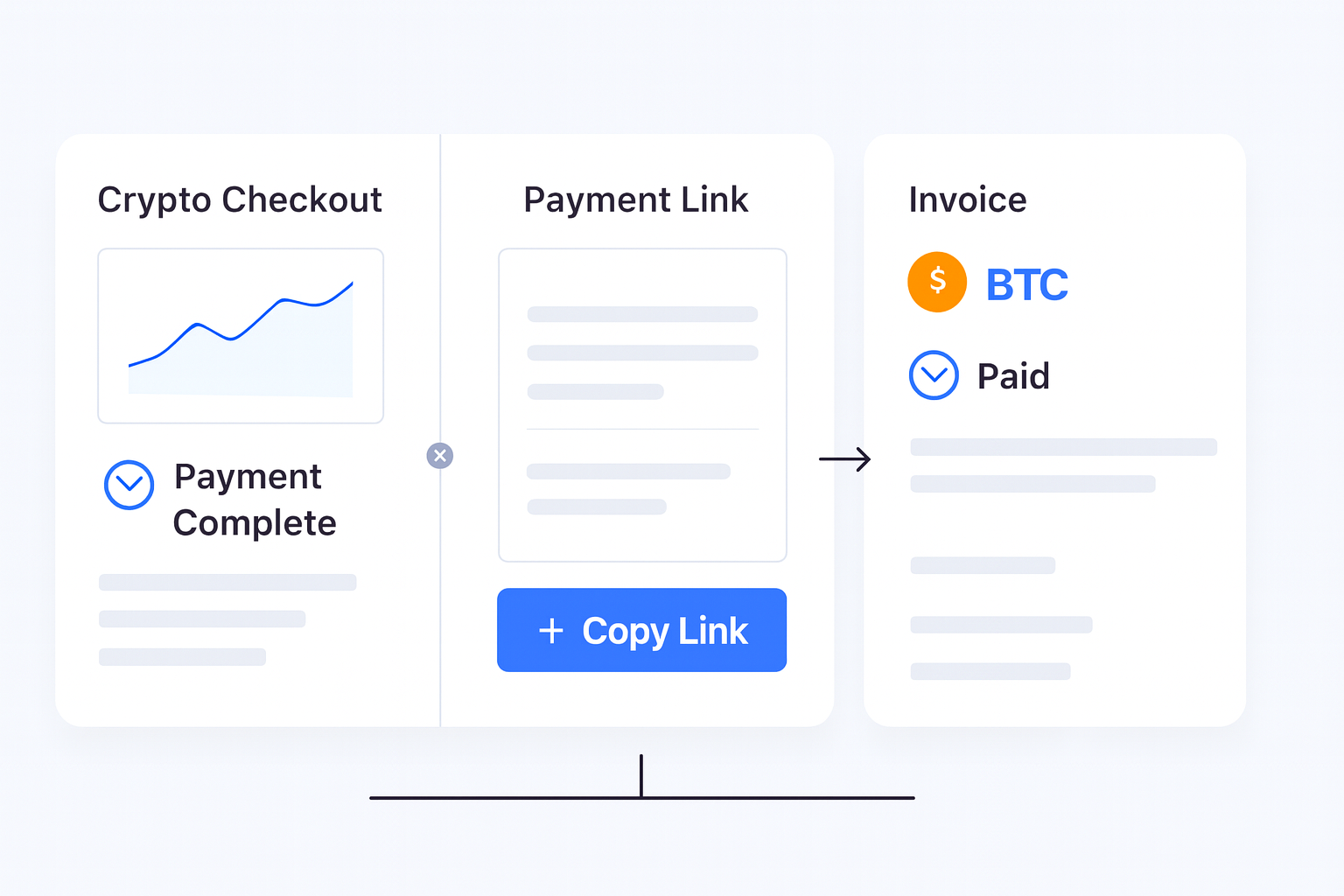
Start with the workflow that matches your business model. A hosted checkout is usually the fastest option for one-time purchases and subscriptions. Payment links work well for lightweight sales workflows. Invoices are a better fit for finance teams, agencies, contractors, and service businesses. If your team needs more control, use the API.
2. Decide how you want to settle
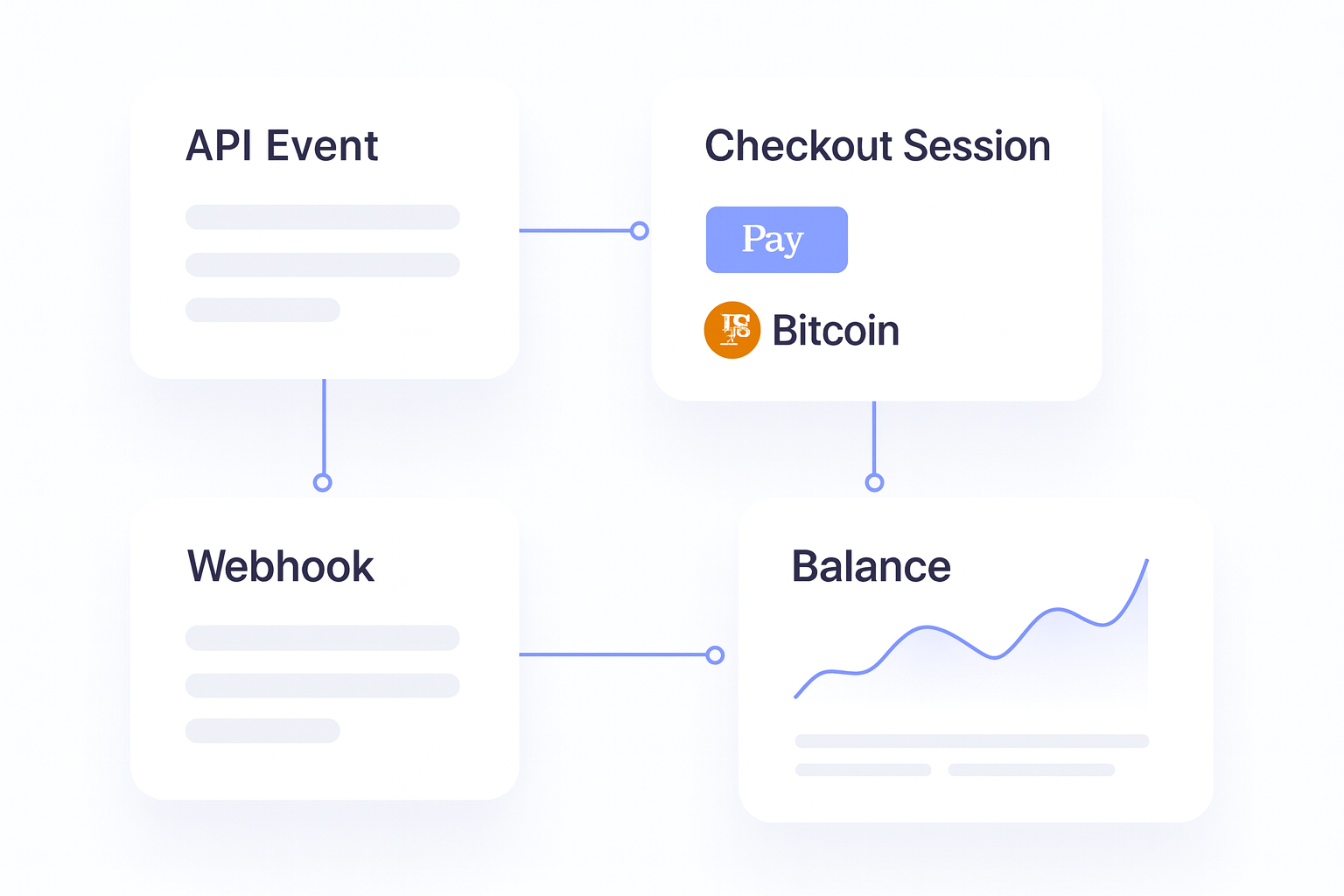
Next, decide whether you want to keep funds in crypto, convert them, or move them into fiat. Radom supports settlement in crypto or fiat, plus balance tracking so teams can see what has been received and how it moves through the business.
3. Set up the customer payment experience
For hosted checkout, make the payment page match your brand and payment flow. Radom Checkout is designed as a hosted payment flow for one-time payments and subscriptions, with wallet support and status updates. That reduces the amount of interface work your team needs to build and maintain.
4. Connect your operations workflow
Once the payment flow is live, connect it to the rest of your operating process. That includes reconciliation, reporting, balance management, and any downstream settlement or withdrawal steps your finance team needs. If your business expects recurring revenue, also review crypto billing and crypto invoicing.
5. Test before you launch
Run a full test payment from customer checkout through to settlement and reporting. Check that your team can see payment status clearly, confirm the right settlement path, and handle exceptions without manual cleanup.
Where Radom removes work
Radom is useful when you want bitcoin payments without building every part of the flow yourself. It gives you hosted checkout, payment links, invoices, subscriptions, and APIs from one account. That means you can launch faster and keep one system for collection, settlement, and reporting.
For teams that want a more complete setup, Radom also supports payment operations around balances and conversion. If your business needs to move between crypto and fiat, review crypto on and off ramp and crypto convert.
Common setup choices by team type
Payments teams
Use hosted checkout or payment links if you want a faster rollout with less engineering overhead. Focus on customer experience, status visibility, and settlement rules.
Finance operations teams
Use invoices, reporting, balance tracking, and settlement workflows to keep reconciliation clean. Finance teams usually care most about how funds move after they are received.
Founders and operators
Start with the quickest path to live payments, then expand into subscriptions, invoicing, or payout workflows as the business grows.
Developers
If you need programmable payment infrastructure, use the API and docs to map the payment flow into your product. Start with the Radom documentation and then choose the checkout or payments path that fits your stack.
What to check before launch
- Is the payment method clear to the customer?
- Does the checkout flow match your brand and product model?
- Can your team see payment status and settlement clearly?
- Do you have a plan for reconciliation and reporting?
- Have you chosen whether funds stay in crypto or move to fiat?
If you need pricing context before rollout, see Radom pricing. For larger volumes or more specific operational needs, contact sales.
Frequently asked questions
Can I accept bitcoin payments without building a full checkout flow?+
Yes. Radom supports hosted checkout and payment links, which are useful if you want to launch faster without building every payment screen yourself.
Can I accept bitcoin and settle in fiat?+
Radom supports settlement in crypto or fiat. If you need to move between crypto and fiat, review the on and off ramp and conversion products.
Does Radom support subscriptions and invoices?+
Yes. Radom supports subscriptions and invoices, which makes it suitable for recurring revenue and finance-led workflows.
Is this only for developers?+
No. Radom supports no-code and API-led workflows, so founders, finance teams, and developers can all use it depending on how they want to launch.
What is the fastest way to get started?+
For many businesses, the fastest path is hosted checkout or payment links. If you need integration guidance, use the docs. If you want to discuss a larger rollout, contact sales.
Next step
If you are setting up bitcoin payments for a business, start with the payment flow that matches your model, then decide how you want to settle and report on the funds. Radom gives you one platform for acceptance, settlement, and payment operations.
Review crypto payments or contact sales to plan your setup.