How to set up a crypto payment gateway
If you need to accept crypto payments for a business, the real job is not just turning on a checkout. You need a setup that fits your payment model, gives customers a clear way to pay, and leaves your finance team with usable settlement and reporting. Radom is built for that kind of setup.
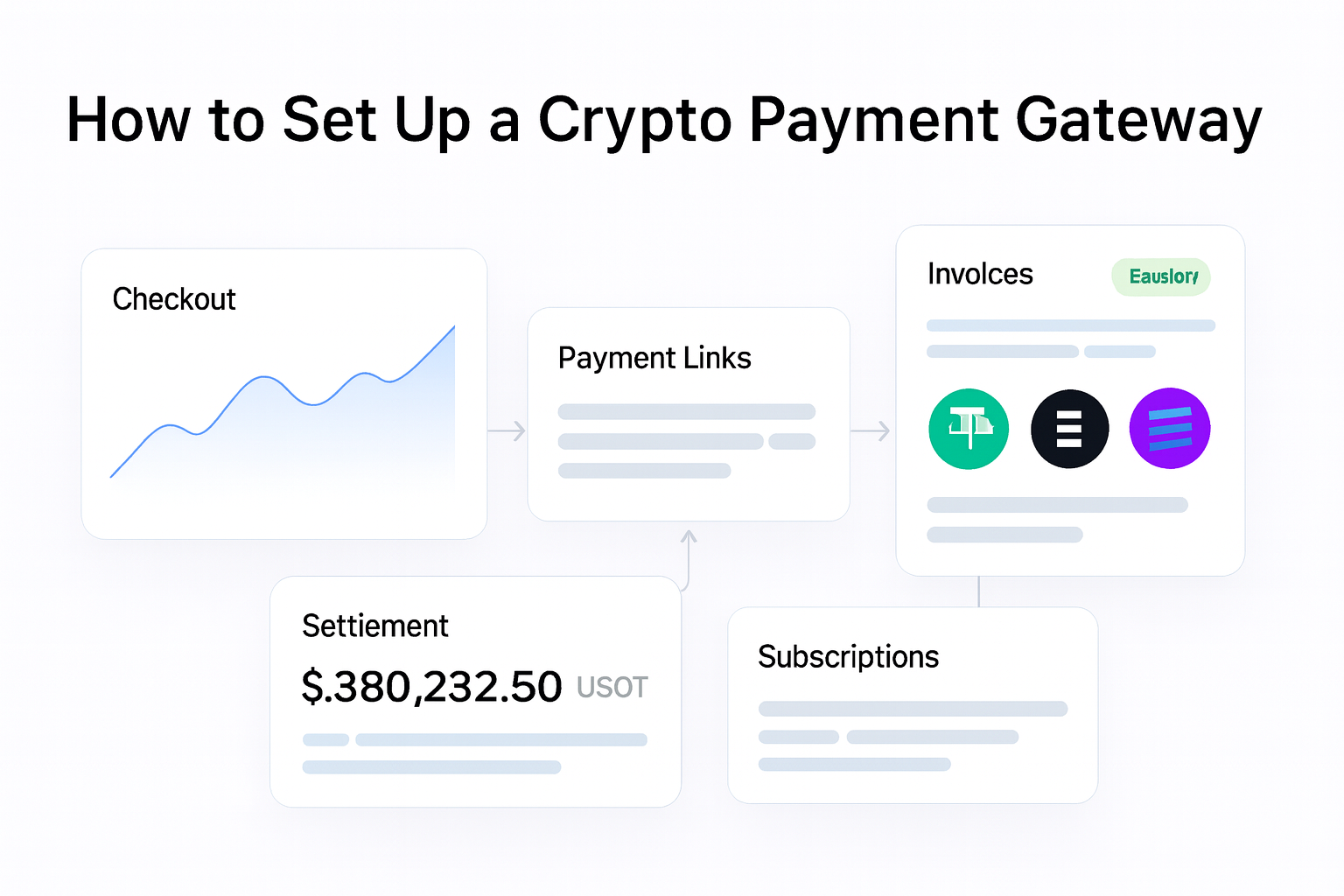
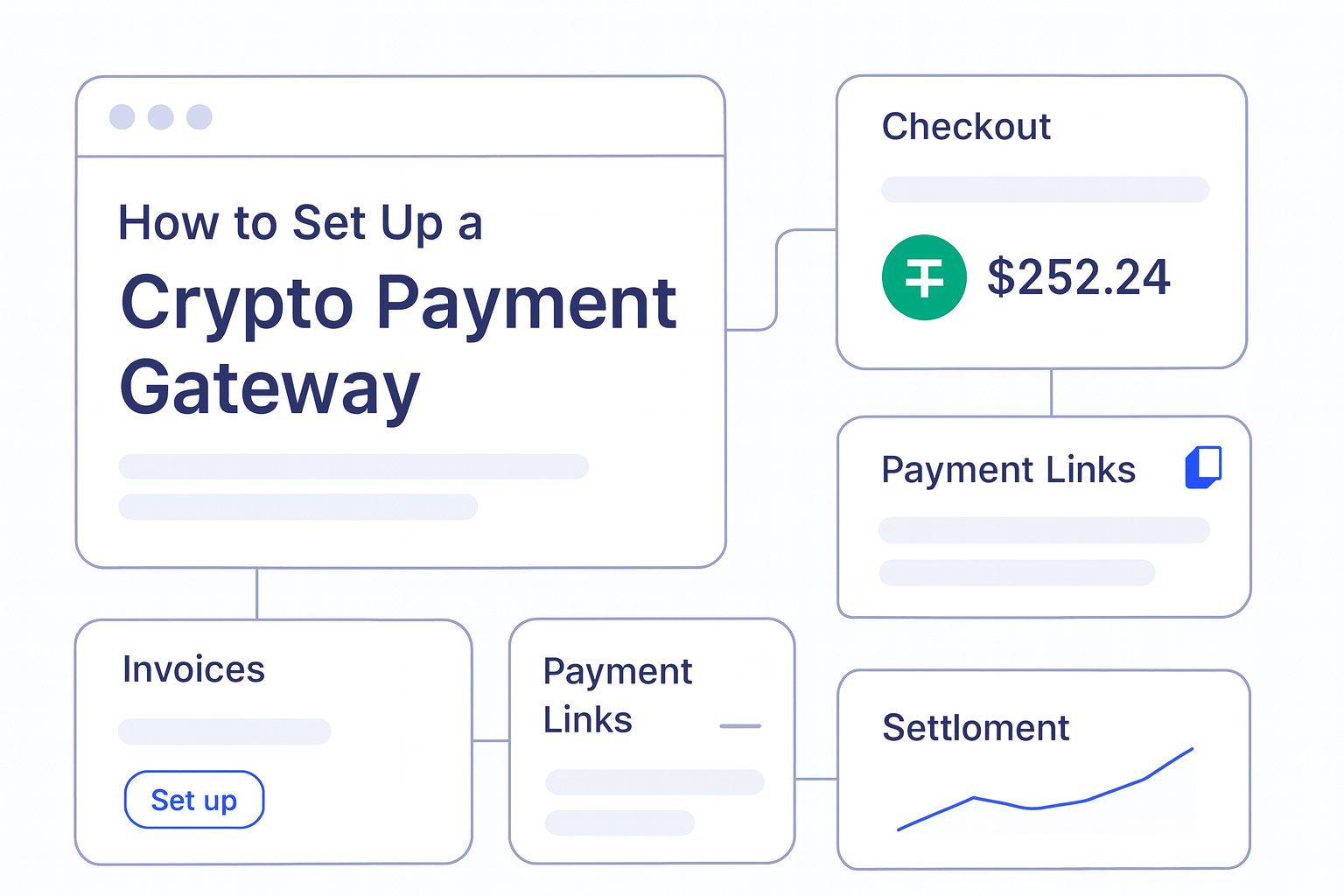
Radom lets businesses accept crypto payments through hosted checkout, payment links, invoices, subscriptions, and APIs from one platform. You can receive funds to your Radom balance, convert assets, or withdraw to your wallet. For teams that want a practical crypto payments stack, that makes the setup simpler to launch and easier to operate.
What to decide before you configure anything
Before you set up a gateway, decide how you want to collect payment and what your back office needs after payment lands. The right setup depends on whether you sell one-time purchases, recurring subscriptions, invoices, or platform payments.
- One-time payments: use hosted checkout or payment links.
- Recurring revenue: use subscriptions or billing flows.
- Manual collection: use invoices.
- Developer-led integration: use APIs and docs.
- Settlement needs: decide whether you want to hold crypto, convert, or withdraw.
If you are still comparing options, start with crypto payment processing and hosted crypto checkout to see which flow fits your business.
Step 1: Choose the payment flow
The first setup decision is the customer-facing flow. Radom supports hosted checkout, embedded flows, subscriptions, invoices, payment links, and APIs. That means you can match the gateway to the way your business already sells.
Hosted checkout is the cleanest option if you want a ready-made payment page. Payment links are useful for lightweight collection and quick sales workflows. Invoices fit finance teams, agencies, contractors, and service businesses. Subscriptions are the better fit when payment repeats on a schedule.
Step 2: Connect the payment flow to your product or operations
Once you know the flow, connect it to the place where payments start. That might be your storefront, app, billing system, sales process, or internal finance workflow. Radom supports businesses that want a no-code setup as well as developers who want programmable payment infrastructure.
For a technical setup, use the Radom documentation to work through integration details. For teams that want to move faster without building every payment screen, hosted checkout can reduce engineering work.
Step 3: Decide how you want to settle
A payment gateway is only useful if settlement is clear. Radom lets businesses receive funds to a Radom balance, convert assets, or withdraw to a wallet. The right choice depends on how your finance team manages treasury, reconciliation, and reporting.
If your business needs to move between crypto and fiat, or manage settlement rules across assets, review crypto conversion and crypto on and off ramp alongside your payment setup.
Step 4: Set up the customer payment experience
Your gateway should be easy for customers to complete. Radom’s checkout is designed as a hosted payment flow with wallet support and reliable status updates. That matters because a payment page that is hard to follow creates support work and abandoned payments.
For businesses that want branded payment pages, Radom supports custom colors, fonts, logo placement, product images, and payment settings. That helps the payment page fit the rest of your site without requiring a full custom build.
Step 5: Align reporting, reconciliation, and payout workflows
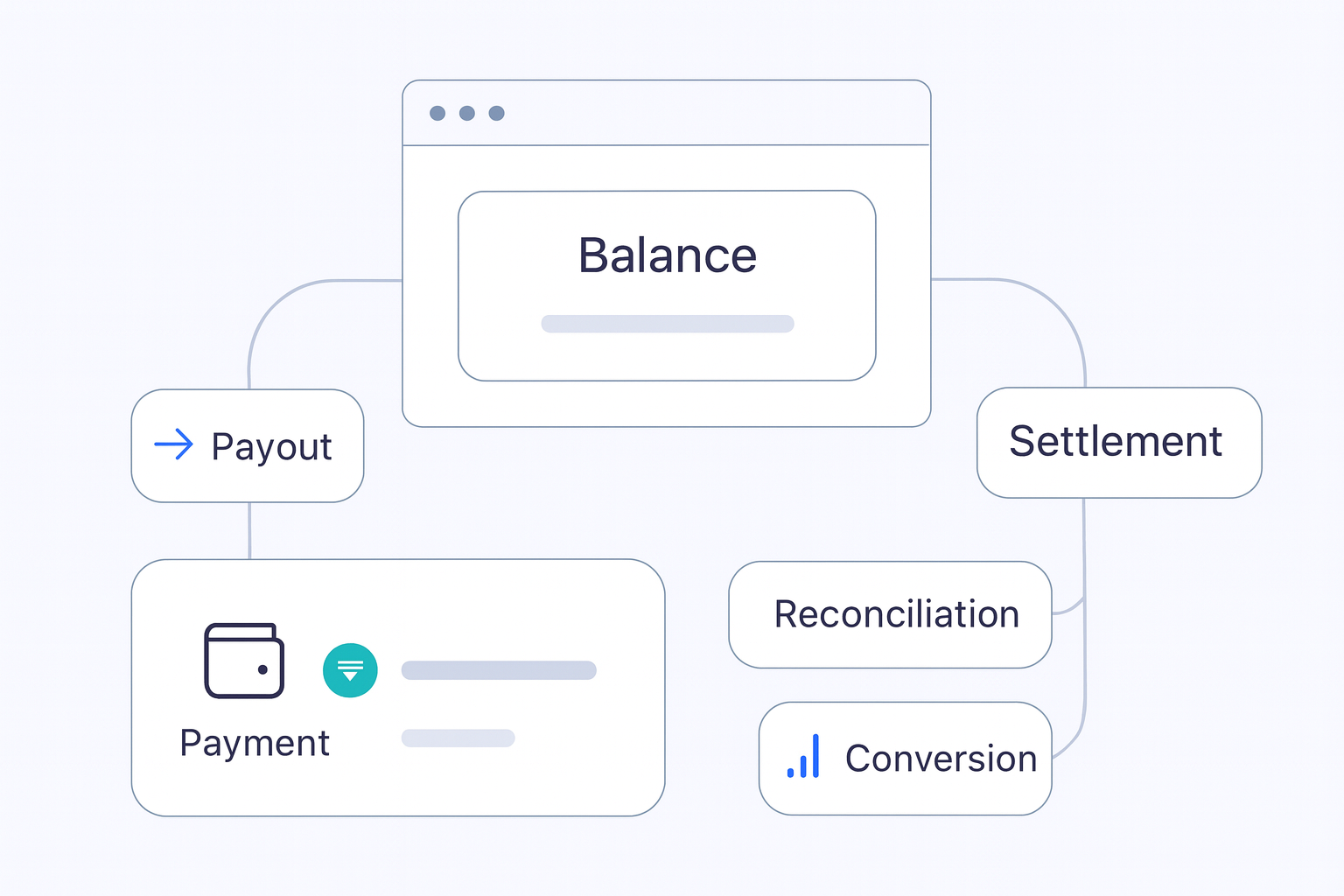
After launch, the gateway should fit finance operations. Your team needs to track balances, understand settlement, and reconcile payments without chasing data across multiple tools. Radom is positioned as a platform where businesses can accept payments and manage the movement of funds in one place.
If your business also needs to pay out creators, affiliates, contractors, or platform users, it can make sense to evaluate payout workflows at the same time as payment acceptance.
Where Radom removes work
Radom reduces the amount of infrastructure you have to build and maintain. Instead of stitching together separate tools for checkout, billing, invoicing, payment links, and payouts, you can use one platform for payment acceptance and settlement workflows.
- Hosted checkout for a ready-made payment page.
- Payment links for quick collection.
- Invoices for manual or finance-led workflows.
- Subscriptions for recurring revenue.
- APIs for teams that need programmable payment infrastructure.
- Settlement tools so finance teams can track balances and move funds with more control.
Pricing and implementation
Radom pricing is published for crypto payment processing, checkout, billing, invoicing, payment links, payouts, conversion, and settlement. The pricing page states that the platform uses per-transaction pricing with no setup fees or monthly fees.
If you are planning high volume or need a more specific commercial setup, use Radom pricing as the starting point and contact sales for a tailored conversation.
Who this setup works for
Radom is built for businesses and platform operators, not only consumers. That makes it relevant for SaaS teams, e-commerce brands, marketplaces, gaming platforms, affiliate networks, and other digital businesses that need a practical crypto payments stack.
If your team is evaluating whether crypto payments fit your business model, the next step is usually to test the checkout flow, review the docs, and confirm settlement requirements before launch.
Frequently asked questions
What is a crypto payment gateway?+
A crypto payment gateway is the payment infrastructure that lets a business accept digital assets from customers and manage what happens after payment is received, including settlement and reporting.
Can I accept crypto without building my own checkout?+
Yes. Radom offers hosted crypto checkout and payment links, which can reduce the amount of custom development needed.
Can I use crypto payments for subscriptions or invoices?+
Yes. Radom supports subscriptions and invoices in addition to checkout and payment links.
Can I settle in crypto or fiat?+
Radom says businesses can settle in crypto or fiat, and can also receive funds to a Radom balance, convert assets, or withdraw to a wallet.
Is Radom only for developers?+
No. Radom supports no-code tools as well as APIs, so it can work for operators, finance teams, and developers.
Next step
If you are setting up a crypto payment gateway for a real business use case, start with the flow that matches your revenue model. Then use the docs to integrate, or speak with sales if you need help aligning checkout, settlement, and reporting.
Contact sales or use the documentation to get started.