Set up crypto payments without building the whole stack yourself
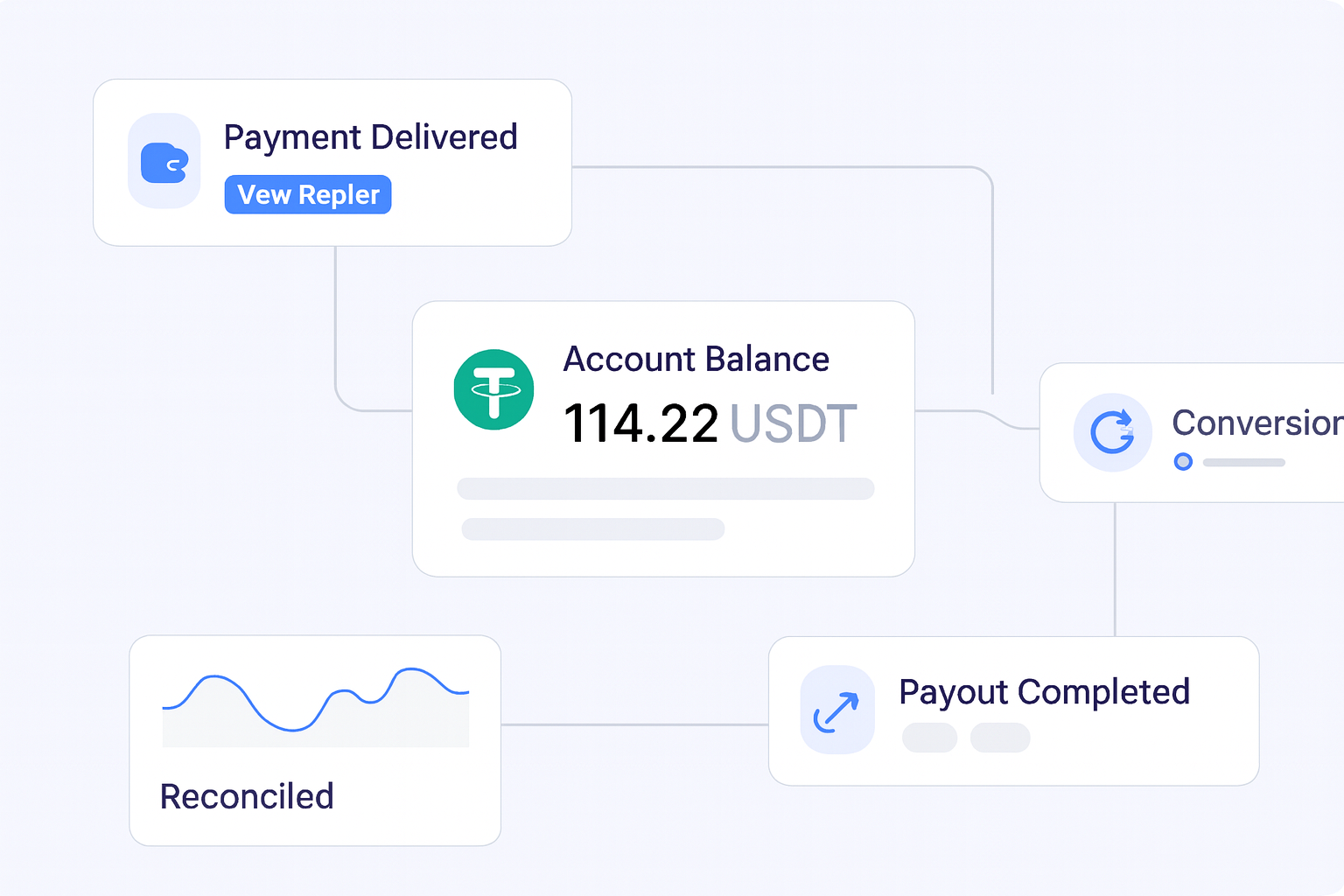
If you are evaluating how to set up a crypto payment processor, the real question is not just how to accept a payment. It is how to collect it, confirm it, reconcile it, settle it, and move funds where your finance or operations team needs them next. Radom is built for that workflow. It supports crypto payments, checkout, billing, subscriptions, invoices, payment links, payouts, conversion, and settlement from one platform.
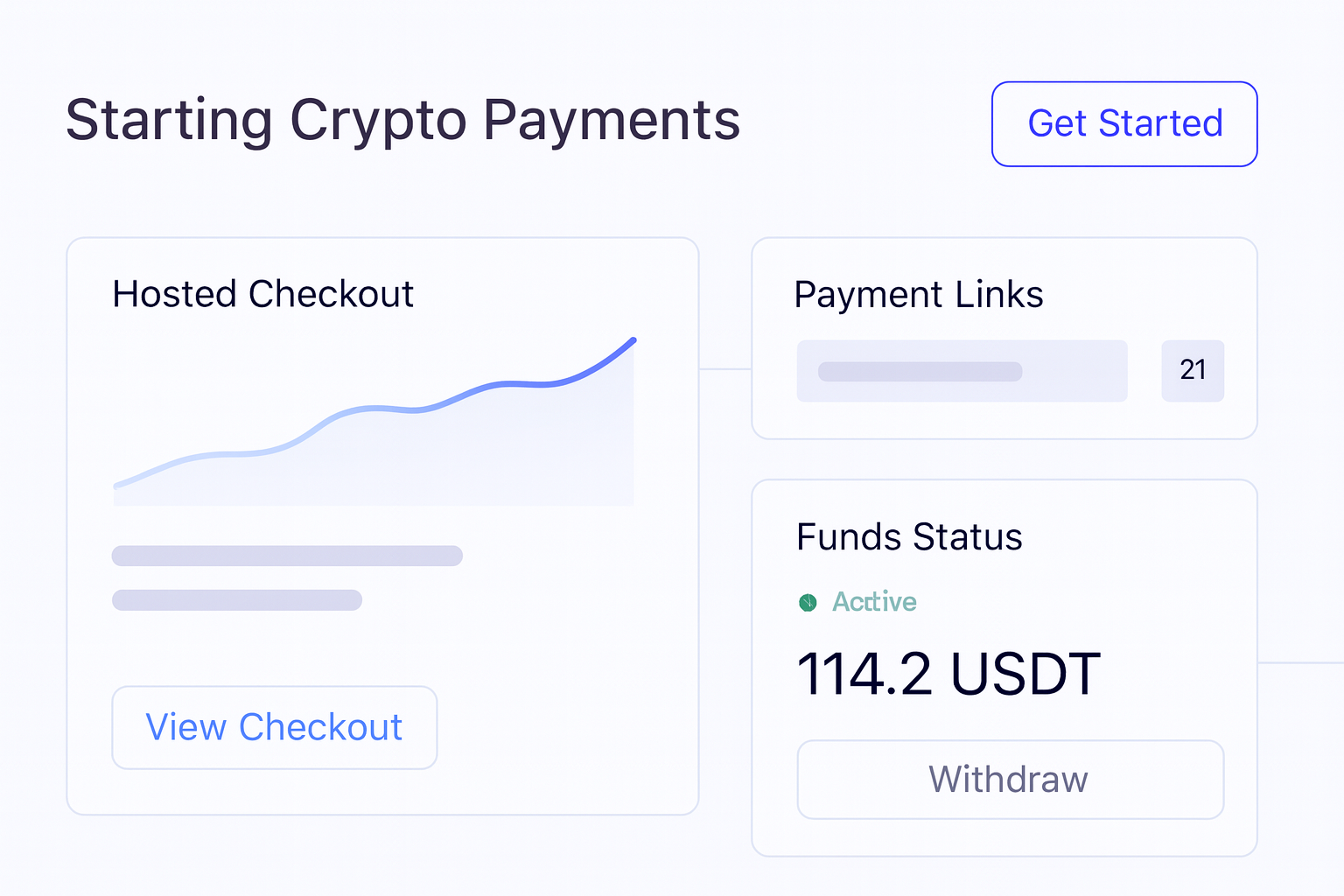
For teams comparing options, the goal should be a payment flow that is easy for customers to use and manageable for your business after the payment lands. Radom supports hosted checkout, payment links, invoices, subscriptions, and APIs, so you can choose the flow that fits your product and operating model.
Use hosted crypto checkout if you want a ready-made payment page, or review pricing before you scope the rollout.
What you need before launch
A practical setup starts with a few decisions.
- Choose the payment flow. Decide whether you need hosted checkout, payment links, invoices, subscriptions, or API-led integration.
- Define what happens after payment. Decide whether you want to hold funds in crypto, convert them, or settle in fiat where available.
- Map your reporting needs. Finance teams usually need clear balances, settlement records, and a process for reconciliation.
- Plan for payouts or treasury movement. If your business also sends money out, connect payment acceptance to your payout and conversion workflow.
- Decide how technical the integration should be. Some teams want no-code tools, while others need APIs and docs for a custom build.
If your team needs a faster launch path, read the Radom docs and connect the flow that matches your product.
A simple setup process
Most teams can approach setup in five steps.
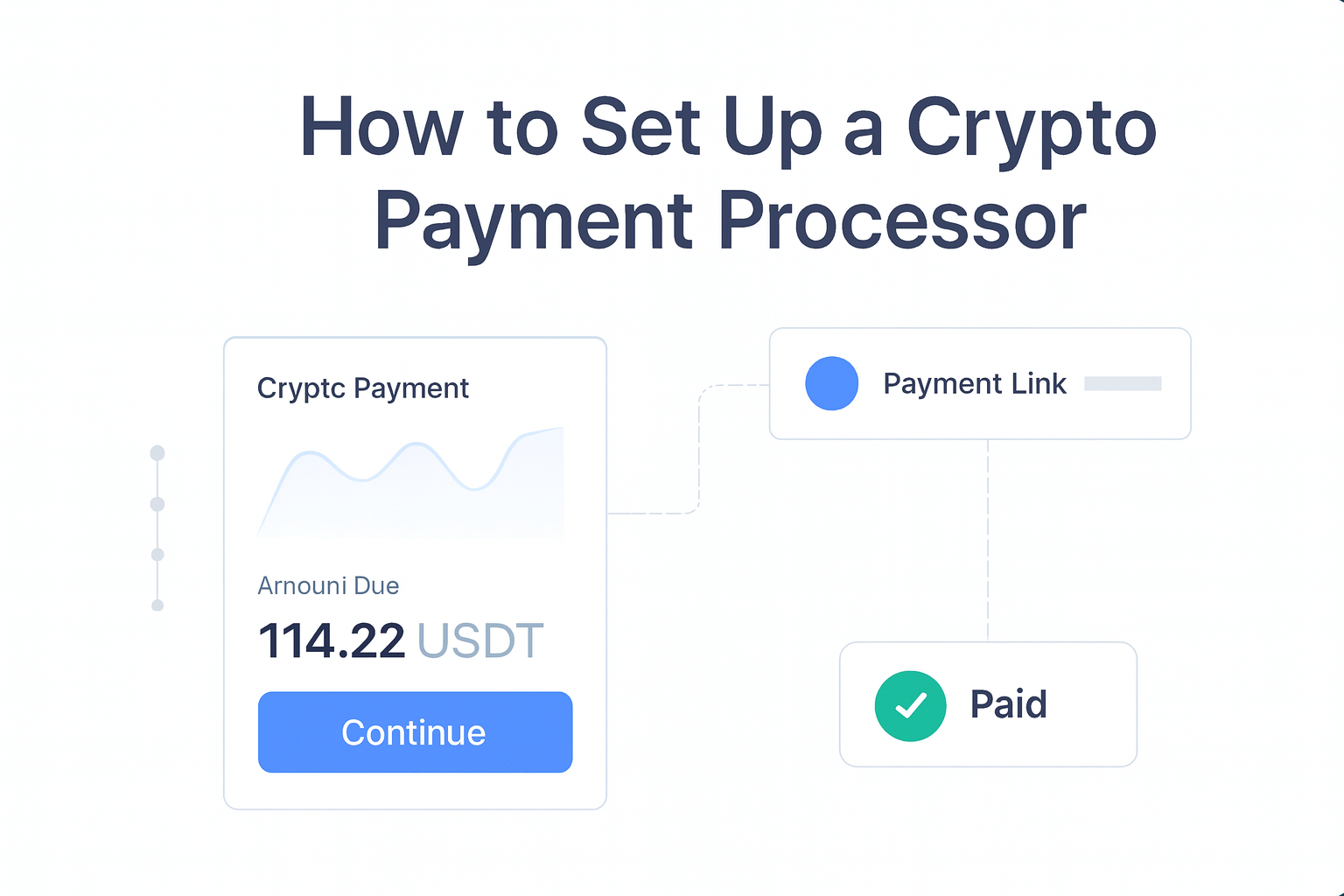
- Create your payment flow. Start with checkout, links, invoices, or subscriptions based on how you sell.
- Configure payment settings. Set the assets, checkout experience, and operational preferences your team needs.
- Connect your business systems. Use APIs or no-code tools to connect Radom to your website, app, or internal workflow.
- Test settlement and reporting. Confirm how balances appear, how payments are tracked, and how your team will reconcile them.
- Go live and monitor the flow. Watch payment statuses, customer experience, and downstream settlement or payout steps.
See crypto payment options if you want to compare the available acceptance flows before implementation.
Where Radom removes operational work
Crypto payment processing creates work after the checkout page is built. Radom is designed to reduce that work across the payment lifecycle.
- Hosted checkout gives you a payment page without building every interface from scratch.
- Payment links help teams collect payments quickly without engineering a full flow.
- Invoices and subscriptions support finance and recurring revenue workflows.
- Settlement tools help teams manage whether they keep funds in crypto or settle in fiat where available.
- Conversion workflows support businesses that need to move between crypto and fiat as part of operations.
- Payout tools help platforms connect incoming payments to outbound money movement.
That combination matters for founders, finance teams, and developers who do not want separate tools for acceptance, reporting, conversion, and payouts.
Review crypto conversion workflows if settlement or treasury management is part of your launch plan.
How to choose the right setup for your business
The best setup depends on the business model.
- SaaS and subscriptions: use billing or subscriptions if you need recurring collection.
- E-commerce and one-time sales: use hosted checkout or payment links for a faster launch.
- Agencies and service businesses: use invoices when payment requests need to be tied to client work.
- Platforms and marketplaces: use APIs and payout workflows if you need to collect and distribute funds at scale.
Radom is built for businesses and platform operators, including teams that need payment acceptance, balance management, settlement, currency conversion, on-ramp, off-ramp, virtual account, crypto-funded fiat payout, and direct crypto payout workflows.
What to check before going live
Before launch, make sure your team has answered the operational questions that usually create friction later.
- Which assets or rails you want to support
- Whether you need fiat settlement, crypto settlement, or both
- How finance will reconcile payments and balances
- Whether you need payouts as part of the same workflow
- Whether your integration should be no-code, API-led, or a mix of both
If you are still comparing vendors, review pricing and contact sales for higher-volume or more complex rollout questions.
Frequently asked questions
What is the easiest way to set up crypto payments?+
For most businesses, the easiest route is hosted checkout or payment links. They reduce build time and give you a clear payment flow without starting from scratch.
Can I accept crypto and settle in fiat?+
Radom supports settlement in crypto or fiat, depending on the workflow you choose and what is available for your setup.
Do I need developers to launch?+
Not always. Radom supports no-code tools as well as APIs, so the right approach depends on how custom your payment flow needs to be.
Can Radom help with payouts too?+
Yes. Radom includes payout workflows, so teams can connect payment acceptance to outbound money movement where needed.
Is Radom only for crypto-native businesses?+
No. Radom is built for businesses that want to accept and move money across crypto, stablecoins, open banking, and fiat rails.
Next step
If you are setting up crypto payments for a business, start with the flow that fits your model and then connect settlement, reporting, and payouts around it. Explore crypto checkout, review pricing, or contact sales if you want help scoping the right setup.