Stablecoin payments are a settlement and operations choice, not just a checkout method
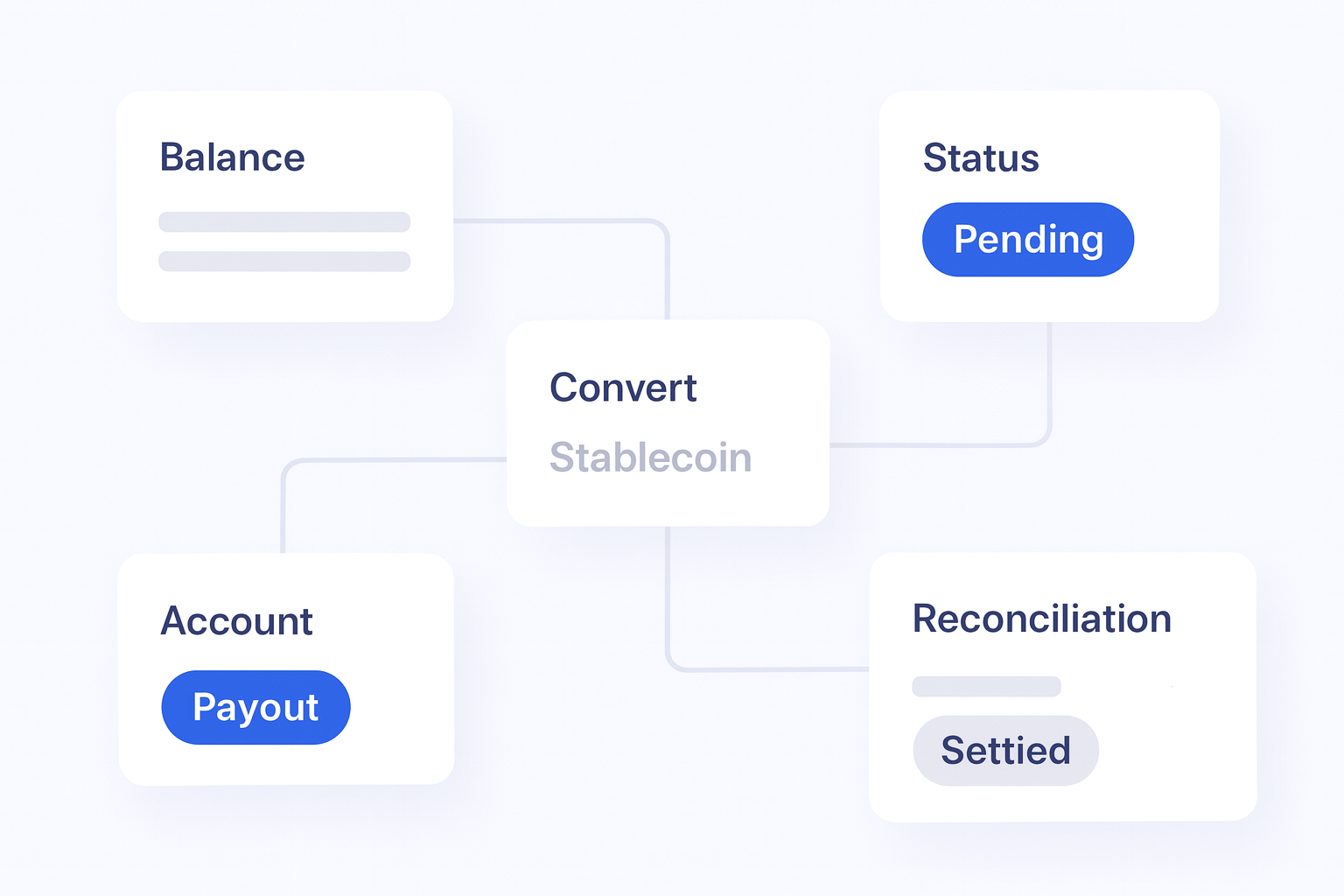
For most businesses, stablecoin payments matter because they can change how money moves after a customer pays. The main questions are usually practical: how do you accept the payment, where does the balance land, what happens if you want fiat on the other side, and how do you reconcile it all?
Radom helps businesses accept crypto payments and then manage what happens next, including settlement, conversion, payouts, and treasury workflows. If you are evaluating stablecoin payments for a product, marketplace, subscription business, or platform, start with the payment flow and work backwards from your finance process.
For product context, see crypto payments and crypto convert.
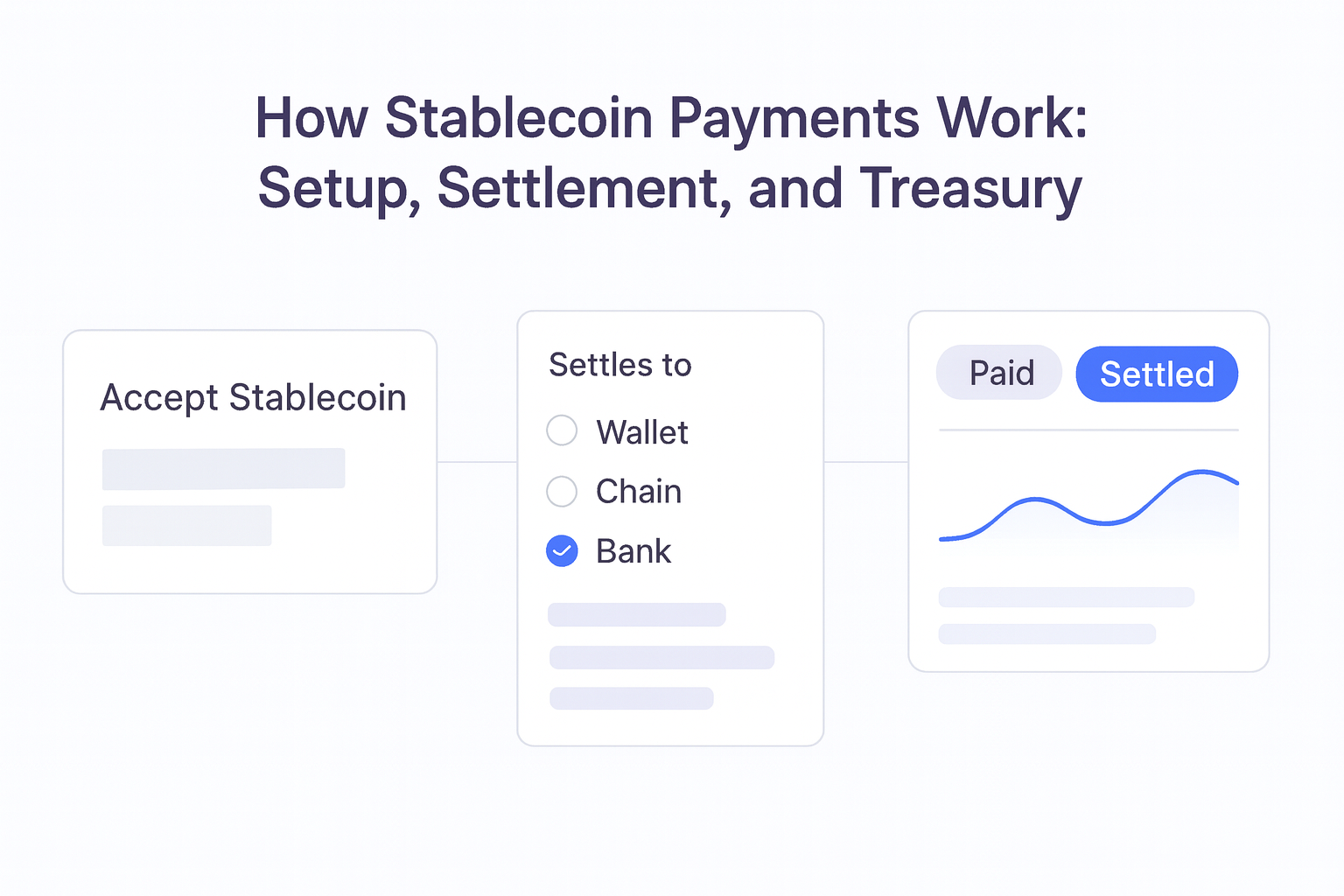
How stablecoin payments work in practice
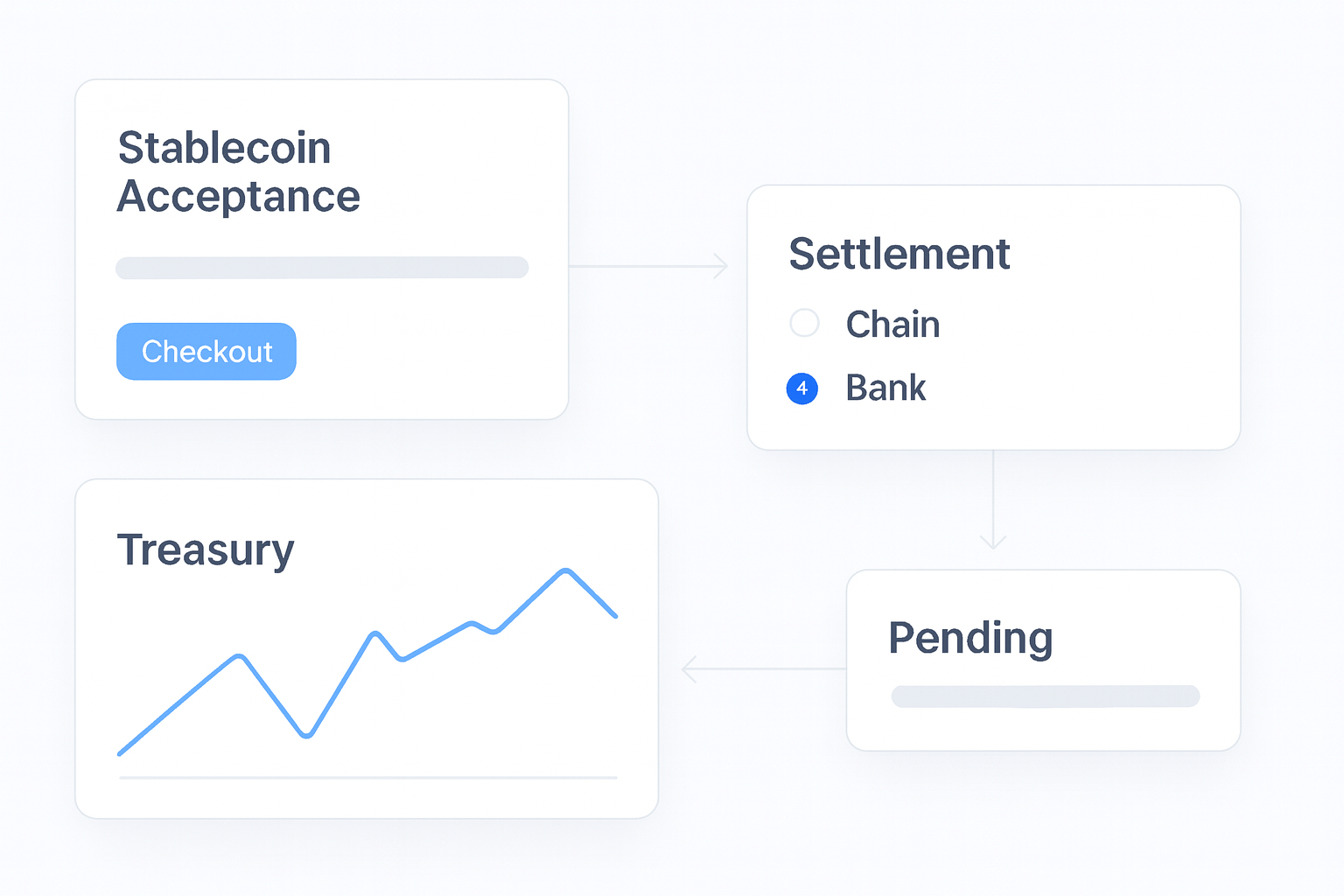
- A buyer initiates payment. The customer pays with a supported stablecoin through a checkout flow, payment link, invoice, or another supported acceptance method.
- The payment is detected and confirmed. Your system records the payment status so your team can see what was paid, when, and in which asset.
- The funds land in your business balance or wallet workflow. From there, you decide whether to keep the asset, convert it, or move it to another rail.
- You settle in the asset that fits your operation. Some teams hold stablecoins. Others convert into fiat or another digital asset for treasury, accounting, or payout needs.
- You reconcile and report. Finance teams need clear records for payment status, balances, conversion events, and downstream payouts.
This is why stablecoin payments are usually part of a broader payment stack, not a standalone checkout decision.
How to set up stablecoin payments
- Choose the payment model. Decide whether you need hosted checkout, payment links, invoices, billing, or API-driven flows.
- Define the settlement path. Confirm whether you want to hold stablecoins, convert to fiat, or move balances across supported assets.
- Map your payout process. If you pay affiliates, creators, contractors, or platform users, decide whether those payouts should be funded in crypto or fiat.
- Set reconciliation rules. Finance and operations teams should agree on how payment status, conversion, and payout records will be tracked.
- Test the end-to-end flow. Validate the customer payment experience, the balance movement, and the reporting your team needs.
Radom is built to reduce the number of tools needed for that workflow. Teams can accept crypto payments, manage conversion, and run payouts from one platform, with APIs available for more automated setups. If you want to compare pricing and operating model, review Radom pricing.
Where Radom removes work for finance and operations teams
Stablecoin payment stacks often become messy when acceptance, conversion, and payout operations sit in separate tools. Radom is designed to keep those steps connected.
- Accept stablecoin payments through supported crypto payment flows.
- Move between crypto and fiat when you need settlement in a different asset.
- Use conversion workflows to support treasury and balance management.
- Run payouts from crypto or fiat balances when your business needs to pay recipients at scale.
That matters for platforms that need predictable operations, not just a payment page. If your team is evaluating payout-heavy use cases, see mass payouts. For teams building against the product, use the Radom documentation.
When stablecoin payments make the most sense
Stablecoin payments are usually most useful when your business cares about cross-border movement, settlement control, or operating across multiple currencies and rails. They can be a fit for SaaS, marketplaces, affiliate networks, creator platforms, iGaming operators, and other internet businesses that need more control over how funds move after payment.
If your priority is customer checkout, start with crypto checkout. If your priority is recurring revenue, use crypto billing. If your priority is operating balances, settlement, or on and off ramp workflows, look at crypto on and off ramp.
Common questions teams should answer before launch
Before you launch stablecoin payments, align on the payment asset, the settlement asset, the reporting format, and who owns the conversion decision. The right setup usually depends on whether payments are going to revenue, treasury, or payout operations.
For many teams, the fastest path is to start with one product surface, then expand into conversion and payouts once the payment flow is stable.
Next step
If you are evaluating stablecoin payments for your business, you can start with the product flow that matches your use case, then expand into settlement and payouts as needed. Sign up to Radom or contact sales if you want help mapping the workflow.