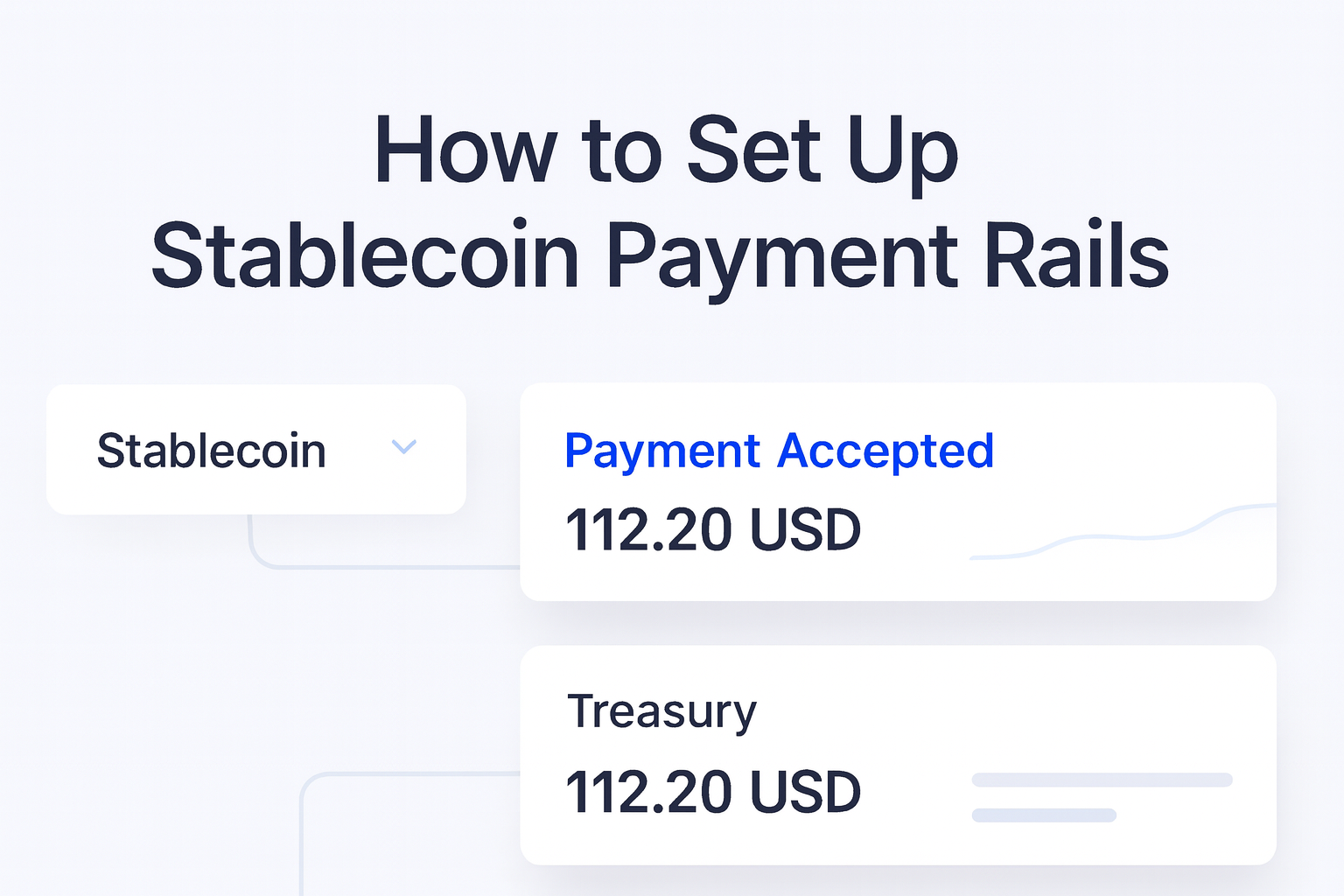
How to set up stablecoin payment rails
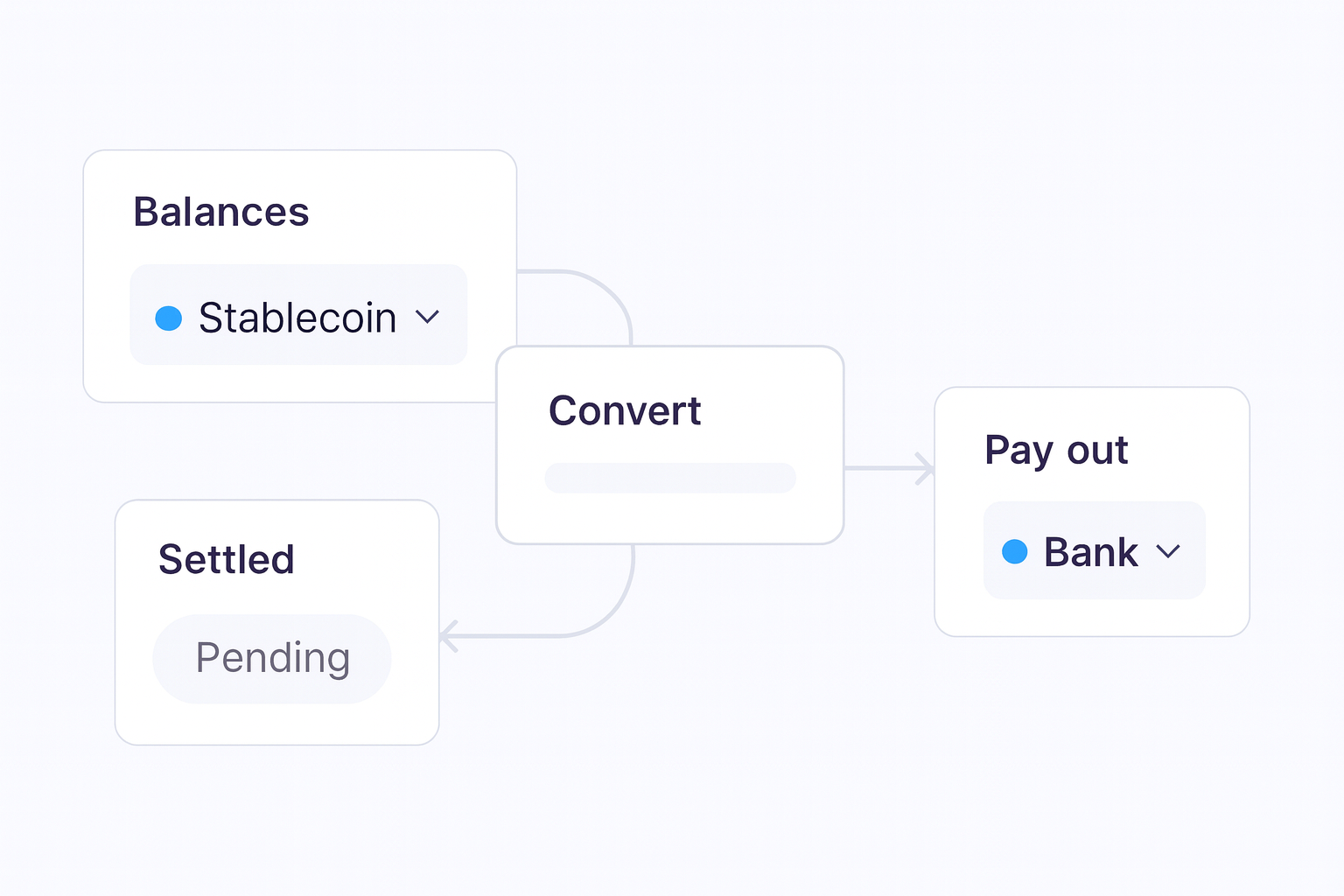
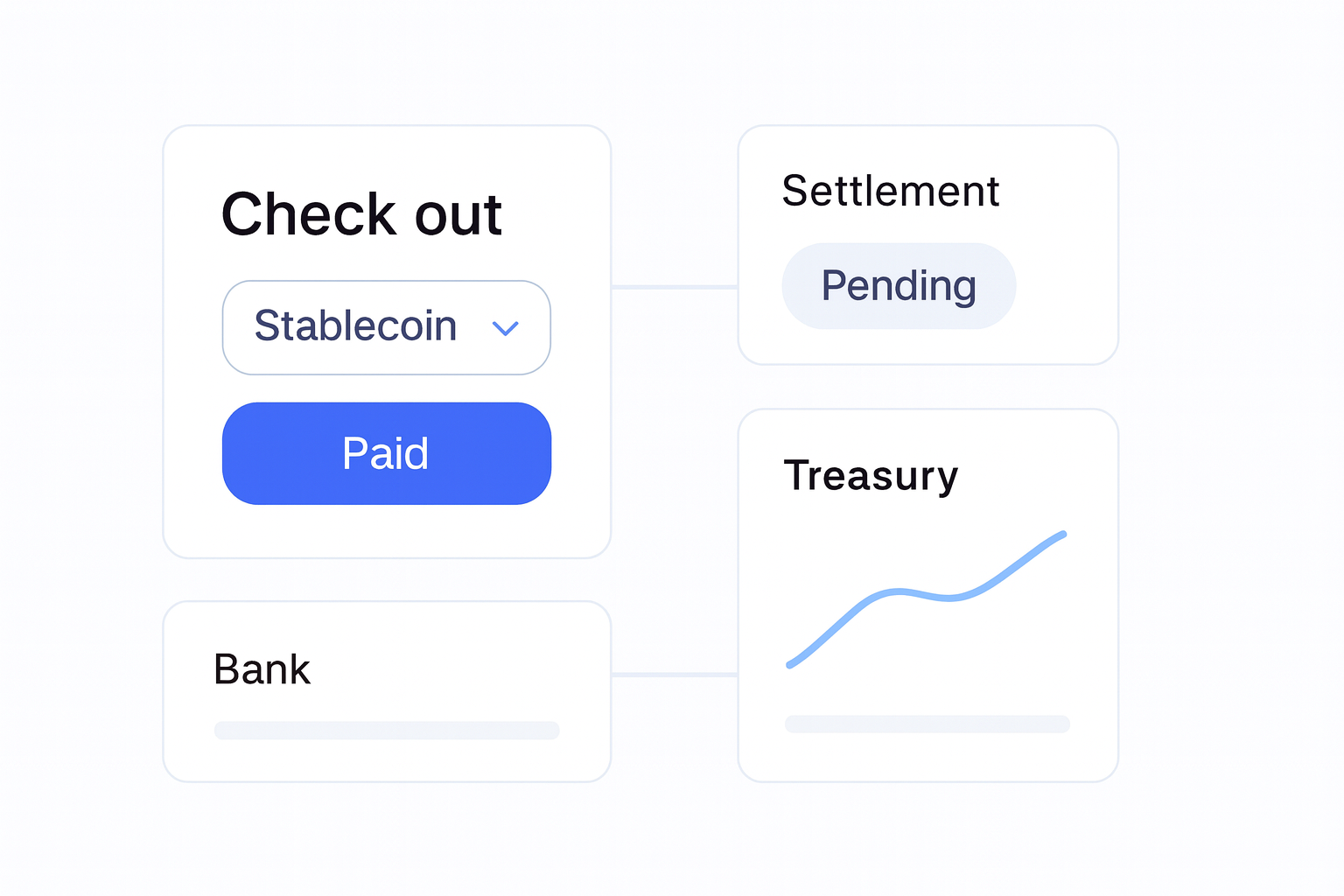
Stablecoin payment rails are not just a way to accept digital assets. For most businesses, they are a payment operations layer that sits between acceptance, settlement, treasury, and payouts. The goal is to move money in the asset and rail that makes sense for your business, while keeping reporting and reconciliation manageable.
If you are evaluating stablecoin rails for a platform, marketplace, subscription business, or global payout operation, start with the business flow first. Decide where funds should enter, what asset you want to hold, when conversion should happen, and how recipients should be paid.
Radom helps businesses accept crypto payments, convert between supported assets, and manage payouts from one platform. For teams comparing product options, the relevant starting points are crypto payments, crypto convert, mass payouts, and crypto on and off ramp.
1. Define the payment flow before you choose the tools
Before you build anything, map the route funds should take. A stablecoin rail can be used for customer payments, supplier payouts, treasury movement, or a mix of all three. The wrong setup usually comes from treating every flow the same.
- Acceptance: customers pay in stablecoins or other supported digital assets.
- Settlement: funds stay in crypto, convert into another digital asset, or move into fiat where supported.
- Treasury: balances are held in the asset your finance team wants to manage.
- Payouts: recipients receive crypto or fiat depending on their location and operating needs.
If your business needs recurring revenue, invoices, or payment links as part of the flow, keep those requirements in scope from the start. Radom supports crypto payments, billing, subscriptions, invoices, payment links, and payouts from one platform.
2. Decide where you want to hold value
Stablecoin rails work best when the holding asset is clear. Some teams want to keep balances in stablecoins for treasury. Others want to convert quickly into fiat for accounting or operational reasons. Some need both, depending on customer type, region, or payout cycle.
Radom supports conversion and settlement workflows so businesses can move between crypto and fiat where available, and manage balances with more control. For teams that want to convert between supported digital assets directly, the crypto convert product is the relevant fit.
3. Choose the collection method that fits your buyer
The simplest stablecoin rail is the one your customer can actually use. A hosted checkout, payment link, invoice, or API-driven flow may all be valid depending on how you sell.
- Hosted checkout: useful if you want a payment page without building every flow yourself.
- Payment links: useful for lightweight collection and one-off payments.
- Invoices: useful for finance teams, agencies, and service businesses.
- APIs: useful for product teams that need programmable payment infrastructure.
Radom's crypto payments tools are built for businesses that want to accept digital assets without stitching together separate tools for checkout, billing, and settlement.
4. Set your settlement rules
Stablecoin payment rails usually become useful when settlement is automated. That means deciding what should happen when a payment lands. Should it remain in stablecoin, convert to another asset, or move into fiat for operations?
For example, a platform might accept stablecoins from customers, convert part of the balance for treasury, and route the rest into payouts. A finance team might prefer to settle into a fiat account for reporting and then convert only when needed. Radom supports workflows that help teams manage liquidity, settlement, and treasury rules from one place.
Where conversion is required, use clear settlement records and rates that your team can reconcile. Radom's pricing page outlines the platform's per-transaction approach, and higher-volume or more complex cases should be discussed with sales. See pricing or contact sales.
5. Plan how payouts will work
Stablecoin rails often become most valuable when they connect to payouts. Many businesses collect in crypto but need to pay affiliates, contractors, creators, sellers, or users in either crypto or fiat.
Radom's mass payouts product supports crypto and fiat payouts from the dashboard, CSV upload, or API. Where supported, businesses can fund payouts in crypto and pay out in fiat currencies such as USD, GBP, and EUR through available rails. That is useful when your recipients do not all want the same asset.
If payout operations are central to your model, start with mass payouts and, if needed, route more specialised workflows through contact sales.
6. Connect the rails to finance operations
Stablecoin payment rails only work well when finance can see what happened. Your team needs clean records for receipts, conversions, settlement, and payouts. Without that, the operational burden grows quickly.
At a minimum, make sure your workflow covers:
- Payment status tracking
- Balance visibility
- Conversion records
- Settlement timing
- Payout status and recipient details
Radom is built for businesses that need more than a consumer wallet experience. It supports payment acceptance, balance management, settlement, currency conversion, and payout workflows in one platform, which helps reduce the number of systems finance has to reconcile.
7. Add the developer layer only where it is needed
If your team wants to embed stablecoin rails into a product, APIs and docs matter. If you only need a managed workflow, no-code tools may be enough. Many businesses need both.
Radom supports developer-led integration for payment acceptance and payouts, with documentation available at docs.radom.com. That gives product and engineering teams a path to automate the flows finance cares about without rebuilding the operational layer from scratch.
Where Radom removes work
Radom reduces the manual steps that usually slow stablecoin payment operations down. Instead of using separate tools for acceptance, conversion, settlement, and payouts, teams can manage those flows from one platform.
- Accept crypto payments through hosted or programmable flows
- Convert between supported assets where available
- Route funds into the settlement or treasury asset your team wants to hold
- Run crypto or fiat payouts from dashboard, CSV, or API
- Use virtual accounts and on and off ramp flows where available for collection and movement between fiat and crypto
If you are building a stablecoin payment stack and want to move quickly, the natural next step is to review crypto payments, compare conversion workflows, or contact sales for a setup that fits your volume and operating model.
Frequently asked questions
What are stablecoin payment rails?+
They are the payment, settlement, and payout workflows that let a business move value using stablecoins and related crypto rails, rather than relying only on traditional card or bank flows.
Do stablecoin payment rails only matter for crypto companies?+
No. They are useful for internet businesses, platforms, marketplaces, subscription products, and operators that need faster settlement, more flexible treasury movement, or global payouts.
Can stablecoin rails be used for payouts?+
Yes. Many businesses use stablecoin rails for recipient payouts, especially when they need to pay across borders or support both crypto and fiat recipients.
Do I need to convert every payment immediately?+
No. Some teams keep balances in stablecoins, some settle into fiat, and some use a mix depending on treasury policy and operational needs.
Where should I start if I want to implement this?+
Start by mapping the flow, then choose the collection method, settlement rule, and payout path. If you want a managed product path, review crypto payments, crypto convert, mass payouts, and pricing.
Contact sales if you need help designing the right flow for your business.