Stablecoin payments are an operations decision, not just a checkout choice
If your business wants to accept stablecoins, the real work is not only taking the payment. You also need to decide how customers will pay, where funds should settle, how finance will reconcile balances, and whether you will convert into fiat or keep value in digital assets.
Radom is built for that workflow. It helps businesses accept crypto payments, manage subscriptions, send invoices, create payment links, run payouts, and settle in crypto or fiat from one platform.
If you are evaluating the acceptance side first, start with crypto payments and crypto checkout.
How to set up stablecoin payments
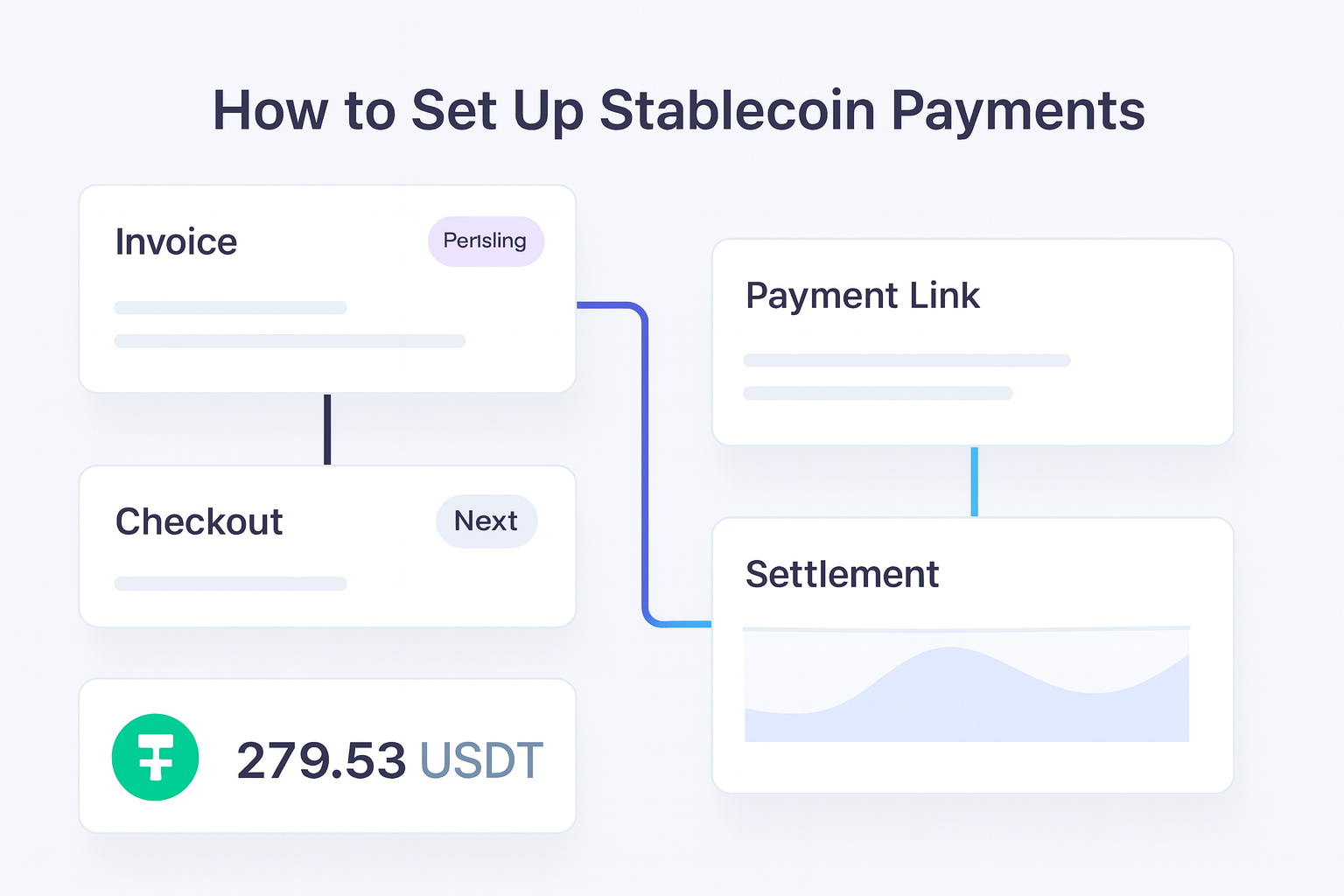
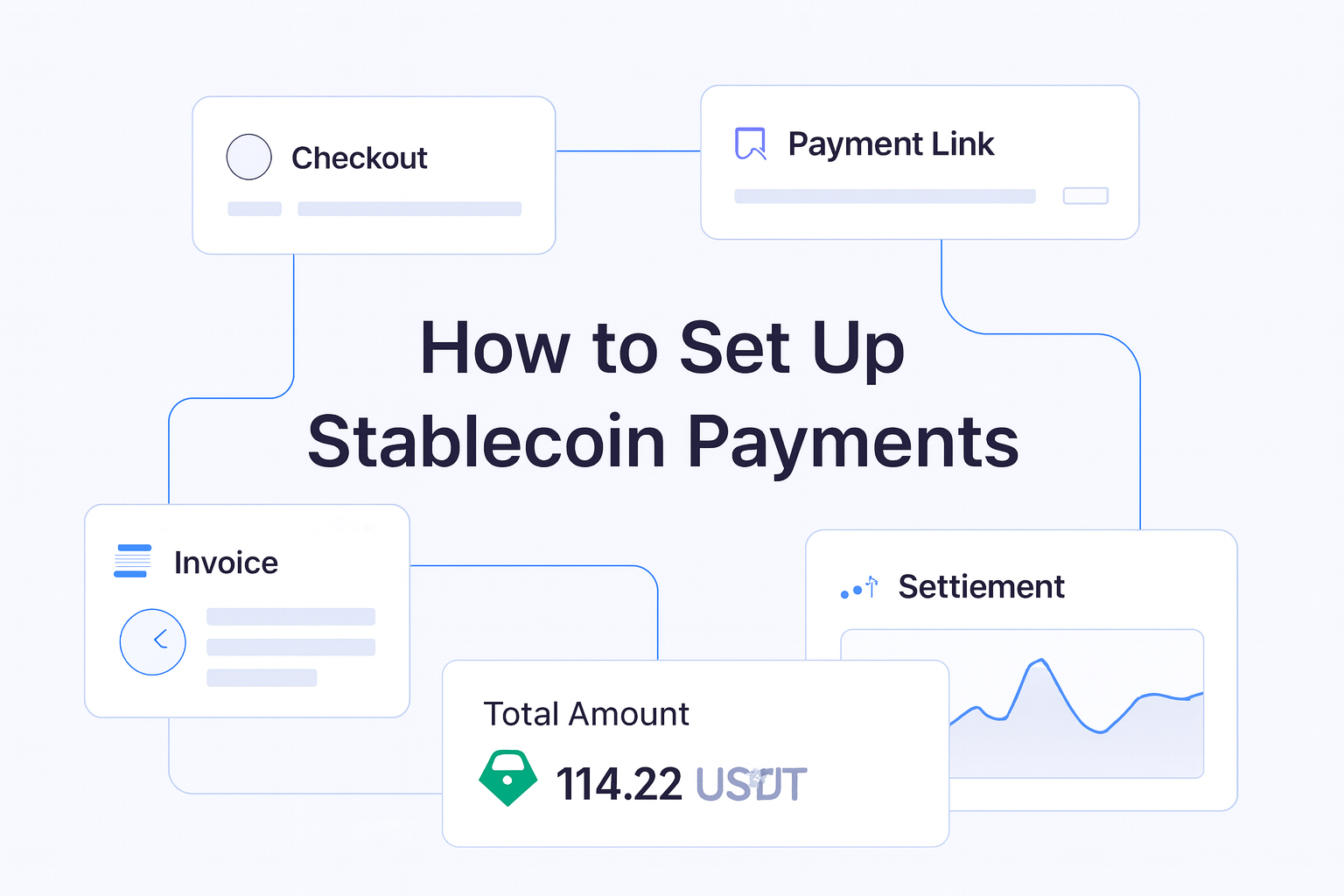
- Choose the payment flow you need. Decide whether you need hosted checkout, payment links, invoices, subscriptions, or API-led payments. Radom supports all of these from one account.
- Decide which assets you will accept. Radom supports 12+ cryptocurrencies across 10+ blockchains. Set the payment options that fit your buyers and your treasury process.
- Define where settlement should land. You can settle in crypto or fiat, track balances, and move funds according to your internal process.
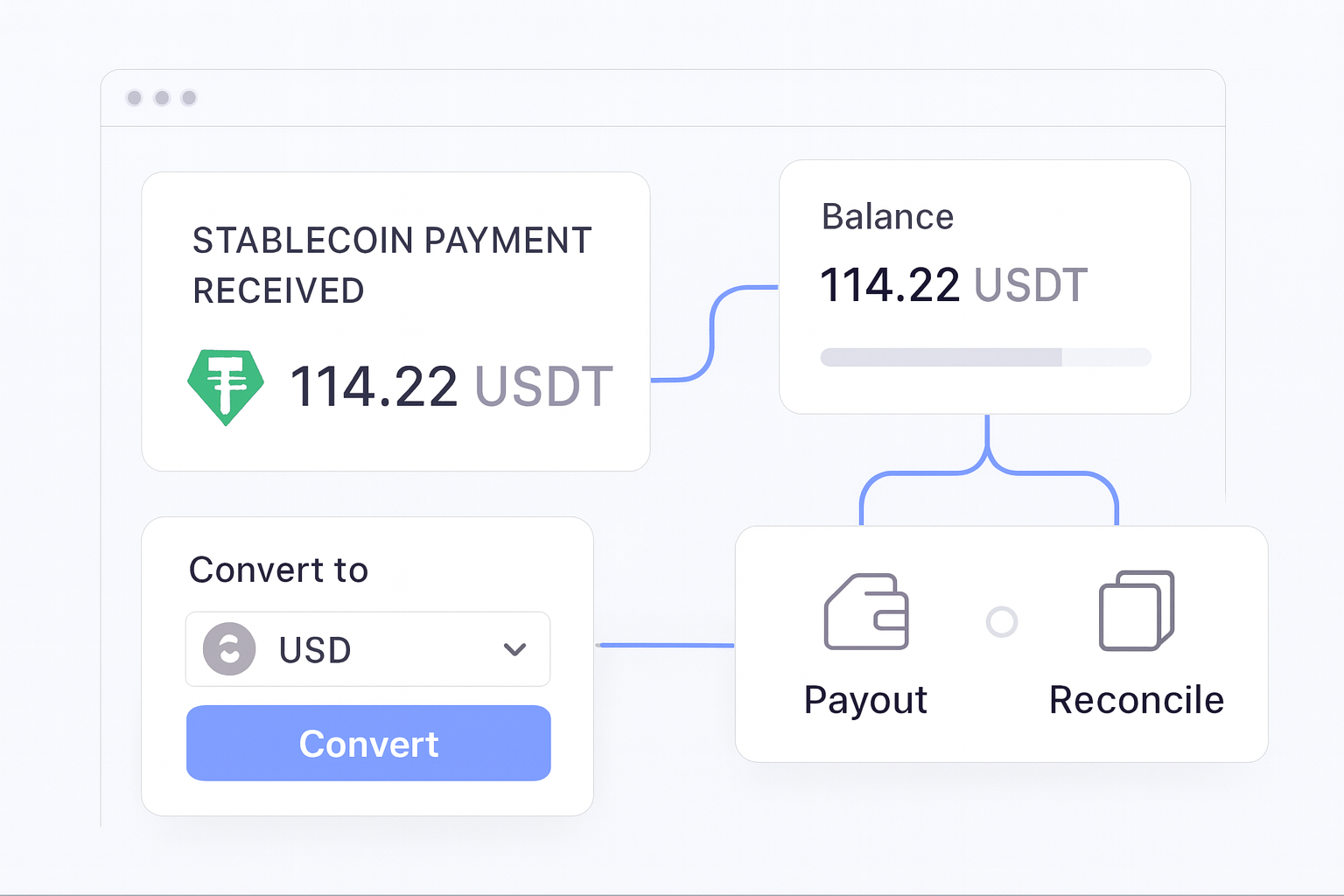
- Set your conversion rules. If your team wants to move between supported assets, use Radom's conversion and settlement tools to manage that workflow.
- Connect the payment flow to your finance process. Make sure reporting, reconciliation, and payout operations are aligned before launch.
- Launch with the right level of control. Use no-code tools if you want a faster start, or APIs if your team needs programmable payment infrastructure.
Where Radom removes work
Stablecoin payments usually create extra steps for finance and operations teams. Radom reduces that by giving you one place to manage acceptance, balances, settlement, and conversion.
- Hosted checkout for teams that do not want to build every payment flow themselves.
- Payment links and invoices for lightweight collection workflows.
- Subscriptions and billing for recurring revenue models.
- Settlement tools for moving between crypto and fiat when needed.
- APIs and docs for teams that want to automate the flow.
If your use case includes treasury movement or conversion, see crypto convert and crypto on and off ramp.
What to decide before you go live
A stablecoin payments setup is easier when these choices are clear in advance:
- Which payment methods your buyers will see
- Which stablecoins or crypto assets you will support
- Whether you want crypto or fiat settlement
- How finance will reconcile balances
- Whether payouts will be made in fiat or digital assets
- Whether your team needs a no-code setup or API access
For teams handling higher volume or more complex payout operations, contact sales to discuss the right setup.
Who this setup is usually for
Stablecoin payments are often a fit for SaaS teams, marketplaces, affiliate networks, gaming platforms, creator businesses, and other internet-native companies that need faster cross-border collection and clearer settlement control.
Radom is designed for businesses and platform operators, not only consumers, so the payment flow can support both acceptance and downstream money movement.
Pricing and next steps
Radom uses per-transaction pricing with no setup fees or monthly fees, according to the pricing page. If you want to compare options before launch, review Radom pricing.
If you are ready to build, use the Radom documentation. If you want help scoping the right flow for your business, contact sales or sign up to Radom.
Frequently asked questions
Can I accept stablecoins and settle in fiat?+
Radom supports settlement in crypto or fiat. If your workflow depends on a specific fiat rail or region, verify the setup with the team before launch.
Can I use Radom for subscriptions or invoices?+
Yes. Radom supports subscriptions and invoices in addition to checkout and payment links.
Do I need to build the payment flow from scratch?+
No. Radom offers hosted checkout and no-code tools, and it also supports APIs for teams that want to automate the flow.
Is Radom only for crypto-native businesses?+
No. It is built for businesses that need practical payment acceptance, settlement, and payout workflows across crypto and fiat rails.