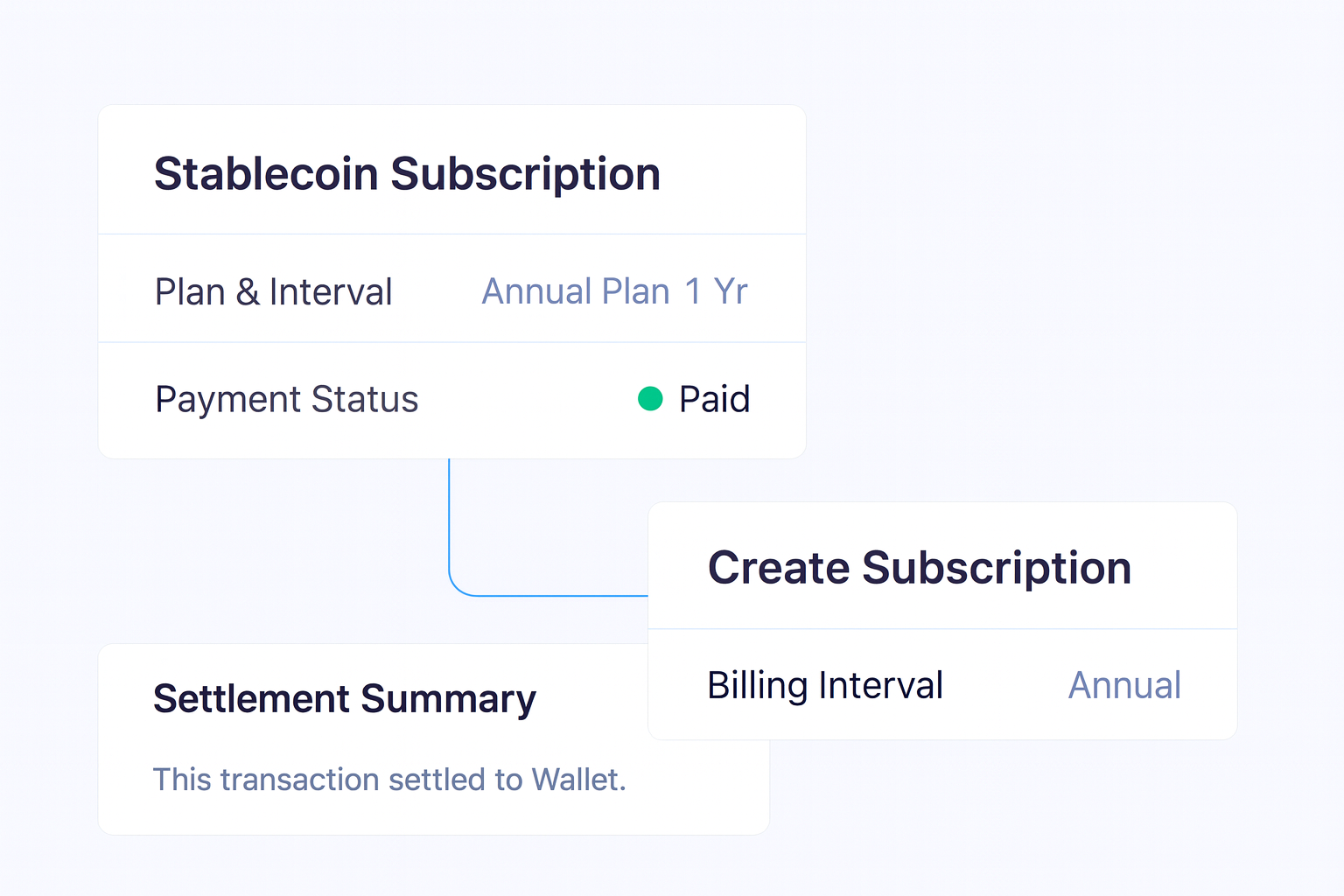
Stablecoin subscriptions are a billing problem first
If you are setting up stablecoin subscriptions, the real work is not choosing a token. It is deciding how recurring payments will be created, tracked, renewed, and reconciled without adding manual work for finance or support teams.
Radom helps businesses sell subscriptions and recurring services in crypto with automated billing, clear payment states, and customer-friendly wallet flows. It is built for teams that want subscription billing to fit into an existing operating process, not sit outside it.
For teams evaluating recurring crypto payments, Radom crypto billing gives you a single place to manage subscriptions, payment states, and settlement.
What you need before you launch
Before you set up stablecoin subscriptions, define the billing model and the operational rules around it.
- What the customer is paying for and whether it is fixed, usage-based, or tiered
- The billing interval, renewal cycle, and any trial or discount logic
- Which stablecoins or supported digital assets you want to accept
- How you want to handle failed payments, retries, and customer notifications
- Who on your team needs access to billing management and reporting
Radom supports billing models buyers expect, including metered usage, seats, tiers, free trials, discounts, add-ons, and custom renewal cycles.
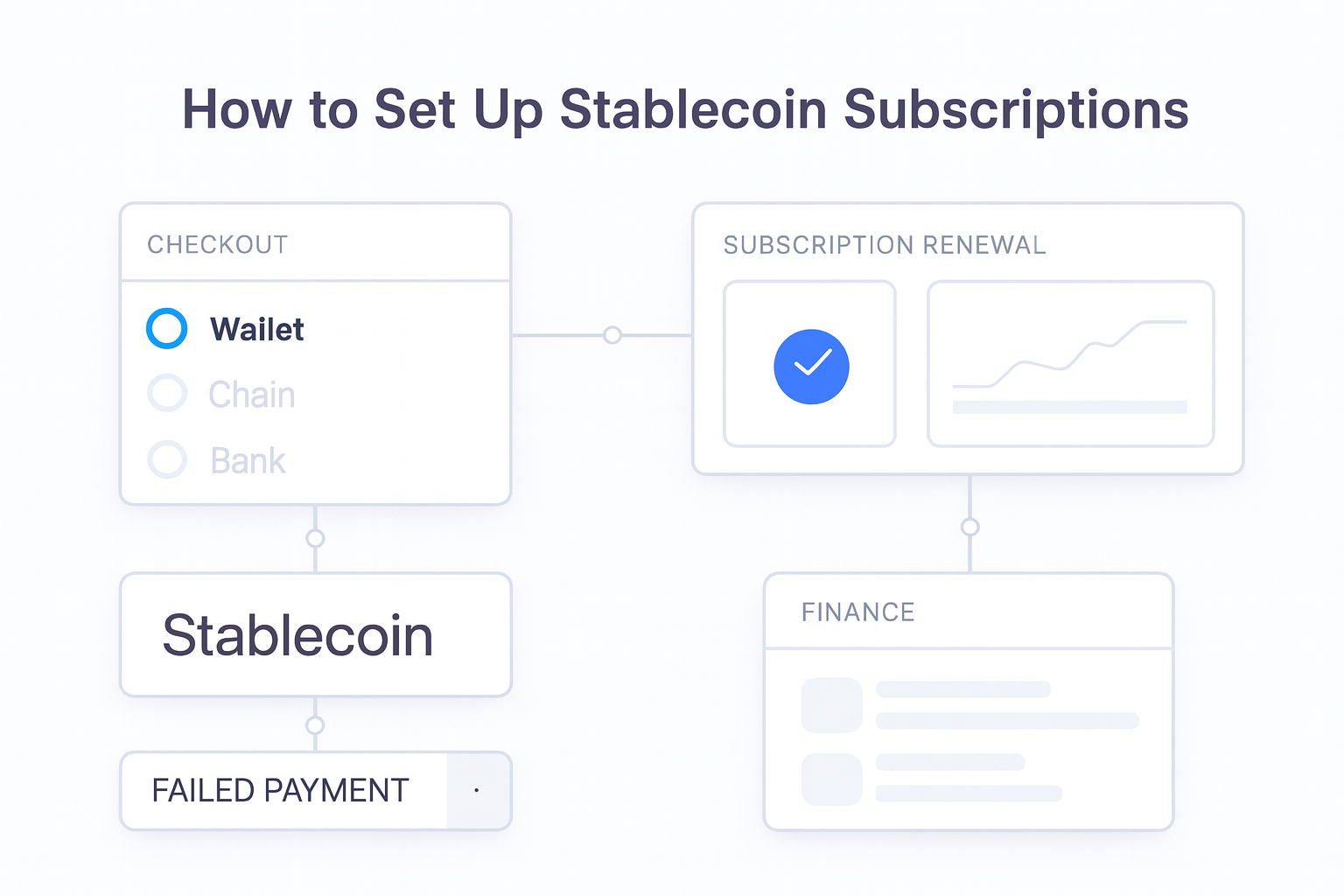
How to set up stablecoin subscriptions
- Define the subscription plan. Set the price, billing interval, and whether the plan is fixed, usage-based, or tiered.
- Choose your payment flow. Use hosted tools if you want a faster launch, or use APIs if your team wants to integrate recurring billing into your product.
- Configure customer payment states. Make sure you can see active, pending, failed, and renewed payments clearly.
- Set renewal logic. Decide how recurring charges should behave at the agreed interval and what happens when a payment fails.
- Connect finance and operations access. Give the right people roles and permissions so billing management does not depend on one admin.
- Review settlement and reporting. Confirm how revenue, failed payments, and settlement will appear in your dashboard and internal reporting.
Radom subscriptions automatically pull funds from a customer's wallet to your own at an agreed interval. That reduces the need to rebuild recurring collection logic from scratch.
Where Radom removes work
Stablecoin subscriptions usually create work in three places: customer payment flow, recurring collection, and finance reconciliation. Radom is designed to reduce all three.
- Customer flow: Radom offers customer-friendly wallet flows and a familiar payments experience for crypto subscriptions.
- Recurring collection: Automated billing supports the renewal cycle instead of forcing your team to trigger each charge manually.
- Operations: Finance and growth teams can track recurring revenue, failed payments, customer activity, and settlement from one dashboard.
If your team also needs to send invoices for one-time or recurring work, pair billing with crypto invoicing so subscriptions and receivables sit closer together.
How teams usually structure the rollout
Most teams start with one subscription line, then expand once the payment flow is stable. A practical rollout often looks like this:
- Test one plan and one customer journey
- Confirm how renewal, failure, and cancellation states appear
- Check internal reporting with finance and operations
- Expand to more plans, more currencies, or more customer segments
If your business sells through hosted checkout or wants a broader payment stack, you can also review crypto payments for the wider acceptance flow and pricing for the commercial model.
Who this is for
Stablecoin subscriptions are a strong fit for SaaS teams, creator platforms, subscription businesses, and operators that want recurring revenue in crypto without making billing a bespoke engineering project. They are also relevant for platform businesses that need clear payment states and operational control across finance and product teams.
When to use APIs versus hosted tools
If you want to move quickly, hosted tools are usually the easiest way to test the workflow. If you need subscription logic inside your product, APIs are better suited to teams that want programmable payment infrastructure.
Developers can start with the documentation, and commercial teams can speak with sales if they need a larger rollout or a more complex operating setup.
Read the Radom docs or contact sales to discuss your subscription use case.
Frequently asked questions
Can stablecoin subscriptions work for recurring SaaS billing?+
Yes. Radom supports businesses that want to sell subscriptions and recurring services in crypto, including billing models such as tiers, seats, metered usage, trials, discounts, and custom renewal cycles.
Do I need to build recurring billing from scratch?+
No. Radom provides hosted tools and APIs so teams can launch recurring billing without building every payment flow themselves.
Can finance teams track settlement and failed payments?+
Yes. Radom is designed to help teams track recurring revenue, failed payments, customer activity, and settlement from one dashboard.
Is Radom only for developers?+
No. Radom supports hosted tools for faster setup and APIs for teams that want more control over integration.
What should I do if my use case is high-volume or operationally complex?+
Use the docs to validate the workflow, then speak with sales if you need help scoping the implementation.
Next step
If you are planning stablecoin subscriptions, start with the billing workflow, then decide whether hosted tools or APIs are the best fit. For recurring revenue teams, the fastest path is usually a short product review, followed by a setup decision with finance and engineering aligned.
Contact sales to discuss your subscription model, or open the docs if your team is ready to integrate.