How to set up USDC payments
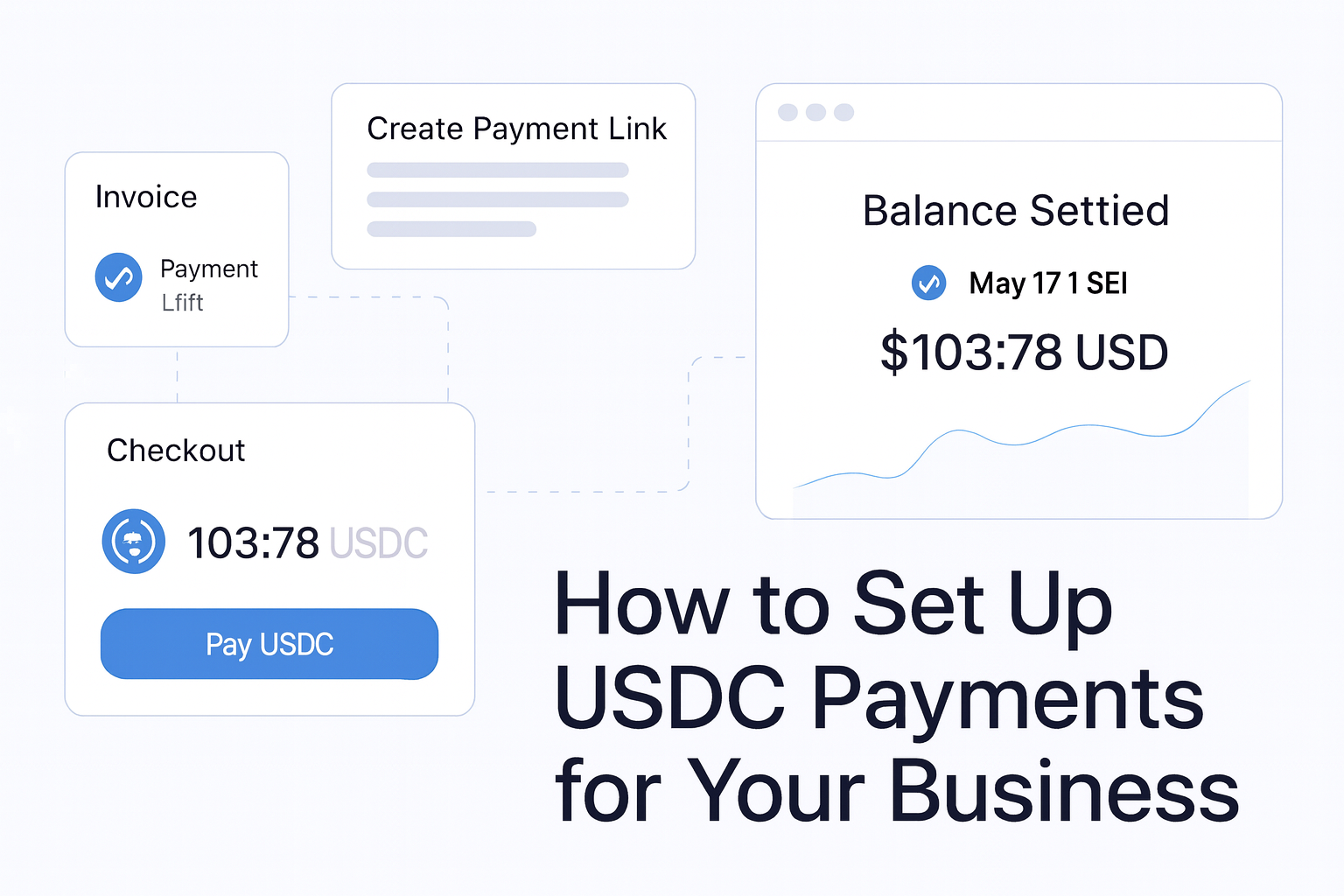
If you want to accept USDC from customers, the setup should do three things well: collect the payment, show the status clearly, and give your team a clean path to settlement. Radom is built for that workflow. It supports crypto payments, checkout, payment links, invoices, subscriptions, and payouts from one platform, with settlement in crypto or fiat where available.
This guide is for founders, payments teams, finance operations teams, platform operators, and developers who want a practical setup, not a theory piece.
1. Decide how you want to collect USDC
Start with the payment flow that matches your business model.
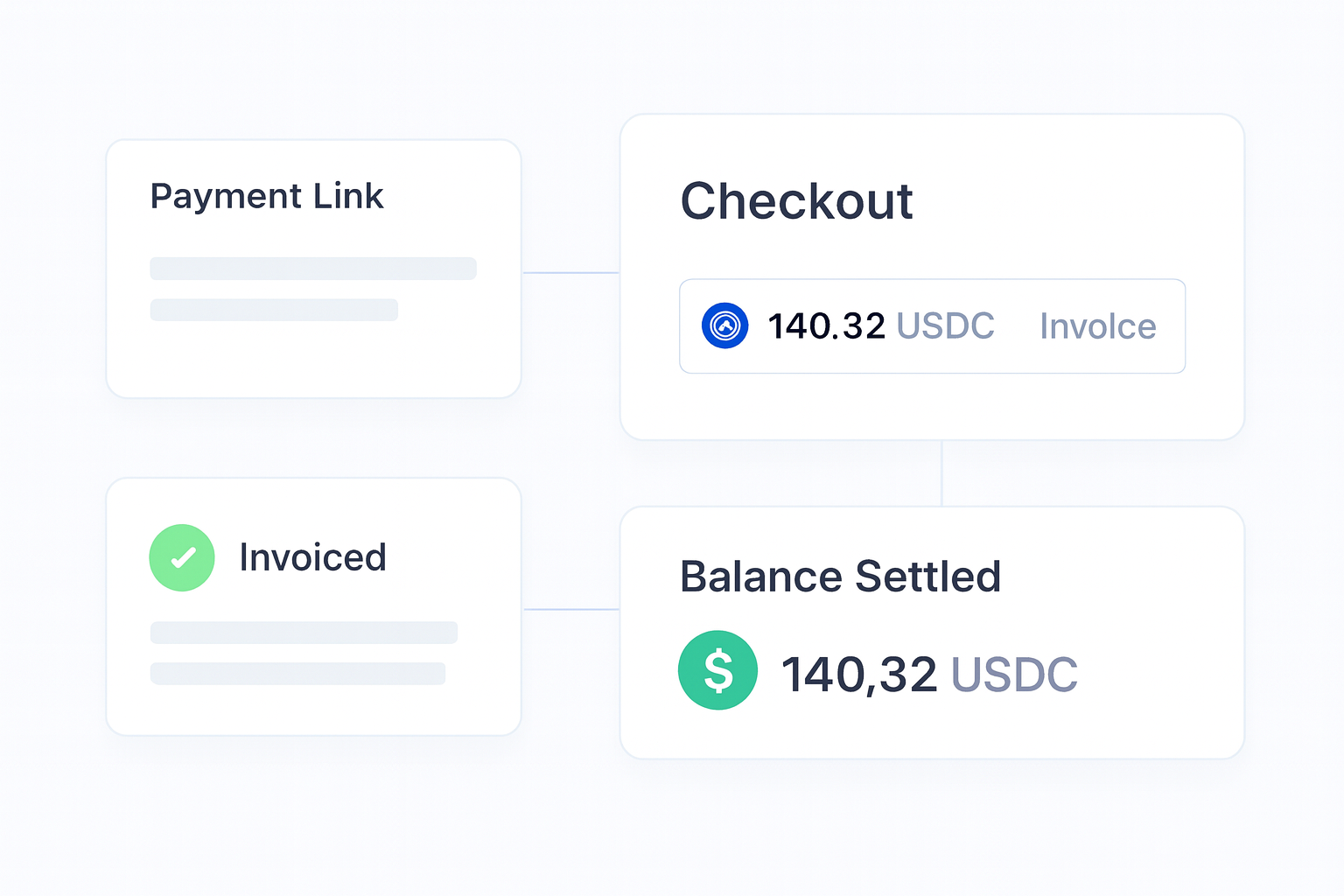
- Hosted checkout for a branded payment page you do not want to build from scratch.
- Payment links for quick collection without a full checkout flow.
- Invoices for finance-led collection and service businesses.
- Subscriptions for recurring billing models.
- APIs if your team wants to automate the flow inside your product.
Radom supports hosted checkout, payment links, invoices, subscriptions, and APIs from one account. If you are still deciding which flow fits best, start with crypto checkout for a hosted payment page or review pricing before you build.
2. Set the payment experience your customers will see
Before launch, confirm the basics your buyers need to complete payment without confusion.
- Branding for the checkout page
- Which payment method you want to offer first
- What status your team needs to track after payment
- Where the funds should land after collection
Radom’s hosted checkout is designed for a clear payment flow and can be adjusted to match your brand. That matters if your team wants a clean customer experience without building every screen internally.
3. Connect the payment flow to settlement
USDC collection is only part of the job. Your operations team also needs to know where funds settle and how they move next.
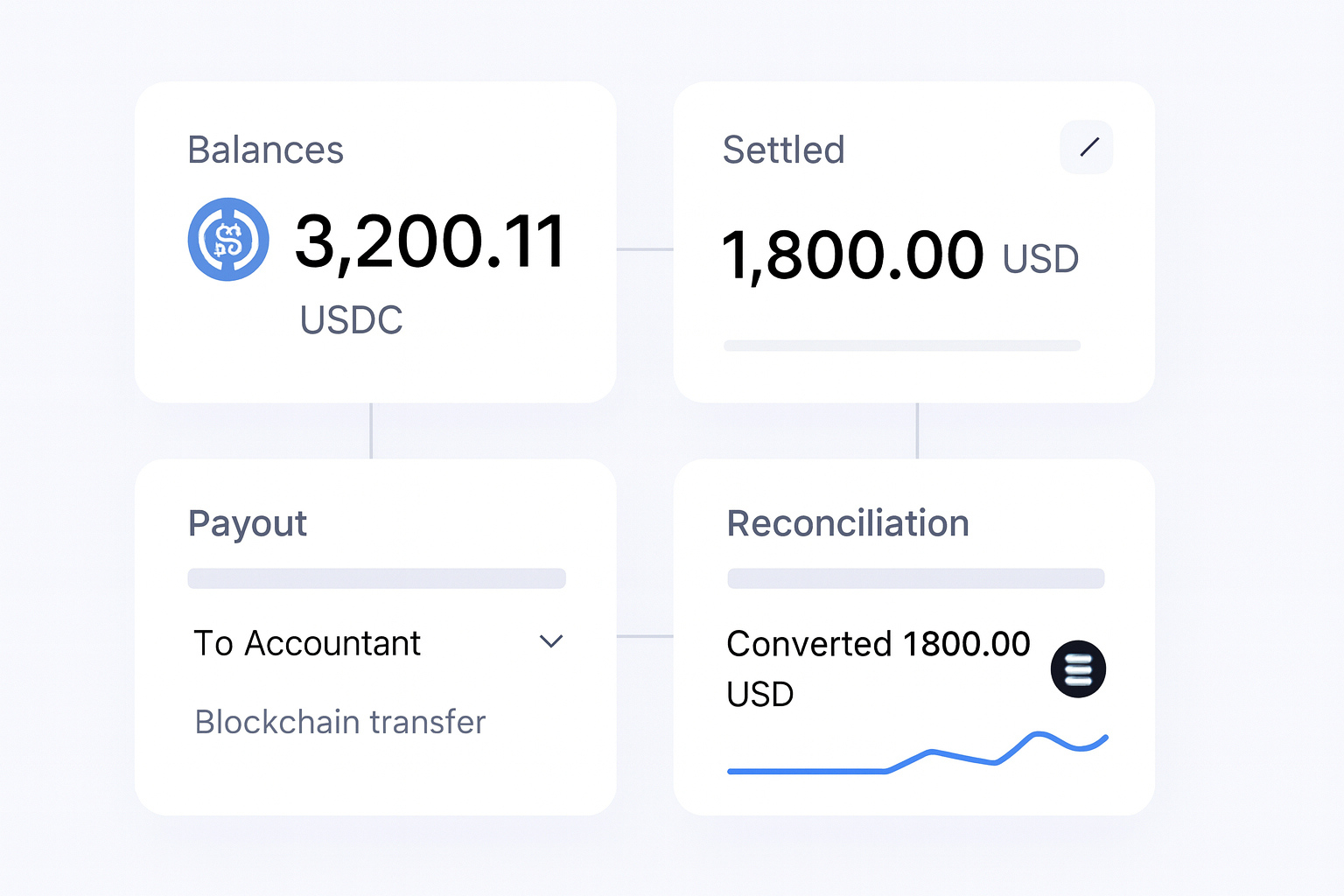
Radom lets businesses receive funds to a Radom balance, convert assets, or withdraw to a wallet. That gives finance and operations teams a cleaner path for reconciliation, treasury, and follow-on payouts.
If your business needs to move between crypto and fiat after collection, Radom also supports conversion and on and off ramp workflows where available. For teams managing balances across currencies, see crypto convert and crypto on and off ramp.
4. Map the operational steps before you go live
A simple launch plan usually covers these steps:
- Choose the collection method: checkout, link, invoice, subscription, or API.
- Decide whether payments settle in crypto or fiat where available.
- Confirm who reviews payment status and reconciliation.
- Test the customer flow from invoice or checkout to completed payment.
- Set the next action for funds, such as holding, converting, or withdrawing.
- Launch with one payment flow, then expand once the team is comfortable.
5. Where Radom removes work
Teams usually spend time on the same repetitive tasks: building payment pages, tracking payment status, reconciling balances, and handling conversion or settlement after funds arrive. Radom reduces that work by giving you one platform for payment acceptance, balance management, settlement, and conversion workflows.
That is useful for operators who want fewer tools in the stack and for developers who want a programmable payment layer without building the full payment lifecycle themselves.
6. Know when to use docs or sales
If your team wants to integrate USDC payments directly into a product, start with the Radom documentation. If you need help with volume, a more complex payout or settlement setup, or a broader commercial rollout, contact sales.
Why teams use USDC for business payments
USDC can be useful when a business wants faster settlement workflows, clearer digital asset handling, or a payment method that fits cross-border operations. The right setup is less about the token itself and more about whether your payment stack can handle acceptance, settlement, reporting, and downstream movement without extra manual work.
Radom is positioned for that business layer. It is built for companies that need to accept crypto payments, manage subscriptions and invoices, and move funds across crypto or fiat rails where available.
Frequently asked questions
Can I accept USDC without building a full checkout?
Yes. Radom supports hosted checkout and payment links, so you can collect USDC without building every payment screen yourself.
Can USDC payments settle in fiat?
Radom supports settlement in crypto or fiat where available. If you need to move between crypto and fiat, review crypto on and off ramp and crypto convert.
Is Radom only for developers?
No. Radom supports both no-code and API-led workflows, so founders, finance teams, and developers can use the platform in different ways.
What should I launch first?
Most teams start with one payment flow, usually hosted checkout, payment links, or invoices. That keeps the launch simple and gives finance and operations teams a clearer process to review.
Next step
If you are setting up USDC payments for a business, start with the payment flow that fits your team and customer journey. You can set up hosted crypto checkout, review pricing, or contact sales if you want help scoping the right setup.