Marketplace payment infrastructure is about more than taking a payment
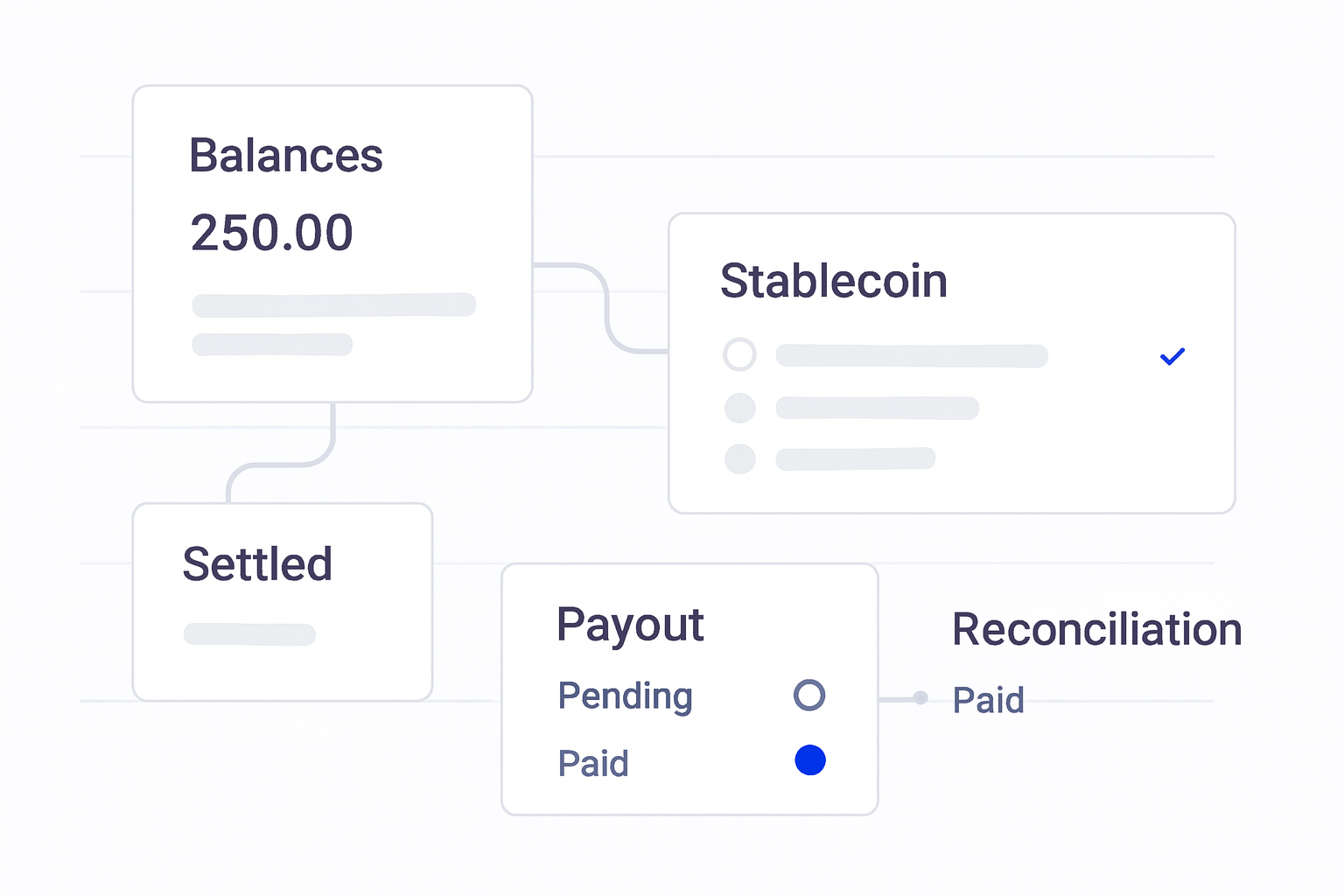
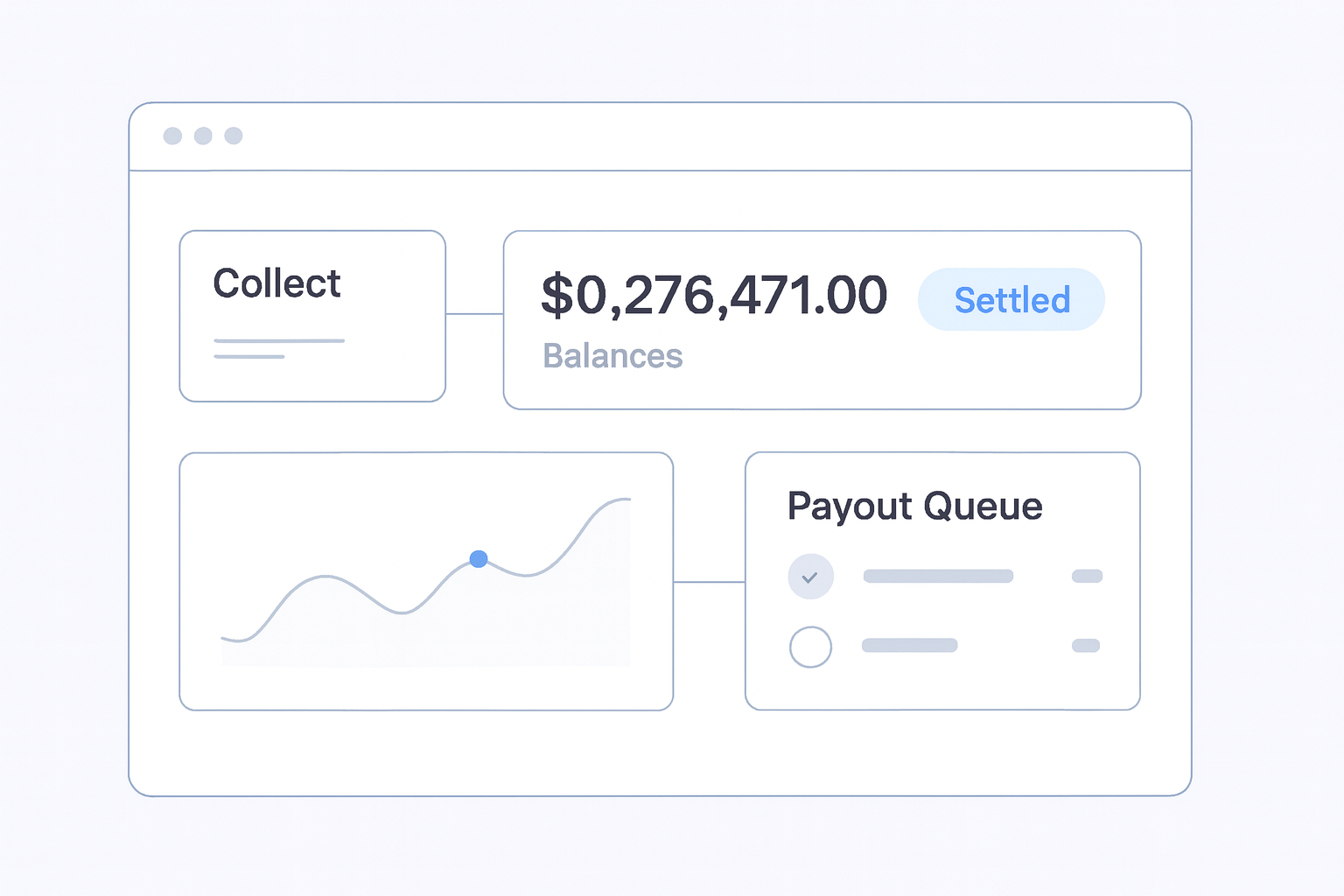
Marketplaces and platform businesses need a payment stack that can collect funds, reconcile activity, manage balances, move value between assets, and pay sellers or partners on time. If those steps live in separate tools, finance teams spend more time matching records than running the business.
Radom helps businesses accept payments, manage subscriptions, send invoices, create payment links, and run payouts from one platform. For marketplaces, the useful part is the operating layer around the payment: settlement, conversion, balance tracking, and payout execution.
Contact sales if you want to discuss marketplace flows, volume, or a platform rollout.
What marketplace payment infrastructure should cover
A useful platform setup should support the full money movement path, not just the initial checkout. For most marketplaces, that means:
- Collecting funds from buyers or end customers.
- Tracking incoming payments against the right order, account, or seller.
- Settling balances into the asset or currency the business wants to hold.
- Paying sellers, affiliates, creators, or contractors through the rail they need.
- Keeping accounting records clear enough for finance and operations teams to reconcile quickly.
Radom supports crypto payments, payouts, conversion, and virtual accounts, which makes it a fit for platform teams that need both collection and downstream money movement.
Where Radom fits in a marketplace workflow
Radom is built for businesses that need practical payment infrastructure, not consumer wallet features. A marketplace can use Radom to accept crypto payments, route funds into balances, convert between supported assets where needed, and run payouts from the same account.
That matters when your business needs to move between crypto, stablecoins, and fiat, or when different recipient groups need different payout rails. Radom supports crypto-funded fiat payouts and direct crypto payouts, with payout workflows available through the dashboard, CSV upload, or API.
For teams that need cleaner receiving flows, virtual accounts can help collect fiat into named accounts and move value into crypto workflows where supported.
How to evaluate marketplace payment infrastructure
If you are choosing a platform, compare it on the work your team actually does every day, not just on checkout surface area.
- Collection - Can you accept the payment methods your buyers or users prefer?
- Reconciliation - Can your team match incoming funds to the right seller, order, or account?
- Settlement - Can you hold funds in the asset that fits your treasury and operations model?
- Payouts - Can you pay recipients in the currency or asset they want?
- Automation - Can your team use APIs or operational tools to reduce manual processing?
Radom supports payment APIs and dashboard workflows, so platform teams can choose between no-code operations and programmable flows. If you are comparing fees or volume-based requirements, review pricing and route larger or more complex cases to sales.
Where Radom removes work for finance and operations teams
Marketplace payment operations usually slow down in the same places: manual reconciliation, asset conversion, payout batching, and exception handling. Radom helps reduce that work by keeping payments, balances, and payouts in one system.
Useful examples include:
- Using one account for collection and downstream payouts.
- Tracking balances across crypto or fiat settlement flows.
- Using conversion tools when the business needs to move between supported assets.
- Running payouts to sellers, creators, affiliates, or contractors from the dashboard or API.
For platform teams that need a more direct acceptance flow, crypto payments can support hosted checkout, invoices, subscriptions, payment links, and APIs from one account.
How platform operators usually structure rollout
A sensible rollout usually starts with one flow and expands once finance and operations are comfortable with reporting and controls.
- Start with one collection use case, such as checkout, invoices, or payment links.
- Define how incoming funds should be tracked and settled.
- Set payout rules for sellers, creators, or partners.
- Test the reconciliation process with your finance team.
- Expand to API-driven automation once the operating model is stable.
Radom is set up for both simpler no-code workflows and developer-led integrations through documentation.
Why marketplace teams choose a single operating layer
Separate tools can work at low volume, but they often create friction as a platform grows. A single payment layer makes it easier to see what was collected, what was converted, what was settled, and what still needs to be paid out.
That is the core value of marketplace payment infrastructure: fewer handoffs, clearer records, and a shorter path from incoming payment to recipient payout.
If your platform needs collection, settlement, and seller payouts in one workflow, mass payouts is the best place to start. For teams that need a broader operating model, virtual accounts and crypto convert are natural next steps.
Frequently asked questions
Can Radom support marketplace payouts?+
Yes. Radom supports payouts from the dashboard, CSV upload, or API. The platform also supports crypto-funded fiat payouts and direct crypto payouts where available.
Can a marketplace collect in one asset and pay out in another?+
Radom supports conversion workflows and settlement tools, so teams can move between supported crypto, stablecoin, and fiat rails where available.
Does Radom only work for crypto-native marketplaces?+
No. Radom is built for businesses and platform operators that need practical payment infrastructure across crypto, stablecoins, open banking, and fiat rails where available.
Should we use payouts or virtual accounts first?+
It depends on the workflow. Use payouts for recipient disbursement. Use virtual accounts when your team needs named receiving accounts and cleaner collection or settlement flows.
Is Radom a bank?+
No. Radom should not be presented as a bank. Use the product pages for the specific rails and availability relevant to your market.
Next step for marketplace teams
If you are building marketplace payment infrastructure, start by mapping your collection, settlement, and payout flow end to end. Then choose the operating layer that reduces reconciliation work and gives finance and operations teams better control.
Contact sales to discuss your marketplace workflow, or review pricing and docs if you are evaluating integration.