What stablecoin checkout is for
Stablecoin checkout is for businesses that want to accept stablecoin payments with a clear hosted payment flow, without designing and maintaining every part of the payment experience themselves. It is a fit for teams that need a payment page for one-time purchases or subscriptions, plus a way to track payment status and settlement from one place.
For payments teams, the main question is not whether stablecoins can move value. It is whether the checkout flow is easy for customers to use, easy for the business to operate, and easy for finance to reconcile. Radom is built around that operational use case.
Explore crypto checkout or review pricing if you are comparing implementation paths.
When stablecoin checkout makes sense
Stablecoin checkout is usually a better fit than a custom flow when you want to move quickly, keep the checkout branded, and reduce engineering work. It is useful for SaaS, digital products, marketplaces, creator platforms, affiliate programs, and other online businesses that need a direct payment page customers can complete without friction.
It also suits teams that want to accept stablecoins alongside other crypto payment methods and keep the payment experience consistent across web and app surfaces.
How to set it up
- Choose the payment flow you need, such as a one-time payment or a subscription.
- Configure the checkout with your brand settings, product details, and accepted assets.
- Connect the checkout to your website or app using the hosted flow or Radom API, depending on how much control you want.
- Test the customer experience end to end, including payment status updates and the post-payment flow.
- Decide how you want to handle settlement, whether that means keeping funds in Radom balance, converting assets, or withdrawing funds.
If your team wants to automate payment creation or status handling, the docs are the right place to start. Read the Radom docs.
Where Radom removes work
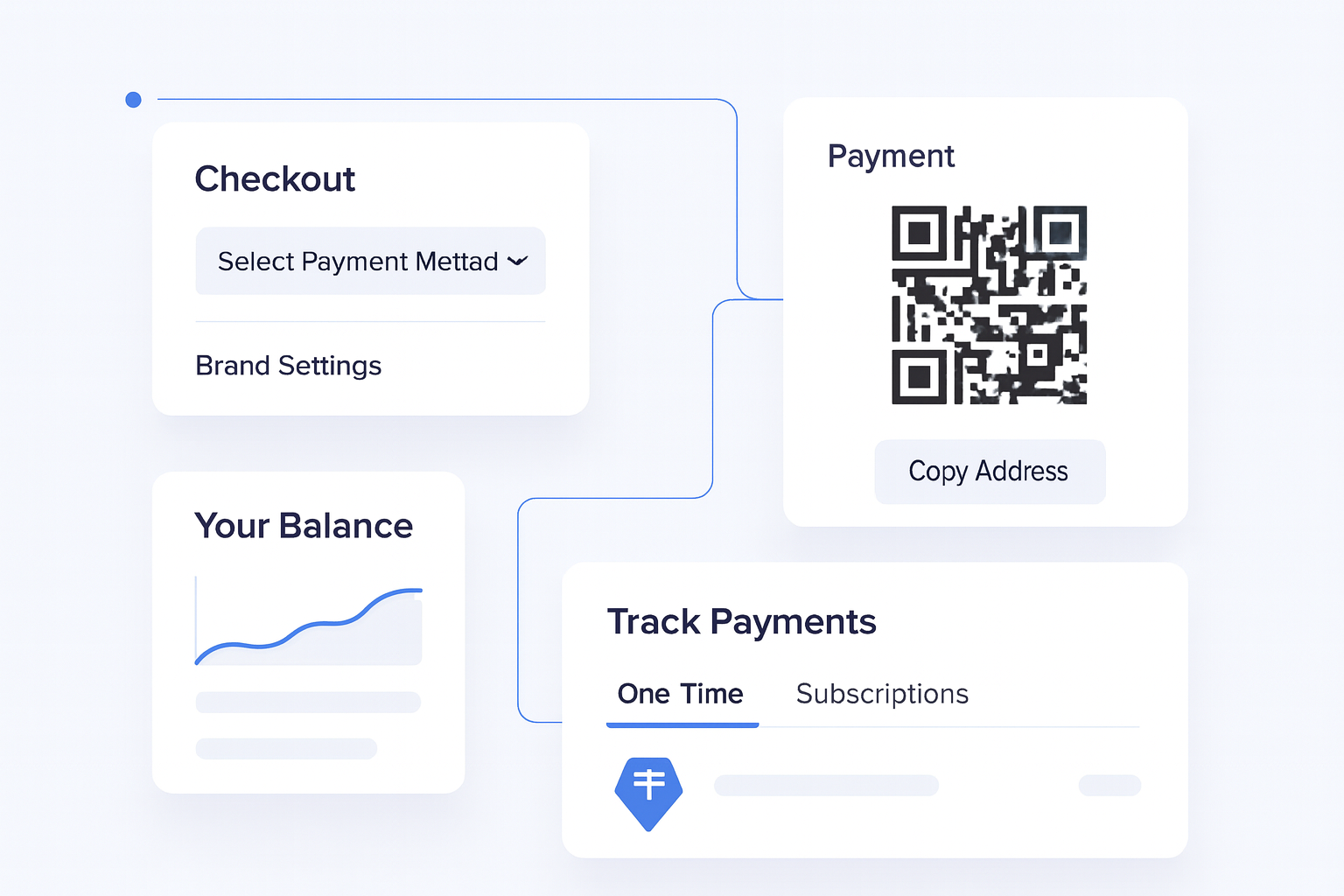
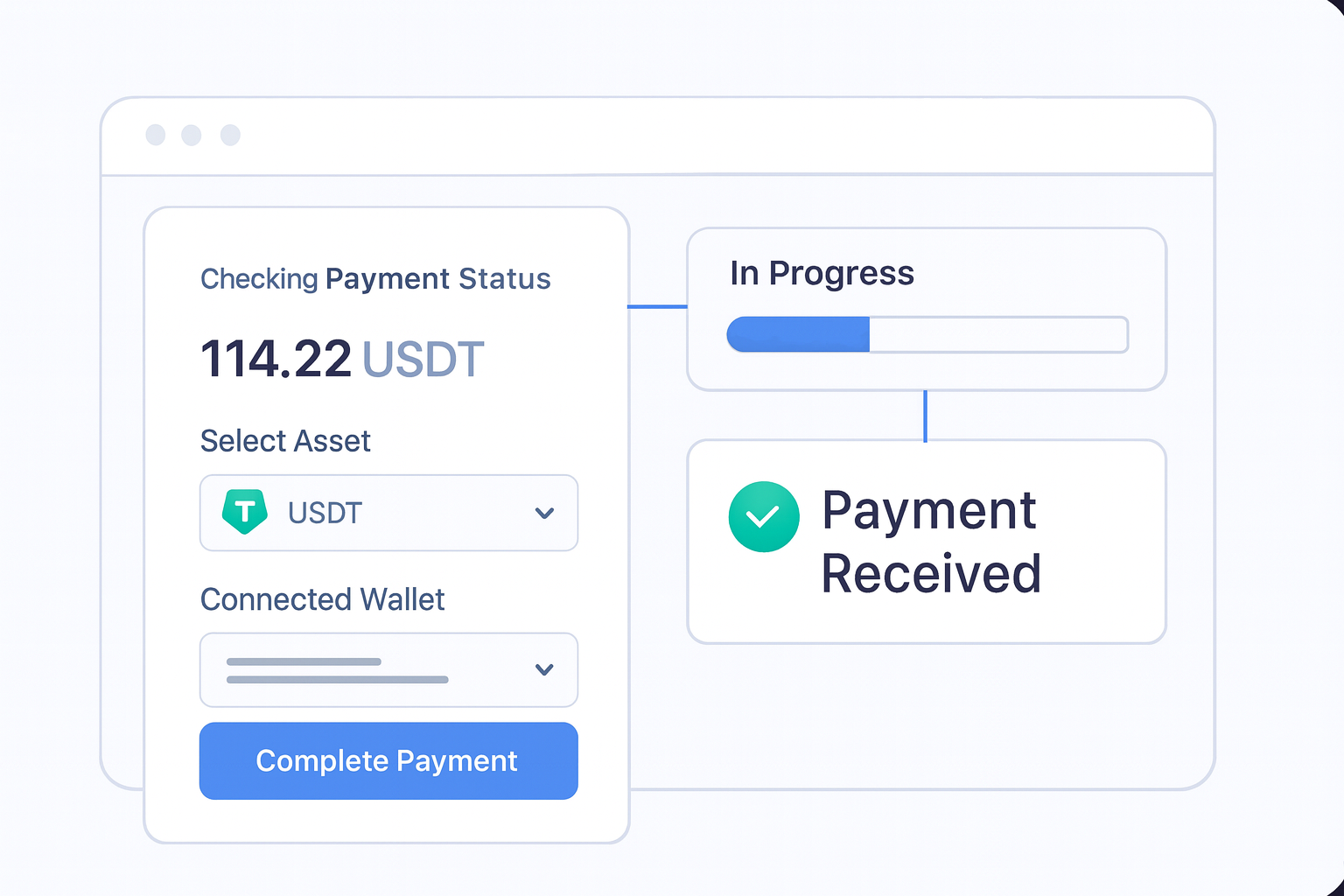
Radom’s hosted checkout gives customers a clear payment flow for one-time payments and subscriptions, with wallet support and reliable status updates. That reduces the amount of payment UI your team needs to build and maintain.
Radom also supports brand controls such as custom colors, fonts, logo placement, product images, and payment settings. That matters when you want the checkout to feel like part of your product, not a separate tool.
For teams that need more than checkout alone, Radom also supports crypto payments, payment links, billing, invoices, and payout workflows from the same platform. See crypto payments or use payment links for lighter workflows.
What finance and operations teams should check
Before you launch stablecoin checkout, confirm how your team will handle payment status, reconciliation, settlement, and reporting. Those details matter more than the surface-level checkout design.
Finance teams should also decide whether the business needs to receive funds in crypto, convert assets, or move value into fiat workflows. Radom supports balance management and settlement tools, but the exact path depends on the business setup and supported rails.
If your use case includes recurring revenue, you may also want to compare crypto billing and crypto invoicing.
Stablecoin checkout for developers
Developers usually care about integration speed, webhook behavior, and how much of the payment UI they need to own. Radom’s checkout is designed to give you a hosted flow with API support, so you can automate payment creation and status handling without building a full custom interface.
If you are evaluating whether to embed checkout, use links, or call the API directly, start with the use case first and then map the implementation to the product. Open the docs or contact sales if you need help scoping the right setup.
Choosing the right stablecoin payment flow
Use hosted checkout when you want a branded payment page and a faster launch. Use payment links when you need a lighter no-code collection flow. Use invoices when the payment starts from finance or account management. Use billing when the revenue model is recurring.
Radom is useful when you want those options to sit inside one business payment stack rather than spread across separate tools.
Next step
If you are evaluating stablecoin checkout for a live business, the fastest next step is to test the hosted flow and confirm that it fits your payment, settlement, and reconciliation needs. Start with crypto checkout, check pricing, or contact sales for a higher-volume setup.
Frequently asked questions
Is stablecoin checkout only for crypto-native companies?+
No. It is for any online business that wants to accept stablecoin payments through a clear hosted checkout flow.
Can Radom support subscriptions?+
Yes. The approved source context for Radom Checkout includes one-time payments and subscriptions.
Can I use stablecoin checkout without building my own payment page?+
Yes. Radom Checkout is a hosted payment flow, which means you do not need to build every part of the interface yourself.
What should finance teams look at before launch?+
Payment status handling, reconciliation, settlement, and how funds will move between crypto and fiat workflows are the main items to confirm.
Where should developers start?+
Start with the docs if you need API details or integration guidance. Read the documentation.