Stablecoin checkout integration for business payments
If your team wants to accept stablecoins without building every payment screen from scratch, a hosted checkout flow is usually the fastest place to start. Radom Checkout gives customers a clear payment page for one-time payments and subscriptions, with wallet support and status updates built in.
This guide is for payments teams, founders, finance operations teams, platform operators, and developers who want a stablecoin checkout integration that is practical to launch and easy to maintain.
For teams that want to start testing rather than spec out a custom flow, Radom’s crypto checkout is the closest product fit.
When hosted checkout makes sense
Hosted checkout is a good fit when you want to:
- Accept stablecoin payments on a website or app.
- Launch one-time payments or subscriptions without building a full payment interface.
- Keep the customer flow branded and consistent.
- Give finance and operations teams clearer payment status handling.
- Move faster while your product team decides whether to build a deeper custom integration later.
What a stablecoin checkout integration usually needs
A working integration usually includes four parts:
- Payment creation - generate a checkout session or payment request for the right amount and currency.
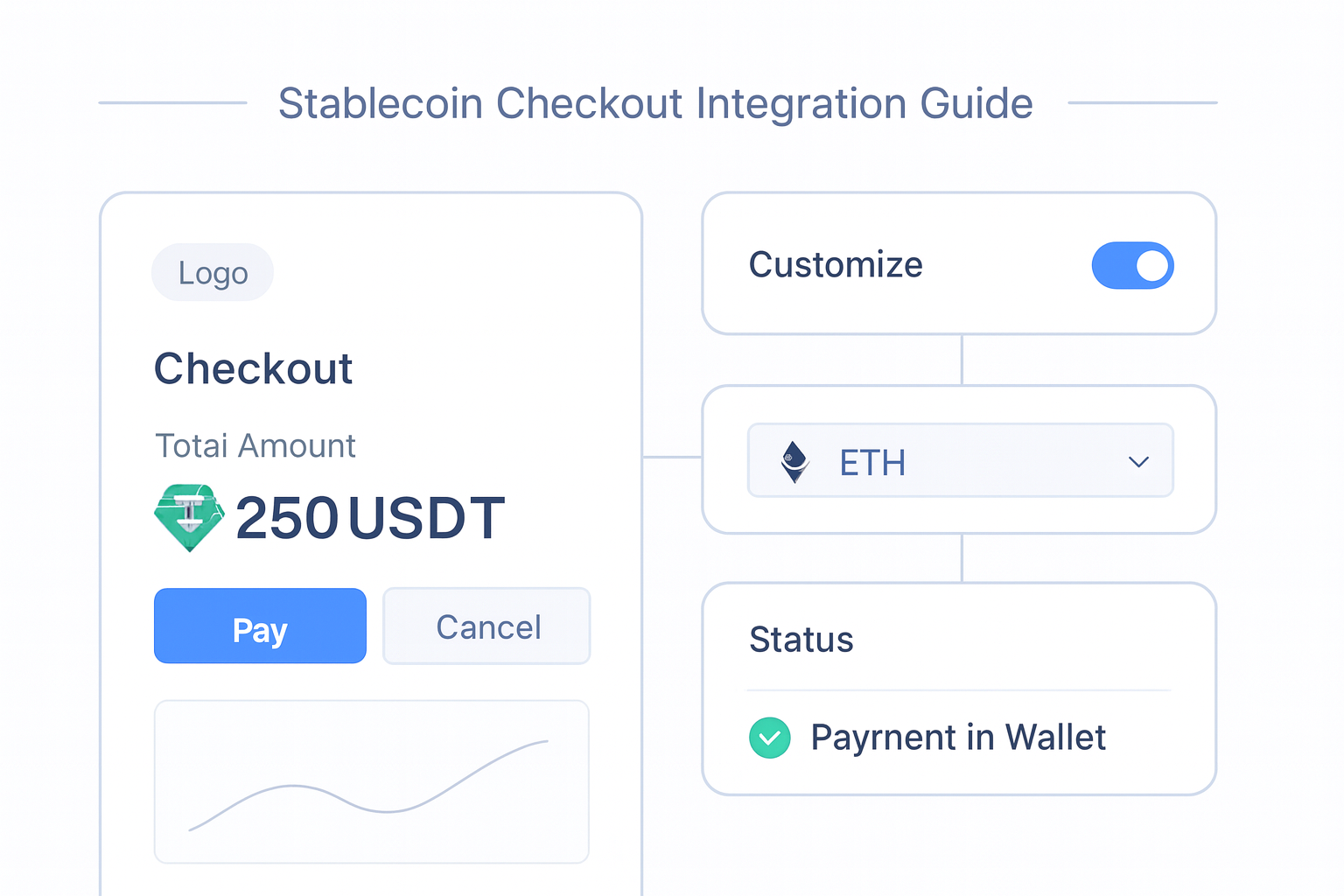
- Customer payment flow - present a hosted page that shows what to pay and how to pay it.
- Status handling - track whether the payment is pending, confirmed, or complete.
- Post-payment actions - update your order, subscription, invoice, or internal workflow when the payment is received.
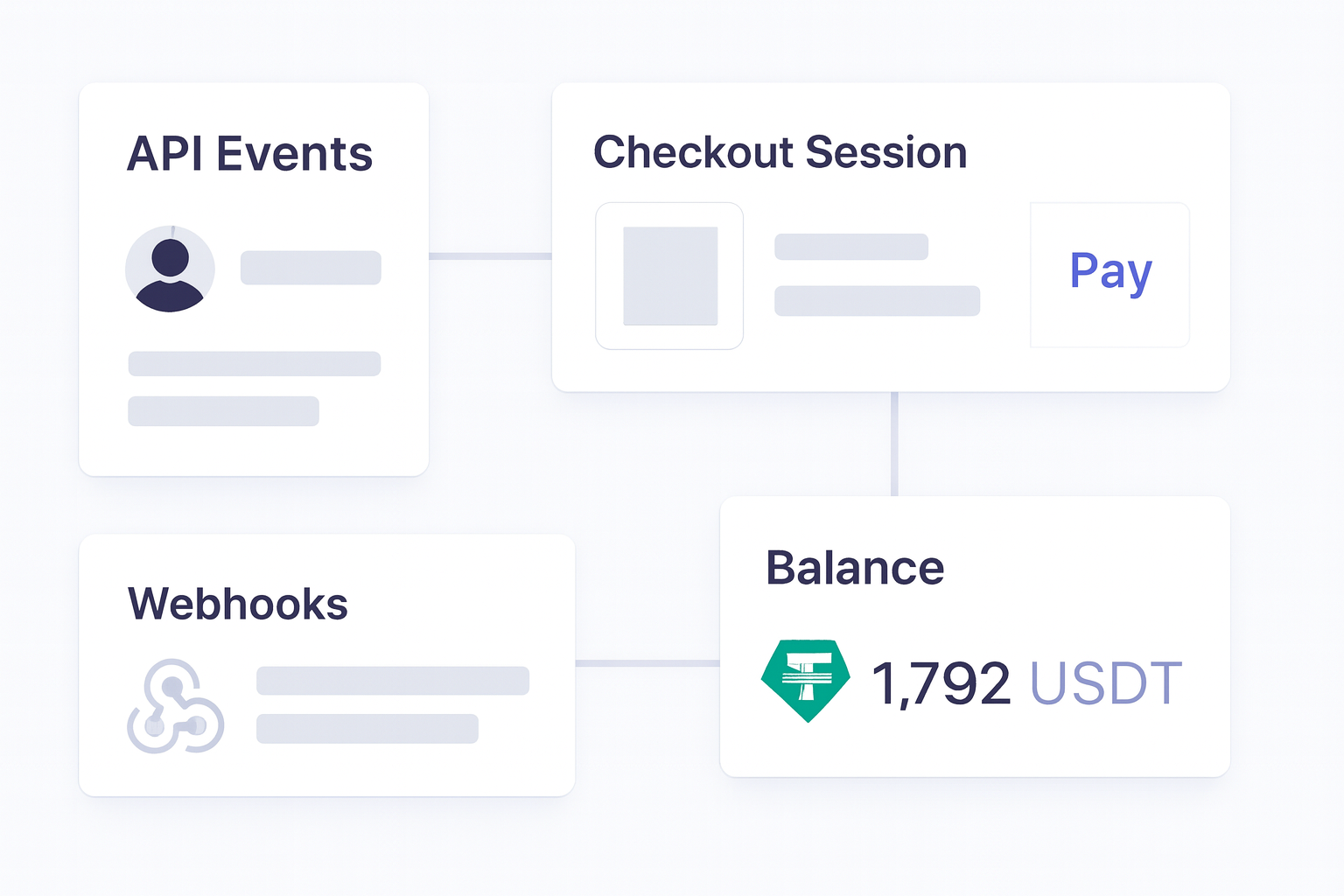
Radom supports hosted checkout, payment links, subscriptions, invoices, payment APIs, and settlement tools from one account. That gives teams a path from simple collection to more automated operations without rebuilding the payment layer each time.
How to integrate stablecoin checkout with Radom
Use these steps as a practical implementation path.
- Choose the payment model. Decide whether you need one-time checkout, subscriptions, invoices, or payment links.
- Set up your checkout flow. Create the hosted payment experience in Radom and match it to your brand using the available styling options.
- Define the payment terms. Set the amount, accepted assets, and any product or order details your team needs.
- Connect your back office flow. Make sure your order system, billing system, or internal ops process can react to payment status updates.
- Test the end-to-end journey. Confirm what the customer sees, how payment status is reported, and how your team handles settlement or withdrawal.
- Review the operational handoff. Decide who monitors payment exceptions, refunds, support questions, and reconciliation.
If your team wants to automate more of the flow, Radom’s APIs can be used alongside the hosted checkout experience. Developers who need implementation details should start with the Radom documentation.
Where Radom removes work
A stablecoin checkout integration can become expensive when teams have to build payment UI, track statuses, and maintain multiple flows for different payment types. Radom reduces that work by providing a hosted checkout page, wallet support, status updates, and a path to settlement or withdrawal from the same platform.
That matters for teams that need to move quickly but still want a payment flow finance can operate and engineering can support.
Branding and customer experience
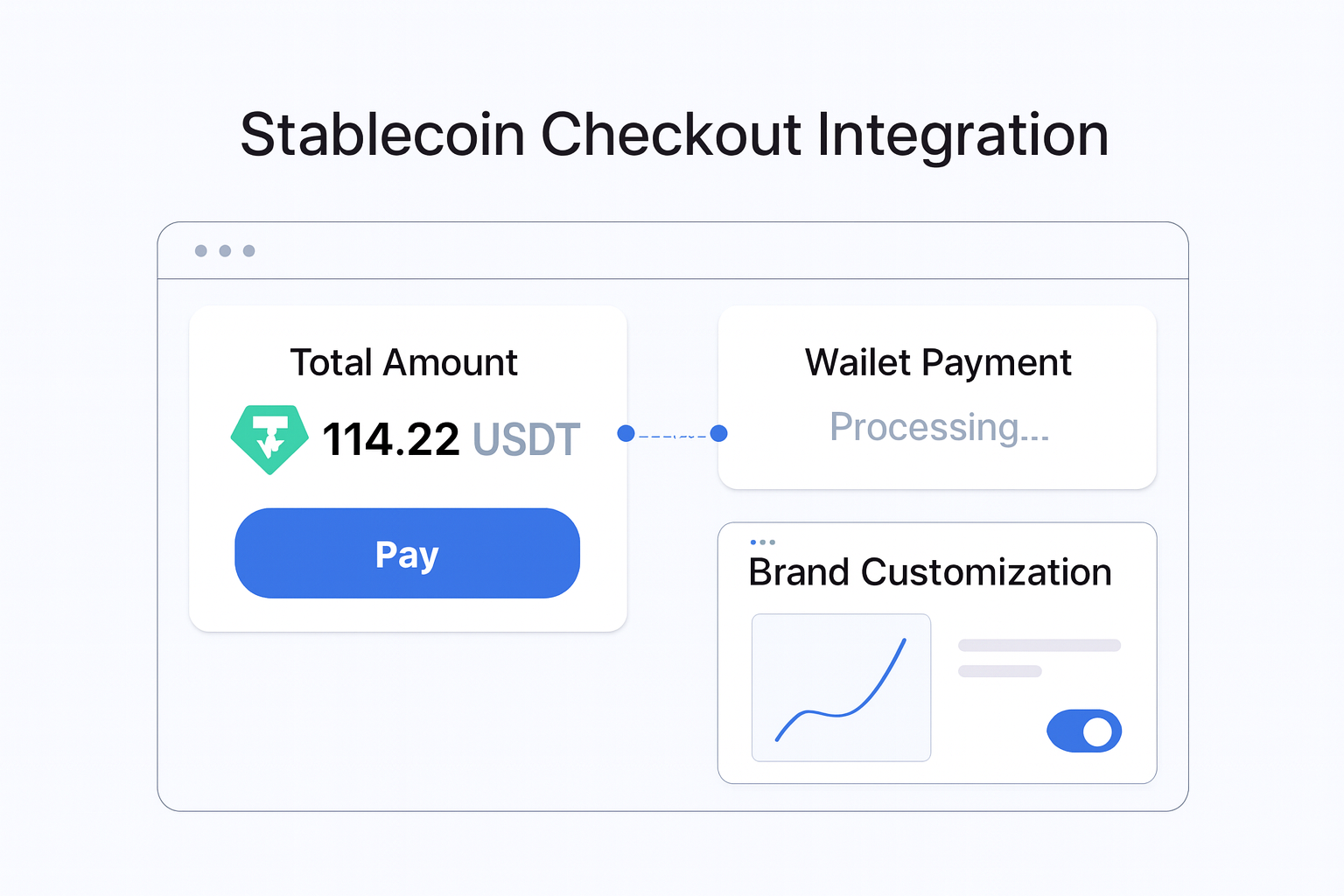
Radom Checkout can be customized with brand colors, fonts, logo placement, product images, and payment settings. That helps teams keep the payment page aligned with the rest of their site or app without building the whole interface themselves.
For operators, the key question is not just whether the checkout looks branded. It is whether the customer can understand what they are paying, complete the payment without confusion, and receive a clear status once the transfer is made.
One-time payments and subscriptions
Radom Checkout supports one-time payments and subscriptions, which makes it useful for SaaS, digital services, memberships, and other recurring revenue models. If your business needs invoicing or recurring billing rather than a checkout page alone, Radom also supports crypto payments across multiple collection methods.
For teams comparing cost structure, the pricing page is the source of truth for current pricing details.
Implementation checklist
- Confirm which stablecoins and payment assets you want to accept.
- Decide whether the customer flow should be hosted checkout, payment links, invoices, or subscriptions.
- Map payment status events to your order or billing system.
- Set the handoff for finance, support, and reconciliation.
- Test the flow across desktop and mobile.
- Review settlement or withdrawal requirements before launch.
When to contact sales
If you are evaluating higher-volume flows, a more complex platform setup, or a payment operation that needs a broader rollout plan, contact sales so the team can help you choose the right product path.
For developers, the best next step is to review the docs. For operators who want to test the product first, start in the dashboard and see how the hosted checkout fits your workflow.
Contact sales if you want help with a rollout plan, or open the docs if you are ready to evaluate the integration details.
Frequently asked questions
What is a stablecoin checkout integration?+
It is a payment flow that lets customers pay with stablecoins through a checkout page, while your team tracks the payment status and completes the order or billing action.
Do I need to build my own checkout page?+
Not necessarily. Radom Checkout is a hosted payment page, which means you can launch a branded payment flow without building every interface from scratch.
Can Radom support subscriptions?+
Yes. The published product page says Radom Checkout supports one-time payments and subscriptions.
Can I use APIs with hosted checkout?+
Yes. The product context says Radom supports payment APIs, and the documentation is the right place to review implementation details.
What should I use if I only need a lightweight payment flow?+
Payment links are a good fit for lightweight collection workflows. If you need a more structured payment page, hosted checkout is the better starting point.
Does Radom publish pricing for checkout?+
Yes. The pricing page should be used for current pricing details and any volume-related questions.