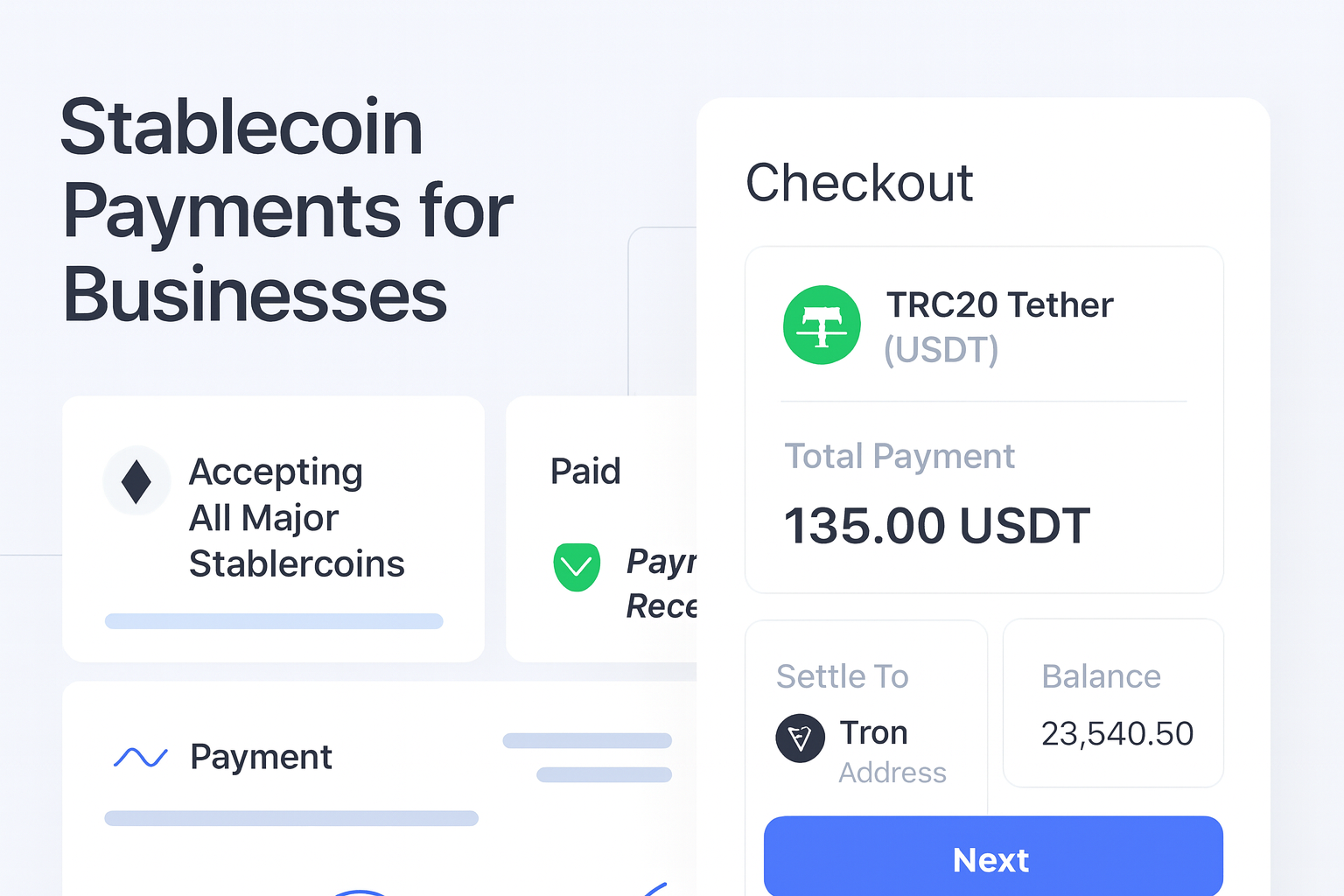
Stablecoin payments for businesses that need control, not noise
Stablecoin payments are a fit when your team wants faster settlement, cleaner cross-border movement, or a payment method that works well for digital-first customers. For operators, the real question is not whether stablecoins are popular. It is whether you can accept them, reconcile them, convert them, and move the funds where the business needs them to go.
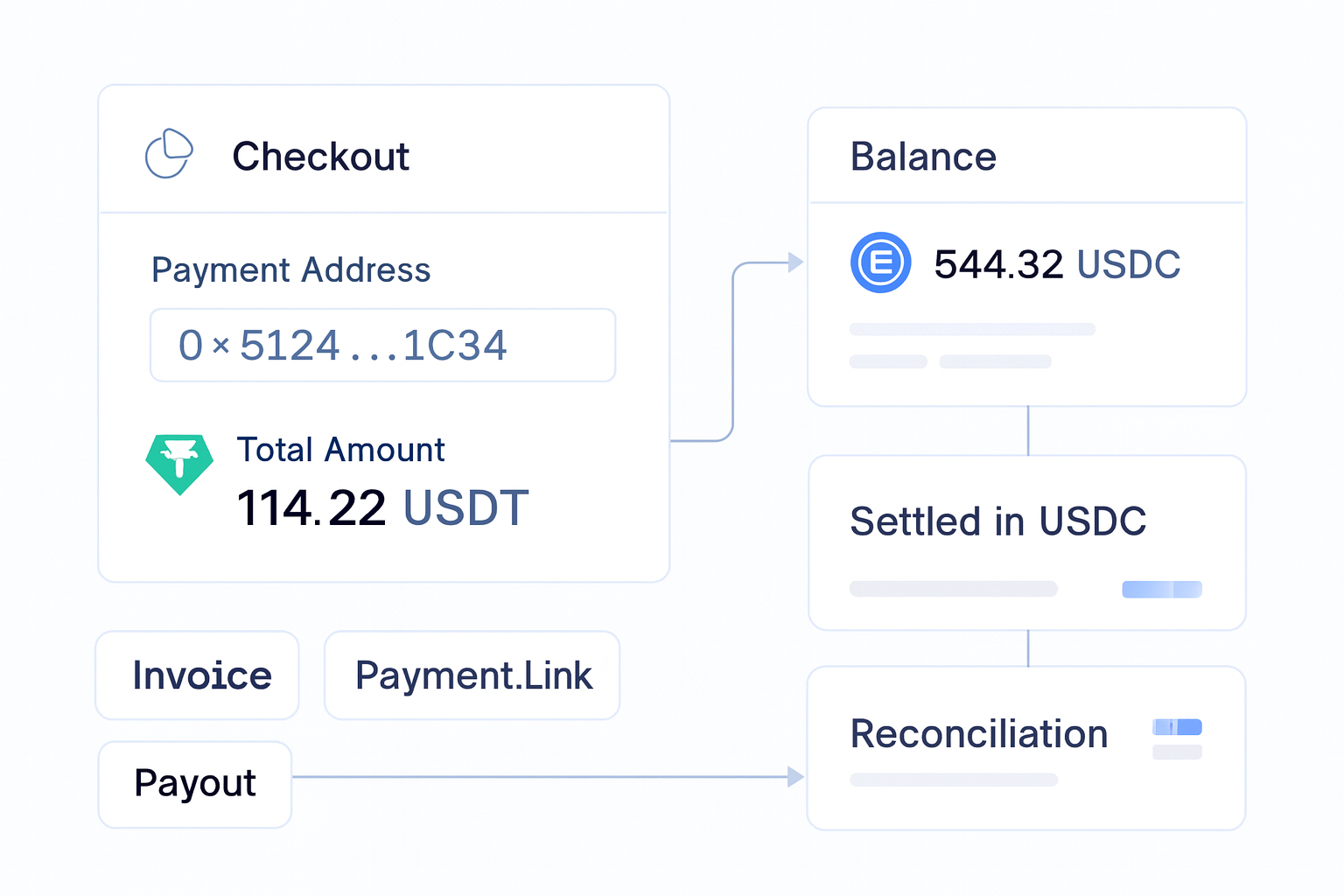
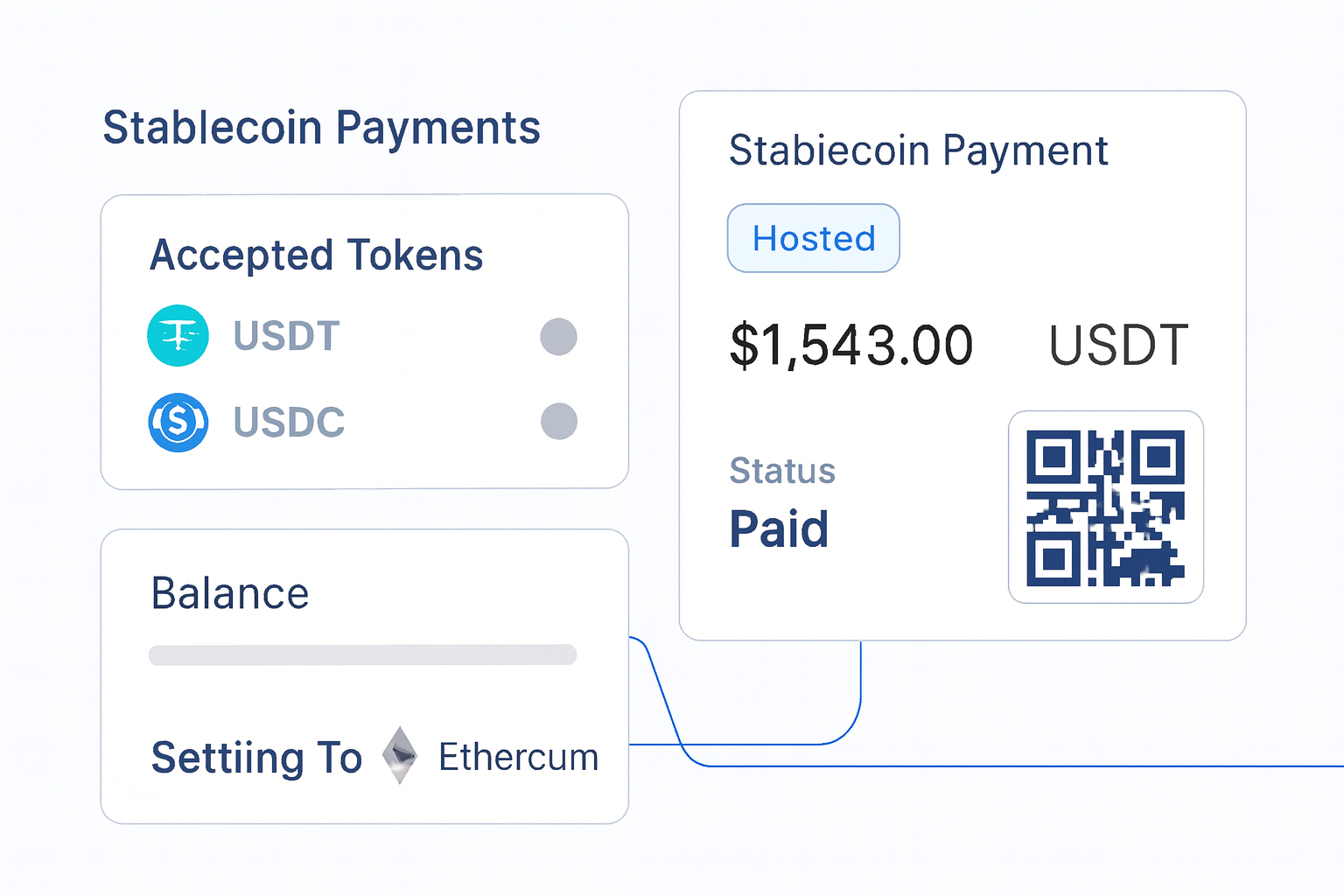
Radom is built for that workflow. It helps businesses accept crypto payments, manage subscriptions, send invoices, create payment links, and run payouts from one platform. You can settle in crypto or fiat, track balances, and launch with APIs or no-code tools. View crypto payments or see pricing.
What stablecoin payments usually need to solve
Most teams do not start with a stablecoin strategy. They start with a business problem:
- Customers want to pay in stablecoins instead of cards or wires.
- Finance wants a cleaner way to reconcile payments and settlement.
- Operations wants fewer manual steps between receipt and payout.
- Developers want payment infrastructure that does not require building every flow from scratch.
Radom supports hosted checkout, payment links, invoices, subscriptions, and APIs, so teams can choose the payment flow that matches the transaction type.
How to set up stablecoin payments
- Choose the payment flow. Use checkout for a hosted customer journey, payment links for lightweight collection, invoices for finance-led workflows, or subscriptions for recurring revenue.
- Decide how you want to settle. Keep funds in crypto, convert them, or withdraw to your wallet depending on how your treasury is managed.
- Map the operational path. Make sure payment status, balance tracking, and reporting fit your finance process.
- Connect the integration. Use the dashboard for a quick launch or the API if your team needs programmable payment infrastructure.
- Test the full flow. Confirm how payment confirmation, settlement, and reporting work before going live.
Radom removes the work of stitching these steps together across separate tools. It gives teams one platform for acceptance, balance management, settlement, and conversion workflows.
Where Radom fits in the stablecoin payment stack
Radom is useful when stablecoin payments are part of a broader operating model, not a one-off checkout. That includes businesses that need to accept customer payments, settle in crypto or fiat, manage balances, and support payout workflows from the same platform.
If your next step is customer checkout, start with crypto checkout. If you need to move between crypto and fiat, review crypto on and off ramp. If your team is comparing conversion and settlement workflows, look at crypto convert.
Who this is for
Stablecoin payments are often evaluated by payments teams, founders, finance operations teams, platform operators, affiliate and iGaming operators, creator and subscription platforms, and developers comparing crypto payment infrastructure. Radom is designed for businesses and platform operators, not consumers.
When to talk to sales
If you have higher volume, a more complex payment model, or need help mapping acceptance to settlement, contact sales. For teams that want to self-serve, the documentation is the fastest way to evaluate the product and integration path.
Contact sales or start with the Radom documentation.
Frequently asked questions
What are stablecoin payments?+
Stablecoin payments are business payments made using stablecoins instead of traditional card or bank rails. They are often used for digital commerce, cross-border flows, and settlement workflows.
Can Radom settle stablecoin payments in fiat?+
Radom supports settling in crypto or fiat. Use the platform to manage balances and route funds according to your operating needs.
Does Radom support recurring stablecoin billing?+
Radom supports subscriptions as part of its crypto payments platform.
Can I use Radom for invoices and payment links?+
Yes. Radom supports invoices and payment links alongside checkout, subscriptions, and payouts.
Is Radom only for crypto-native businesses?+
No. Radom is built for businesses and platform operators that need practical payment infrastructure across crypto and fiat workflows.