Compare stablecoin payment platforms with the operational work in mind
If you are evaluating stablecoin payments, the real question is not just whether a provider can accept USDC or other supported assets. It is whether the platform helps your team collect funds, track settlement, convert balances, and move money out again without adding manual work.
Radom is built for businesses that need payment acceptance, billing, invoices, payment links, payouts, conversion, and settlement in one place. That matters when finance, operations, and developers all need the same system to hold up in production.
Compare Radom pricing or contact sales if you are comparing platforms for a live rollout.
What to compare in a stablecoin payments platform
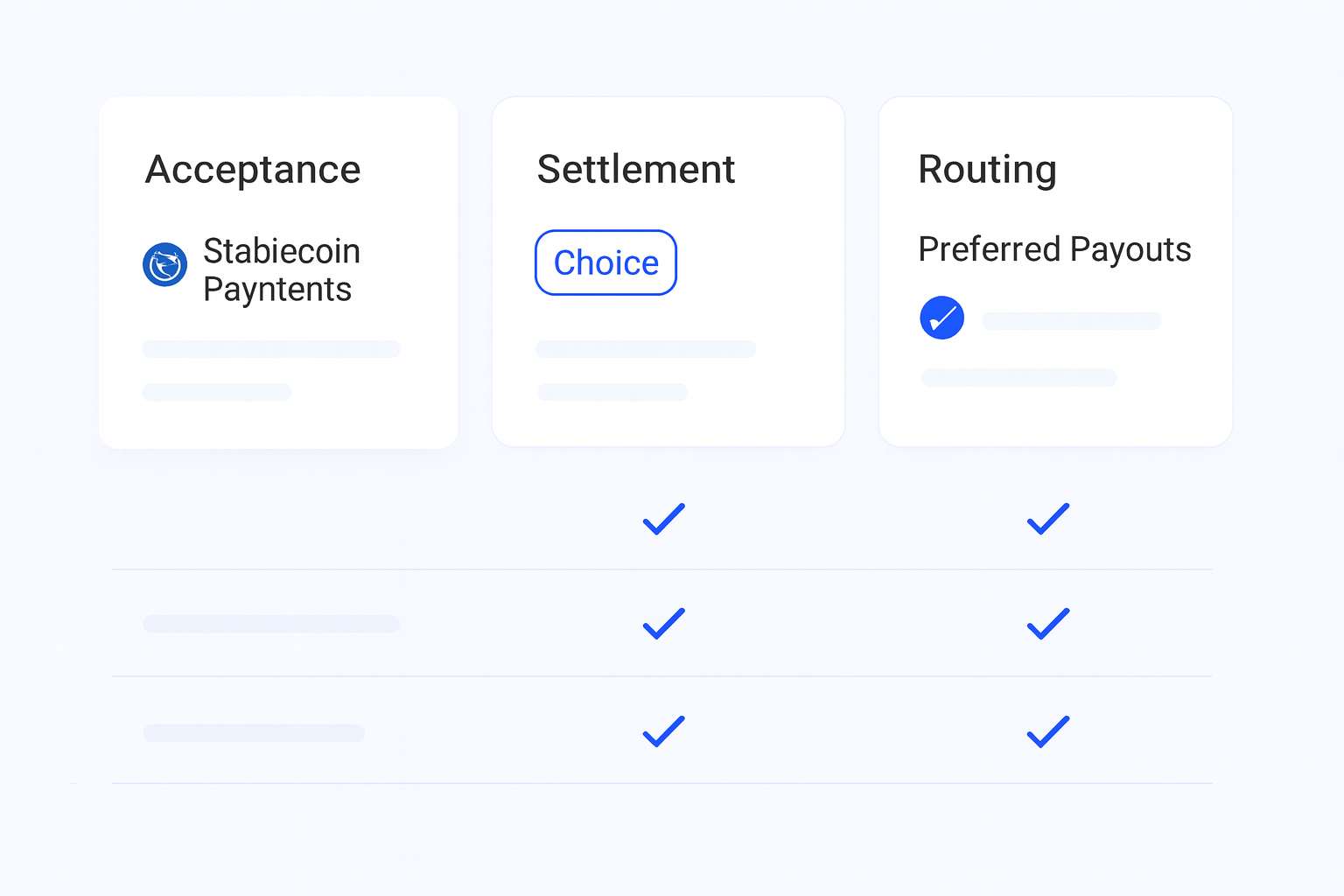
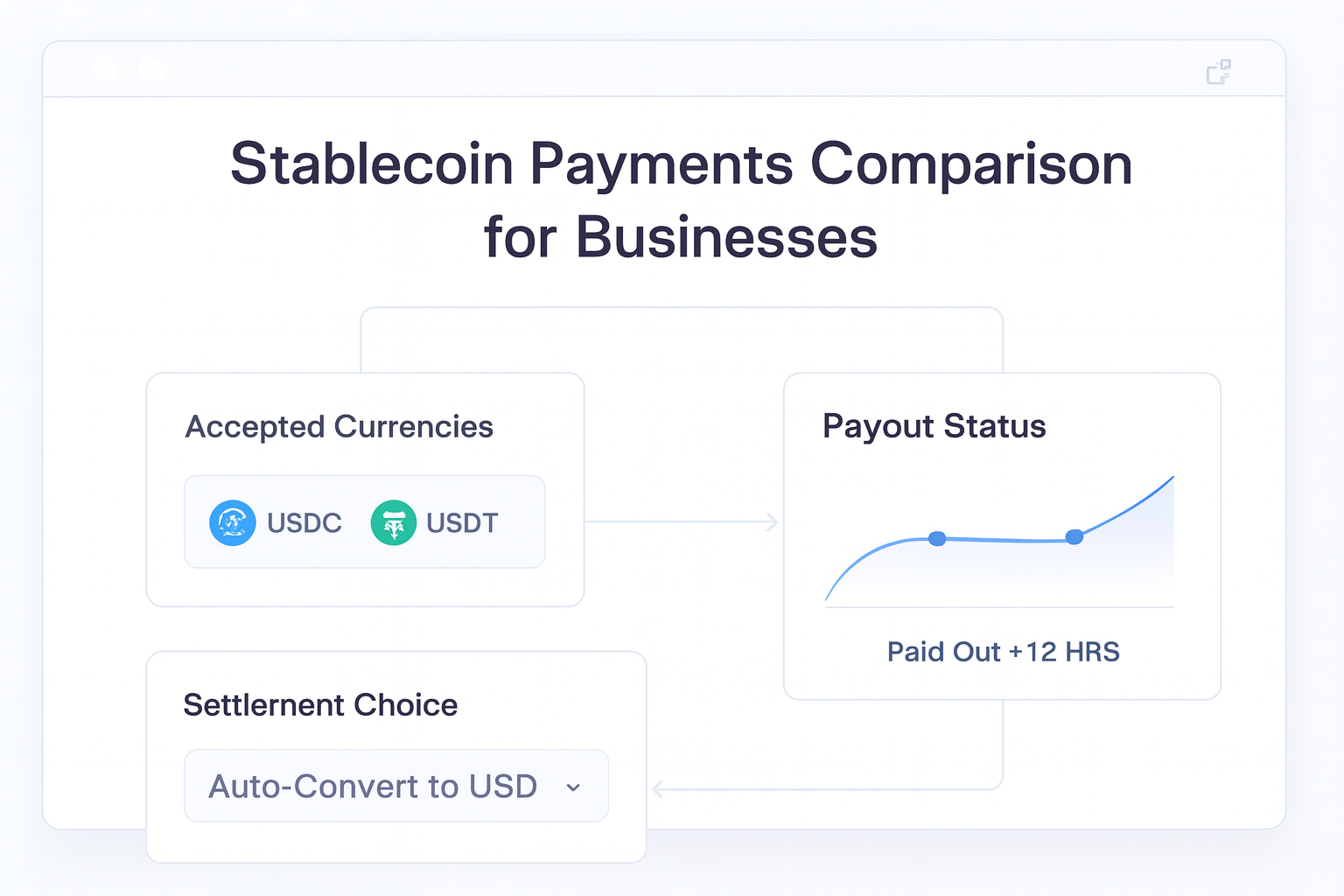
For decision-stage buyers, the useful comparison points are practical:
- Payment acceptance: hosted checkout, payment links, invoices, subscriptions, and API support.
- Settlement options: whether you can keep funds in crypto, settle in fiat, or convert between supported assets where available.
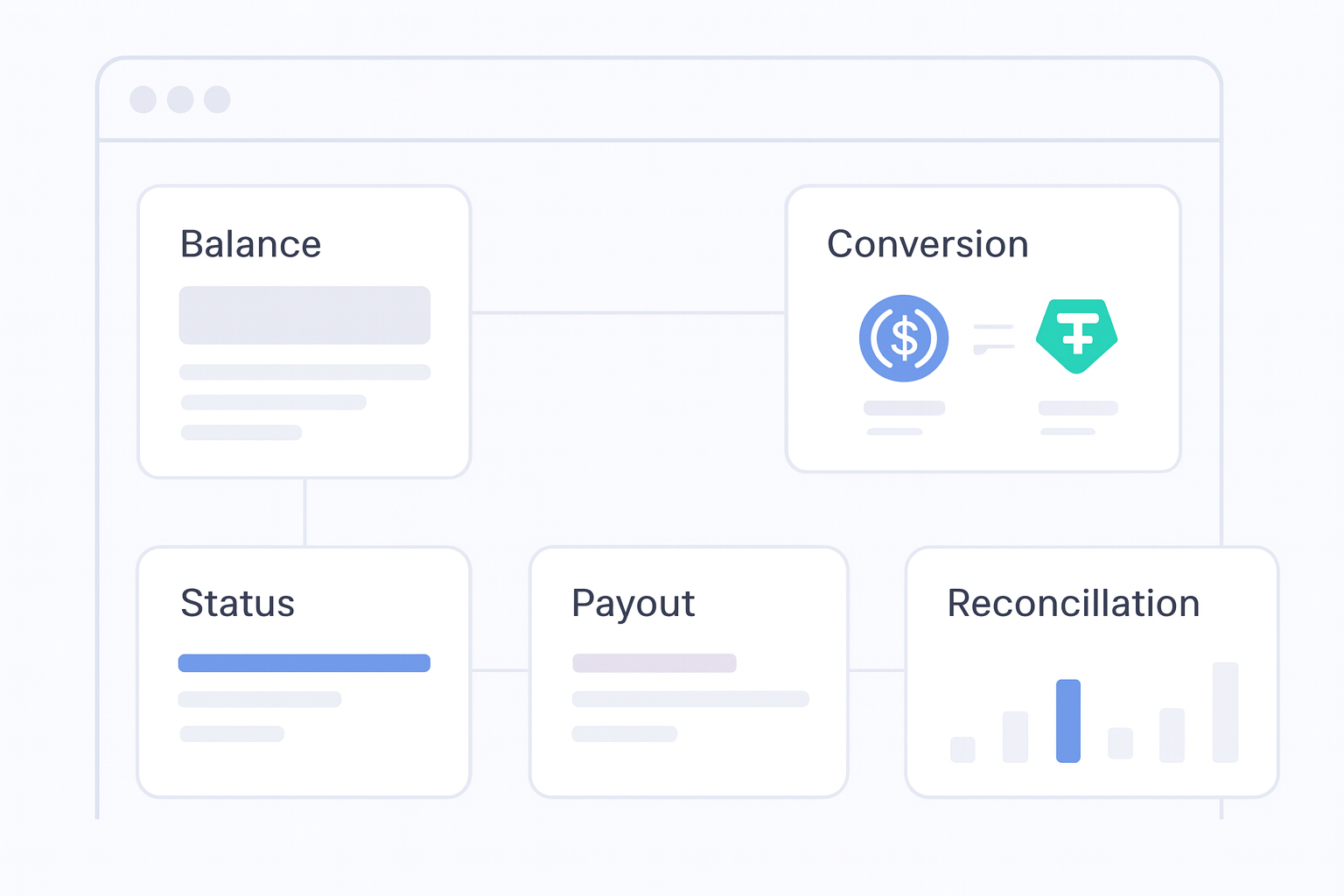
- Balance management: whether finance teams can track incoming payments and reconcile activity from one dashboard.
- Payout workflows: whether the platform supports mass payouts and direct crypto or crypto-funded fiat payouts.
- Developer access: whether the product has APIs and docs for teams that need to automate payment flows.
Radom covers these workflows through crypto payments, crypto checkout, billing, invoicing, payment links, payouts, conversion, on and off ramp, and virtual accounts. Read the docs if your team needs implementation detail.
Where Radom fits in a stablecoin payments stack
Radom is a fit for teams that want more than a single payment acceptance tool. The platform is designed to support business payment operations across collection, settlement, conversion, and payouts.
That makes it useful for SaaS teams running recurring payments, marketplace operators collecting funds from customers, and platforms that need to pay recipients globally. It also gives developers a path to integrate payment flows without building every component from scratch.
If you are comparing payment pages specifically, start with crypto checkout. If you need recurring revenue workflows, review crypto billing and crypto invoicing.
A simple way to evaluate your options
- List the payment types you need now, such as checkout, invoices, subscriptions, or payment links.
- Check whether the platform supports the settlement model your finance team wants, including crypto or fiat where available.
- Confirm whether payout workflows are built in or require separate tooling.
- Review the developer path, including APIs and documentation.
- Compare pricing and sales support for your expected volume before you commit.
Radom is strongest when you want one platform to handle payments and downstream money movement. If your use case includes conversion or moving between fiat and crypto, review crypto convert and crypto on and off ramp.
Stablecoin payments for payouts, not just collection
Many teams start with payment acceptance, then discover the harder part is moving funds to the right recipient in the right currency. Radom supports payouts alongside payment acceptance, which helps platform operators keep collection and disbursement in the same operational view.
That is relevant for affiliate networks, iGaming operators, creator platforms, and other global businesses that need reliable payout workflows. If payouts are central to your model, review mass payouts and speak with sales.
When to choose Radom
Radom is a strong option when your team wants stablecoin payments as part of a broader business payment stack. If you only need a single narrow payment feature, a lighter tool may be enough. If you need acceptance, settlement, conversion, invoicing, billing, and payouts to work together, Radom is built for that operating model.
For teams comparing vendors now, the next step is usually either pricing review or implementation review. See pricing, review the docs, or contact sales for a fit check.
Frequently asked questions
Does Radom support stablecoin payments?+
Radom supports crypto payments and related business payment workflows. Supported assets and exact settlement paths should be checked in product documentation or with sales before launch.
Can Radom handle checkout, billing, and invoices?+
Yes. Radom supports hosted checkout, billing, subscriptions, invoices, and payment links from one platform.
Can Radom help with payouts as well as collection?+
Yes. Radom supports payouts, including crypto and crypto-funded fiat payout workflows where available.
Is Radom only for developers?+
No. Radom supports no-code tools and APIs, so it can work for operators and developers.
What should I review before choosing a stablecoin payments platform?+
Check payment types, settlement options, payout support, conversion workflows, pricing, and documentation quality.