Accept stablecoin payments without rebuilding your checkout stack
Ecommerce teams use Radom to accept crypto payments through hosted checkout, payment links, invoices, subscriptions, and APIs from one account. For stores evaluating stablecoin payments, the practical question is usually not whether customers can pay. It is how the payment flow fits with order confirmation, settlement, reporting, and finance operations.
Radom is built for businesses that want a direct way to take digital asset payments and manage the funds after payment. You can receive funds to your Radom balance, convert assets, or withdraw to your wallet. For teams that need a faster launch path, crypto checkout gives you a hosted payment flow without building the entire interface yourself.
Contact sales if you want help mapping stablecoin acceptance to your store, billing model, or payout workflow.
Where stablecoin payments fit in ecommerce
Stablecoin payments are usually a fit when your customers already hold digital assets, when you sell across borders, or when card processing creates friction in approval, chargebacks, or reconciliation. Radom supports businesses that want to accept crypto across the channels they already use, including ecommerce storefronts, marketplaces, SaaS products, and subscription flows.
If your team prefers lightweight collection workflows, crypto payment links can be used for quick payment collection, invoice follow-up, and manual order handling. If you need recurring revenue, crypto billing supports subscriptions and recurring payments.
What ecommerce teams can do with Radom
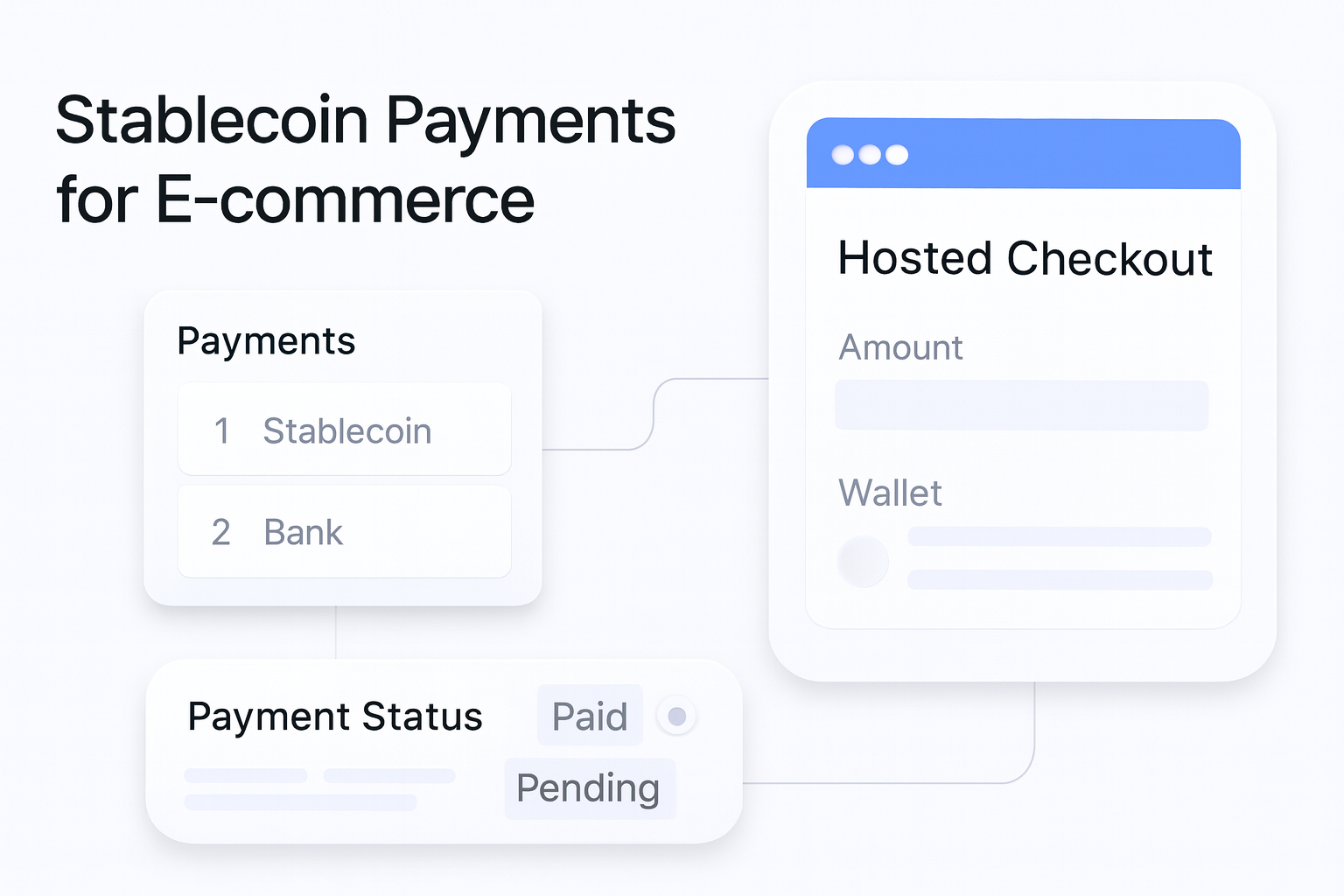
- Accept crypto payments from customers through hosted checkout or payment links.
- Support one-time purchases and subscriptions from one platform.
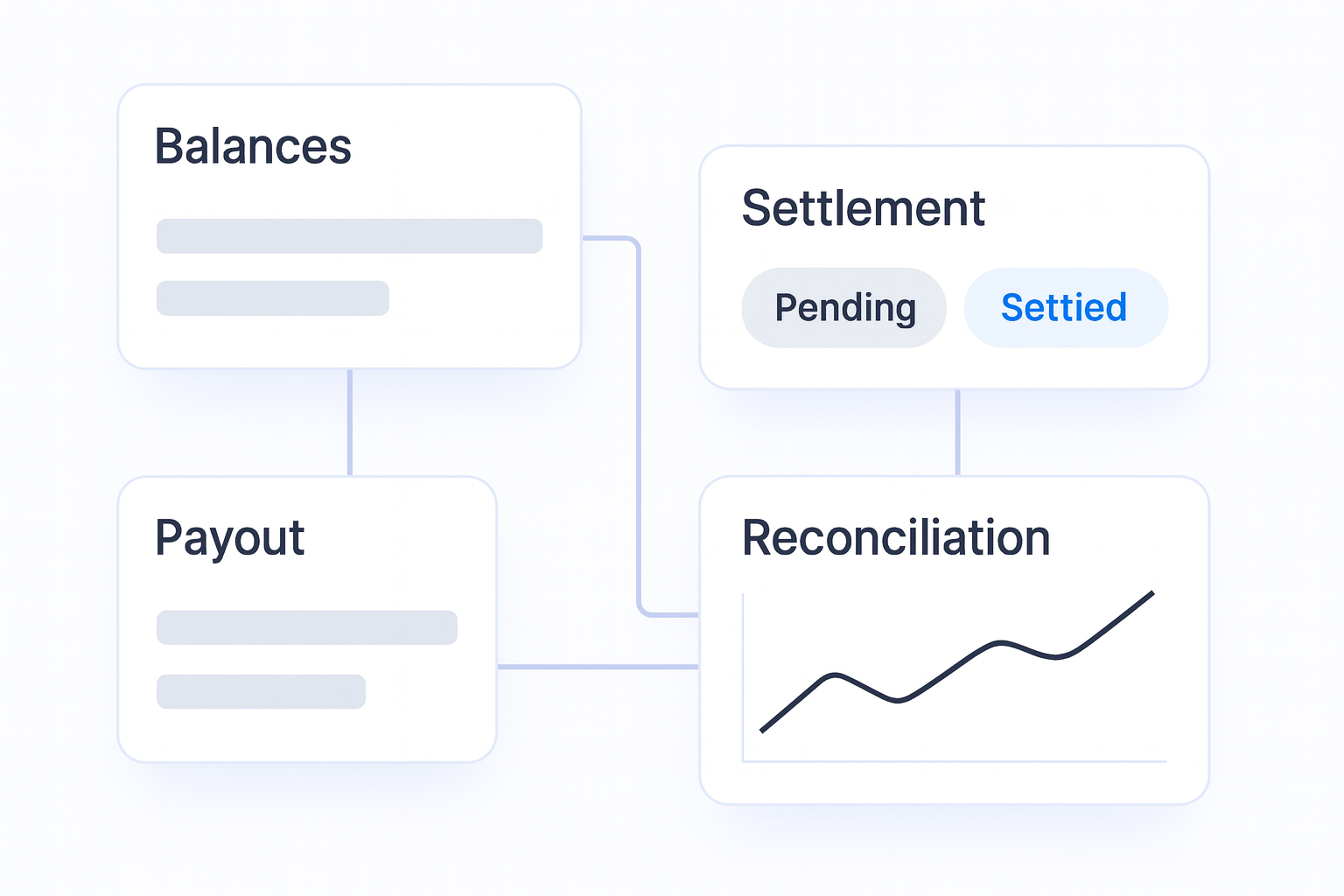
- Receive funds to your Radom balance and manage settlement from there.
- Convert assets or withdraw to your wallet when your workflow requires it.
- Use APIs when your team needs programmable payment infrastructure.
For teams that want to understand pricing before rollout, the pricing page explains the current commercial model and routes higher-volume or more complex cases to sales.
How a stablecoin ecommerce flow works
- Create the payment flow you need, such as hosted checkout, a payment link, or an API-led integration.
- Configure the payment details, accepted assets, and customer-facing experience.
- Send the customer to the payment page or embed the flow in your site or app.
- Track payment status in the dashboard and confirm when funds arrive.
- Settle, convert, or withdraw funds based on your treasury and finance process.
This is where Radom removes work for commerce teams. You do not need separate tools for checkout creation, payment collection, and post-payment balance handling. The platform is designed to keep those steps in one place so finance, operations, and engineering can work from the same payment record.
Built for operators, not just developers
Ecommerce payments usually involve more than a checkout screen. Finance teams need reporting. Operators need clear payment states. Developers need a flow they can integrate without rebuilding core infrastructure. Radom is positioned for businesses that want practical payment infrastructure, not a consumer wallet product.
If your team is comparing options for payment acceptance, crypto payments gives the broader product view, while crypto checkout is the fastest path for hosted acceptance.
When to talk to sales
Contact sales if you are evaluating stablecoin payments for a larger store, a marketplace, or a platform with settlement, reconciliation, or payout requirements. Sales can help you decide whether checkout, links, billing, or APIs are the right starting point.
Contact sales to discuss your ecommerce payment flow.
Frequently asked questions
Can Radom be used for stablecoin payments on an ecommerce site?+
Yes. Radom supports crypto payments for businesses through hosted checkout, payment links, invoices, subscriptions, and APIs.
Can I use Radom without building a full payment page?+
Yes. Radom Checkout is a hosted payment flow, and payment links give you a no-code way to collect payments.
Can ecommerce teams manage settlement after payment?+
Yes. Radom supports receiving funds to your balance, then converting or withdrawing funds based on your workflow.
Is Radom only for developers?+
No. Radom is built for businesses and platform operators, and it supports both no-code tools and APIs.
Where should I start if I want to compare options?+
Start with pricing if you need the commercial model, or contact sales if you have higher volume or a more complex ecommerce setup.