Why stablecoin payment integration matters
If you accept payments from global customers, contractors, or platform users, stablecoins can reduce friction at checkout and simplify cross-border settlement. The practical question is not whether to accept stablecoins. It is how to do it in a way your finance, operations, and engineering teams can actually run.
A good integration should let you accept payments, track status, reconcile balances, and settle into the asset your business wants to hold. Radom is built for that kind of workflow across crypto payments, checkout, invoices, payment links, payouts, conversion, and settlement.
For teams evaluating implementation options, start with crypto payments and hosted crypto checkout if you want a faster launch path.
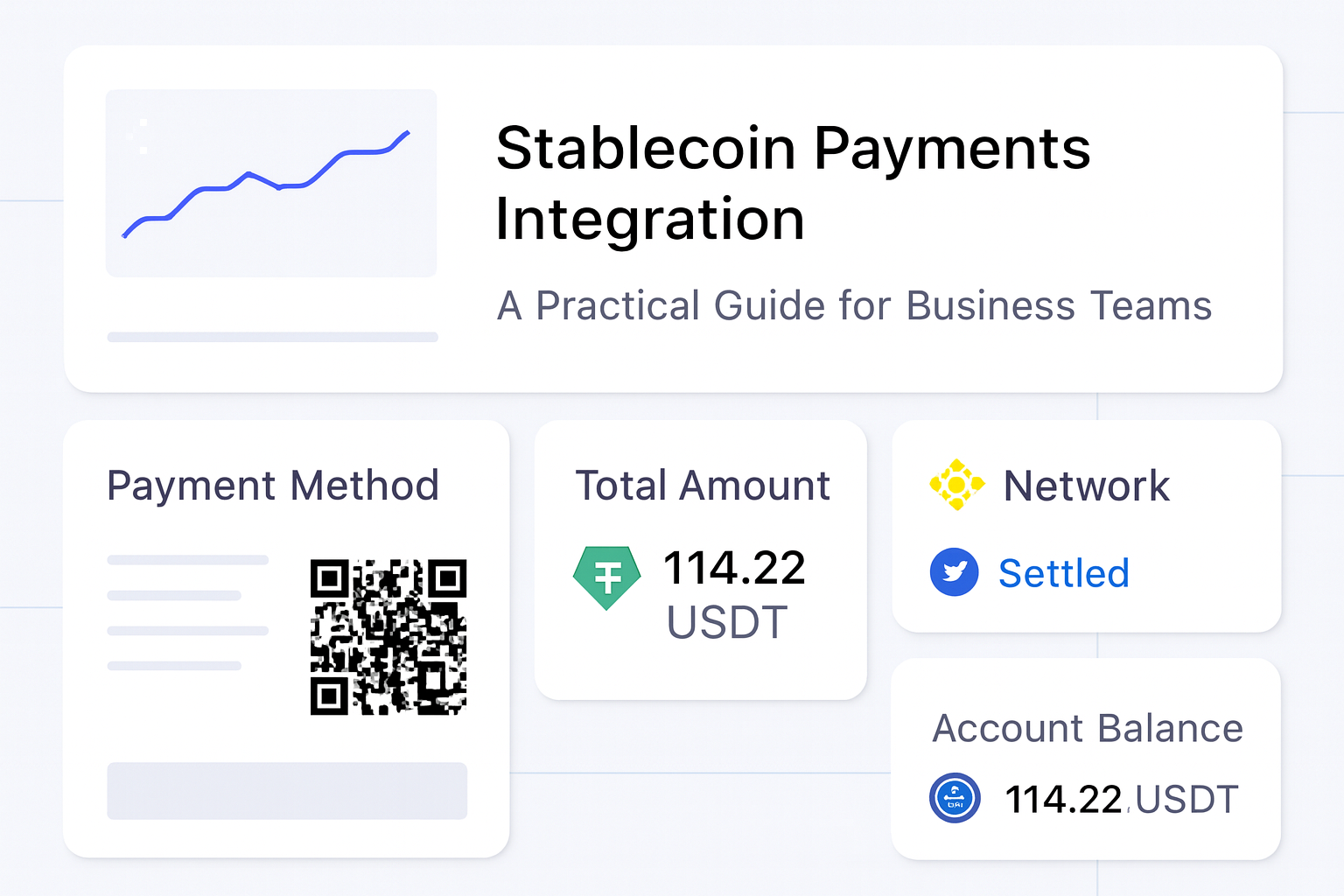
What a stablecoin payments integration usually includes
Most business integrations need five parts:
- A way to present payment instructions or a hosted checkout to the customer.
- Payment status handling so your team knows when funds are pending, confirmed, or complete.
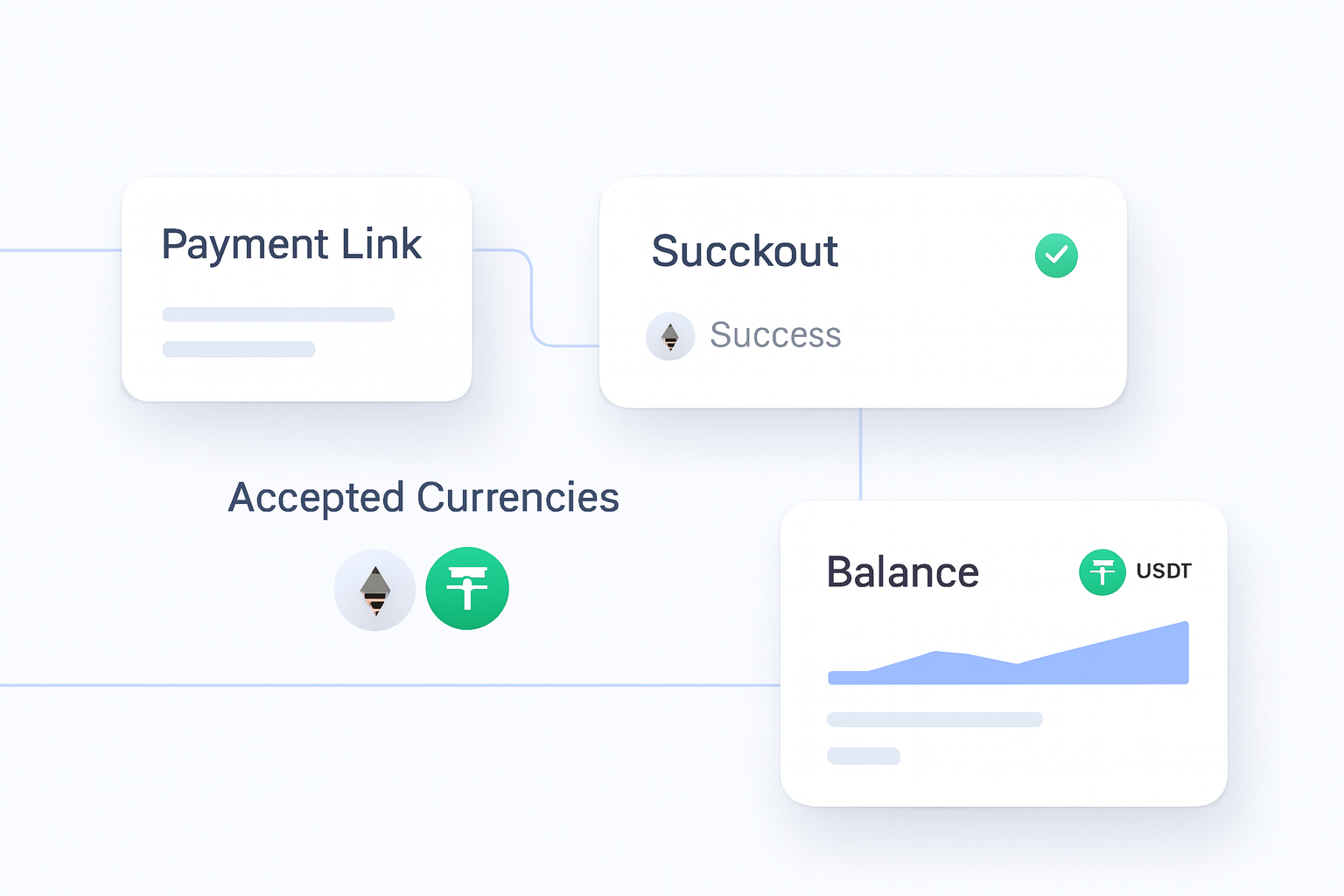
- Balance management so incoming funds land somewhere your finance team can track.
- Settlement or conversion rules so you can hold, convert, or withdraw as needed.
- Reporting or API access so product, finance, and operations stay aligned.
Radom supports hosted checkout, payment links, invoices, subscriptions, payouts, and payment APIs from one platform. That reduces the need to stitch together separate tools for acceptance and back-office operations.
How to integrate stablecoin payments
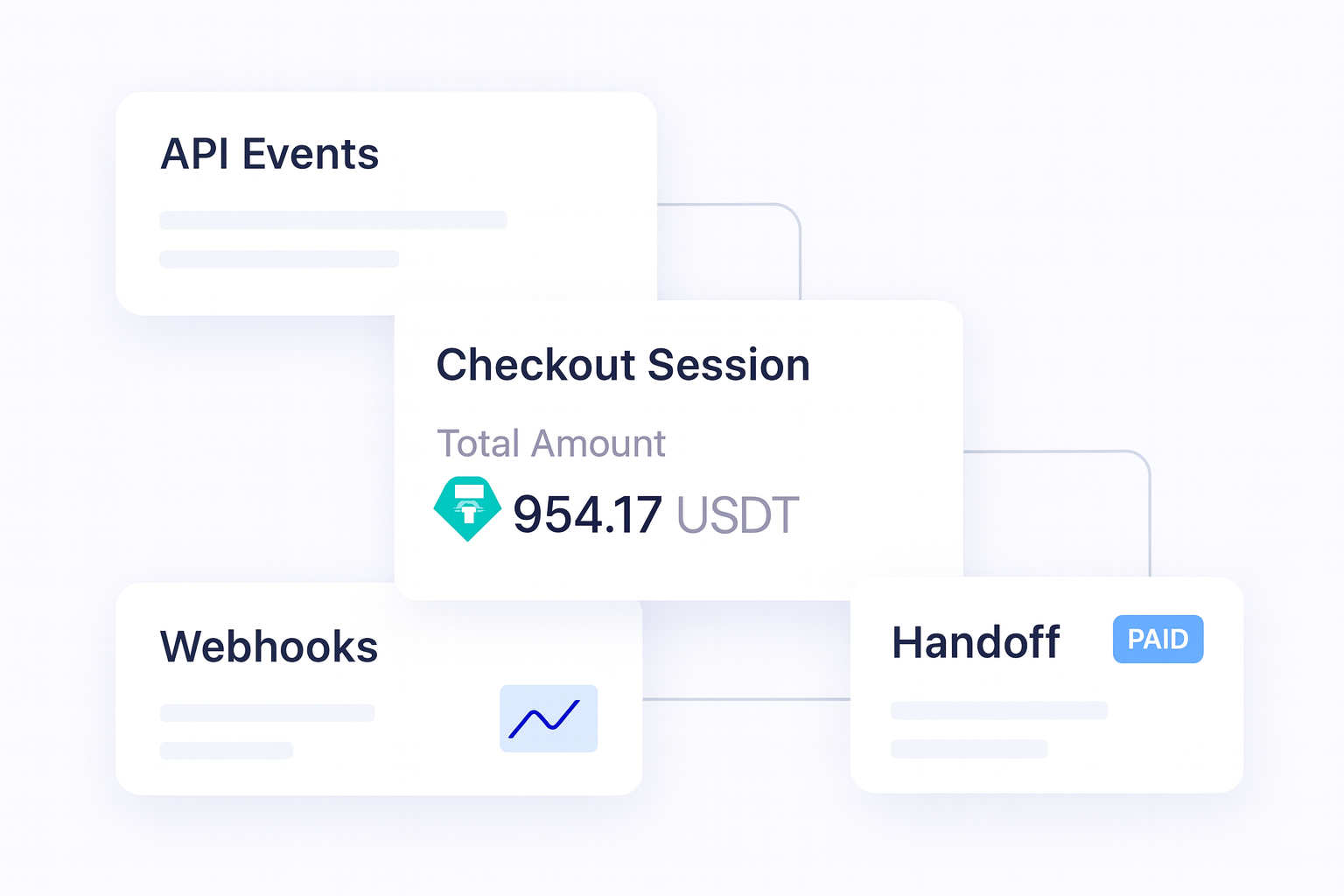
- Choose the payment flow. Use hosted checkout if you want a ready-made payment page. Use payment links for lighter workflows. Use invoices for finance-led collection. Use APIs if your product team wants a programmable integration.
- Define the settlement path. Decide whether incoming funds should stay in crypto, be converted, or be withdrawn to your wallet. If you need fiat settlement or conversion between assets, connect the payment flow to your treasury process.
- Map status handling. Make sure your internal systems can respond to payment updates, failed attempts, and completed payments without manual checking.
- Set reporting expectations. Finance and operations teams should be able to reconcile each payment against the order, invoice, or payout it belongs to.
- Test before launch. Run a small set of live or sandbox-style tests, depending on your setup, before routing real volume through the integration.
If your team needs to move between stablecoins and fiat as part of settlement, review crypto convert and crypto on and off ramp alongside the payment flow.
Where Radom removes work
Radom reduces the amount of custom build work by combining acceptance, balance handling, settlement, and payout operations in one platform. That matters for teams that do not want separate tools for checkout, invoicing, conversion, and payouts.
For developers, the main value is having APIs and docs available when you need a programmable flow. For operators, the main value is having a clearer path from payment received to funds settled or moved onward.
For businesses with recurring revenue, Radom also supports billing and subscriptions. For teams that collect one-off payments, hosted checkout, payment links, and invoices provide simpler entry points.
Implementation choices by team type
Payments teams: Start with the customer-facing payment flow and make sure settlement rules are defined before launch.
Founders: Choose the fastest route to acceptance first, then refine reporting and treasury controls as volume grows.
Finance operations teams: Focus on reconciliation, settlement timing, and how incoming stablecoins map to internal records.
Platform operators: Plan for multiple payment types, payout needs, and different recipient preferences from the start.
Developers: Review the API path and documentation before choosing between hosted checkout, links, invoices, or a custom integration.
Affiliate, iGaming, creator, and subscription platforms: Make sure your payment and payout setup supports high-volume operations, clear reporting, and the right settlement path for your business model.
Pricing and launch considerations
Radom pricing is published on the pricing page. The current public pricing page says Radom uses per-transaction pricing with no setup fees or monthly fees. If you are running significant volume or need a more tailored rollout, contact sales for a commercial review.
When you are ready to test the flow in practice, the cleanest next step is to sign up and start testing in the dashboard.
Frequently asked questions
Can Radom handle stablecoin payments as part of a broader crypto payments setup?+
Yes. Radom supports crypto payments, checkout, invoices, payment links, payouts, and payment APIs. Stablecoin payments fit inside that broader workflow.
Do I need to build a full checkout from scratch?+
No. Radom offers hosted crypto checkout, which is useful if you want a ready-made payment page instead of building every payment flow yourself.
Can I keep funds in crypto or convert them?+
Radom supports settlement in crypto or fiat, and it also supports crypto conversion workflows. The exact path depends on how you want to manage balances.
Is this guide only for developers?+
No. It is written for payments teams, founders, finance operations teams, platform operators, and developers who need a practical implementation plan.
Where should I start if I am still evaluating the setup?+
Start with crypto payments, review pricing, and use the Radom documentation if you want to assess the technical path.
Next step
If you are planning a stablecoin payments integration, the fastest way to evaluate Radom is to test the dashboard, review the product flow, and decide whether hosted checkout, payment links, invoices, or APIs fit your use case.
Contact sales if you want help scoping a higher-volume rollout or a platform setup.