USDC payments comparison
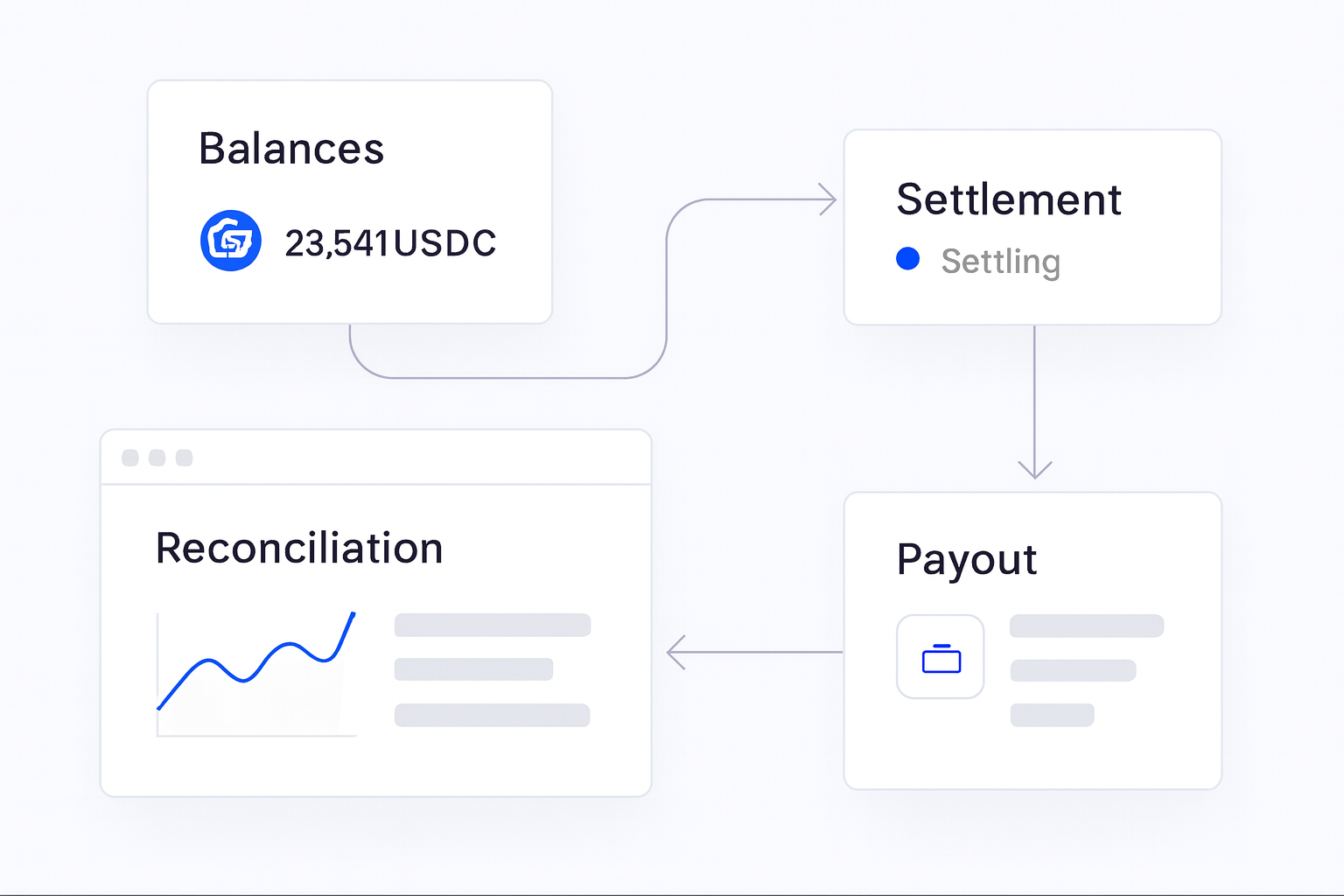
If your team is comparing USDC payment infrastructure, the real question is not whether you can accept a stablecoin. It is how the full workflow fits your business: checkout, billing, invoicing, payment links, payouts, conversion, settlement, and reconciliation.
Radom is built for businesses that need to accept crypto payments and manage the money movement around them. It supports hosted checkout, payment links, billing, invoices, payouts, and payment APIs from one platform, with settlement in crypto or fiat and balance tracking across the workflow.
Compare Radom pricing or contact sales if you want help mapping USDC payments to your business model.
What to compare in a USDC payments platform
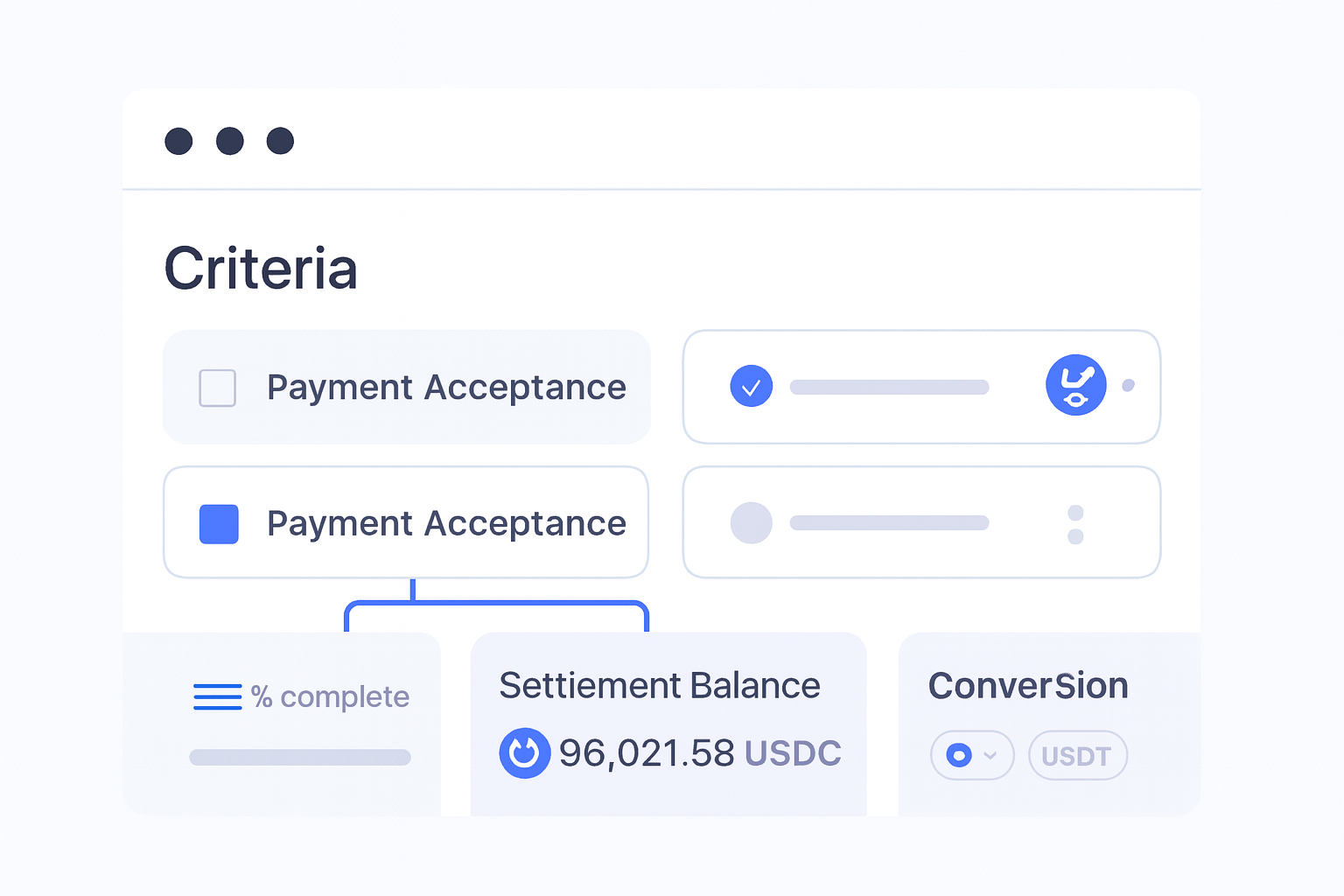
When you evaluate USDC payment options, compare the parts that affect operations, not only the payment button. A useful platform should help you collect payment, confirm status, manage balances, and move funds where they need to go next.
- Payment acceptance: hosted checkout, payment links, invoices, subscriptions, and APIs.
- Settlement options: crypto settlement, fiat settlement, and clear balance visibility.
- Conversion: the ability to move between supported digital assets and fiat where available.
- Payout workflows: support for sending money onward when your business needs it.
- Developer fit: APIs, docs, and predictable implementation effort.
- Operator fit: reconciliation, reporting, and control over funds movement.
Radom’s current product pages support this broader workflow across crypto payments, crypto checkout, crypto convert, crypto on and off ramp, payouts, and virtual accounts.
Where Radom fits in a USDC payments stack
Radom is not positioned as a narrow checkout tool. It is a crypto payments platform for businesses that need to accept, manage, and move money across crypto, stablecoins, open banking, and fiat account rails.
For USDC-focused teams, that means one platform can support payment acceptance, settlement choices, balance management, and downstream money movement. The homepage also states that Radom supports 12+ cryptocurrencies across 10+ blockchains, with launch options through APIs or no-code tools.
That matters for teams that want a payment layer rather than a one-off payment page.
Review crypto payment workflows
Decision criteria by team
For founders
Look for a platform that lets you launch quickly without creating a patchwork of tools. If you need to start with hosted checkout or payment links and later expand into billing, invoicing, or payouts, Radom gives you a path to do that from one account.
For finance and operations teams
Prioritise settlement control, balance tracking, and reporting. USDC payments can reduce payment friction, but the operational value comes from knowing how funds are received, converted, and reconciled.
For developers
Check whether the platform offers APIs and documentation that fit your implementation model. Radom supports APIs and no-code tools, which lets teams choose between faster launch and deeper integration.
For platform operators
If you run a marketplace, affiliate network, creator platform, or other digital business with payout obligations, compare not only collection but also how easily you can move funds onward. Radom supports payouts and payment APIs, which makes the platform relevant beyond simple acceptance.
How Radom reduces work in a USDC payment flow
- Accept USDC or other supported crypto payment methods through hosted checkout, links, invoices, or APIs.
- Track payment status and balances from one platform.
- Settle in crypto or fiat where your workflow requires it.
- Use conversion tools when you need to move between supported assets and fiat.
- Route funds into payouts or treasury workflows without stitching together separate systems.
This is the practical difference between a payment widget and a payment operating layer.
See hosted crypto checkout or compare conversion workflows.
Pricing and implementation
Radom pricing is per transaction, with no setup fees or monthly fees listed on the pricing page. If you have significant payment volume or a more complex implementation, use pricing as the starting point and speak with sales about fit.
For teams that want to build, the documentation is the right next step. For teams that want to compare commercial terms or implementation scope, contact sales is the faster route.
Read the docs or contact sales.
When Radom is a strong fit
Radom is a good fit if you need:
- Crypto payments with hosted checkout, payment links, invoices, subscriptions, or APIs.
- A single platform for acceptance, settlement, conversion, and payouts.
- Business-focused workflows rather than consumer wallet features.
- A path from no-code launch to developer-led integration.
- Tools for internet businesses, platforms, and operators that need control over money movement.
If your use case is limited to one isolated payment action, a narrower tool may be enough. If you need the full operating workflow, Radom is built for that broader job.
Compare pricing or talk to sales.
Frequently asked questions
Does Radom support USDC payments?+
Radom supports crypto payments and stablecoins on the platform. The published pages do not list every supported asset in one place, so specific asset availability should be checked during implementation review.
Can I settle USDC payments in fiat?+
Radom states that businesses can settle in crypto or fiat, and its on and off ramp page covers movement between crypto and fiat where available.
Can Radom handle subscriptions or invoices as part of a USDC payments flow?+
Yes. The product pages list subscriptions, billing, invoices, payment links, and checkout as supported workflows.
Is Radom only for developers?+
No. Radom supports APIs and no-code tools, so it can work for both technical and non-technical teams.
What should I do if my USDC payments setup needs payouts too?+
Use the payouts page and speak with sales. Radom’s platform is built for acceptance and money movement, not only payment collection.