USDC payments integration for businesses that need a cleaner stablecoin workflow
If your team is evaluating a USDC payments integration, the real question is not just whether you can accept USDC. It is how that payment fits into your checkout, billing, reconciliation, settlement, and payout process.
Radom is built for businesses that want to accept crypto payments and manage the money that follows. You can use hosted checkout, payment links, invoices, subscriptions, or APIs depending on how your team sells. From there, you can receive funds to your Radom balance, convert assets, or withdraw to your wallet.
For teams comparing options, start with crypto payments, then review crypto checkout if you want a hosted payment page. If your workflow needs conversion or settlement rules, see crypto convert.
What a USDC payments integration usually needs to cover
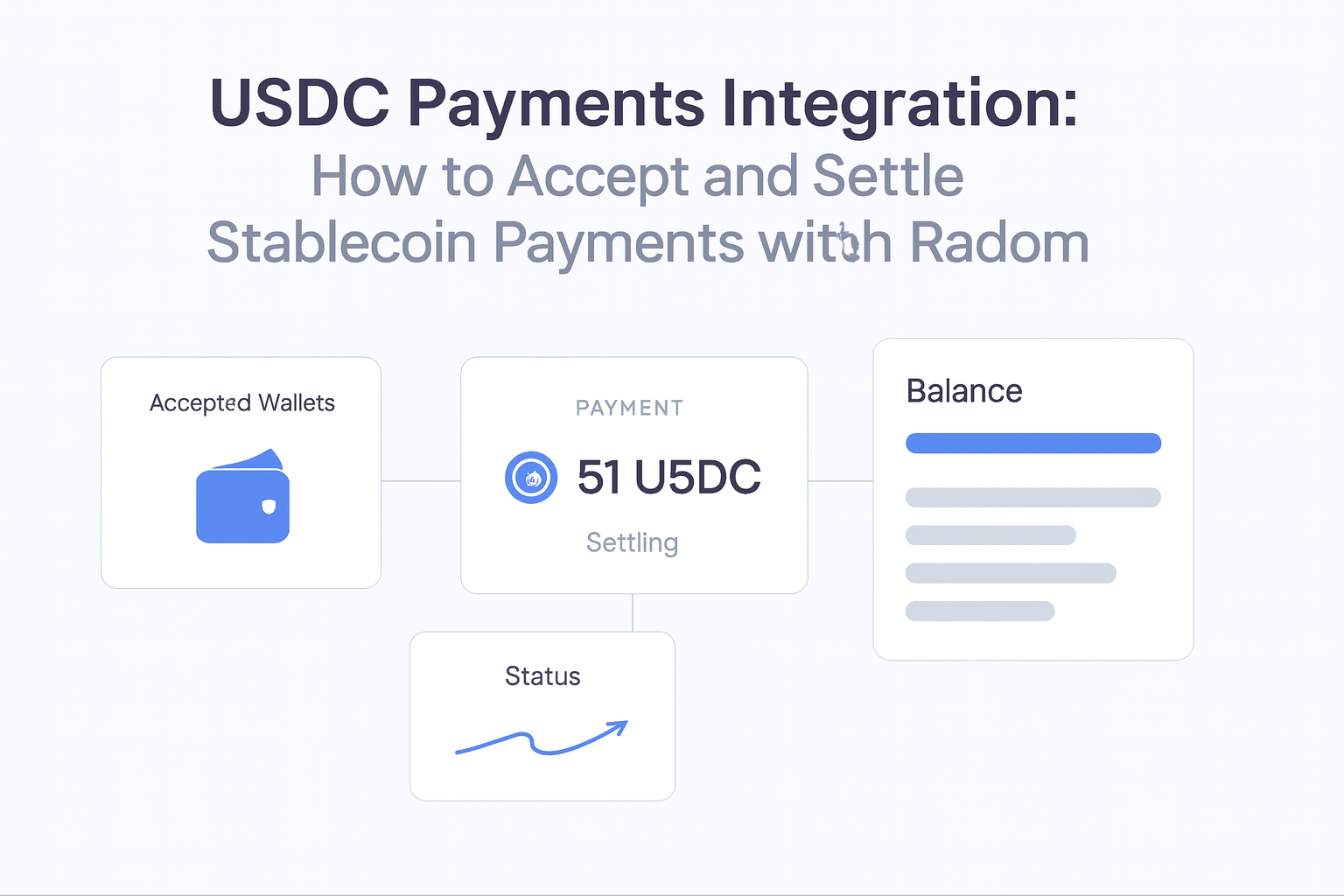
Most operators do not need a one-off payment button. They need a repeatable payment flow that finance, operations, and engineering can support. A usable USDC integration usually includes:
- A clear payment surface, such as hosted checkout, payment links, invoices, or an API-led flow.
- Status updates so teams know when a payment is pending, confirmed, or settled.
- Balance tracking for reconciliation and reporting.
- Options to keep funds in crypto, convert them, or move them into the next step of the business workflow.
- Support for the payment model you actually run, whether that is one-time payments, subscriptions, or invoice collection.
Radom’s product set covers crypto payments, billing, subscriptions, invoices, payment links, and payouts from one platform. That matters when your payment flow is tied to operations, not just checkout.
How to integrate USDC payments with Radom
There are a few common ways to set up USDC acceptance. The right path depends on how much control your team needs and how quickly you want to launch.
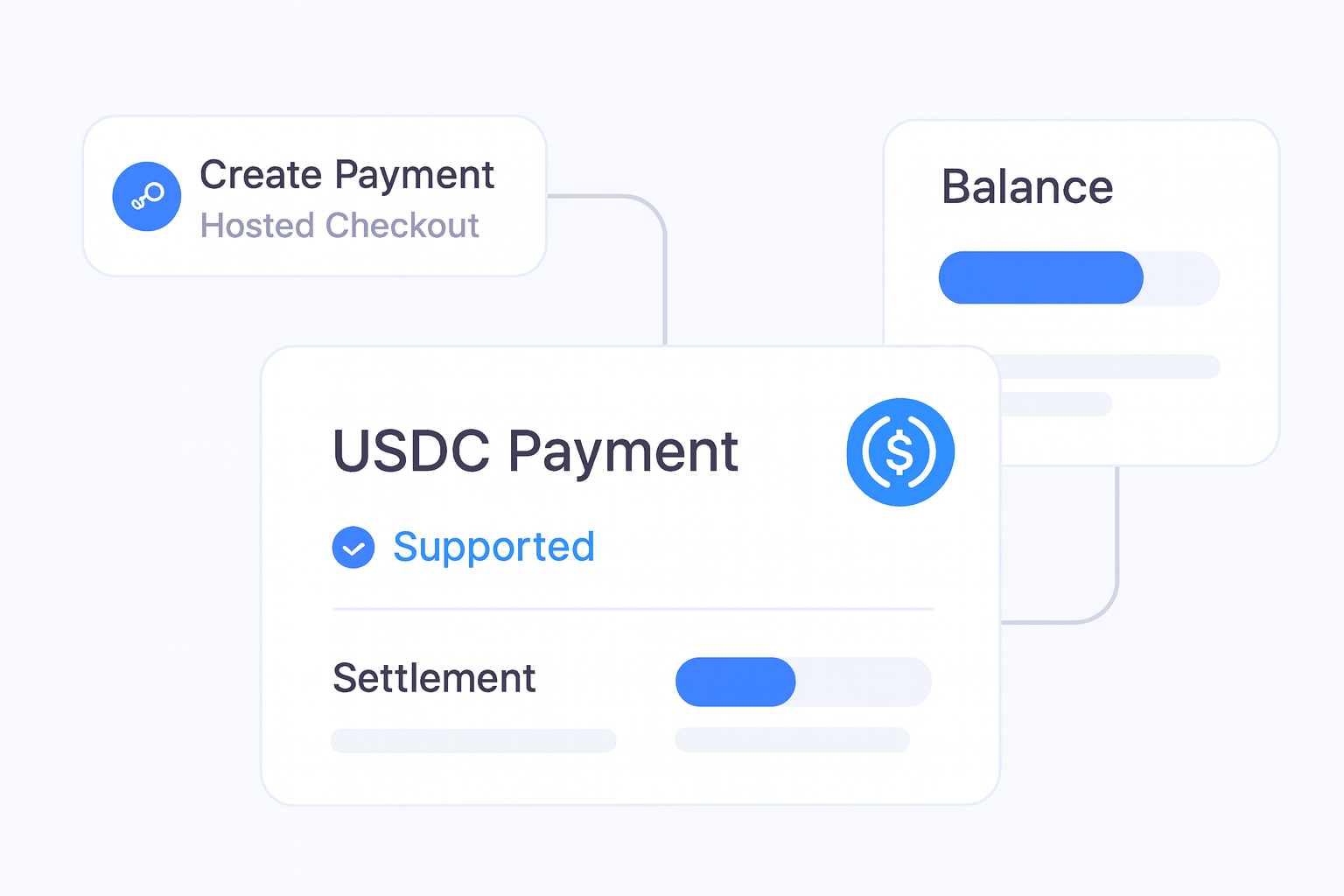
- Choose the payment model. If you need a hosted experience, use checkout. If you need lightweight collection, use payment links. If you bill customers on a recurring basis, use billing or subscriptions. If you invoice clients, use invoices.
- Decide where the payment should land. You can receive funds to your Radom balance, then decide whether to hold, convert, or withdraw.
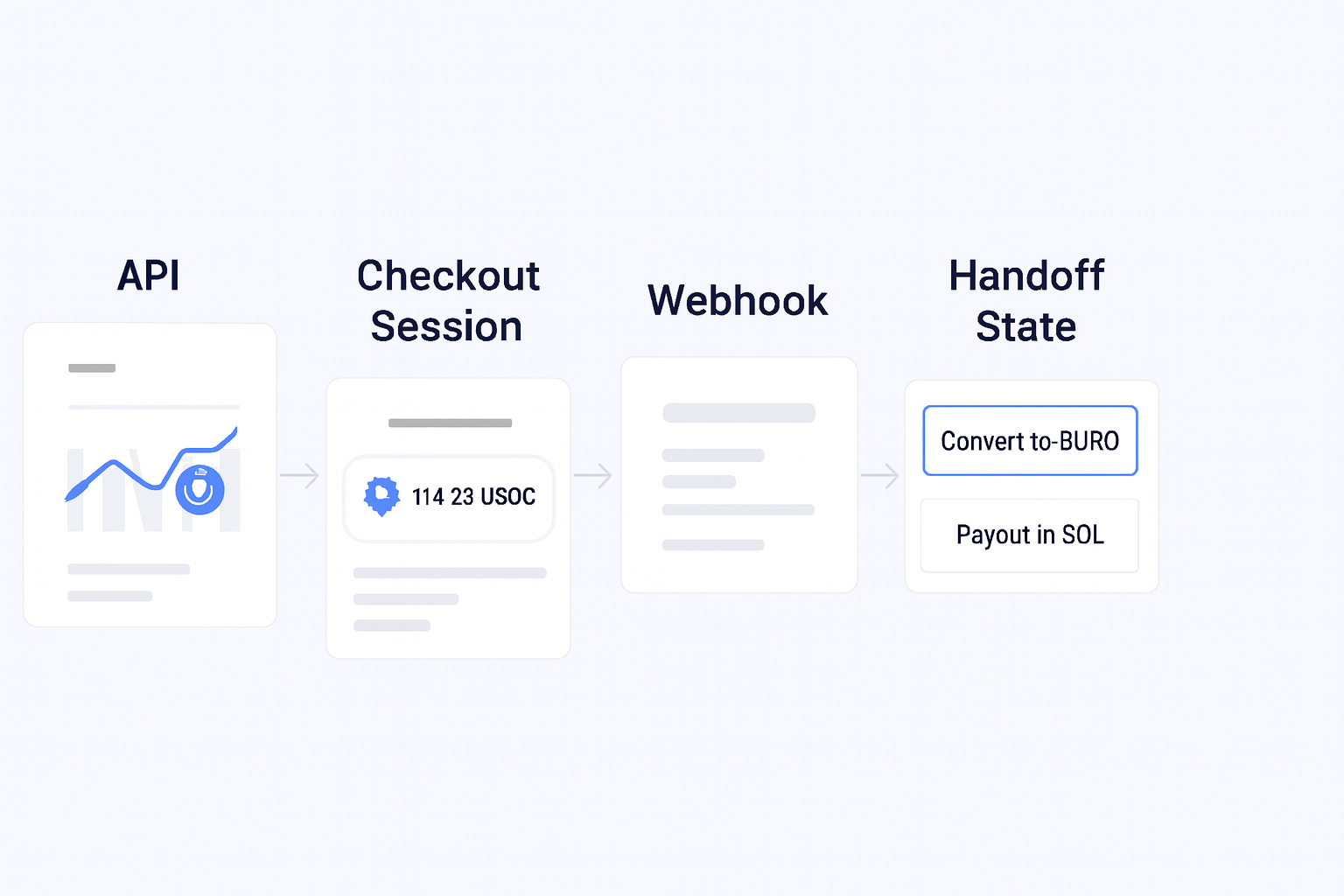
- Map the operational flow. Finance teams usually care about settlement, reconciliation, and reporting. Developers usually care about API behavior and how the payment status updates through the flow.
- Test the customer journey. Make sure the payment screen, payment status, and post-payment handling match your business process.
- Connect the next step. If you need to move between crypto and fiat, review crypto on and off ramp alongside conversion and virtual account workflows.
If your team wants to validate the workflow before a full rollout, the practical next step is to review pricing and then contact sales for higher-volume or more specific requirements.
Where Radom removes work
USDC acceptance becomes hard to manage when every step is built separately. Radom reduces that overhead by putting the payment methods, settlement tools, and operational controls in one place.
- Less checkout work: use hosted checkout instead of building a payment page from scratch.
- Less finance friction: track balances and settlement in the same platform that accepted the payment.
- Less tool sprawl: use one platform for payments, billing, invoices, payment links, payouts, conversion, and settlement.
- Less manual routing: convert or withdraw funds based on how your business wants to hold and move value.
That structure is especially useful for SaaS teams, marketplaces, creator platforms, affiliate programs, gaming operators, and other digital businesses that need stablecoin payment operations to stay predictable.
When USDC payments are a good fit
USDC is often a better fit when your customers already operate in crypto or when you need faster global payment acceptance than traditional rails can provide. It can also help when your team wants a payment method that is easier to reconcile than a scattered mix of wallet transfers and manual invoices.
Radom supports businesses that want to accept crypto across the channels they already use. That includes teams that need checkout, subscriptions, invoices, payment links, and payout workflows rather than a single standalone payment page.
If your use case is more about moving money after acceptance, rather than only taking payment, review payouts and crypto convert as part of the same implementation plan.
Implementation questions to settle before you build
Before your team starts coding, answer these questions:
- Will you accept USDC through checkout, invoices, payment links, or an API?
- Do you want to settle in crypto, keep funds in balance, or convert them?
- Does finance need reporting and reconciliation at the transaction level?
- Will you need subscriptions, recurring billing, or one-time collection only?
- Do you need payout support after funds are received?
Once those decisions are clear, the implementation is usually easier to scope. Developers can work from the API and docs, while operators can confirm the business rules around settlement and conversion.
Next step
If you are evaluating USDC payments integration for a business or platform, Radom gives you a practical way to test the flow without stitching together separate tools. Start with the checkout and payments setup, then expand into billing, invoicing, conversion, or payouts as needed.
Open the docs if you want to review the integration path, or contact sales if you need help with volume, workflow design, or a broader payment operation.
Frequently asked questions
Can Radom accept USDC payments?+
Radom supports crypto payments for businesses, including stablecoin payment workflows. The exact setup depends on the product path you use, such as checkout, payment links, invoices, or APIs.
Can I settle USDC payments in fiat?+
Radom supports settlement workflows that can move between crypto and fiat where available. If you need fiat settlement or conversion, review crypto on and off ramp and crypto convert.
Do I need to build my own checkout page?+
No. Radom offers hosted checkout for teams that want a payment page without building every flow themselves.
Can I use Radom for subscriptions or invoices?+
Yes. Radom supports billing, subscriptions, and invoices in addition to payment links and checkout.
Is Radom only for developers?+
No. Radom works for developers, but it is also built for finance, operations, and platform teams that need a business payment workflow.
Related Radom pages
Review crypto payments for the broader product overview, crypto checkout for hosted payment pages, pricing for commercial terms, and crypto convert if your flow includes settlement or treasury movement.